Daily insights for city builders, delivered every morning at 6 AM ET. I’m Brandon Donnelly — a Toronto-based real estate developer and founder of Globizen. I’ve been writing here since 2013.

Tag: paris

  • What is the FSI of Paris?

    In the world of development, there is something known as a floor space index (FSI). Some places call it a floor area ratio (FAR), but they mean the same thing. It is one measure of density. To calculate it, you simply divide the total building area by the site area. For example, if you had a 25,000 square foot piece of land and you were to build a single storey building that occupied every bit of the site (also 25,000 sf), you would have an FSI or FAR of 1.0. If you built a two storey building on only half of the site, you would similarly have an FSI or FAR of 1.0. The area didn’t change, you just moved things around. That’s how FSI’s work.

    A ratio like this tells you how intensely you may be using a piece of land, but it doesn’t tell you everything or necessarily give you the full picture. Which is why I find it silly when too much emphasis is placed on this singular number. I don’t think anyone in the history of the world has ever traveled to a city — let’s take Paris — and remarked how beautiful it is because of its floor space indices. Nobody thinks like this. It’s way too esoteric. What guides our experiences is built form, the ground plane, relationships to streets, materiality, light, context, and many other important things.

    To give a specific example, let’s take One Delisle. This project was in effect approved twice. After it was approved by City Council in July 2020 an adjacent land parcel was acquired. It wasn’t absolutely necessary to do this, but we felt it made for better city building and so we did it. (We wanted to look back knowing we did the right thing.) That meant that we needed to go back to Council to revise our approvals, which ended up happening at the beginning of this year (public staff report, here). There was no change to the tower and and no change to any of the key setbacks or stepbacks. But the overall FSI did go down!

    Will anyone notice or care about this lower ratio? I doubt it. Which is why I think it’s silly to try and plan our cities around them. It feels like design by spreadsheet. Thankfully, I think many people recognize this.

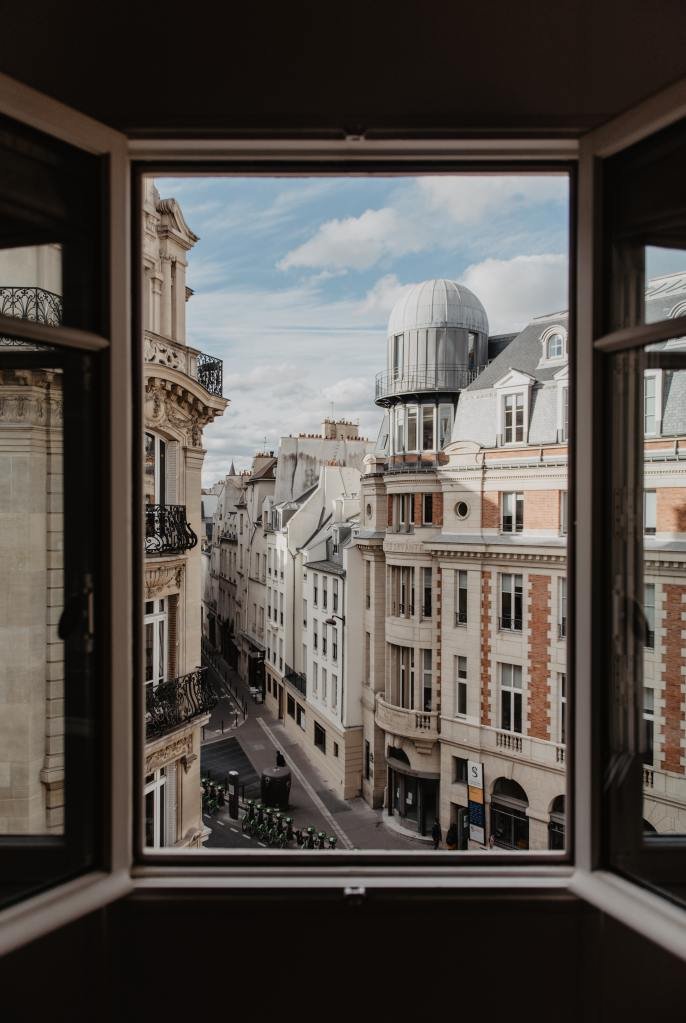
    Photo by Thibault Penin on Unsplash

  • The tokenization of cities

    The web in its current state is like a city without public spaces. People can only interact in places owned by someone else, and a small group of landlords captures an oversized share of all economic activity. – Dror Poleg

    I would encourage you all to read Dror Poleg’s recent article called, “The Token Society: Cryptocurrencies will change the way we work, live, and love.” It’s an interesting read, particularly for us urbanists. Poleg starts with urban history. He first talks about how the emergence of industrial cities allowed for new divisions of labor. The example he gives is that of the quatorzième, which is a job that emerged in Parisian society sometime in the late 19th century. The job of a quatorzième was literally to be the 14th person at dinners and functions. Since a headcount of 13 was thought to be bad luck, it was important to be able to call on someone at a moment’s notice to fill this critically important role. While this probably seems silly in today’s context — I mean, who goes out anymore? — it was a real thing and it was a thing that the modern city was suddenly able to provide. Poleg goes on to thread this idea all the way through to today. Web 2.0 enabled a new sharing economy and much larger digital communities (though note the quote at the top of this post). However, we’re nowhere near done yet. Web 3.0 is going to, in his words, enable “the finalization [or tokenization] of all human activity.” Welcome to the new token society.

    P.S. I’m by no means an expert on cryptocurrencies. I have just been watching from afar for the past several years. But over the last few months, it has been hard not to pay attention to what is happening with NFTs and the Ethereum network. And I’m not just talking about the price of ETH (which is up ~56% over the last month alone). I am now of the opinion that we are seeing one of the first mainstream use cases emerge on top of a blockchain network. And yes, I believe it will also change our cities.

  • It’s okay to put buildings close together

    This morning I came across this beautiful photo by @callicles of the 11th in Paris. After admiring it for a few moments, I then immediately tweeted it out with the above caption: “It’s okay to put buildings close together.” Because here’s the thing about this photo: It represents one of the great paradoxes of city building. When most people look at this photo, I suspect that they will find it beautiful. They will like the mid-rise architecture and they will like the quaint European-scaled streets. But despite its fairly universal appeal, very few cities are able to build this way today. It’s often not allowed. So instead what people do is travel to Europe in the summer, sit in cafes, admire the architecture and urban design, and then lament the fact that we don’t build cities like we used to.

    What is it that makes this intersection so inviting? Well, the buildings are tight up against each other. I’m guessing that the right-of-ways (ROWs) in this picture are maybe 6-9 m wide. There are no building setbacks or stepbacks to speak of, save and except for the penthouse floors which taper back slightly. And so all of the spaces in these buildings would likely have some sort of direct facing condition with their opposing neighbors (but partially mitigated by the fact that these aren’t all glass buildings). The ratio of ROW to building height is, I’m guessing, something like 1:4, which, at the end of the day, is a large part of the reason why these streets feel so intimate and inviting. The buildings frame the streets and public realm.

    What I just described breaks many of the guidelines that I suspect many of you in the industry are accustomed to following. In our world, the streets should be wider to allow for adequate fire and service vehicle access. The buildings should stepback to allow light to reach the sidewalks, to mitigate impacts on any surrounding single-family homes, and to provision for sky views. Here in Toronto, the midrise guidelines also stipulate that buildings should have a ROW to building height ratio that is closer to 1:1. Though to be fair this guidance is often rightly broken. But the truth remains, we generally don’t build like this anymore. Why is that?

    It’s not because we can’t do it. We certainly could. We are, for whatever reasons, choosing not to. Is it because we’re bad at understanding what we actually like and what makes for great cities? Is it because what we end up liking is a bit counterintuitive? My unproven and untested theory is that it is at least partially the result of an approach to planning that is defensive — instead of offensive — in nature. We plan around and bow completely to existing contexts. We plan to mitigate impacts. We plan to satisfy some very individualistic concerns about how cities and neighborhoods should be built. For better or for worse, we plan to piss off the least amount of people. Politics also play an outsized role.

    What is far less common to think about is how to plan offensively. The fact of the matter is that the Paris we all love today pissed off a lot of people when it was being constructed. The approach was top-down and hugely disruptive. It ignored and completely erased much of the city’s previous urban context. Artists at the time, and probably many others, despised the new regularity of Paris’ street wall buildings. They longed for the old hodgepodge of medieval blocks and the visual variety that they created. But today, it’s hard not to think of this offensive move as anything but visionary. Of course, there are also countless examples of top-down offenses turning out terribly bad for cities.

    Perhaps the right approach, then, is to simply start being more deliberate about introducing elements of planning offense. My friend David Wex of Urban Capital likes to remind me that Montreal is a city with grandeur and that Toronto, for the most part, is a city without it. So as I have argued before, over here, I think it’s time we rethink our approach. Instead of just worrying about things like shadow impacts and angular planes (defensive), we should also be asking ourselves offensive questions. How refreshing would it be to sit down in a project meeting and have someone ask: “Okay, but does this design contribute to the overall grandeur and beauty of our city?”

    And maybe once we take this new perspective, we’ll come to the conclusion that sometimes it’s okay to put buildings close together.

  • The urban spectacle

    The term flâneur is a French noun that more or less translates into lounger or saunterer. Its origins date back to probably the 16th century, but it was really during the 19th century that it was imbued with its new modern associations. A flâneur is a person about town, a person of leisure, and a kind of urban explorer. Their goal is to take in city life.

    In the middle of Haussmann’s overhaul of Paris, the flâneur emerged as an important literary and artistic figure in the new modern metropolis. They showed up everywhere from poems to Impressionist paintings. The flaneur was both a spectator, as well as an urban detective of sorts, responsible for hanging out and surveying the changing nature of city life.

    Being a modern-day flâneur is one of my favorite things to do. I love to do it when I’m traveling, but I also love to do it when I’m at home. Always with a camera. (The last year has been particularly helpful at encouraging aimless walks outside.)

    The flâneur is also a reminder that city life is indeed a kind of spectacle. Sometimes we walk around just to be seen and sometimes we walk around just to see others. Presumably, it is one of the reasons why many cafes in Paris arrange their seating so that you face outward toward the street. That’s the important view.

    When the flâneur figure was coming into its own, Paris was going through a profound transformation. And it was unsettling to many. These urban detectives were grappling with modernity and trying to make sense of where city life was heading.

    Though the causes are very different, we are similarly living through a period of adjustment. What will our cities be like in the the post-COVID world? That is, of course, the question. But we shouldn’t forget that our desire for urban spectacles is deeply entrenched. And I am certain that the spectacles will return much faster than most people think.

    This weekend, I set out with a couple of friends to be flâneurs. We came with cameras and drones and with the goal of documenting construction and real estate activity in a chosen meetup spot. Everything was then posted to a shared Twitter account (@unlyst). We’d like to make this a habit. So if any of you would like to join our next meetup, drop me a note @donnelly_b.

    Photo by Latrach Med Jamil on Unsplash

  • Coupe d’une maison parisienne

    This is an interesting article by ArchDaily, looking at the “evolution of the house plan in Europe” between 1760 and 1939. The article focuses on London, Paris, Amsterdam, and Moscow and includes floor plans, photographs, as well as well-known illustrations like the one shown above. Created by Bertall in 1845, the drawing shows a section through a Parisian house and is called The Five Floors of the Parisian World.

    What it shows is the declining opulence that used to exist in Paris’ apartment blocks as you moved upward. If you were rich, you lived on the second floor, right above the ground floor lobby. The ceilings were higher on this floor and maybe had a balcony overlooking the street. If you lived on the third floor it meant that you were a less rich. And if you lived in the top floor attic, you were poor. That is what this comic is showing.

    Now, all of this changed over time as new technologies, namely the elevator, were brought to multi-family buildings. All of a sudden it became convenient to live higher up and all of a sudden people wanted better views and to get further away from the chaos of the street. What I’m curious about, though, is how posterity dealt with the lower ceiling heights on these upper floors.

  • Toronto jumps 9 spots in Kearney’s 2020 Global Cities Outlook ranking

    “…the pandemic and its aftermath have also created a rare openness to doing things differently. Seizing this opportunity won’t be easy, or a short-term affair. But if we can be certain of anything, it’s that cities will adapt and evolve, and that they have the potential to come back stronger.”

    – Kearney 2020 Global Cities Report

    The Kearney 2020 Global Cities Report is out and it incorporates two main rankings: their Global Cities Index (GCI) and their Global Cities Outlook (GCO).

    The former is intended to be a snapshot of where things stand today and the latter is intended to be a forecast of where things might be heading.

    Here’s their GCI:

    And here’s their GCO:

    Note: The big mover in their GCO is Toronto, jumping nine spots to take second place behind London.

    The full report can be downloaded over here.

  • Airbnb’s S-1 is now public

    Airbnb’s IPO documents recently went public.

    Not surprisingly, their business as a travel company has been heavily impacted by COVID-19. Last year, the platform saw 326.9 million nights and experiences booked, with 251.1 million being booked in the first nine months of 2019. This year, nights and experiences are down to 146.9 million for this same nine month period. Revenue is correspondingly down from $3.7 billion for the first nine months of 2019, to $2.5 billion for the first nine months of this year.

    But what is also clear from their data is that people still really want to travel and have new experiences. As soon as April passed and the Northern Hemisphere entered the normally busy Q3 travel season, domestic travel began to quickly ramp back up. For many, this likely took the place of international travel. See above chart.

    Of greater concern might be all of the regulation that now surrounds short-term rentals. As of October 2019, about 70% of the platform’s top 200 cities (by revenue) had some form of regulation impacting short-term rentals. But at the same time, no one city accounts for more than 2.5% of the platform’s revenue. So there’s strong geographic diversification.

    If you’d like to take a look at the company’s S-1, you can do that over here. And for those of you who might be curious, these are Airbnb’s top 10 cities based on revenue:

    1. London
    2. New York City
    3. Paris
    4. Los Angeles
    5. Rome
    6. Barcelona
    7. Tokyo
    8. Toronto
    9. San Diego
    10. Lisbon
  • The world’s best cities

    Whenever you see a best-of-anything ranking, you should probably ask yourself what the hell “best” even means. In this case, Resonance Consultancy is ranking the world’s cities based on six alliterative categories: place, people, programming, product, prosperity, and promotion.

    Some of these metrics are qualitative, but many are, in fact, quantitative. Number of COVID-19 infections in 2020; number of direct destinations served by the city’s airports; number of foreign-born residents; number of top-rated restaurants (TripAdvisor); most Instagram check-ins, and so on.

    The result is this list of the world’s best cities:

    1. London
    2. New York
    3. Paris
    4. Moscow
    5. Tokyo
    6. Dubai
    7. Singapore
    8. Barcelona
    9. Los Angeles
    10. Madrid
    11. Rome
    12. Chicago
    13. Toronto
    14. San Francisco
    15. Abu Dhabi

    I arbitrarily chose the top 15 cities in order to make sure that Toronto was included in this ranking. If you’d like to download a full copy of the 2021 World’s Best Cities report, you can do that over here. I recommend you check out their performance criteria.

    Toronto, for example, performs very well when it comes to “people.” That’s fairly consistent across most of these rankings. But it didn’t fare so well when it comes to “place.” That category includes things like the average number of sunny days and the number of high quality sights & landmarks.

  • The global effort to build more bike lanes

    I received an email this week from a senior real estate executive who was sharing the fact that, in response to COVID, he had decided to give up driving completely. He was now cycling everywhere — whether for work or for personal errands. And it was doing wonders for his health and his overall well-being.

    Indeed, this feels like some sort of golden era for urban cycling. Back in May I wrote about how Toronto City Council had just approved the largest ever one-year expansion of bike lanes. Some 40 km. When have we ever moved this quickly and without months (okay, years) of painful debate? Probably never.

    Of course, it’s not just Toronto. This is happening all over the world. Here are some of the numbers (taken from this recent Journal article):

    • Paris added 400 miles of pop-up bike lanes across the region — all of which didn’t exist before the pandemic – some of the streets being tracked have seen a doubling in usage
    • Oakland closed almost 10% of its streets to cars
    • Montreal is adding an additional 70 miles of pedestrian and cycle paths
    • Bogota is the midst of planning for 47 miles of temporary bike lanes
    • The UK has fast tracked over $315 million in capital spending for bike infrastructure — referring to this as a “once-in-a-generation” opportunity
    • New York’s bike share service (Citi Bike) saw year-over-year usage surge 67% in the first 10 days of March alone — before any shelter-in-place rules were even imposed

    There are obvious reasons for this rush to build out cycling infrastructure. We’re in the midst of a global health crisis and people are staying away from public transit in big numbers. But I think it’s also important to keep in mind that in many / most cases, there is really no other viable mobility solution. You cannot take all the people that used to ride the tube in London and plop them into cars. There isn’t enough space.

    So cities all around the world are doing the sensible thing and acting fast to make sure that it’s safer for people to move about on bikes. But as we all know, humans tend to have a bias toward the status quo. And so when this is all said and done, I suspect that many of these pop-ups will end up sticking around. And that will be a good thing for cities.

  • How Europe is reopening

    Just over a month ago, as North America was beginning its lockdown, the Europeans were the ones showing us how to stay sane in quarantine through balcony orchestras and viral internet videos. Now we’re looking to them for how best to reopen the economy and minimize the number of fits and starts.

    • This morning Spain recorded its lowest daily death rate from the coronavirus. It is beginning to prepare for a phased relaxation of its lockdown rules. Things will not return to normal overnight. [Financial Times]
    • Spain allowed construction activity and manufacturing to resume this past week. As a reminder, Spain’s strict lockdown started on March 14. [New York Times]
    • Bookstores are open in Venice, but that’s about it. Customers have to enter one at a time, or schedule an appointment. Hotels, restaurants, and cafes remain shuttered. It is believed that at least 1/6th of all Italian restaurants and bars will not survive. Reopening is not happening uniformly across Italy’s 20 regions. [Wall Street Journal]
    • Last week, Denmark became the first country in the Western world to reopen elementary schools. The desks are far apart and teaching outside is being maximized, but some/many are concerned that this is too soon. Are we prioritizing the economy (i.e. free up the parents) over the health of our children? [New York Times]
    • The Czech Republic currently has one of the lowest number of cases on the continent. But hardware stores and bike shops are some of the only nonessential businesses that are allowed to be open. The Easter weekend saw an over 60% increase in year-over-year sales. Biking is something to do right now. [Wall Street Journal]
    • On Monday, the lockdown will be further relaxed by the Czech government. Weddings of up to 10 people will start to be allowed. Gyms are expected to open on May 11, but their change rooms will remain closed. (I’m surprised by this one.) Malls, hotels, and indoor restaurants aren’t expected to reopen until June 8 at the earliest. Should the number of new daily cases exceed 400 going forward, the government has said it will reimpose a lockdown. [Wall Street Journal]
    • The UK is not yet considering a relaxation of its lockdown. As of Sunday, the situation remains “deeply worrying.” The UK currently has the 5th highest national death toll. [Globe and Mail]
    • On April 13, Emmanuel Macron announced that France would begin a phased reopening of its economy — schools and some businesses — starting on May 11. This is a unique approach. He gave a firm date, well into the future. What if this doesn’t make sense when the time comes? Clearly the government felt that the psychological benefits of a firm date outweighed the potential risks. Minimize uncertainty during an uncertain time. [Le Monde]
    • Lots of discussion around the porosity of borders. Logically, there’s a view that unless there’s a common strategy, it’s better to keep borders closed. But what are the economic implications of doing that? [New York Times]

    Photo by Grant Lemons on Unsplash