Daily insights for city builders, delivered every morning at 6 AM ET. I’m Brandon Donnelly — a Toronto-based real estate developer and founder of Globizen. I’ve been writing here since 2013.

Tag: olympics

  • Olympic athletes will — probably — be able to swim in the Seine

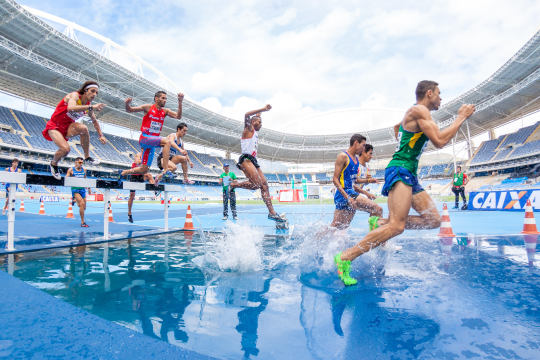
    Since the modern Olympic Games were revived in 1896, no city has ever hosted swimming events in an urban river. Too poopy. But Paris, as we talked about, hopes to be the first. Starting on July 30, the Seine is scheduled to host the swimming portion of the triathlon competitions.

    Except, it will depend on water quality. Today’s training sessions (scheduled for Sunday, July 28) were cancelled because water tests showed that the Seine is currently below acceptable standards. This is due to heavy rain over the last few days, which I guess overloaded the city’s storm network.

    So what is clear is that — 36 years after then-Mayor Jacques Chirac first promised to clean up the river — the city has only been able to successfully achieve this, sometimes. It’s not an easy task.

    According to Bloomberg, the clean-up efforts have already cost €1.4 billion. This was spent on doing things like constructing a 50,000 m3 holding basin (about the size of 12 Olympic-sized pools) under the Gare D’Austerlitz. This now holds storm overflow during heavy rain events, in lieu of it going into the Seine.

    But this doesn’t provide any guarantees as evidenced by today’s cancelled training sessions. Presumably, it just makes it less likely for overflow stormwater to get dumped into the Seine. So a cynic might ask: Why bother with all of this?

    Well, for one thing, swimming in a river in the middle of a major global city is just plain cool. Look at how the Swiss do it. But another reason could be that you want to create one of the greenest cities on the planet. And if that’s the case, then seeing athletes swimming in the Seine is a pretty powerful image.

    It shows progress.

    Photo by J Shim on Unsplash

  • Cost of the Olympic Games, 1960-2021

    There are many reasons why one might want to host the Olympics. Brand building is certainly one. Making some kind of profit is another. But the direct economic benefits aren’t always clear. Embedded above are two recent charts from the WSJ outlining 1) the cost of the Olympic Games over the years (the exact numbers are likely debatable) and 2) some of the overruns that host cities have seen. Montreal stands out as an unfortunate outlier with cost overruns exceeding 700%. And Tokyo stands out as being the most expensive games ever. As I understand it, the economics are challenging in the best of times. So one can only imagine what kind of dent the Tokyo Olympics might leave behind.

  • Should the Olympic Games be held in the same place every 4 years?

    I have argued before that hosting major events, such as the Olympics, can serve as a catalyst for completing meaningful public projects. But there is also an argument to be made that it’s not entirely worth it. The economic legacy is weak. The ROI simply isn’t there.

    Recently Harvard Business Review interviewed a gentleman named Chris Dempsey. Dempsey was a former Bain & Company consultant and the cofounder of the No Boston Olympics organization. He played a big part in Boston withdrawing their bid to host the 2024 Summer Games. Los Angeles ending up taking its place.

    His rationale is as follows.

    The International Olympic Committee was founded on June 23, 1894 by a Frenchman by the name of Pierre de Coubertin. At the time of its creation, the World’s Fair had already pioneered the rotational model of traveling to different cities.

    The most famous of these exhibitions was arguably “The Great Exhibition” held in London in 1851. Indeed, the plate-glass Crystal Palace structure which actually hosted the event was later seen as an important turning point in the history of architecture. It was designed by Joseph Paxton, who was an English gardener and architect.

    Of course, the world was a different place at the end of the 19th century.

    The events weren’t being broadcasted around the world in HD. We didn’t have social media. And transportation costs were high (economist Edward Glaeser reminds us of this in the talk I posted yesterday). So rather than ask people to spend weeks traveling the world by boat, it was decided that the show should travel to them. It should rotate places.

    This made sense then, but does it make sense now? I would love to hear your thoughts on this in the comment section below.

  • The Olympics are dead. Or are they?

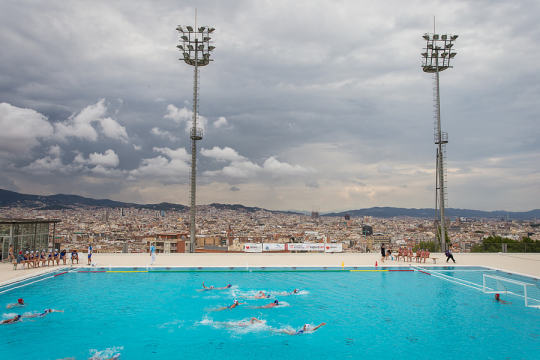
    Olympic Pool – Barcelona, Spain by Tom Weightman on 500px.com

    https://500px.com/embed.js

    Early this morning Professor Robert Wright – who is a regular reader and commenter on this blog – sent me an article from The Guardian called, ‘The Olympics are dead’: Does anyone want to be a host city any more? And that got me thinking.

    With Toronto having just hosted the Pan Am Games (the Parapan Am Games are still going on), there’s a lot of talk and debate happening in this city right now about whether or not we should make a go at hosting the 2024 Summer Games. The deadline for cities to express their interest is September 15th, 2015.

    The supporters (of which I would include myself) say it’s a great opportunity for civic (re)branding and urban renewal. It creates real deadlines to get things done. But the naysayers argue it’s a fiscal disaster waiting to happen. See 1976 Summer Olympics in Montreal.

    But in my view there are ways to host the Olympics and there are ways not to host the Olympics. Montreal (1976) is an example of what not to do. And Los Angeles (1984) and Barcelona (1992) are some of the best examples of what to do.

    The key is to think of the Olympics not as the end, but more as the beginning. In Olympic talk, they refer to this as legacy. Here’s what Los Angeles managed to accomplish as a result of the 1984 Summer Games (via Gizmodo):

    In 1979, the L.A. organizing committee had made a deal. If the games saw any profits, LA84 would give 60 percent back to the U.S. Olympic Committee and keep 40 percent for Southern California. At the end of the games, the total expenditures came in at a respectable $546 million, but even more impressive was the profit: A surplus of $232.5 million, meaning $93 million would stay in the region. This was huge. The only other games at the time which could claim to be financially successful at all were the other L.A. Olympics: The ones held in the city in 1932.

    The profits were used to create an endowment called the LA84 Foundation, which funds youth sporting events, resources, and facilities throughout the area. With smart management, the endowment has grown over the years, and over $214 million has helped an estimated three million children and 1,100 organizations in Southern California. Recently, the LA84 Foundation helped raise money to pay coaches and buy equipment at LAUSD high schools after budget cuts decimated their programs.

    The rest of the above article is definitely worth a read. It’s a great example of fiscal prudence.

    So what I am suggesting is not that we run blindly into hosting the Summer Games. But that we instead open our minds to the opportunities. Let’s great creative. If we could catalyze further city building, turn a profit, and leave meaningful legacies for this region (like what LA did), then why wouldn’t we want to have a go at it?

  • The PRESTO Push

    image

    Back in 2004, I spent a summer living in Asia. And one of the things that I remember really standing out for me was Hong Kong’s Octopus card. It’s a refillable card that you just tap to get onto transit. Lots of cities have them.

    But the cool thing about the Octopus card was that you could use it so many other places besides just on transit. I don’t know know what it’s like today in Hong Kong, but I remember also using it in taxis and to buy breakfast in the morning at Pret a Manger. That was pretty incredible for 2003.

    This was also great for me because I’m one of those people that dislikes carrying around paper money/change. I almost never spend my change and so it just ends up just accumulating in a container beside my front door. Here in Toronto we also use microscopic transit tokens, so that adds another layer of inconvenience.

    But that’s all changing.

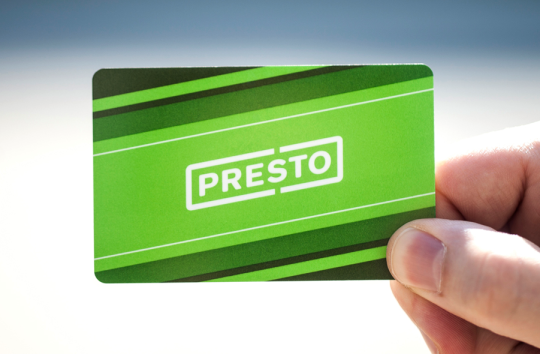
    Toronto now has its own version of the Octopus card and it’s called PRESTO. Technically it launched in 2009, but I only recently noticed the card readers appear at my home subway station (King Station). So tonight I decided to finally pull the trigger and order a card. I’ve been waiting 11 years for this moment 🙂

    And I was doing that, I noticed this message on the website:

    image

    Not surprisingly, we seem to be pushing to get PRESTO rolled out before the world comes to visit. And I think that’s a great thing.

    One of the big benefits of hosting an event like the Pan Am Games or the Olympics is that it creates a hard deadline to get things done, which is something governments often need. It’s a bit like tidying up before guests come over for dinner. You find a way to do it before people arrive.

    There’s a lot of debate about whether or not it makes sense for cities to spend the money on playing host city. But I don’t think we should ignore the fact that they can be a great catalyst for city building. Things get done. And oftentimes done is better than perfect.

    Good news: I’ve been told that the PRESTO system will be compatible with mobile phones and near field communication. Because let’s face it, cards won’t be around that much longer.

  • #WeAreWinter, but #AreWeSummer?

    The 2014 Winter Olympics are under way in Sochi, Russia and I’m happy to report that Canada is currently in the lead with 3 gold medals, 3 silver medals and 1 bronze medal.

    I also love our slogan: #WeAreWinter. It’s almost as good as the “Own the Podium” one associated with the 2010 Vancouver Winter Olympics. I think it’s important to strive to be the best and I love to see us doing that.

    But beyond just sports, the Olympics can also be highly political. Consider the facts that the average daily temperature in Sochi never drops below freezing and that it’s the warmest city, ever, to host the Winter Olympics. In fact, it’s where Russians vacation to get away from the cold. 

    My only hope—through all the politics—is that the opportunity to city build isn’t lost.

    As I’ve said before, I think major sporting events like the Olympics and the Pan American Games are a wonderful opportunity to catch up on infrastructure deficits. It creates a real deadline and pushes people and government to move quicker than they otherwise would.

    It’s for this reason that I would have liked Toronto to bid for the 2024 Summer Olympics.

    A truly successful Olympic Games should leave the host city better off than it was before. It’s about the sports, but also the legacy. Here’s a fact sheet from the International Olympic Committee on the “Legacies of Games.” I would love to hear your thoughts in the comment section below regarding whether or not you think Toronto should have bid.

  • Why the Pan Am Games are good for Toronto

    The Pan American Games are coming to Toronto in 2 years – 559 days to be exact. While not as high profile as the Olympics, some of you may be surprised to learn that the Pan Am Games will involve three times as many athletes as the Vancouver Olympics did.

    However, the big question with these sorts of events is always whether or not they create a lasting economic boon for the host city. History is littered with examples of economic disasters and lingering Olympic debts. I’d love to see a full analysis of what it costs to bid for a game, how much public money has to go up, how much private investment it spurs, and so on.

    At the same time, I suspect that some of the positive externalities might be hard to measure. How do you attach a value to the brand equity you get from hosting a major international sporting event? It’s hard, but for many people around the world the 2015 Pan Am Games could be the event that embeds Toronto into their psyche. 

    But there is another big benefit to playing host. It creates a real deadline. When cities bid for games they make all sorts of promises about the kinds of things they’re going to build and provide. In the case of Toronto, it accelerated the creation of a new mixed-income neighbourhood called the West Don Lands (which will be used to house the athletes during the games).

    “Originally, build out of the 32 hectare (80 acres) West Don Lands was planned to unfold in three strategic phases and take between 10 and 12 years, subject to market conditions. With the Pan Am Games, more than half of the community will be in place for the Games in 2015.” -Waterfront Toronto

    So in effect, we’ve leveraged the games in order to expedite capital projects that were already in the pipeline. I like this, because without a hard and fast deadline, I can almost assure you that these publicly run projects would have fallen behind schedule. Deadlines and goals are good.

    Here’s an example why:

    When I first started my MBA program at Rotman, we did an interesting organizational behaviour exercise involving origami cranes. The class was split into groups and each group was asked to go away and build paper cranes. If you’ve ever built one of these, you’ll know that they can be tough at first.

    But what each group wasn’t aware of was that they were all given different instructions in terms of the number of cranes they were expected to build. Their goals were different. At the end of the exercise, all of the cranes were counted and each group wrote their “production” levels on the board.

    What was discovered was that each group more or less built the exact number of cranes that they were asked to build. This is interesting, because presumably every group had the raw ability to produce the same number of paper cranes. All that changed was the motivation.

    Returning to the case of the Pan Am Games, the mandate is clear: We need to house 10,000 athletes and officials by the summer of 2015, or else we’ll look utterly incapable in front of the world. We have a deadline. And that’s a good thing.