
Daily insights for city builders, delivered every morning at 6 AM ET. I’m Brandon Donnelly — a Toronto-based real estate developer and founder of Globizen. I’ve been writing here since 2013.

Tag: olympia & york

  • The fragility of paper wealth

    I recently came across this list of the world’s richest people between 1987 and 1989:
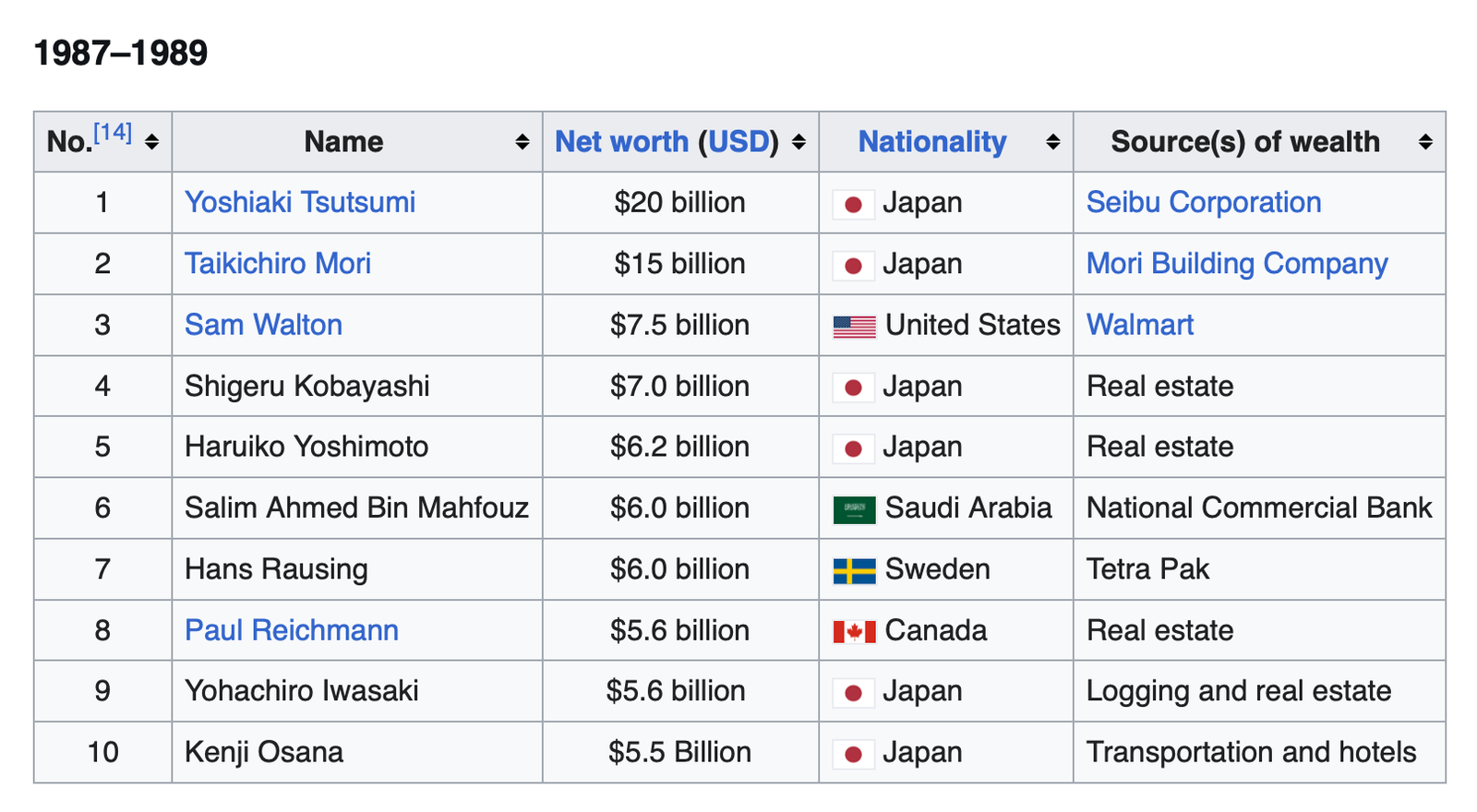
    The obvious takeaway is Japan, which makes up 60% of this top 10 list. As we know, the late 80s marked a massive asset bubble in the country that seemed to be creating unprecedented wealth and affluence — and the ability for the Japanese to buy trophy real estate around the world — but then collapsed in 1990.

    Another interesting name on this list is Paul Reichmann. Those of you in the real estate industry may know that Paul Reichmann and his brothers, Albert and Ralph, founded a development company in the 1950s in Toronto called Olympia & York. It was the outgrowth of their Olympia Flooring and Tile Company.

    Olympia & York developed First Canadian Place in 1975, the World Financial Center in Battery Park City, New York, in 1985, One Canada Square in London in 1991 (the tallest building in the UK at the time), and became the largest property development company in the world in the 1980s — hence Paul’s spot on the list.

    But now here’s this same top 10 list for 1992:
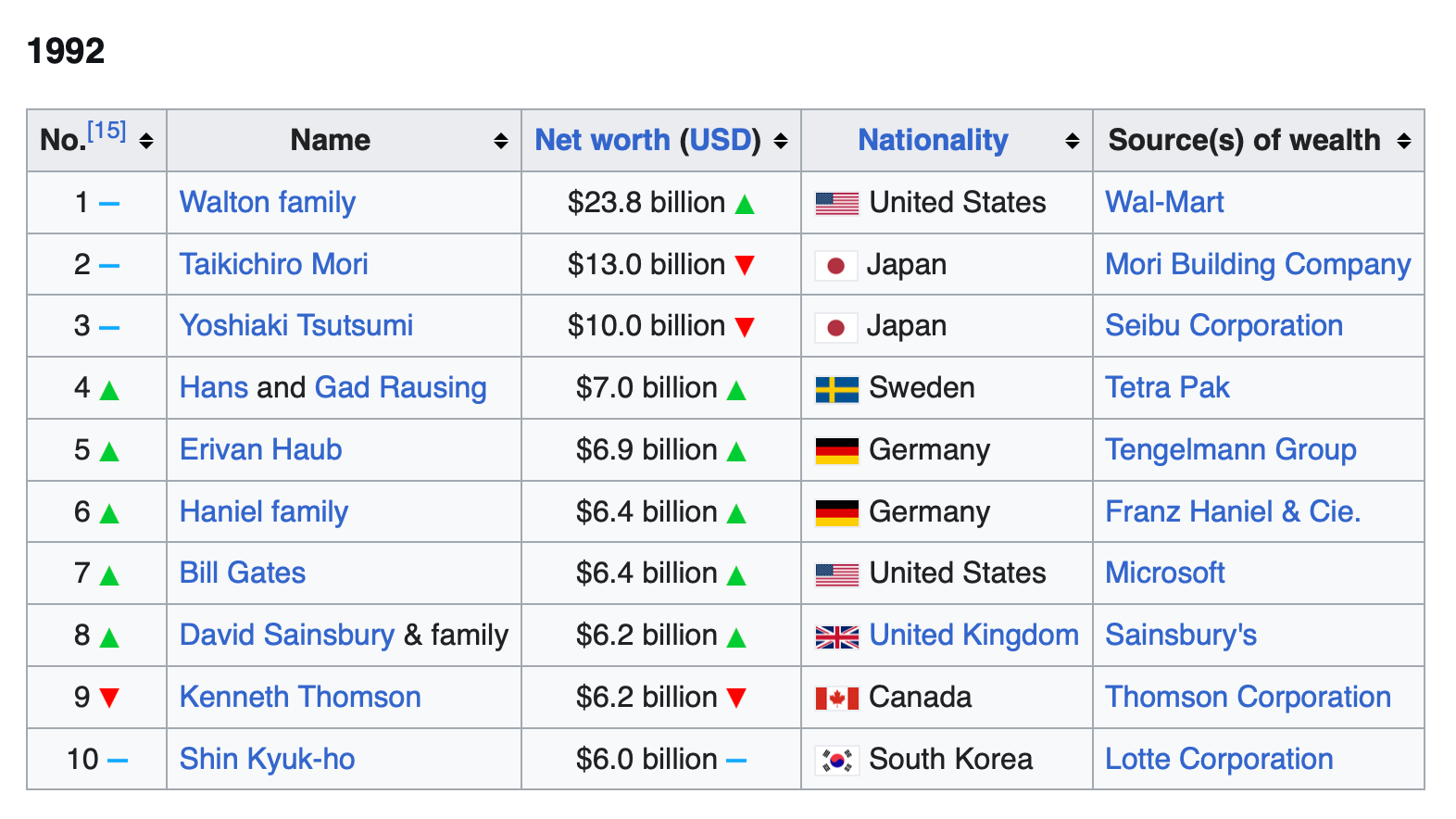
    The Japanese are far less prominent, and Paul is no longer on the list. Olympia & York filed for bankruptcy in 1992, and by the following year had been broken up. It’s a reminder that when we’re talking about the world’s richest people, we’re talking about paper equity tied to market cycles, rather than cash sitting in a high-interest savings account.

    Market dynamics trump individual performance, or to put it another way, it’s a lot harder to be a genius when the market turns against you.

  • Paul Reichmann, dead at 83

    This past Friday, Paul Reichmann passed away in Toronto. He was 83. For those in the real estate business, Paul was a legend. He was the developer behind landmark office projects such as First Canadian Place in Toronto, World Financial Center in New York and Canary Wharf in London.

    He was the man behind Olympia & York, which by the late 80s was one of the largest real estate development firms in the world, making the Reichmann family the 7th richest family in the world. Their net worth reached $12.8 billion at its peak. In 1990 they owned 8% of New York’s commercial office space. This was more than twice as much as the Rockefellers.

    But what makes the Reichmann story so fascinating is the beginning and end of it.

    Paul was born in Vienna, but his family fled the Nazis and came to Toronto like many others at the time. He and his brothers setup a tiling company called Olympia Tile and its this business that eventually led them into real estate. 

    Paul became known for taking on huge risks. He believed firmly in the principles of risk and reward.

    I remember when I was at Penn hearing stories about Olympia & York from the Dean at the time, Gary Hack (a Canadian). He used to tell us about the phenomenal amounts of leverage that O&Y used to take on in order to scale.

    But ultimately it was this leverage that brought them down. In 1992, Olympia & York went bankrupt and the family was left with a net worth of less than $100 million. Still a great sum of money, but nowhere near the $12.8 billion they once had. The New York Times called it “one of the most astonishing financial collapses in history.”

    But in many ways, this is not an uncommon developer story. Real estate development is risky. And Paul did eventually rebuild. Not to where he was before, but he did come back. He became Chairman of Canary Wharf in London and went on to develop the tallest tower in Latin America.

    Last week Toronto lost one of its most prolific real estate minds. Paul was also largely part of an era that no longer exists. The real estate business in the 80s wasn’t as institutionalized as it is today. It was filled with larger than life individuals, such as Paul, taking on huge personal risks. It must have been an exciting time to be in real estate.

    Thanks for everything you’ve done for Toronto, Paul.