Daily insights for city builders, delivered every morning at 6 AM ET. I’m Brandon Donnelly — a Toronto-based real estate developer and founder of Globizen. I’ve been writing here since 2013.

Tag: off-white

  • 3% approach

    The late fashion designer, Virgil Abloh, had a design rule for himself called the “3% approach.” Above is a slide from a presentation that he gave at Harvard back in 2013 where he listed it as item 3 of his “personal design language.” The idea behind this 3% rule is simple: you really only need to change something by 3% in order to create something new.

    Case in point:

    Given this, it should come as no surprise that Abloh had cited artist Marcel Duchamp as being a source of inspiration. (We’ve spoken about this before.) Duchamp is most famous for his “readymade” sculptures where he took existing objects — like urinals — and transformed them into art by signing them and curating them appropriately. This was obviously controversial, but it made Duchamp one of the most important artists of the 20th century.

    Now, 3% seems like an oddly precise number. I don’t know how, for instance, you quantify the amount of change on the above shoe. Is it surface area? In any event, that’s beside the point. What’s most fascinating for me about this approach is that it suggests that small changes are enough to, not just create novelty, but actually establish authorship. Meaning, the shoe on the right is no longer a Converse shoe. It is now an “OFF-WHITE” shoe. They authored it.

    Like the work of Duchamp, this was and is controversial. Lots of companies have sued Off-White for trademark infringement. We know, for example, where the above black stripes came from and we know that Off-White’s multi-directional arrow logo is borrowed from Glasgow Airport’s logo c.1960. But that’s clearly the point of readymade reworks. And it’s clearly enough for people to want to pay a lot more for the shoe on the right.

    Fascinating.

    Do you think that this 3% approach applies (or could apply) to other things outside of fashion, like architecture and buildings? I think so.

  • OMA New York has just published its first book

    OMA NY — the New York office of OMA — has just published its first monograph. It’s called OMA NY: Search Term. For those of you who may be unfamiliar, Office for Metropolitan Architecture (OMA) is an architecture firm that was founded by Rem Koolhaas in Rotterdam in 1975.

    The firm is considered to be one of the most influential in the world because of their projects, the writing and thinking of Rem Koolhaas, and because of how many notable architects developed their craft under his tutelage.

    When I was in architecture school, OMA was a firm that people wanted to work at and I had friends who did. You weren’t paid very much from what I remember, but people put up with that because you wanted OMA on your resume and you wanted to learn things from Rem (apparently he’s a big fan of Raisin Bran in the morning).

    The New York office of OMA is run by Shohei Shigematsu and Jason Long who are both partners. The practice started out as an American outpost, but it has become more independent over the years and, from what I can gather, it now prides itself on having its own attitudes and views on architecture and urbanism.

    This monograph is about that. Twenty radical projects from the firm’s new guard. It also includes interviews from people like Virgil Abloh (Off-White). I don’t have a copy yet, but if you’re an architecture and urbanism person, you probably want this one on your bookshelf.

    Image: Rizzoli

  • “BRAND”

    image

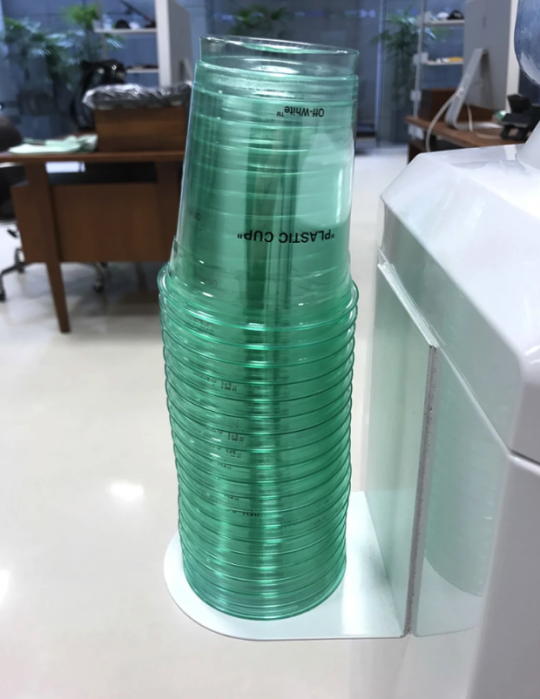
    For a number of reasons, I am fascinated by the streetwear label, Off-White

    It is one of the hottest labels in fashion, and yet there’s a part of me that doesn’t really get it. It’s mostly bold text, usually in quotations, on various apparel items. A set of Wellington boots might be plastered with “FOR RIDING.” A winter coat might be plastered with “DOWN JACKET.” And when they collaborate with Nike, the shoes might be tagged with “AIR.” Quotations included. Is that fashion?

    But then you hear Virgil Abloh – the founder of Off-White, who by the way was also trained as an architect before becoming creative director for Kanye West – talk about his brand and it starts to make more sense. The quotation marks are supposed to signal “ironic detachment and a comment on the idea of originality.” Okay, so a little more sense.

    Part of his inspiration comes from the work of Marcel Duchamp. In 1917, Duchamp shocked the art world with, Fountain. Some would consider this to be the most pivotal art piece of the 20th century. It was an off the shelf urinal that he simply signed, dated, and placed on a pedestal. Though initially rejected as art, it eventually redefined what art could be, shifting it from, “new physical creations to [the] moulding [of] ideas.”

    The corollary to this was that anything could be art, even something as utilitarian as the catch basin that you pee into. And this insight is something that Abloh has used to fuel his label. But he has taken it a step further. He has leveraged the ubiquity of these everyday-items-elevated-to-art as a way to elevate his own brand. Here’s a quote by Abloh from the Guardian:

    “The idea [that] an everyday object is art. Branding is generic and if I adopt the generic, then it becomes my branding, but it normally occurs in life.”

    In other words, he is co-opting generic and ubiquitous items – like, for instance, the patterning on caution tape – for his Off-White designs. And if you believe that a bit of brand equity is at least partially driven by brand ubiquity, well then you might start to see the value in this approach. He is simply assigning authorship to things that are already omnipresent.

    But, is that fashion? I guess that depends on whether you consider Duchamp’s Fountain to be art.

    Image: SSENSE