Daily insights for city builders, delivered every morning at 6 AM ET. I’m Brandon Donnelly — a Toronto-based real estate developer and founder of Globizen. I’ve been writing here since 2013.

Tag: norman foster

  • Building on rooftops in New York City is really tough

    Hedge fund manager Bill Ackman is a pretty wealthy guy and so it is fairly safe to assume that he could choose to live almost anywhere. For some people the ideal might be a low-rise house with a backyard in the suburbs.

    But since 2018, Ackman has chosen a kind of penthouse apartment on the roof of a 1920’s co-op building in Manhattan’s Upper West Side. It was formerly the home of author Nancy Friday and Ackman supposedly purchased it for $22.5 million.

    He is now looking to demolish the penthouse and build a new two-storey residence designed by architect Norman Foster. The design looks like this, which kind of reminds me of Philip Johnson’s The Glass House:

    Today it was in the news that Ackman has been having a fun time trying to convince his co-op board that a new set of glass boxes on the roof their building is a good idea. FT reported that the project has created “an atmosphere of fear and distrust among residents in the building.”

    I’m not exactly sure what it is about this proposal that is causing fear and distrust but Ackman is on record saying that he thinks this isn’t about heritage preservation or architectural integrity; it’s about people not wanting the disruption that comes along with construction. Fair.

    One way to test this, I suppose, is to propose something more traditional or similar to what’s already there. But I suspect that the other dynamic at play here is simply that he is a rich guy with a starchitect trying to build something cool.

    Building things is tough.

  • How drones will change cities

    Dezeen, the architecture and design magazine, has a documentary out called Elevation – How Drones Will Change Cities. It premiered in Hong Kong in March and is supposed to be widely available this month. I’m not exactly sure when that is happening, but below is a trailer. If you can’t see it below click here.

    [youtube https://www.youtube.com/watch?v=YSlep5XCpaw&w=560&h=315]

    Included in the trailer is footage of a delivery drone concept by design consultancy PriestmanGoode called Dragonfly. Norman Foster also talks about the development of “aerial highways.” It’s 2018 and we were promised flying cars by this point. But flying drones, similar to what’s in the above trailer, seem more probable right now.

  • Can starchitecture trump soul-crushing sprawl?

    Hunter Oatman-Stanford just published a longish read over on Collectors Weekly that talks about the history of suburban office complexes in America. That part alone makes it an interesting read.

    But he also makes the argument that innovative companies like Apple and Google are still stuck in a midcentury suburban mindset with their new mega headquarters:

    “I look at Apple’s Norman Foster building, and it’s 1952 all over again,” Mozingo says. “There’s nothing innovative about it. It’s a classic corporate estate from the 1950s, with a big block of parking. Meanwhile, Google is building another version of the office park with a swoopy roof and cool details—but it does nothing innovative.”

    Others have made this same argument. Back in 2013, Wired published an article talking about why Apple’s new Norman Foster spaceship could result in them losing the war for tech talent. 

    And if you read the piece in Collectors Weekly, you’ll see just how little, in some cases, the office environment has changed since the middle of the 20th century.

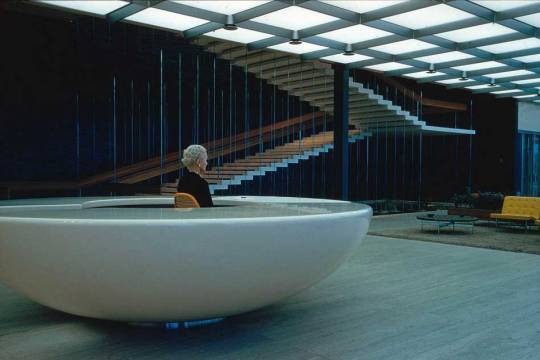
    Back then, we also had big name starchitects designing suburban head offices for innovative companies. Below is a photo from the GM Technical Center in Warren, Michigan. It was designed by Eero Saarinen and it opened in 1956.

    image

    There’s lots of research that suggests that, today, both entrepreneurs and capital are flocking to urban centers, instead of the suburbs. And I certainly don’t need to repeat that to this audience.

    But given this shift, I think we will increasingly view the suburban sprawl of places like Silicon Valley as a serious competitive disadvantage. I mean, I am sure these new buildings will be lovely, but I certainly wouldn’t want to work there. 

    Would you?

  • Fun Friday: Saltz, Zurich

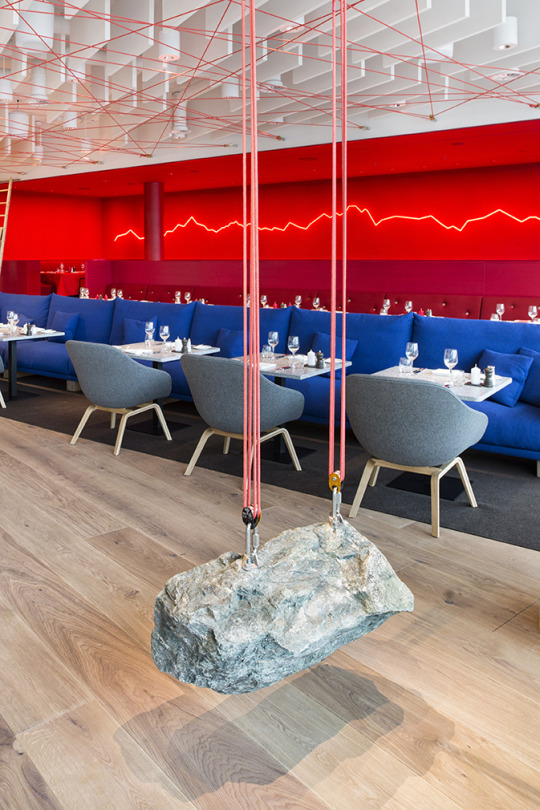
    Earlier this month a new restaurant – called Saltz – opened up in Zurich’s historic Dolder Grand Hotel. (The building was originally built in the late 19th century, but an extension was added in 2008 by architecture firm Foster + Partners.) 

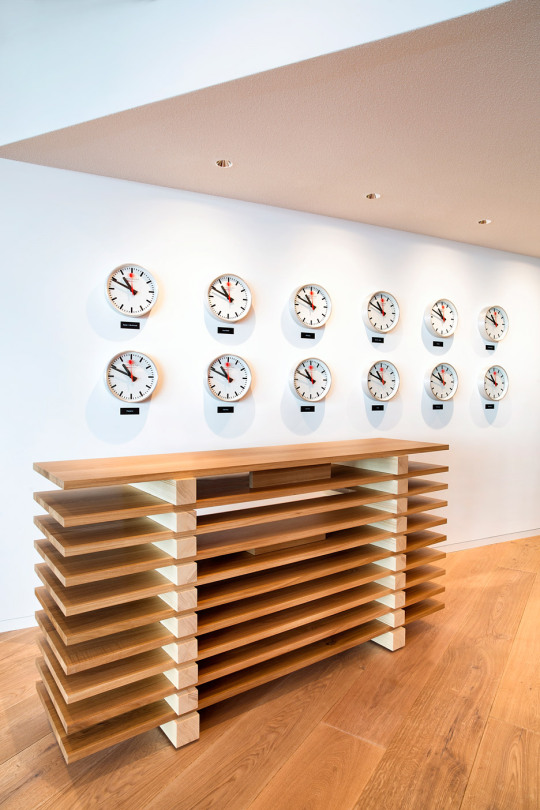
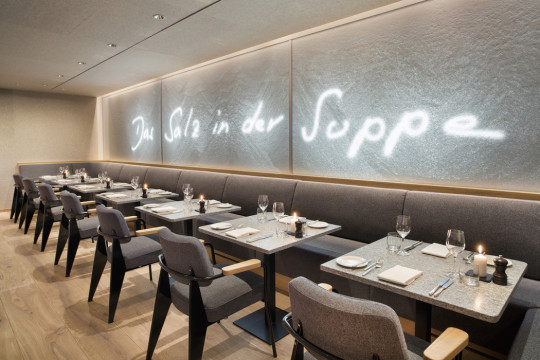
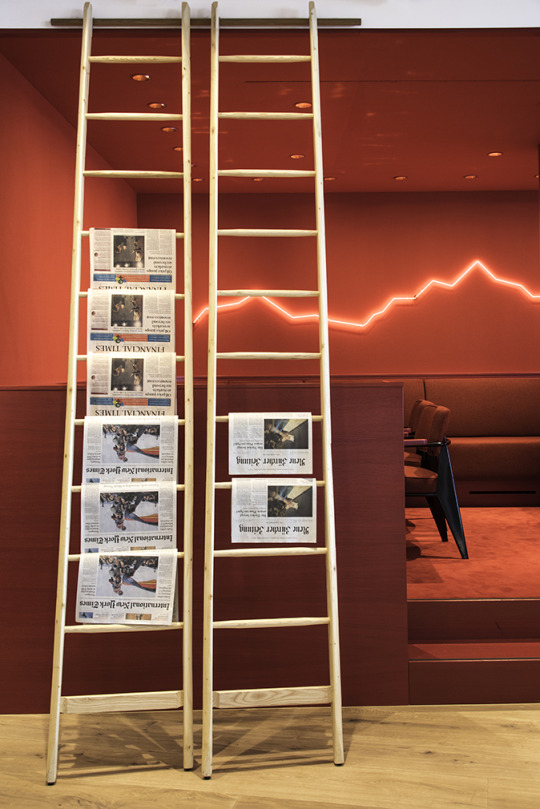
    Designed by artist Rolf Sachs, the 280 square meter restaurant is fitted out with an eclectic mix of unusual materials: neon, salt, rock, climbing rope, felt, and so on. And everything is intended to relate back to Swiss culture in some way.

    The interiors caught my attention as I was browsing through the press release this morning, so I have decided to post a few photos. All of the photography is by Nico Schaerer, courtesy of The Dolder Grand and artist Rolf Sachs.

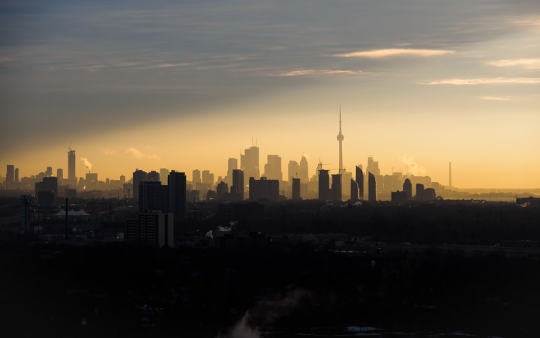
  • 10 reasons to visit Toronto right now

    https://500px.com/embed.js

    Next weekend a good friend of mine from architecture school will be visiting Toronto from Philadelphia. And I’m really excited to show him the city. (Next month it’s my turn to go to Philadelphia.)

    He’s a fellow city geek. He hasn’t been to Toronto in a number of years. And I haven’t seen him since our trip to Detroit 2 years ago.

    For those of us living and working in Toronto, there’s a lot to celebrate. Sure the Gardiner Expressway East decision didn’t go as I – as well as many other urbanists, including our Chief City Planner – had hoped. But there’s no shortage of other things to brag about.

    So here are 10 reasons to visit Toronto right now:

    1. We’ve created an entirely new business district south of Union Station called South Core. Now the region’s primary mobility hub is in the middle of the country’s most important business district, as opposed to on the edge of it. It’s a better use of infrastructure.

    2. We now have a dedicated train (the Union Pearson Express) that takes you from the country’s busiest airport directly to downtown in 25 minutes. You’ll find local retailers at the stations and a brand created by the brain behind Monocle Magazine. You can even use a smart card to ride it and our local transit system.

    3. We didn’t shut down Uber. Instead our mayor wants to create new policy that will allow these services to coexist with conventional taxi services. We don’t yet know how this will turn out, but I believe it’s a step in the right direction. It’s Toronto taking a leadership approach to innovation as opposed to trying to stomp it out.

    4. We are about to host the largest sporting event in Canadian history. The 17th Pan American Games will have double the number of athletes competing as the 2010 Winter Olympics in Vancouver.

    5. We created an entire neighborhood from scratch in order to house all of these athletes (Canary District). And I think it’s destined to become one of Toronto’s great neighborhoods. I’m saving my first visit for next weekend, so expect a follow-up post on this.

    6. We are dramatically rethinking this city’s public realm. From the plaza out front of Union Station to the new Queens Quay Boulevard along the waterfront, we are prioritizing people and creating more complete streets. It has given Toronto an entirely new urban feel.

    7. We are slowly starting to embrace our forgotten laneways and alleys through the help of organizations like The Laneway Project. And this is going to eventually lead to a further rethink of our pubic spaces and urban fabric.

    8. We continue to be one of the fastest growing cities in the world (certainly in the developed world). As a result, we are building some really exciting buildings by some of the top architects in the world. This includes everyone from Norman Foster to Frank Gehry.

    9. According to a recent report coming out of the Martin Prosperity Institute, Canada is one of the most creative and globally competitive countries in the world, as well as the most open to “ethnic and religious minorities and gay and lesbian people.”

    10. The ATC community is in the process of identifying a new, quintessentially Toronto food dish. But since we have every type of imaginable cuisine here, we’re struggling to pick just one. When you visit, you can help us identify the best and most Toronto dish.

    So there’s a lot to be excited about. I for one can’t wait for us to host the Pan Am Games, starting tomorrow. It’s a chance to show off this great city. 

    So if you’re also in town next weekend and want to geek out about cities, drop me a line.

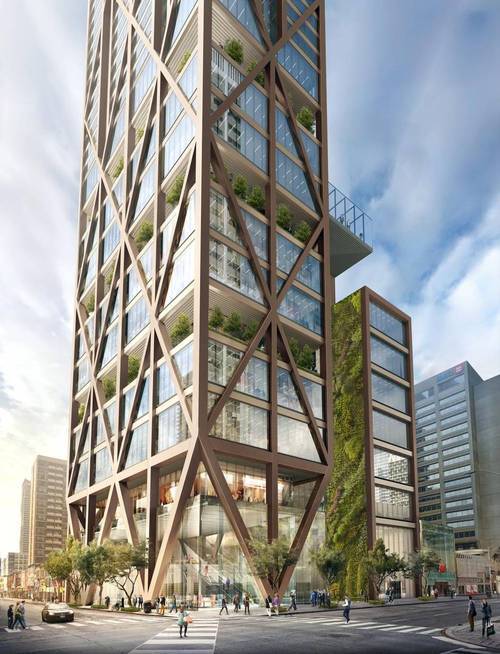
  • What do you think of 1 Bloor West? [Poll]

    image

    Over the past few weeks I’ve been running a little experiment on Twitter where I tweet about a new development project in Toronto and I ask people to vote on it. If they like the project, I ask that they retweet (RT) it. And if they don’t like it, I ask that they favorite it (FAV).

    Here’s what it looks like in tweet form:

    As you can see from this experiment, about 69% of the people who participated seemed to be in favor of this project (at least at the time of writing this post). That said, the discussion following this tweet was a lot more negative than I would have expected.

    Somebody also pointed out that in my experiment I’ve created a bias towards supporting the project, since a retweet means the project gets shared, whereas a favorite doesn’t do that. I would argue that the more distribution the better for an accurate consensus, but point taken.

    So today I thought I would do this same experiment here on Architect This City. 

    At the bottom of this post, I’ve featured a comment from myself asking if you support the 1 Bloor West project. If you like the project, I ask that you “up vote” my comment. And if you dislike the project, I ask that you “down vote” it. You can do so by using the up and down arrows towards the bottom left of the comment.

    Hopefully this hack will create a more neutral voting framework. I hope you will participate. If you’re reading this via email, you’ll need to open up the post in your browser by clicking “read more” at the bottom.

    If you’d like to learn more about the project before voting, check out this article from the Globe and Mail. Happy voting!