Daily insights for city builders, delivered every morning at 6 AM ET. I’m Brandon Donnelly — a Toronto-based real estate developer and founder of Globizen. I’ve been writing here since 2013.

Tag: nighttime

  • New York City’s $35 billion nightlife economy

    image

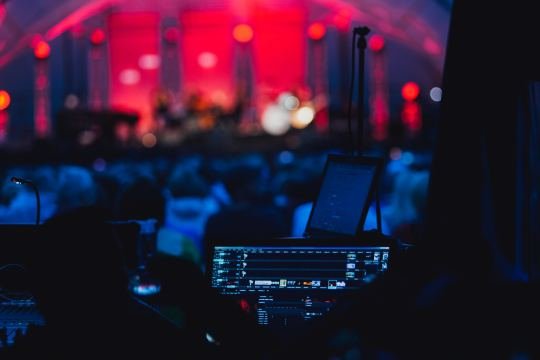
    The Mayor’s Office of Media and Entertainment in New York City recently commissioned this report on the city’s nightlife economy. The study was completed by Econsult Solutions, the North Highland Company, and Urbane Development. (Full disclosure: I was a teaching assistant for the President of Econsult while at Penn.)

    Here’s what they found:

    The total economic impact of this industry is the sum of its direct, indirect, and induced economic impacts, as well as the ancillary spending impacts that are adjacent to nightlife activity. In 2016 (the most recent year where standardized datasets were available), the nightlife industry supported 299,000 jobs with $13.1 billion in employee compensation and $35.1 billion in economic output. This economic impact also yielded $697 million in tax revenue for New York City.

    They also found that, between 2011 and 2016, the nightlife industry has outpaced the city’s overall economy. Nightlife establishments grew by a 2% annual growth rate. Jobs in the nightlife industry grew by a 5% annual growth rate. And nightlife wages have been rising by 8% annually – about double the average for the city.

    I am a firm believer in the value of the nighttime economy. So I’m happy to see more people paying attention to it as of late. For the full report, click here.

    Photo by Markus Spiske on Unsplash

  • Why what happens after dark matters to creative industries

    I have been very vocal on this blog about the importance “nighttime economies” for cities and for its creative industries. So I continue to be encouraged by all of the attention that this topic is getting over the last year or so.

    Recently, the Creative Industries Federation released a report called: Because the Night – Why what happens after dark matters to the creative industries. It’s a look at creative industries in the UK and the role that nightlife plays in supporting them.

    Here are some of their takeaways:

    Creative industries in the UK have been growing faster than any other sector since 2008. CIF estimates that 1/11 people now work in this space, with the number being much higher in London: 1/6.

    The value of restaurants, clubs, bars, pubs, live music venues, and theaters, is that they are places to connect, showcase talent, develop ideas, and so on. They are also critical in attracting top talent because, well, people not surprisingly like to have fun.

    In the span of one decade (2005 to 2015), it is estimated that the UK lost roughly half of its nightclubs. The total went from 3,144 to 1,733. From 2007 to 2015, London lost 35% of its “grassroots music venues”, which, historically, have served to support emerging artists.

    Arguably, some of this may be due to changes in consumer preference and broader shifts in terms of the way people discover/consume music. But it’s also thought to be because of rising urban rents, concerns around noise and revelry, and so on.

    Still, the nighttime economy in the UK is thought to be worth £66 billion per year and to employ some 1.3 million people. It’s an integral part of our urban economies and so it’s time we acknowledged and celebrated it as such.

  • Job Opportunity: London Night Czar

    The City of London is looking for a “Night Czar” to help shape and grow the city as a 24-hour destination. Here’s a snippet from the job posting:

    “The Night Czar will champion the value of London’s night time culture whilst developing and diversifying London’s night time economy.

    Working with the Mayor, the Night Time Commission, local authorities, businesses, the Metropolitan Police Service, Transport For London and other agencies, the Night Czar will create a vision for London as 24-hour city and a roadmap showing how the vision will be realised. The Night Czar will have proven leadership ability, public profile and convening power, plus a thorough understanding of the night time economy and the ability to work in a political environment.”

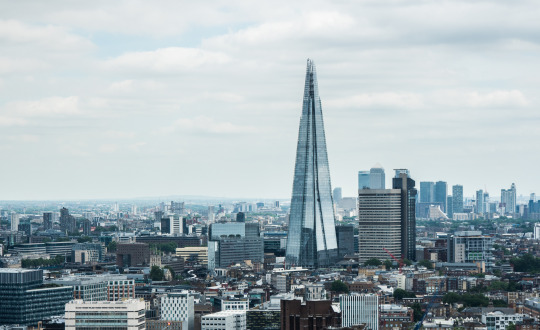
    I think 2016 will turn out to be the year of the “night mayor.” This trend is really picking up momentum in Europe, as more and more cities look to capitalize on their night time economies.

    The job will pay £35,000 per year for 2.5 days of work per week. The closing date for the application is Monday, September 12, 2016. If you’d like to apply, you can do that here.

    I’ve been writing about this trend all year. Hopefully a decision maker in Toronto is reading this.

  • Lisbon creates 24-hour district

    About a year ago I wrote a post called, Lisbon is the new Berlin. The timing of the post happened to coincide with Monocle’s first ever Quality of Life Conference, which was held in the city.

    Since then, I’ve been keeping an eye out for all things Lisbon and the city has quickly jumped to the top of my list of places I want to visit. I am obsessed with understanding the triggers that catalyze change within a community and/or city.

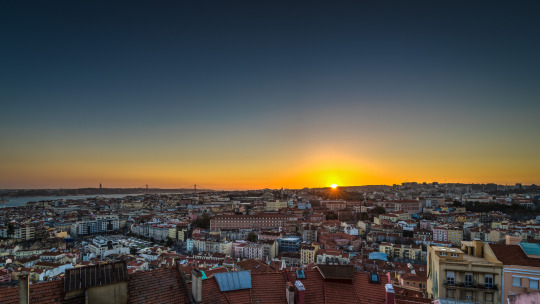
    On a related note, Lisbon has recently put in place new regulations to control nightlife in the city. Bars in certain areas must now close at 2am on the weekdays and 3am on the weekends. Outdoor patios must close at midnight. If you have the right kind of soundproofing though, your bar can remain open until 4am. The impetus for these changes was to address nightlife noise complaints – a perennial problem in many cities.

    However, Lisbon has also created a 24-hour district along a supposedly underdeveloped area of the waterfront. This means that bars and clubs in this area will have the option of staying open 24/7. At the same time though, investments are being made (Portuguese article) to transform the area into something more than just a place for drinking and dancing.

    I am noticing a real trend in European cities around using nightlife as a strategic lever to attract talent and revitalize neighborhoods. Oftentimes the knee jerk reaction is to simply focus on the negative externalities associated with nightlife. But there are strategic benefits. Many cities today recognize that.

    Image: Mhx on Flickr