Daily insights for city builders, delivered every morning at 6 AM ET. I’m Brandon Donnelly — a Toronto-based real estate developer and founder of Globizen. I’ve been writing here since 2013.

Tag: nightclub

  • Do rich people love quiet?

    Now that phones work on the subway (here in Toronto), I sometimes find myself having to take calls while in transit. And one of the things it has made me realize is that the subway is a very noisy place. It’s not a suitable place for calls.

    But interestingly enough, I only really realized this once I started taking calls and once I wanted it to be quiet. Before that, it was just the sounds of the subway and it was perfectly fine from an auditory perspective. And that’s maybe the thing about noise in the city: it’s relative, and it depends on your expectations.

    Here’s an excerpt from a recent article in the Atlantic by Xochitl Gonzalez that refers to urban silence as “the sound of gentrification”:

    Attempts to regulate the sounds of the city (car horns, ice-cream-truck jingles) continued throughout the 20th century, but they took a turn for the personal in the ’90s. The city [of New York] started going after boom boxes, car stereos, and nightclubs. These were certainly noisy, but were they nuisances? Not to the people who enjoyed them.

    And here’s another quote that directly speaks to its relativeness:

    In the years that followed, many of New York’s nightclubs migrated to Brooklyn, which remains loud and proud. An analysis of 2019 data ranked it as the loudest borough in New York. It earned this distinction by racking up the most noise complaints to 311—the city complaint hotline. Which raises the question: Was it the noisiest borough? Or was it just home to the densest mix of loud people and people who wanted to control those loud people?

    Urban noise is obviously an important consideration. If you have to get up for work at 5 AM and someone or something is keeping you up, that is going to be supremely annoying. But if you’re looking for something fun to do, then a noisy Brooklyn nightclub could be the cacophony of sounds that you’re after.

    When I first heard about the issue that we spoke about in yesterday’s post, my mind immediately went to noise. I thought, “That must be it. Well-caffeinated coffee drinkers are disrupting the rest of the neighborhood!” I have no idea if that’s actually a problem in this particular case, but it’s often a thing.

    According to Xochitl Gonzalez, rich people love quiet. Do you agree?
  • Three nights only

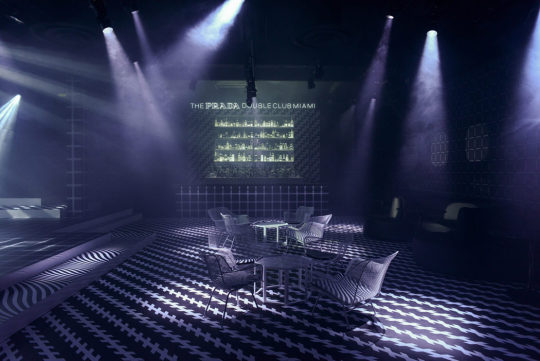
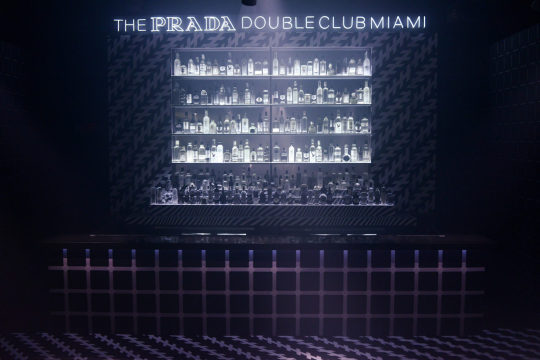
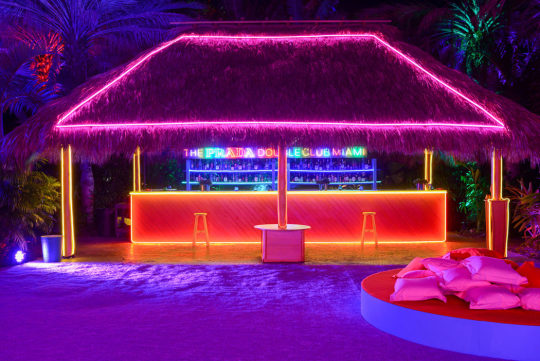
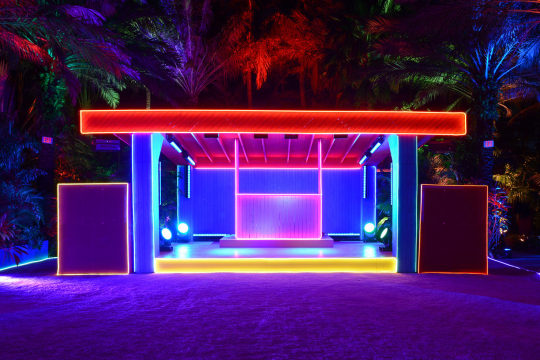
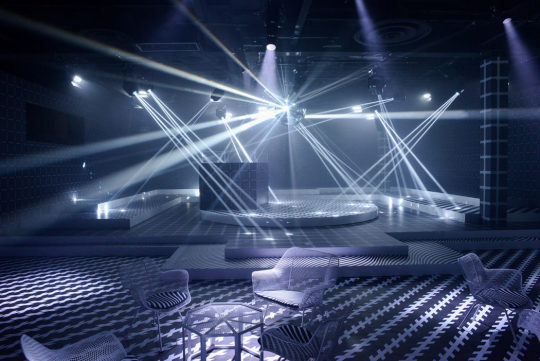
    For this year’s Art Basel Miami Beach, artist Carsten Höller collaborated with Fondazione Prada to create a 3-night-only pop-up club called, The Prada Double Club Miami.

    By time you read this post, the pop-up is likely to be over. But it is an interesting space nonetheless.

    The installation made use of an old 1920s film studio and was comprised of two distinct spaces – hence the double club reference. 

    The interior bar and dance floor were entirely monochromatic.

    Höller wanted all color to instead come from participants within the space. 

    The exterior bar, on the other hand, was “hyper-polychromatic.”

    Perhaps some of you might find inspiration here for your next condo sales office. That would be fun.

    Photography: Casey Kelbaugh, courtesy of Fondazione Prada and via The Spaces

  • Building on stilts

    image

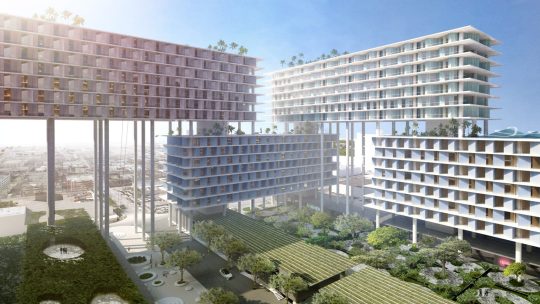
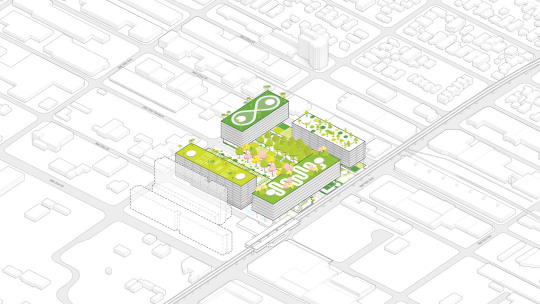
    Last week Bjarke Ingels Group and UIA Management announced a 125,000 square meter mixed-use complex in Allapattah, Miami called the Miami Produce Center. 

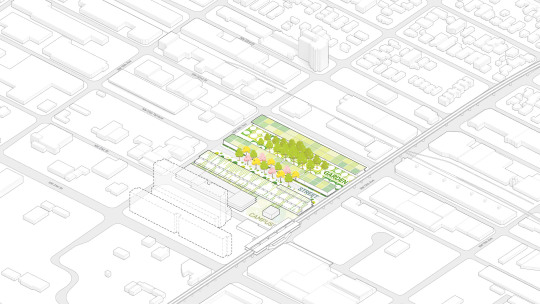
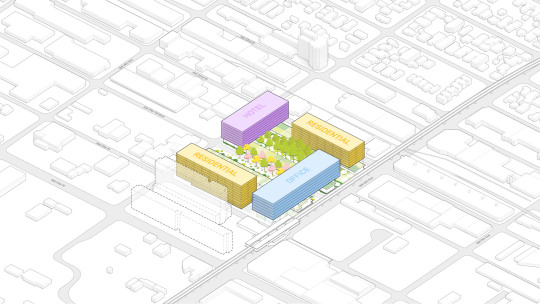
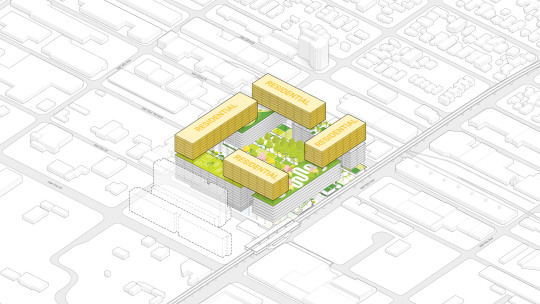
    The proposed project includes office, residential, and hotel uses on stilts over three existing warehouse buildings. The existing buildings will be transformed into restaurants, shops, cafes, and a school. And supposedly, at least according to the renderings, the parking garage will be designed so that it can be transformed into a club at a night. This is Miami after all.

    Here are a few diagrams from BIG showing the build up:

    imageimageimageimage

    Perhaps best known for its warehouses and Dominican population, investors have been speculating for years that Allapattah would eventually become the next Wynwood. Here’s some evidence that it already has the requisite bars and artsy things.

    Does this project signify a tipping point for the area? Feels like it. But those of you who know Miami better than I do would be in a better position to comment.

    Images via Dezeen

  • The post-Wall techno music of Berlin

    image

    I’ve written about Berlin many times before on this blog. It’s such a fascinating case study for me because of its history, its urban development patterns, and its famous techno scene.

    Last month, Nick Paumgarten wrote a piece in the New Yorker, called Berlin Nights, where he dives into the city’s club culture and its reputation as the cradle of techno music. 

    But in doing that, he is necessarily forced to talk about the once divided city and its unique “post-Wall” condition. When the Wall came down, the East became – as a result of its under-utilized built form – a breeding ground for the pent up energy and creativity of the West.

    Here is an excerpt that speaks to the importance of those empty spaces and sparsely populated neighborhoods:

    The post-Wall abundance of derelict building and excess housing was decisive. “Empty spaces allowed there to be a club culture,” Robert Henke said. “With no empty space, you get a closed-at-2 a.m., restrictive-alcohol culture.” At first, the reclamation seemed slapdash, improvisational, anarchic, as squatters took over buildings and neighborhoods and set off a period of cultural ferment. But the powers that be had been dreaming up developments for years before the Wall came down, and now—amid a boom in real-estate speculation and investment (everyone spoke of the Swedes)—empty space, and the sense of wildness that comes with it, has become harder to come by. “Flats are getting more expensive,” Hegemann said. “But we still have many free spaces. This is the secret for why Berlin is still alive.”

    And here is the story of one such building:

    Some empty spaces have completed their life cycles. One afternoon, I visited the old Reichsbahnbunker, a five-story fortress of reinforced concrete built by the Nazis in 1942 as an air-raid shelter. The Soviets turned it into a jail for P.O.W.s. Then it was used to store bananas and other tropical fruit. It was abandoned. In the nineties, it became an infamous techno night club, the Bunker. No ventilation, no fire exits. The government eventually shut it down. In 2003, an advertising executive and his wife bought the building and converted it into a museum to house their collection of contemporary art. They also built a glass-and-steel penthouse on the roof, to house themselves. Now the collection is open to the public, by appointment only. I joined a tour one afternoon. The guide, a young art student with a sweet monotone, took us into a cell-like space featuring giant manipulated photographs of the night sky, by Thomas Ruff, and explained that it had been the original dark room of Berlin. “It was very extreme,” she said. “It was hot, damp, loud, and dark. It was said to be the hardest club in the world. I’m sure you can imagine the things.” She gave a coy smile.

    If you’re interested in cities and/or electronic music, the essay is well worth a read.