
Daily insights for city builders, delivered every morning at 6 AM ET. I’m Brandon Donnelly — a Toronto-based real estate developer and founder of Globizen. I’ve been writing here since 2013.

Tag: new urbanist

  • It’s okay for urbanism to be a bit messy

    The urban-to-rural transect is a New Urbanist planning framework that prescribes a smooth continuum of settlements that go from least dense to most dense. The six zones are as follows: natural (T1), rural (T2), sub-urban (T3), general urban (T4), center (T5), and core (T6).

    Part of this framework is about rejecting single-use Euclidean zoning. Instead of segregating uses, New Urbanism looks to return to a mix of uses within close proximity of each other. This is a good thing.

    But the transect also advocates for a certain orderliness. There should be a smooth transition as you move outward from T6 toward T1. It is about placing things in their useful order and maintaining a certain kind of character.

    Witold Rybczynski makes an interesting observation about this in a recent post called “urban discontinuities.” The point he makes is that some of the most remarkable urban moments are the result not of smoothness, but of “odd juxtapositions.”

    Think:

    – Mount Royal (T1) in the middle of downtown Montreal (T6).

    – The North Shore Mountains (T1) that terminate views from within the building canyons of downtown Vancouver (T6)

    – The walls of tall buildings (T6) that frame Central Park (T1) in Manhattan

    – The wonderful ravines (T1) that cut through Toronto’s urban fabric (T6)

    These are contrasting zones in the transect bumping up against each other. And it turns out that most of us really like these moments. But I think that the bigger point to be made here is that urban environments aren’t always neat and tidy, and that’s because they are a constantly evolving organism.

    That’s not a bug. It’s actually a feature to be celebrated.
  • Fabricating a new urbanism

    image

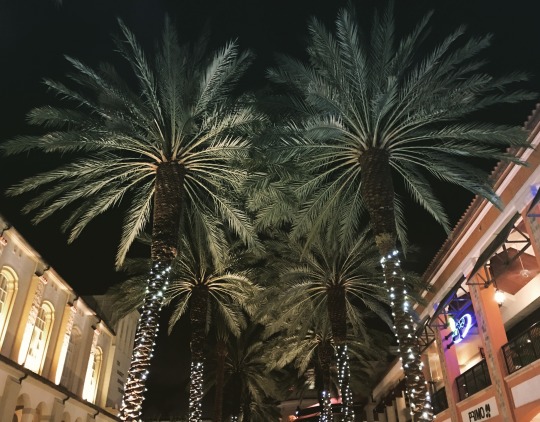
    Last night I was in CityPlace, West Palm Beach. Completed in 2000, CityPlace is a quintessential example of New Urbanism. (For those of you from Toronto, this is a different kind of a CityPlace.)

    In case you’re unfamiliar with this movement, here’s a snippet from The Charter of New Urbanism (via Wikipedia):

    “We advocate the restructuring of public policy and development practices to support the following principles: neighborhoods should be diverse in use and population; communities should be designed for the pedestrian and transit as well as the car; cities and towns should be shaped by physically defined and universally accessible public spaces and community institutions; urban places should be framed by architecture and landscape design that celebrate local history, climate, ecology, and building practice.”

    At a high level, New Urbanism makes a lot of sense. American cities were sprawling uncontrollably and so advocates had decided that something had to change. The Congress for New Urbanism was founded in 1993.

    But the New Urbanism movement has had its share of critics. Here’s how Witold Rybczynski – professor at the University of Pennsylvania – talked about it on his blog:

    “What are the important ideas that have affected American cities in the last 20 years? The development of waterfronts. The renaissance in constructing urban parks. The move of genXers and retirees into downtowns. High-rise urban living and Vancouverism. The popularity of urban bicycling and bike-rental programs. Ditto for Zipcars. Urban farmers markets and community gardens. Urban charter schools. The dramatic expansion in attendance of urban cultural institutions, especially art museums. Urban tourism. Downtown trophy buildings. The emergence of influential big-city mayors. Have any of these been the result of the new urbanism movement?”

    Frankly, I have never been a big follower of New Urbanism. It has always felt artificial to me. But I recognize the immense challenge in transforming car-oriented cities and communities into walkable ones. It’s one of the greatest challenges in city building. You’re asking people to change their habits.

    If any of you are experts on New Urbanism (because I am certainly not), I would love to hear from you in the comment section below.