Daily insights for city builders, delivered every morning at 6 AM ET. I’m Brandon Donnelly — a Toronto-based real estate developer and founder of Globizen. I’ve been writing here since 2013.

Tag: neon

  • Brutalist live/work creative space opens in Kanazawa, Japan

    I am really interested in these sorts of spaces. In this case, these is an old brutalist office building in Kanazawa, Japan that was purchased in 2019 by artist Hiraki Sawa. The original intent was to turn it into a co-working space, but eventually the idea evolved into a hybrid “co-being” space that can be rented as a place to stay and/or as a place to facilitate creativity.

    The space itself was left mostly raw and exposed, but neon movable walls were inserted by AB Rogers Design that allow you to configure the volumes as you’d like. What’s interesting about spaces like these is that they enable play and experimentation. Maybe it also makes money, or maybe it doesn’t. But that doesn’t seem to be the main point.

    The point is to empower creativity. And finding spaces to do this can be tough in competitive markets where demand is consistently outstripping supply. Oftentimes you need some slack in the system so that there’s literal breathing room for new ideas, or rich people who can make it so.

    Whatever the case, I am a believer that when given the opportunity, people will generally find a way to imagine and create. So if you happen to find yourself in Kanazawa and would like to book this space, which is called Fish Market, click here. Guests are being asked to submit a request explaining how and why they’d like to use the space.

    It’ll be fun to see what this leads to.

    Photos: Takumi Ota via AB Rogers Design

  • Junction House featured in the Toronto Star

    This morning the Toronto Star published a profile piece on one of Junction House’s earliest purchasers: Barbara Martinez. Barbara downsized from a house to a 1-bedroom condominium in Roncesvalles, but then realized that she still wanted space to entertain and have guests over. So she decided to buy a 3-bedroom penthouse at Junction House with an approximately 350 square foot terrace. That’ll work. It is truly one of the nicest suites in the building, and will come equipped with a view of the Toronto skyline that looks something like this (see background projection below):

    I am quoted in the article as saying that mid-rise condominiums in Toronto’s neighborhoods naturally tend to attract a different set of buyers compared to, say, a downtown tower. That is true and we are seeing it play out at Junction House. Yes, we have 1-bedroom suites that are perfect for young professionals and/or investors, but we also have some spectacular 2-storey suites (the House Collection) and larger single-storey suites for people just like Barbara. Congratulations on your new home purchase!

    Photos: Steve Russell for the Toronto Star

  • Neon popup gallery at Junction House

    I met Mark Garner, who is the COO and Executive Director of the Downtown Yonge BIA, about five years ago. We met because of our shared passion around Toronto’s laneways. At the time, you weren’t allowed to do what we now call laneway suites. Housing was not to be built on our rear streets. But thanks to champions like the Yonge BIA, Lanescape, the Laneway Project, a number of local Councillors, and many others, a lot has changed over the last five years.

    As luck would have it, Mark and I reconnected at the beginning of this year because of another shared interest: neon. The Downtown Yonge BIA has been working for over five years to establish a permanent home for the neon signs and lights that are slowly (or perhaps quickly) disappearing from Toronto’s streets. The goal is to found Neon Museum Toronto. And I am so impressed by their dedication to this cause. You should see what they have collected so far.

    Given the obvious connection to Junction House, we decided we were overdue for another fun project. So today the team is excited to announce that — in collaboration with both the Downtown Yonge BIA and Neon Demon Studio — the Junction House Sales Gallery (at 2720 Dundas Street West) will be hosting a Neon Popup Gallery from April 12 to 14. blogTO has already covered the event, here.

    It is open to the public. And entry is free. But it is coming to you for one weekend only. So get your camera ready and come by between 11AM – 9PM.

  • Photogenic neon in the Junction

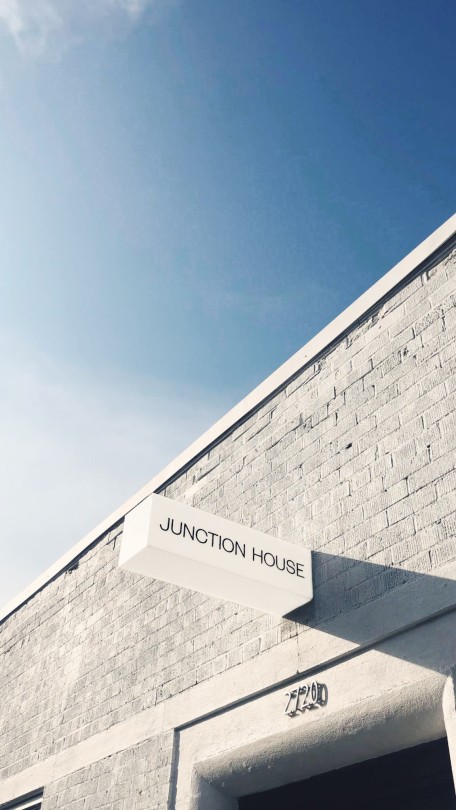
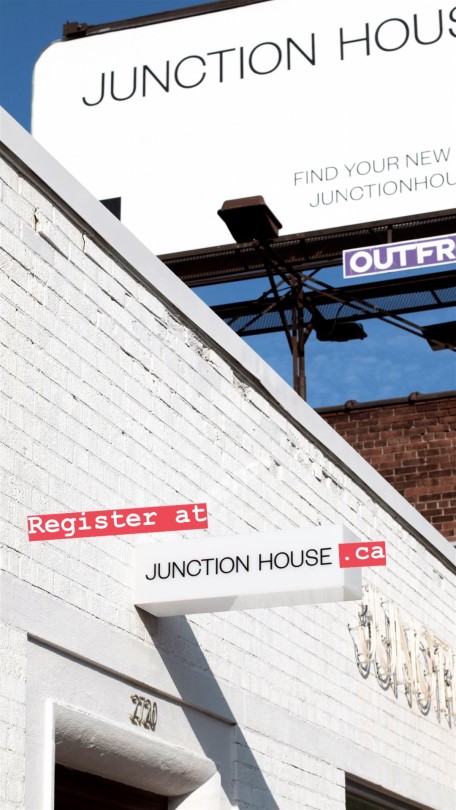
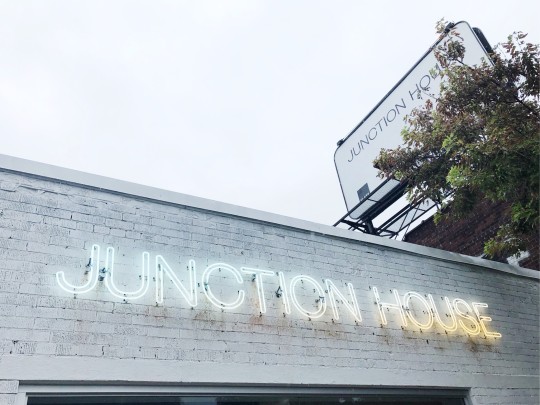
    We just finished putting up some additional signage at the future sales office for Junction House. Clean and minimal, but fun. I am pretty pumped with the way everything turned out. Creative and photos by Vanderbrand. Instagram story mashup and failed neon photo by me.

    This week I learned that properly photographing neon takes a bit of work. The neon “Junction House” sign is actually all white when you see it in person. Apparently it has something to do with the frequency. 

    I’m going to go back one evening with my tripod and Fuji and see if I can do better.

  • Long live the neon

    image

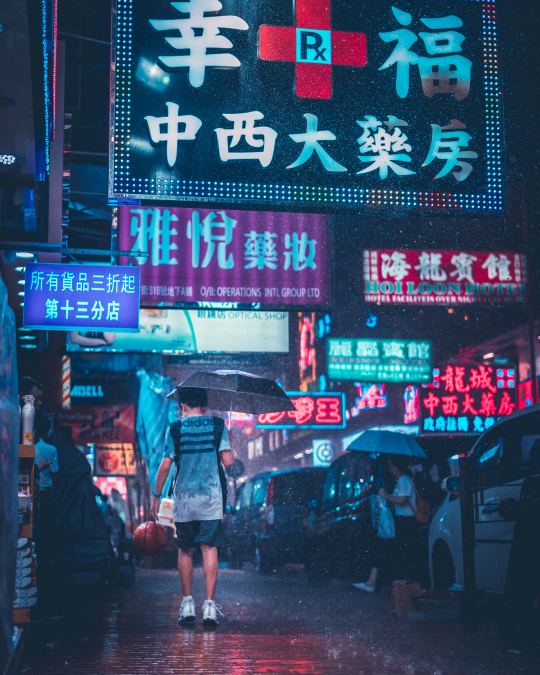
    I like this article and photo essay in the Guardian talking about “Hong Kong’s fight to save its neon shimmer.” Neon lights have been a ubiquitous feature of the Hong Kong nightscape since about the middle of the 20th century. They were an outcropping of increasing economic prosperity. And in many ways they really represent the culture of the city – a frenetic free market where entrepreneurs have no choice but to compete for attention. 

    But thanks to more restrictive sign ordinances and new technologies (though LED can be made to look pretty similar to neon), there’s growing concern that a fundamental part of Hong Kong’s urban landscape may be disappearing. The article mentions a newish (2017) advocacy group called the Hong Kong Neon Heritage Group, which is trying to raise awareness about the city’s remaining lights.

    Love live the neon.

    Photo by Sean Foley on Unsplash

  • I love neon

    “As the manufacture of storefront signage becomes increasingly standardized,” says a circular from Berlin’s Buchstabenmuseum, “the tradition of idiosyncratic signs created by skilled craftspeople, reflecting regional differences and a firm’s unique character, is dying out.”

    The above quote is from this Globe and Mail article talking about the lost art of sign making and about an exhibition that starts today (until January 27) in Montreal at the Media Gallery of Concordia University’s Communication Studies and Journalism Building. It is called Tel Quel / As Is and it is by the Montreal Signs Project.

    Cities all around the world are facing a decline in distinctive local signage, which is not all that different than the decline in regional architecture. We are living in a global village.

    Montreal has responded with the above project. Berlin has responded with the Buchstaben Museum (letter museum). And here in Toronto, Mark Garner of the Downtown Yonge BIA has been trying to convert one of our laneways into a haven for restored Toronto neon signs. Great idea.

    It can be challenging to repurpose old signs. There are often issues of appropriateness and scale. Sometimes a new or renovated building looks good with its old signage. But in other cases – and perhaps more often than not – it wouldn’t. So then what do you do with it?

    Still, it behooves us to try. Signs, like buildings, are a snapshot of a moment in time. They are part of the environment that we create for ourselves. They are part of our history.

  • LED neon lighting by Electric Confetti

    image

    Ever since I attended Art Basel Miami Beach last year, I’ve been determined to get a neon piece for my condo. I got inspired by all of the neon I saw at the show and so I told myself that I was going to get something made.

    I found a company in Vancouver called Endeavour Neon, but I never ended up pulling the trigger. It turns out that traditional neon lighting is pretty expensive. 

    However, I recently discovered a Melbourne-based company called Electric Confetti. Founded by designer Natalie Jarvis, the company makes LED neon lighting using flex tubes. Supposedly, this makes them more durable and more energy efficient. They’re also less expensive.

    I am trying to figure out shipping to Canada, but it looks like I might be finally getting my neon. I really like the banana (pictured above), but that might be an odd reference for a bedroom. I’ll sleep on it.

    I thought I would share with all of you in case you have a home, an office, or a project that could use some neon lighting.