Daily insights for city builders, delivered every morning at 6 AM ET. I’m Brandon Donnelly — a Toronto-based real estate developer and founder of Globizen. I’ve been writing here since 2013.

Tag: museum of modern art

  • Feel-good stories about city building

    One of the things that I have learned over the years from sitting on panel discussions about city building is that, if I talk about the challenges and economic realities of development, I will be less popular than if I just tell feel-good stories about urbanism and architecture. The latter is often what people want to hear. It’s more exciting.

    But to ignore the economic realities of the world is to ignore real solutions. And this, as I have talked about before, is one of the main qualms that I had with architecture school. Money, economics, and real estate matters were tertiary, if not entirely taboo. Just focus on the purity of design and everything else will resolve itself.

    Now don’t get me wrong, I love design. It is fundamental. But so are a bunch of other things, which is why I think this article, by Benjamin Schneider, hits the nail on the head. It is specifically a review of a MoMA exhibit called New York, New Publics, but really the overarching message is this one here: “Enough with the feel-good architecture.”

    To tell a feel-good story within this framework, urban development projects must be edited and curated to cleanse them of these associations. Favored projects must somehow appear to transcend capitalism, NIMBYism, an anti-urban federal government, and the compromises inherent in the transformation of the built environment. Because this is impossible—except in the case of marginal beautification projects—the public is left with false expectations about how cities get built, making the hard stuff even harder to pull off.

    City building always involves compromises. But the more we’re upfront about what they are, the sooner we’ll get to more optimal solutions.

  • The Koblick House by Richard Neutra

    I came across the above photo this morning. If you can’t see it, click here. It’s a photo of the Koblick House in Los Angeles designed by Richard Neutra and Gregory Ain for art professor Harry Koblick. Built into the hills of Silver Lake in 1937, the house is a three-storey duplex with about 1,620 square feet according to some sources. (I couldn’t find any plans or drawings, but I’d really like to see the section.) The upper unit has 2 bedrooms and 1 bath. And the lower unit has 1 bedroom and 1 bath.

    Richard Neutra was a prolific modernist and designed numerous “international style” buildings, like the Koblick House. His work was included in the seminal 1932 MoMA (New York) exhibition on modern architecture, which was an important moment for modernism in the United States. It helped to import the international style from Europe at a time when exhibitions did things like that. It is perhaps easy to forget that ideas didn’t spread as quickly around the world back then.

    I love the simplicity of this house. The double car garage that services the two units. The side stair that leads to the front door. And the two large terraces that probably look out over some kind of landscape. Over 80 years later and it still feels contemporary. Perhaps some of you will be equally inspired by this archive photo.

  • Don’t touch that door handle

    Door handles are a funny thing these days. They are one of if not our most common point of contact with the built environment, and yet in the best of times they go largely unnoticed. And in today’s world they have flipped to become a source of anxiety. Do I really need to touch this door handle or can I maybe use my foot or elbow? Some have responded by wearing gloves. But sometimes door handles offer up clues — such as a worn finish — as to where they are most commonly touched. But then one is faced with yet another difficult dilemma: do you handle the pristine part or remain committed to the worn out part since everybody else is probably thinking what you’re thinking and searching for the unadulterated section of the handle? Who knew that opening a simple door could elicit such complexity.

    But we shouldn’t be too critical of the mighty door handle. Edwin Heathcote recently published this short history of door handles and it’s a good reminder of the design intent that has gone into them over the years and how they also came to embody our broader views about architecture. One of my favorites, of course, is the original Bauhaus door handle designed by Walter Gropius and Adolf Meyer c. 1922. (Pictured above, it’s currently housed on the fifth floor of the MoMA in New York.) Its lever starts out square and machine-like, but then transforms into a cylinder, exactly where you’re supposed to grip it with your hand. It is ultra minimal, but it tells you exactly what to do. It also helps us with our dilemma. Worn or not worn, the cylinder is obviously where it should be handled.

    Image: MoMA

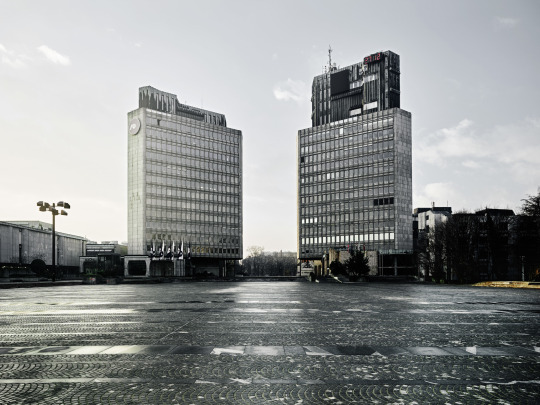
  • Toward a Concrete Utopia: Architecture in Yugoslavia, 1948–1980

    image

    A new exhibition on postwar architecture in (the former) Yugoslavia opens up today (July 15) at the Museum of Modern Art in New York. It’s called, Toward a Concrete Utopia: Architecture in Yugoslavia, 1948–1980and it runs until January 13, 2019.

    Here is a bit more about the exhibition:

    Situated between the capitalist West and the socialist East, Yugoslavia’s architects responded to contradictory demands and influences, developing a postwar architecture both in line with and distinct from the design approaches seen elsewhere in Europe and beyond. The architecture that emerged—from International Style skyscrapers to Brutalist “social condensers”—is a manifestation of the radical diversity, hybridity, and idealism that characterized the Yugoslav state itself.

    And here is a panel discussion about the exhibition (click here if you can’t see the video below):

    [youtube https://www.youtube.com/watch?v=M2S0bBTHu-8&w=560&h=315]

    Architecture tells you a lot about a place and what was happening at the time in which it was built. I would love to see this exhibition and I hope to do exactly that if I’m in New York City before the new year.

    Image: MoMA

  • Video: New York 1911

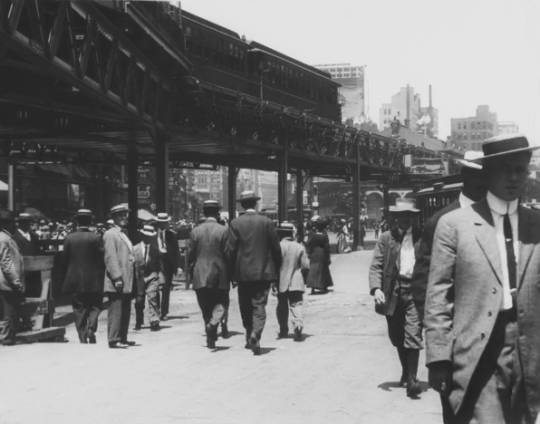
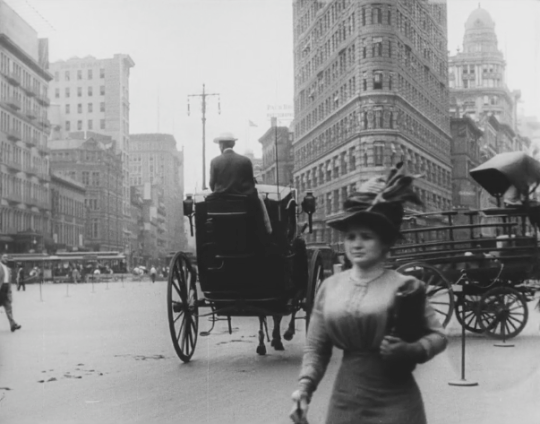
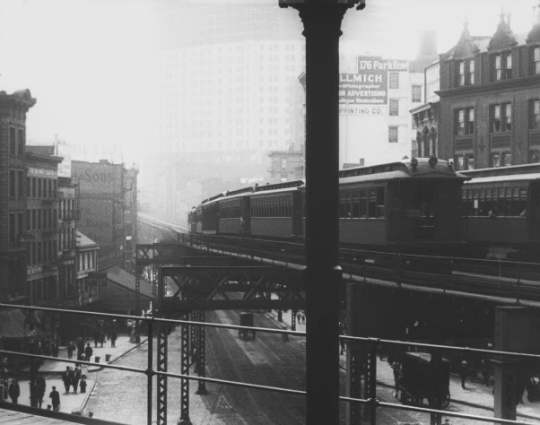
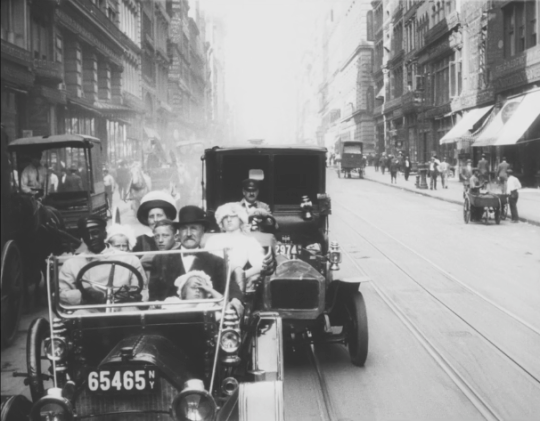
    The Museum of Modern Art (MoMA) recently restored and published a “documentary travelogue” of New York City from 1911. 

    It was originally filmed by a Swedish company, called Svenska Biografteatern, that went around the world filming noteworthy places such as Niagara Falls, Paris, Monte Carlo, and Venice.

    Not surprisingly, New York City is a vibrant and bustling place at the beginning of the 20th century. But it somehow feels serene. Maybe it’s the soundtrack. It’s also interesting to think that this was filmed only 3 years before World War I broke out.

    I particularly enjoyed seeing all of the streetcars (trams) and elevated rail running through the streets.

    Below is a screenshot of a young girl – clearly bored and/or disinterested – being chauffeured down Fifth Avenue in what was almost certainly a fancy convertible at the time.

    MoMA doesn’t allow you to embed the video, but you can watch it here through July 14. It’s 9 minutes and, if you’re a city nerd like me, I think you’ll really enjoy it. The street life footage kicks in around the 3 minute mark.

    Screenshot Images: MoMA