Daily insights for city builders, delivered every morning at 6 AM ET. I’m Brandon Donnelly — a Toronto-based real estate developer and founder of Globizen. I’ve been writing here since 2013.

Tag: mumbai

  • Sensible, balanced, affordable, and livable

    I just discovered a new alliance of non-partisan, non-profit resident and ratepayer groups in the Greater Toronto Area that have come together in opposition of what they see as “unregulated overdevelopment and the lack of sensible growth vision for the GTA.” If you’d like to read through their public letter to the Premier of Ontario, Doug Ford, you can do that over here.

    In it you will learn that the Toronto region is vying desperately for the title of the most densely populated place on earth by trying to compete with already established locales like the slums of Mumbai and Monk Kok in Hong Kong. One has to admire ambition.

    But what is not clear to me is what exactly “sensible, balanced, affordable, and livable developments” should look like. Should we quash our low-rise “Neighbourhood” designations (the majority of our land area) and instead blanket the region with mid-rise buildings similar to Paris? This is one option and, by the way, Paris is far denser than Toronto (relevant reading here and here).

    Or should we maintain our low-rise “Neighbourhoods” exactly as they are and simply reduce overall housing supply by limiting height and/or density at our transit stations? Is this the ask? I’m not sure. But this is a good question for city builders: What should sensible, balanced, affordable, and livable development look like? Is the 33-storey building that I live in sensible?

  • [Film] CROSSROADS: Life in the Resilient City

    Five cities. Five stories.

    Here is a short film by Nils Clauss and Neil Dowling, which recently premiered at the Seoul Biennale of Architecture and Urbanism. (If you can’t see the embedded video above, click here.) The film is named after this year’s Seoul Biennale (which is going on right now until the end of October) and focuses on five crossroads of city life that were put forward by French architect Dominique Perrault: above/below, heritage/modern, craft/digital, natural/artificial, and safe/risk.

    To illustrate these urban crossroads, the filmmakers visit New York, Seoul, Mumbai, Paris, and Nairobi. But instead of interviewing so-called “experts”, these crossroads are examined from the perspective of people just living through them. The documentary is very well done. And having just come back from Paris, I can say that I think they chose the right city to tackle the heritage/modern crossroad.

    To close things out, I would like to share one screenshot from the film. Here you can see an ingenious little urban table that slips over a street bollard. It’s just perfect. There is so much that can be done to better activate our streets and public spaces.

  • Libra expected to launch within Indian WhatsApp

    I was at a wedding last night (congrats, again, Kate + Rob) and a group of us started talking about Facebook, or, more specifically, how most of us have stopped using it all together. I deleted my account last year, but ended up having to create a ghost account with no friends just so that I could run social ads. But other than that, I don’t go on. This, of course, is a problem for Facebook. Here are some stats on its declining user base.

    This trend line could be one of the motivating factors behind Libra (Facebook’s new blockchain-based currency). Payment infrastructure, if successful, should be a lot stickier than social infrastructure. But being the classic underachiever that he is, Zuckerberg’s ambitions run even deeper than this. Max Read published a fantastic article on Libra in New York Magazine last week. Here is an excerpt:

    As far as I know, there’s only one other entity out there developing a blockchain-based digital currency for a billion-plus-member economy: China. The People’s Bank of China has been amassing blockchain and digital-currency patents as it develops its own cryptocurrency — loosely pegged to a basket of other currencies, just like Libra — which could help it more efficiently monitor and control capital flows. (So much for the decentralized, anarchist dream of cryptocurrency.) Facebook doesn’t want to compete with Mastercard, or even with Goldman Sachs. It wants to be the currency platform Mastercard operates on. Facebook’s payment product is a whole new currency because its long-term competition isn’t PayPal or Visa or even WeChat, but the renminbi, the euro, the yen, and the dollar.

    Libra is expected to be first available to Indian WhatsApp users. The goal is to gain a foothold in the $689 billion global remittance economy, of which $80 billion flowed to India last year (2018). In the short-term, this probably won’t make any or much money for the company. But it should get people using and bought in to Libra in the medium-term.

    If you’re looking for more on Libra, including what checks and balances can expected to be in place regarding your privacy and personal information, have a listen to this podcast:

    Photo by Nitin Mendekar on Unsplash

  • Residential population densities compared

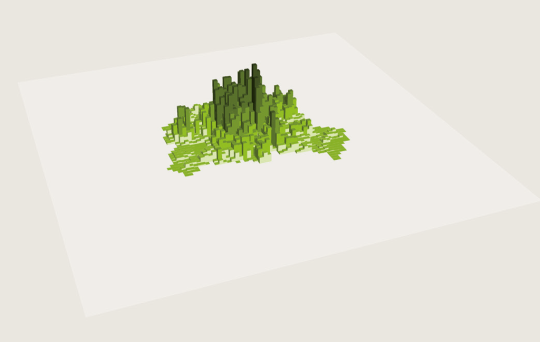
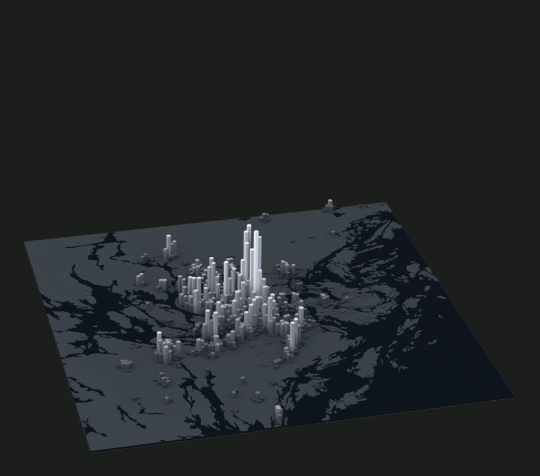
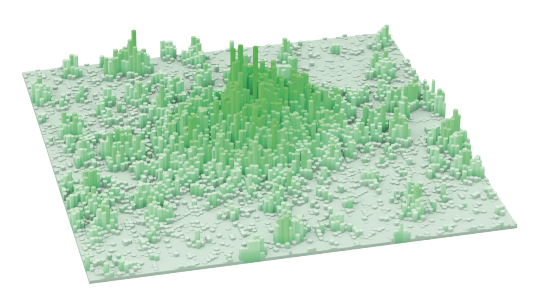
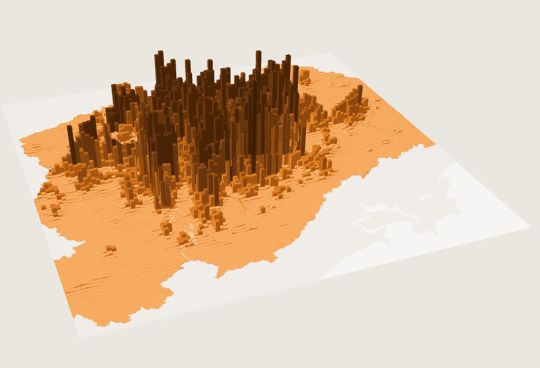
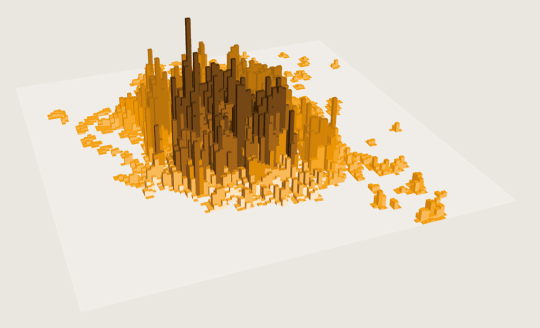
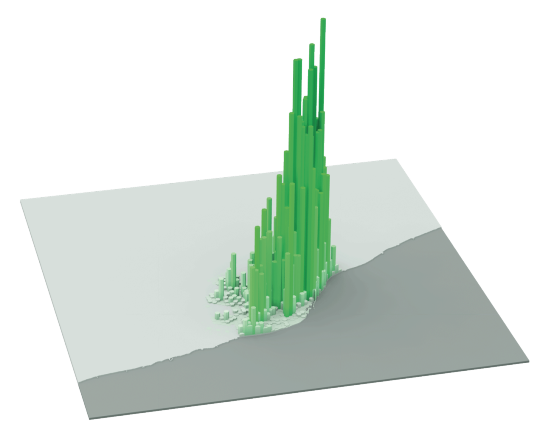
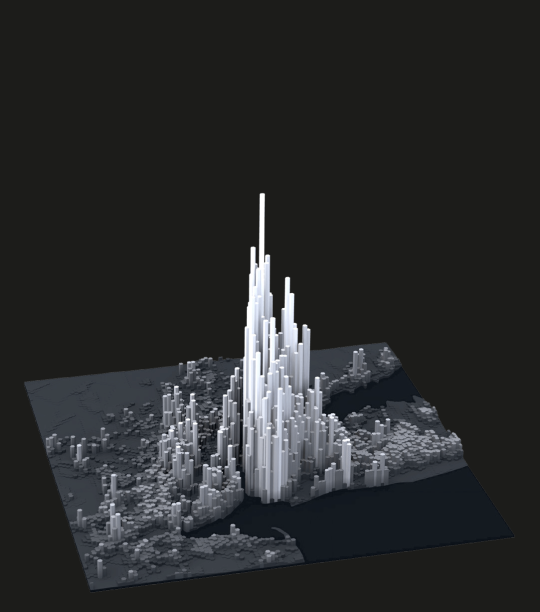
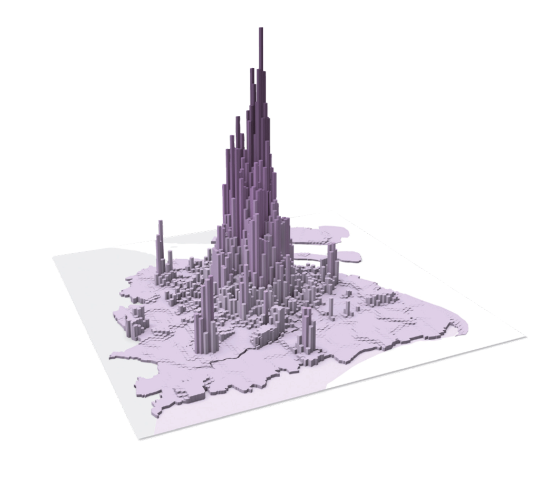
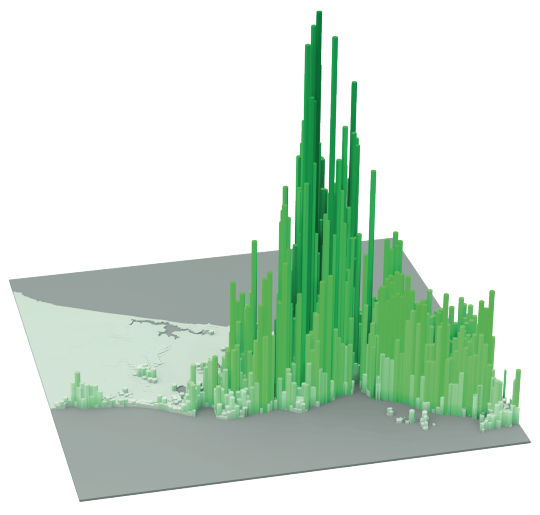
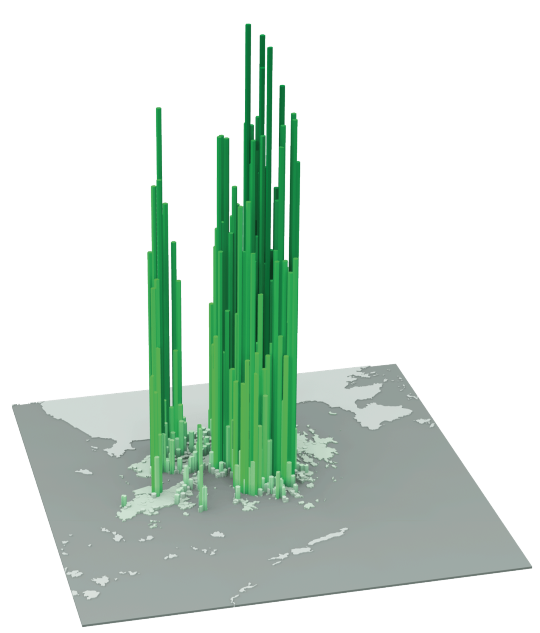
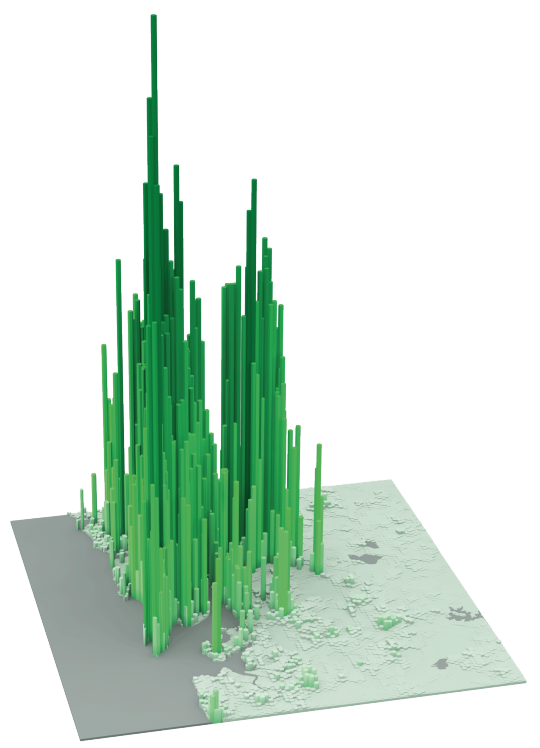
    The following diagrams were taken from LSE’s Urban Age website. I’ve sorted them from lowest to highest peak residential population density. In each case I’ve also included the year of the dataset. 

    It’s amazing how much these simple extrusion diagrams can tell you about the city. It also shows you that high population densities don’t necessarily need to equate to tall buildings. Barcelona, in particular, stands out for me.

    Berlin (Peak residential density: 21,700 people/km2, 2009)

    image

    Stockholm (Peak residential density: 24,900 people/km2, 2012)

    image

    London (Peak residential density: 27,100 people/km2, 2013)

    image

    São Paulo (Peak residential density: 29,380 people/km2, 2009)

    image

    Mexico City (Peak residential density: 48,300 people/km2, 2009)

    image

    Barcelona (Peak residential density: 56,800 people/km2, 2013)

    image

    New York (Peak residential density: 59,150 people/km2, 2012)

    image

    Shanghai (Peak residential density: 74,370 people/km2, 2011)

    image

    Istanbul (Peak residential density: 77,300 people/km2, 2013)

    image

    Hong Kong (Peak residential density: 111,100 people/km2, 2013)

    image

    Mumbai (Peak residential density: 121,300 people/km2, 2013)

    image

  • The top 10 mega-cities by 2030

    One of the reasons I’m so fascinated by cities is that it’s becoming increasingly more important to get them right. From about 1831 to 1925, London was the largest city in the world. Its population went from somewhere around 1.5 to 2 million people to nearly 7.5 million. London surpassed Beijing as the largest city and was then surpassed by New York.

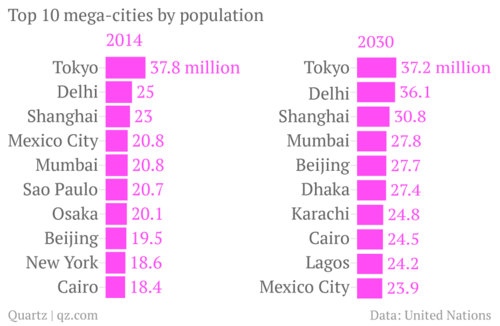
    Today our largest cities are significantly bigger. Tokyo has almost 40 million people and London doesn’t even make the top 10. But there’s also a broader shift taking place. According to a new report by the United Nations, most of the world’s largest cities will be in Africa and Asia by 2030. Here’s a chart from Quartz:

    image

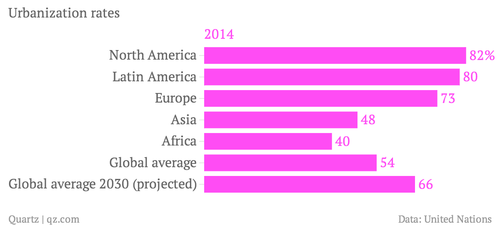
    And the reason for this shift is because Asia and Africa are newly urbanizing, whereas the rest of the world has already urbanized. In North America, over 80% of people already live in cities.

    image

    But even though Asia and Africa are following a trend that has already taken place in the rest of the world, it doesn’t mean we should assume we know what we’re doing. Having spent time in cities like Dhaka, I can attest to the many challenges that these mega-cities are facing and will continue to face as people flood in from the rural areas looking for economic opportunities.

    So while it’s important that we talk about strategies for reviving cities like Detroit – which has a population somewhere around 700,000 – 800,000 people – we should also keep in mind that we have some significant challenges ahead of us in terms of creating a sustainable urban planning agenda for the world.

  • I just pledged my support to dramatically improve transit in the Toronto region

    I care a lot about transit.

    I fundamentally believe that it needs to be the backbone of any well functioning and thriving metropolis. As the global economy continues to become an increasingly more urban one, we are seeing the rise of cities at a scale the world has never seen before.

    Tokyo is over 37 million people. Jakarta is almost 27 million. Seoul is almost 23 million. And the list goes on. With cities of this size, do we really think it’s reasonable for everybody to be driving around in cars? It ain’t going to work.

    Here’s an image from the Guardian, with the title, “Imagine if Paris had as many new cars as Mumbai”:

    Now, by global standards, Toronto is a relatively small city, at just over 6 million people in the region.

    But that doesn’t mean we don’t have challenges. In my view, the single biggest threat facing Toronto’s long term economic competitiveness is our severe infrastructure deficit. It’s impacting productivity levels, social cohesion, the environment, our global brand and many other things.

    Because of this belief, I’ve become interested in the work of CivicAction. It’s a group of non-partisan civic leaders who care about the future of our city. They have 3 areas of focus:

    1. Accelerating regional transportation
    2. Enhancing the region’s economic performance
    3. Fostering inclusion and resilience

    They’ve just launched a pledge that allows Torontonians to make their voice heard to elected officials. I just pledged to support new ways to raise funds for a better transportation network, and I would encourage you to do the same if you care about the future of our city. I know I certainly do.

    At the time of writing this post, 2,821 members of the general public and 126 elected officials had pledged.