








Camera: Fujifilm X-T3 (23mm lens)
Daily insights for city builders, delivered every morning at 6 AM ET. I’m Brandon Donnelly — a Toronto-based real estate developer and founder of Globizen. I’ve been writing here since 2013.
Camera: Fujifilm X-T3 (23mm lens)
The two official languages of Mallorca are Catalan and Spanish. However, there is also a local dialect of Catalan spoken on the island called mallorquí. Many of the locals we met last week spoke all three. At the same time, it was also our experience that everyone spoke English.
In Morocco, the two official languages are Arabic and Berber. Berbers are an ethnic group that predate the arrival of Arabs to the Maghreb region of North Africa. And today, about a quarter of Moroccans still speak it according to Wikipedia.
French colonial rule in Morocco (which lasted from 1912 to 1956) also means that a large percentage of the population speaks French. The “official” number was above 60% in 2012, but our experience in Marrakech has been that it’s virtually everyone.
This has also been our experience with English. Though, interestingly enough, some of the locals have told us that this was not the case as recent as 10 years. English is a new phenomenon in Marrakech. Anecdotally, it means that many of the locals seem to speak a minimum of 4 languages.
This is, of course, par for the course in this part of the world. But as a Canadian who is working diligently to try and master only two languages — I take a weekly French class at Alliance Française in Toronto — it’s an easy way to feel linguistically inadequate.
Languages are difficult. They’re relatively easy to learn when you’re young, but if you don’t use them consistently and if you’re not immersed, they’re also easy to lose. Which is why some estimate that by the end of this century, at least 50% of the languages currently spoken will become critically endangered or completely extinct.
Here is how UNESCO classifies endangered languages:

The simple takeaway is that it starts with children. A “vulnerable” language, for instance, means that kids still speak the language, but that it may be restricted to only certain domains, such as at home with relatives. A “definitely endangered” language means that kids are no longer learning and speaking it. This is a kiss of death.
So to get a sense of where things are headed, it’s a good idea to ask people, “what languages do kids learn in school and/or at home today?” And the answer to that question in Marrakech seems to suggest that English has overtaken French as the preferred second language after Arabic.
As we all become more globally connected, it only heightens the need for a lingua franca — a common language that we can all use to communicate with each other. And today that global language is English. That certainly makes things easier and more efficient, but it also comes with negative consequences.
It is going to mean sacrificing the local languages and dialects that emerged at a time when the world wasn’t so small.

Tadelakt is a plaster surface that you will find all throughout Moroccan architecture. It is used on floors, walls, sinks, showers, and more. It is made from lime plaster (sand, water, and lime). And it gets applied in stages with, as I understand it, wooden floats, trowels, and mechanical polishers. The last step is to apply a sealer, which then gives it a waterproof finish. This is why it is suitable for bathrooms and exterior walls. From the sounds of it, it’s a labor-intensive process, but apparently the result is a very durable finish. I also think it lends a modern feel because it’s a continuous application that can wrap corners and follow curves.
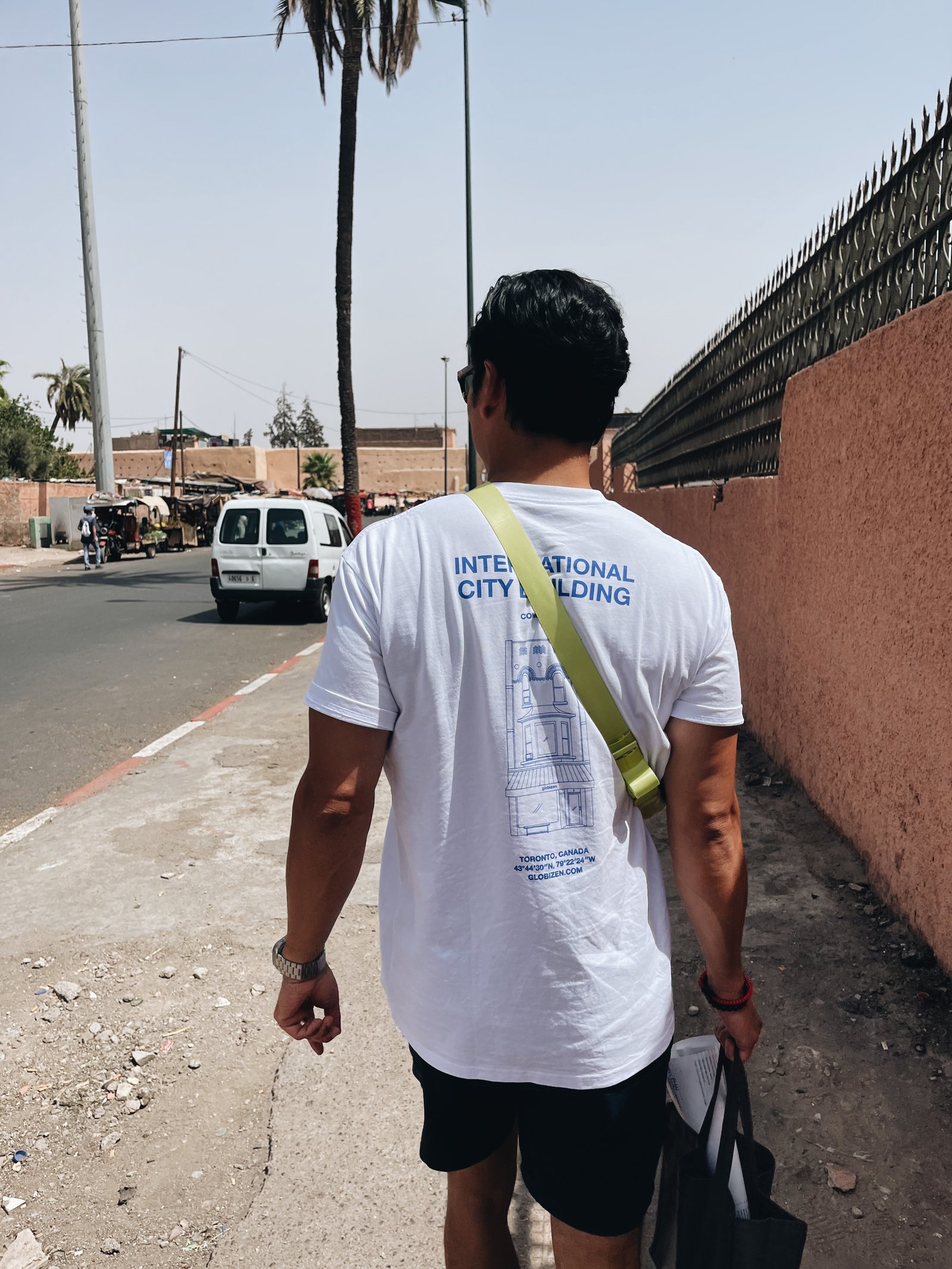

Marrakech is one of the most frenetic, vibrant, and exciting cities that I have been to in a long time. Walking through the Medina means walking on streets that are only a few meters wide, but that are still somehow filled to the brim.

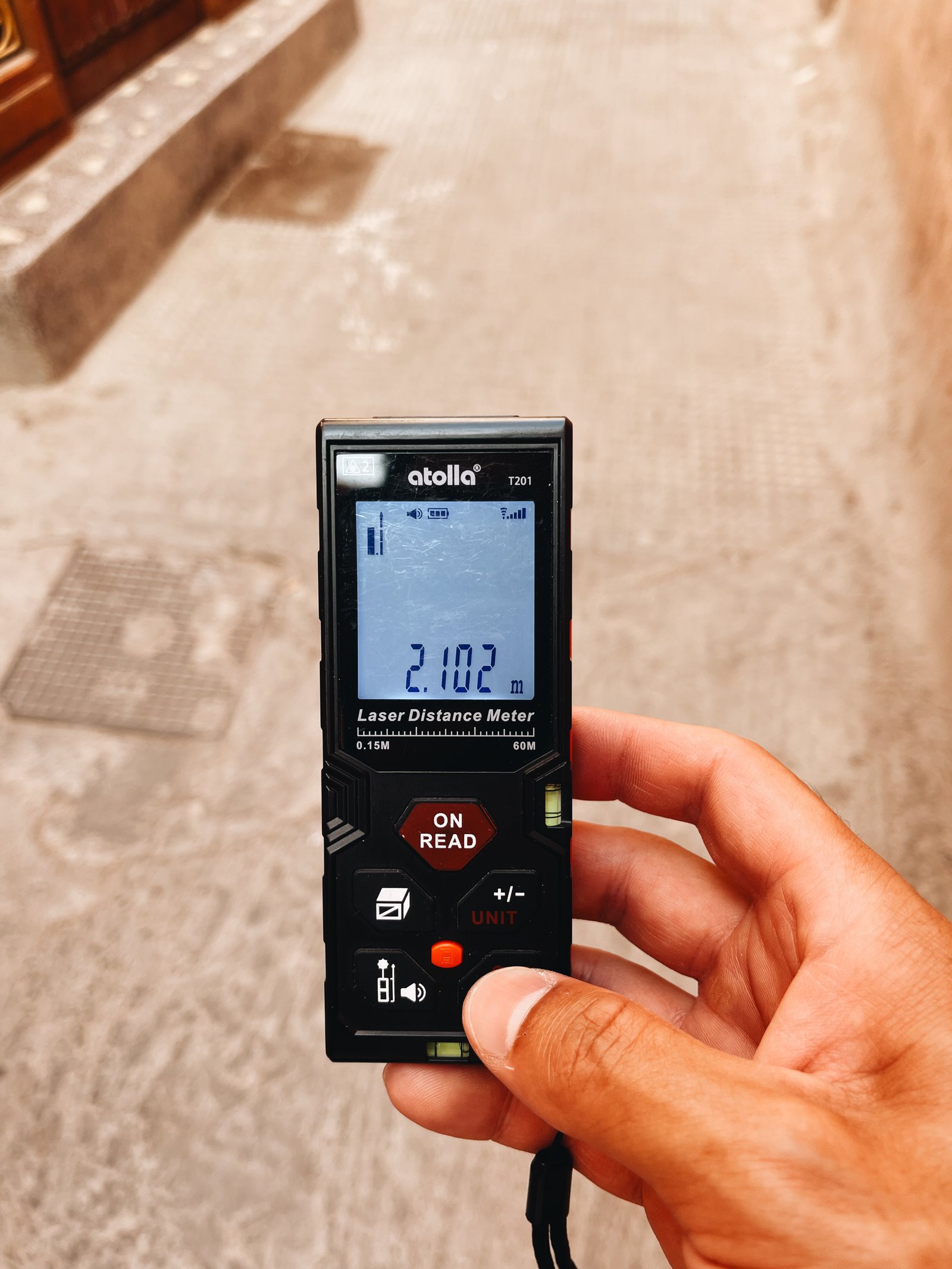
Filled with a beautiful cacophony of people, smells, and merchants, selling everything from leather sandals to engine parts. Filled with an endless supply of people vying aggressively for your attention (and who all seem to coincidentally have a relative in Toronto). And filled with motorbikes that are liable to ride over your feet if only you let your guard down for a second.

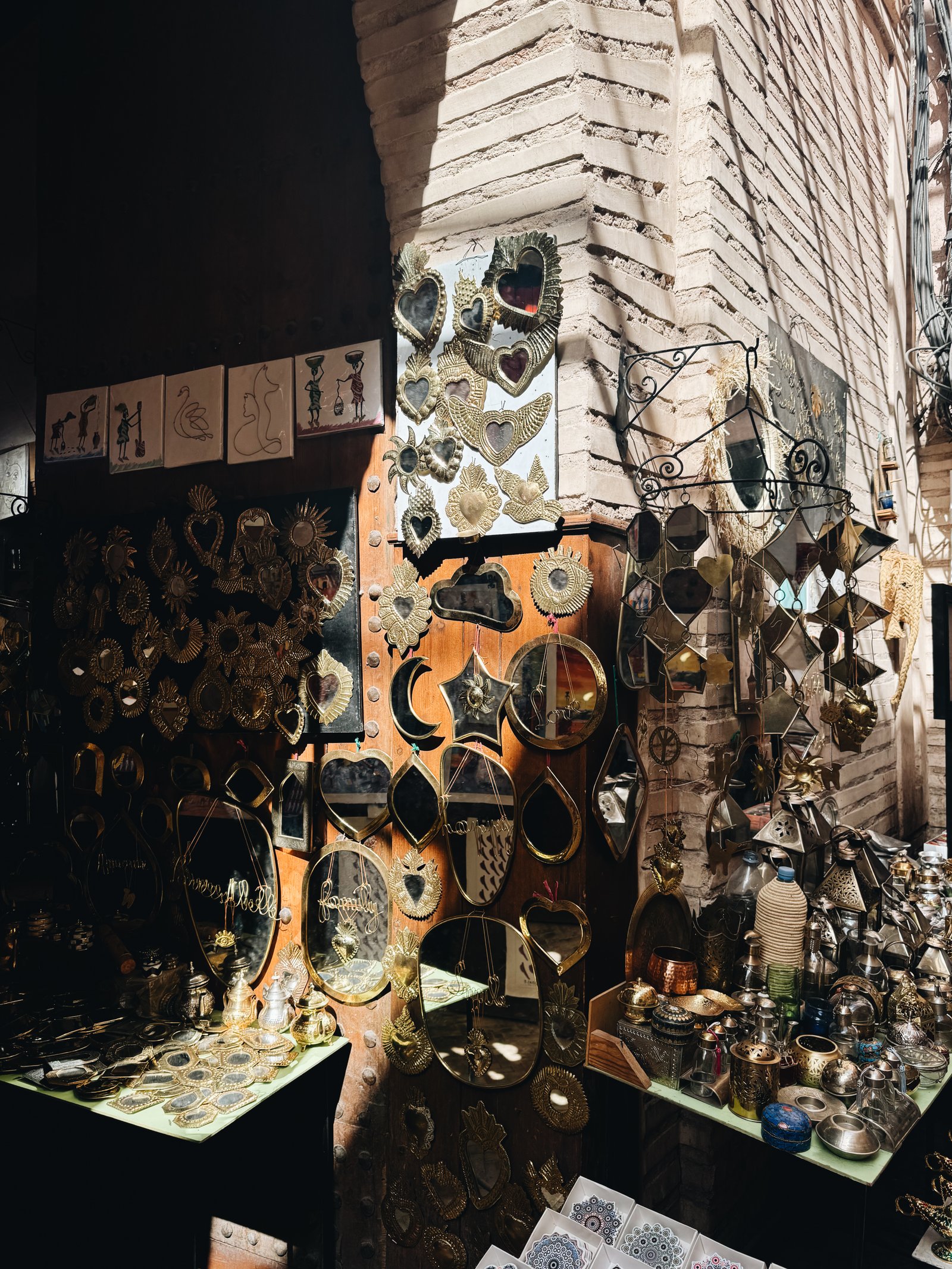
Sensory overload. It is at the same time exhausting and one of the coolest experiences ever.
Another name for these streets would be “shared streets,” which is a way of saying that the formal distinctions between areas dedicated to pedestrians, cyclists, and motorists have been removed. While they are intended to be pedestrian-oriented, the overall approach is that all users just, you know, figure it out. Today, this is viewed as an enlightened approach to street design. Though it’s clearly not a new one.
I will, however, be the first to admit that it’s easy to feel like an uptight Canadian in the Medina of Marrakech. This thought definitely crossed my mind: “I can’t believe they let motorbikes rip through these tiny streets.” You can see why somebody at some point felt it might be a good idea to carefully segregate uses.
At the same time, the architecture of Morocco feels like the perfect complement to these chaotic streets. Notably inward facing, the central feature of a traditional riad is its courtyard. These spaces offer much-needed protection from the hot Moroccan sun, but they also allow for family privacy, which is something that is important in this culture.

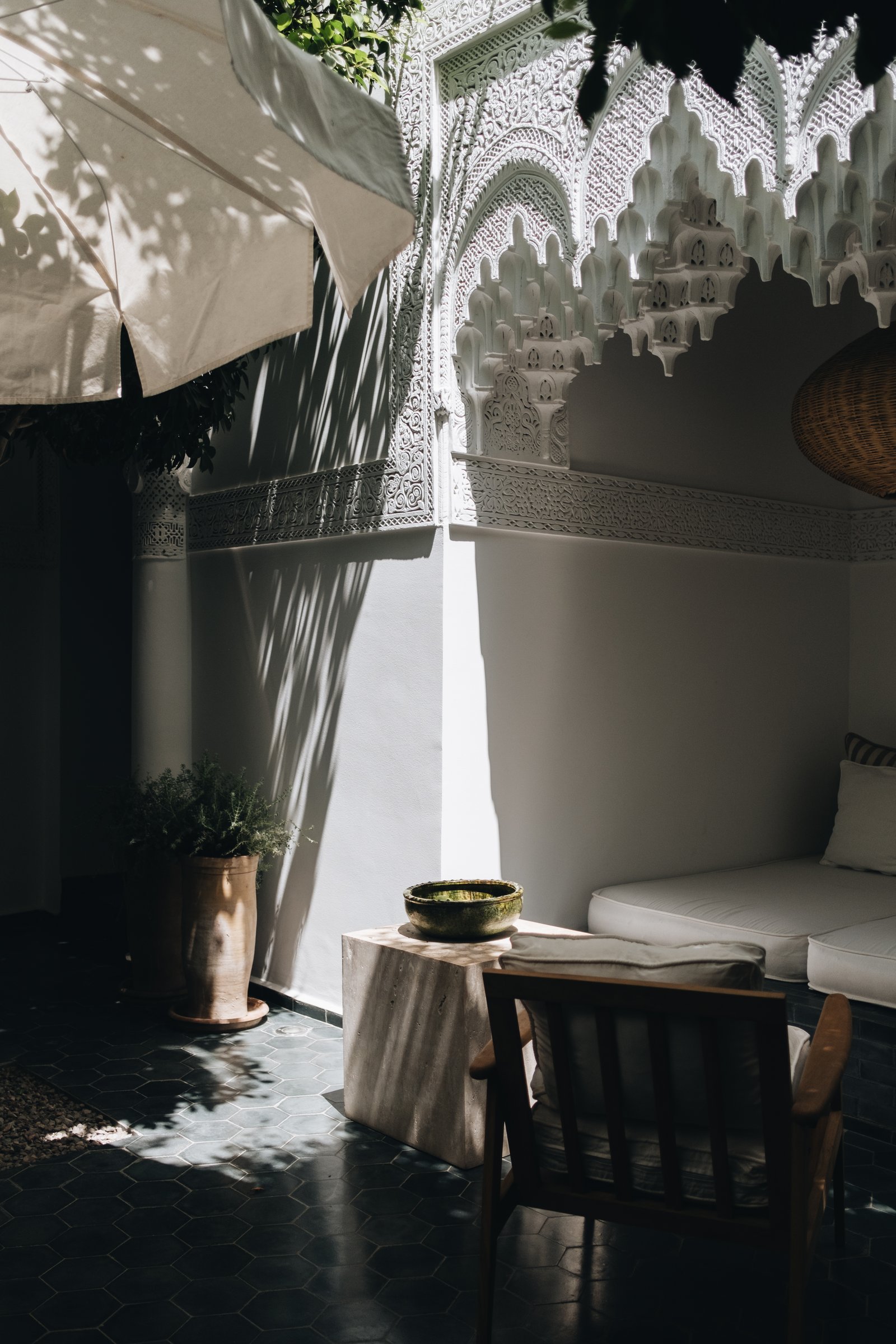
The result is that you immediately feel it every time you walk inside. You have now entered a beautiful and calm oasis in the middle of a frenetic and exciting city.