Daily insights for city builders, delivered every morning at 6 AM ET. I’m Brandon Donnelly — a Toronto-based real estate developer and founder of Globizen. I’ve been writing here since 2013.

Tag: midcentury modern

  • 24514 Malibu Road

    The story of the Hunt House in Malibu, California — as recounted here by Soho House — has me wanting to serendipitously stumble upon an underpriced midcentury architectural gem along the coast of the Pacific Ocean so that I can spend my weekends fastidiously restoring it to its former splendor.

    I have already started looking.

    Originally built in 1957, the Hunt House at 24514 Malibu Road was designed by California modernist Craig Ellwood. It was the 1,400 sf weekend home of Dr. Hunt and his wife Elizabeth. Like many of the homes on this street, the minimalist entrance and front facade ultimately step down into a grand waterfront space. Photos and video tour, here.

    The current owners, architect Diane Bald and her husband Michael Budman, discovered the house while driving the coast in search of a rental. The Hunt House was marked as for rent or for sale. They rented it immediately.

    After four years in the house, an evil developer ended up buying the house with the intent of knocking it down and building something new. But he allowed them to remain living there during entitlements.

    Turns out it’s hard to build in Malibu, and so after another four years, he gave up and said, “you know what Diane? You’re the rightful owner of this house, I will never be able to build what I want.” (Quote from Soho House.) It is at this point that Diane bought the house and began restoring it.

    That process was documented here on Instagram.

    Top Image: Richard Powers via Soho House

  • Jason Statham’s home is on the market for $6.995 million

    I keep coming across actor Jason Statham’s homes (or former homes) in design publications. At the beginning of this year, he and model Rosie Huntington-Whiteley sold their Malibu beach house for $18.5 million. It was beautiful. And last month, he listed a home — he seems to have many — near LA’s Sunset Strip for $6.995m. (Pictured above.) A renovation of an existing 1957 house, Statham purchased the house in 2015 for $2.7mm and completed a meticulous renovation with Standard Architecture. Look at that roofline! For those of you in the market, here’s the listing.

    Photo: ©Benny Chan | fotoworks

  • What they don't teach you in architecture school

    When you go to architecture school, you are indoctrinated to appreciate certain projects, buildings, and houses. One of those pieces of architecture, at least for my generation, is the Farnsworth House in Plano, Illinois, by Mies van der Rohe.

    Completed in 1951 for Dr. Edith Farnsworth (a nephrologist), the house is one of the most celebrated midcentury modern houses in the United States. Today, the former weekend retreat is a museum owned by the National Trust for Historic Preservation. (Information on how to visit can be found, here.)

    But what they don’t teach you in architecture school is that the house never really worked all that well as, you know, an actual house. And that the client and architect ended up embroiled in legal battles toward the end of construction.

    This is part of the story that is told in Alex Beam’s new book, Broken Glass, which was recently reviewed by Witold Rybczynski in the Wall Street Journal. Now, Witold isn’t a fan of modern architecture to begin with and so the Farnsworth House never stood a chance:

    Despite the purposeful appearance of his architecture, Mies was not particularly interested in practical matters. The travertine on the terrace weathered badly, and a poorly designed heating system left sooty stains on the windows. The glass walls resulted in spectacular heating bills in the winter and hothouse temperatures in the summer—there were only two small openable windows. Then there was the problem of condensation on the glass in cold weather. “You feel as though you are in a car in the rain with a windshield wiper that doesn’t work,” Farnsworth complained. A film about the genesis of her house, starring Elizabeth Debicki and Ralph Fiennes, is currently in the works. It will be interesting to see if it will show the doctor squeegeeing her foggy windows.

    On his blog, Witold calls Mies an aesthete. Appearance was everything. My personal view is that it’s generally good practice to design houses so that they function properly. But icons are icons and the Farnsworth House is certainly an icon. Maybe we should just call it a prototype.

    Image: Farnsworth House (National Trust for Historic Preservation)

  • SoCal Googie

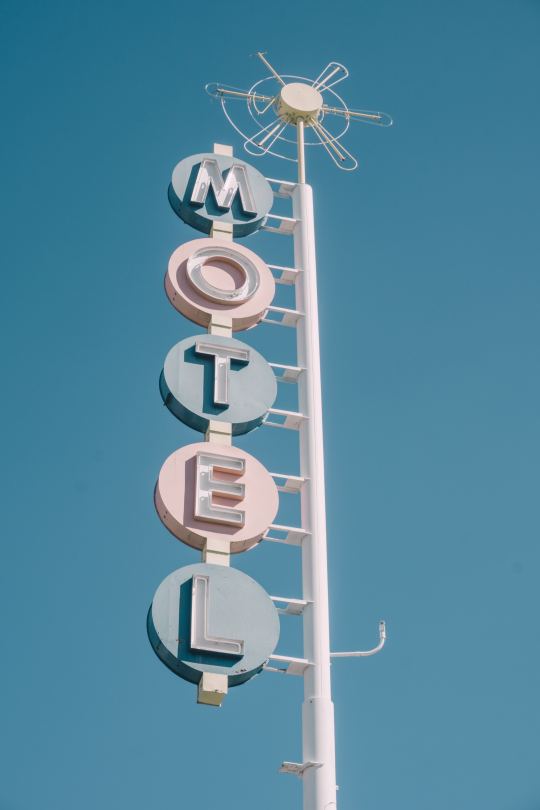
    I must have been sick for this lesson in architecture school, because I just discovered, through Curbed, that there is a subset of mid-century modern architecture known as Googie. It originated in Southern California in the 1940s and was all about the future, car culture, the Space Age, and the many other things that dominated the postwar years. Think starbursts, curvaceous geometric shapes, and bright colors. We all know the architecture. But did you know it was called, Googie?

    Supposedly the Googie movement was given its label by architecture critic Douglas Haskell, who used it in a derogatory way to describe criticize the architectural fashion at the time. Googie was the name of an actual coffee shop in West Hollywood designed by John Lautner. And that’s something that is noteworthy about Googie. It was a form of architecture for average buildings: coffee shops, gas stations, motels, and those sorts of things.

    There will always be critics who eschew that which is fashionable at the time. I suppose one could argue that if you’re being fashionable, then you’re not being timeless. Because fashion is about what’s current. And good architecture should be timeless, right? But there’s something so fascinating about a kind of built form that perfectly captures a particular time and place. Middle of the 20th century. Car-oriented Southern California. 

    Sometimes good architecture and design also needs a bit of time and distance in order to fully appreciate it. What was once garish may one day become treasured. Just give it a generation or two.

    Photo by ian dooley on Unsplash