Daily insights for city builders, delivered every morning at 6 AM ET. I’m Brandon Donnelly — a Toronto-based real estate developer and founder of Globizen. I’ve been writing here since 2013.

Tag: miami beach

  • CloudKitchens has spent more than $130 million on property over the last two years

    According to a recent Wall Street Journal review of property and corporate records, Travis Kalanick’s ghost kitchen startup, called CloudKitchens, has spent over $130 million over the past two years buying more than 40 properties in about two dozen cities.

    Travis is co-founder and the former CEO of Uber and this latest startup provides commercial kitchens to restauranteurs who are looking for a low-cost way to launch delivery-only food concepts.

    In some ways, it can be compared to coworking spaces for delivery-only restaurants. Instead of renting a full restaurant space, you lease 200-300 square feet of real estate at a lower cost address. CloudKitchens then handles all of the distribution and fulfillment, effectively lowering the barriers to entry for food startups.

    Some of the properties that they have been buying include a vacant restaurant space in Miami Beach for $9.2 million (May 2020) and an industrial property in Queens, New York for $6.6 million (March 2020). They’ve also bought in cities like Portland and Las Vegas.

    As you might imagine, now is a pretty good time to be buying some of these properties. And if you think about it, there are some real cost advantages to what they are doing, not to mention some co-working-style arbitrage on the real estate.

    The company is apparently going to great lengths to conceal what and where they are buying. But what is perhaps more interesting is their asset-heavy approach. They’re buying lots of real estate, which is inline with what companies like Opendoor are doing, but is distinct from Uber’s asset-light approach.

    It is also different from what many other ghost kitchen startups are doing. It seems that most are leasing their spaces. There has to be a reason for this difference.

  • The new Rubell Museum

    This December 4 (2019) — the day before Art Basel starts — the Rubell family will open a new 100,000 square foot museum in Miami’s Allapattah district. (For years people have been calling Allapattah the new Wynwood.)

    A former industrial space on a 2.5 acre lot, the building was renovated by New York-based Selldorf Architects. Just over half of the building has been allocated to exhibition space and about 65% of this will be for permanent/longer-term collections.

    The Rubell family started collecting contemporary art in 1965. At the time, they were living in New York City. In 1990 they moved to Miami and in 1993 they opened up the “Rubell Family Collection” in Wynwood, which was a depressed neighborhood up until probably the early 2000s.

    With over 7,200 works, it is now one of the largest privately owned and publicly accessible contemporary art collections in the world. If you live in Miami or you happen to find yourself there this winter, you may want to check out the new Rubell Museum.

    Rendering: Selldorf Architects

  • Lincoln Road’s $67 million makeover (and Business Improvement Areas)

    Lincoln Road is one of my favorite parts of Miami Beach. Supposedly the pedestrian-only street attracts some 11 million visitors a year. But I have noticed that the street has lost some of its mainstays to areas such as Wynwood. This is probably why the city and local property/business owners struck a deal this past summer to makeover the street based on a design by Field Operations.

    The deal works like this: The City of Miami Beach is going to pay for the entire US$67 million makeover. This money will come from city and county taxes, as well from bonds. In return, property owners in the Lincoln Road Business Improvement District (BID) have agreed to tax themselves an additional 25% in order to pay for promoting and programming the street.

    Obviously everyone believes that they will come out ahead as a result of this makeover. An improved Lincoln Road means more foot traffic, more sales, and more tax revenue. There’s also talk of expanding the boundaries of the BID, which would generate additional funds. Right now the district is bounded by Alton Road on the west and by Washington Avenue on the east.

    For those of you who aren’t familiar with Business Improvement Districts, they are essentially defined areas where additional taxes are levied in order to fund projects and improvements that help overall economic development within the district. It is a structure that is used all around the world and it is one that was actually pioneered here in Toronto.

    Here we call them Business Improvement Areas, and the first ever was the Bloor West Village BIA, which was established in 1970. There are now 83 BIAs in the City of Toronto. The first BID in the United States was the Downtown Development District in New Orleans. It was established in 1974. There are now over 1,200 across the U.S.

    If you’d like to learn more about the improvements planned for Lincoln Road, here’s a copy of the master plan that was submitted to the City of Miami Beach’s Historic Preservation Board. The link is from The Next Miami.

    Rendering: Field Operations

  • Airbnb is powering new purpose-built short-term rental buildings

    This past weekend I was in a condo building here in Toronto with large signs in the elevator saying, “No Short-Term Rentals Including Airbnb Are Permitted. Trespassers Will be Prosecuted.” It was the first time I had seen anything like this, but it immediately signaled to me that the building must be having a problem with short-term rentals. Why else would you deface the elevators? There are some buildings that allow short-term rentals, but most don’t.

    However, over the last few years we have started to see purpose-built short-term rental buildings. In some cases, existing apartments buildings were “converted”, as was the case with Niido’s two properties in Nashville and Orlando. Here tenants in the building can rent both unfurnished and furnished apartments and then rent them out on Airbnb up to a maximum of 180 days per year. To date, I think these are the only two properties to use the “Powered by Airbnb” moniker, but more are on the way.

    The developer behind Niido — Newgard Development Group — recently launched a new Powered by Airbnb brand called, Natiivo. This one looks to be focused on for sale product, with two upcoming projects in Austin and Miami. Both projects will have hotel licenses in order to avoid any regulatory risk going forward. But this makes me wonder how materially different this model is from the condo-hotels we’re already familiar with.

    For landlords and developers, the goal is obviously to maximize rents and prices. Allowing (or explicitly encouraging) residents to rent out their place and earn some extra cash, should help with that. And given the way I started this post, we also know there’s a desire to do this, particularly in places with strong tourist demand like in Nashville and Miami. But the reviews are mixed. Not everyone wants to live in a hotel. But then again, not everyone wants to co-live. To each their own.

  • How Cubans transformed Miami into a global city

    I have a large, and growing, stack of books sitting beside my bed. It is a symptom of my interest in reading exceeding my actual capacity to read, given all the other things I’m doing. However, summer is a good time to get caught up and over the long weekend I did finish reading, The Global Edge: Miami in the Twenty-First Century. It was great, and so now I can confidently recommend it to all of you.

    The most interesting storyline for me was the leading role that “pre-Mariel” Cubans (more on this below) played in transforming Miami from a winter destination to an emerging global city. According to 2015 figures, the City of Miami’s population is 70% Hispanic, of which 34% are Cuban. About 70% of the city’s population speaks Spanish at home. And only about 11.9% of the population is white (non-Hispanic).

    But the bit that really intrigued me was the distinction that Alejandro Portes and Aerial C. Armony make between the “pre-Mariel” Cubans who arrived in the 1960s and 1970s — many of whom became successful entrepreneurs — and the “Marielitos” who arrived in the 1980s onward. This latter group has, on average, not seen the same kind of financial successes as its predecessors.

    The other thing that I think many of you will appreciate is that the authors recognize that all urban phenomena are inherently spatial. And so almost everything they discuss is described in terms of its physical manifestation within the city. Perhaps the most stark is the region’s growing inequality. Wealth along the water; poverty inland.

    Here’s some more information on the book if you’re interested.

    Photo by Alejandro Luengo on Unsplash

  • 17 years of inventory in Miami

    Miami has historically had a volatile housing market because of its position as a second-home destination and because of its dependency on Latin American buyers. There is perhaps no other housing market in the US with the same kind of overall reliance on capital from abroad. This recent article by Candace Taylor in the WSJ is yet another reminder that we are once again in one of those cycles. Below are two excerpts that I found interesting. Note the stats, particularly the last bit in bold. It is also a reminder that when housing supply exceeds demand, usually something happens: prices come down.

    At the same time, new condos launched just as the owners of older units looked to cash out. There were 691 condo sales in Miami Beach in the first quarter of 2019, down 24 percent from 909 in the first quarter of 2015. During the same period, single family homes sales dropped to 81 from 117. The threat of climate change has had some impact on Miami home buyers’ decisions. A 2018 study showed that the value of single-family homes near sea level in Miami-Dade County rose more slowly than that of homes at higher elevations. But agents said a greater threat to the high-end market is inventory buildup.

    Meanwhile, a strong dollar incentivizes international buyers to sell the units they already own, even at below-market prices. The result is a glut of condos for sale, both new and resale. In December 2018, there were 3,663 condo listings for sale in the greater downtown Miami area—more than double the 1,591 for sale in December of 2013, according to an Integra Realty Resources report. Sunny Isles, where new buildings include the 53-story Jade Signature, the Porsche Design Tower and the Turnberry Ocean Club, is estimated to have about 17 years of inventory of condos priced at $5 million and up.

  • Miami in the 21st century

    I started reading a new book this weekend called, The Global Edge: Miami in the Twenty-First Century.

    When many (or perhaps most) people think of Miami/Miami Beach, they think of its beaches and resorts. And that is certainly a mainstay of the region’s offering. But over the past few decades, Miami has also emerged as an important global city (albeit at a more regional scale) and as a center for art and culture. Miami has the second largest concentration of international banks in the United States after New York, which begins to speak to the region’s importance for Latin America.

    New York City is what it is today because it was the port of entry for new immigrants coming to the United States. This same phenomenon is what reshaped the Miami economy, starting first with Cuban exiles. Today, the city remains a refuge for Latin Americans searching for greater political and economic stability. As my friend from Miami likes to tell me, “the best thing about Miami is that it’s so close to the United States.”

    I’m enjoying this book and I bet some of you will as well.

  • Climate gentrification is reshaping coastal cities

    Last year, Jesse Keenan, Thomas Hill, and Anurag Gumber of Harvard University, published a research paper called, Climate gentrification: from theory to empiricism in Miami-Dade County, Florida.

    What they were trying to uncover was a possible relationship between climate change and single-family home pricing in places, like Miami, that are vulnerable to sea level rise and flooding. This phenomenon is colloquially referred to as “climate gentrification.”

    One of the things that they uncovered through their work was, in fact, a positive correlation between the rate of price appreciation of single-family homes in Miami-Dade County and incremental measures of higher elevation. In other words: there’s value in higher ground.

    Recent reports (like this one from the WSJ) that Little Haiti in Miami is experiencing a surge in investment, seem to, at least partially, support this finding. Little Haiti sits about twice as high as Miami Beach, which is only about 4 feet above sea level.

    Here is a diagram from the WSJ showing the change in home prices since 2018:

    I’m not sure that this diagram necessarily reinforces the above finding. Mid-Beach in Miami Beach is shown as having an 8% gain, and yet it sits, like pretty much the rest of the Beach, within a 100-year floodplain. But already Miami is looking to manage the impacts of, “gentrification that is accelerated by climate change.”

  • Three nights only

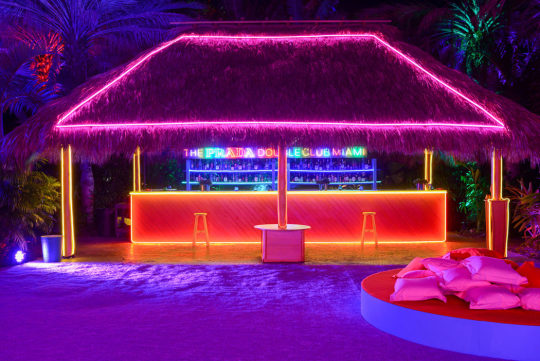
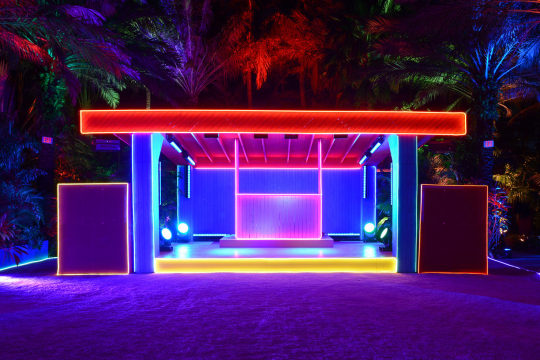
    For this year’s Art Basel Miami Beach, artist Carsten Höller collaborated with Fondazione Prada to create a 3-night-only pop-up club called, The Prada Double Club Miami.

    By time you read this post, the pop-up is likely to be over. But it is an interesting space nonetheless.

    The installation made use of an old 1920s film studio and was comprised of two distinct spaces – hence the double club reference. 

    The interior bar and dance floor were entirely monochromatic.

    Höller wanted all color to instead come from participants within the space. 

    The exterior bar, on the other hand, was “hyper-polychromatic.”

    Perhaps some of you might find inspiration here for your next condo sales office. That would be fun.

    Photography: Casey Kelbaugh, courtesy of Fondazione Prada and via The Spaces

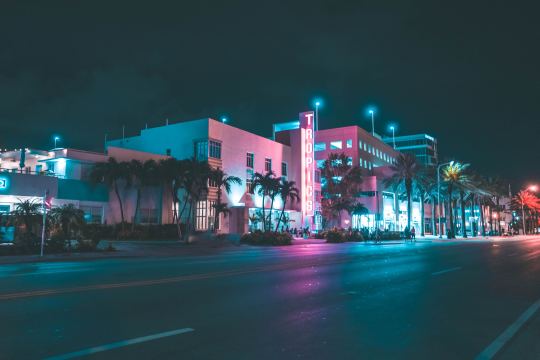
  • Cities are always changing. What’s happening in Miami Beach?

    image

    The Miami Herald has a recent article up asking: Has Miami Beach lost its mojo? While the beach will always be an immense draw, there’s concern that entertainment dollars could now be starting to favor mainland neighborhoods like Wynwood, Brickell, and the Design District. 

    Here are some of the reasons why it is believed that may be happening:

    – Structural changes to the retail landscape

    – High rents have pushed out all of the interesting and distinctive tenants

    – City is too lenient when it comes to the nighttime economy; South Beach has become a circus

    – Investors and developers are worried about the Beach’s exposure to sea level rise

    – Strips like Ocean Drive and Lincoln Road have simply completed their urban cycle and are no longer attractive and novel

    – Overdevelopment of luxury housing (curiously, there’s a preservationist quoted in the article who appears to believe that restricting development to only mid-rise will result in less luxury housing)

    Many of these points are certainly not unique to Miami Beach. We know the retail landscape is changing. But as I was reading through the article, I was once again reminded that cities are always changing – even when we try and stop them from doing that.

    There are over 900 historic buildings in the Miami Art Deco District. Most are low-rise and mid-rise. This includes the iconic Ocean Drive. And yet the above article is all about the changes that the Beach has seen and experienced over the years.

    Oftentimes we only associate change with new buildings. But architectural preservation does not guarantee any sort of urban stasis. Cities are far more complex than that.

    Image: Photo by Ryan Spencer on Unsplash