Daily insights for city builders, delivered every morning at 6 AM ET. I’m Brandon Donnelly — a Toronto-based real estate developer and founder of Globizen. I’ve been writing here since 2013.

Tag: mexico

  • En province

    As many of you know, I am learning French, again.

    One of the small things that I found really interesting in this week’s class — besides, of course, figuring out how the hell to use le subjonctif — was the expression “en province.” In France, this effectively refers to any place in the country that isn’t Paris — the capital city/region. And it turns out that many other countries employ a similar kind of vocabulary.

    According to Wikipedia, people in Peru say “en provincias”, people in Mexico say “la provincia”, people in Poland say “prowincjonalny”, and people in Bulgaria say “в провинцията”, whatever that means. What is fascinating to me about this is that it implies a very capital and urban-centric mentality. You’re either in the capital city or you’re, well, in the provinces.

    It’s also not something that is used in either Canada or the US. In Toronto, you’ll hear people say that someone is “up north” and, in Philly, you’ll hear people say “down the shore” to indicate that they’re headed in the general vicinity of the east coast. But as far as I’m aware, there isn’t a specific term that is used to describe any and all lands that exist outside of our capital cities.

    Maybe it’s because Ottawa isn’t our biggest city and so it would be silly to designate everything outside of it as being some sort of provincial non-capital territory. But I wonder if part of it is because we don’t have the same urban-centric mentality. Could it be that we just don’t value and think about our principal cities in the same way?


  • Leading female architects

    Reed Kroloff has a noteworthy piece in the New York Times talking about how architecture is no longer just a ‘gentleman’s profession’. Though less than a third of AIA (American Institute of Architects) members are females, “offices led or owned by women are creating an ever-wider range of public buildings that address architecture and urbanism in new and invigorating ways”, says Kroloff.

    I am thrilled, but not surprised, to see Jeanne Gang of Studio Gang on the list (pictured above). Her firm is the design architect behind our One Delisle proposal. And I was also happy to see Magui Peredo of Estudio Macias Peredo on the list. She is based in Guadalajara and, if you aren’t familiar with her work, I recommend you check it out. I love the materiality of it.

    Image: New York Times

  • Spaces between buildings

    Doug Saunders recently published a great piece in the Globe and Mail about the “the dead spaces between buildings” and the architectural revolution that is taking place from Mexico City to Toronto to solve this underappreciated problem.

    The example in Mexico City is that of the San Pablo Xalpa public housing complex where architect Rozana Montiel transformed the underutilized spaces between the apartment buildings into vibrant “common-unity” spaces. 

    This meant removing 95% of the fences and gates that had previously been erected as safeguard against the unsavory people and acts that were taking place in these open spaces.

    The underlying goal was to try and address the socioeconomic decline that had taken root in Mexico’s public housing complexes. And there was a sense that part of the problem was simply their physical design.

    Of course, this is partially about trying to correct the failures of post-war planning. But I think this conversation around the “spaces between buildings” shouldn’t just be a corrective one. It can be broader than that.

  • How avocado toast became the poster child for Millennial self-indulgence

    I am a big fan of avocados, as I’m sure many of you are as well. But why the obsession these days? Consumption is very clearly up. Sure they’re healthy, but what else is driving their celebrity status?

    Here’s an excerpt from a recent New Yorker essay called, A Grand Unified Theory of Avocado Toast:

    Today, nine out of ten imported avocados in the U.S. are from Mexico.

    The change resulted from the North American Free Trade Agreement. Their effects on the consumer avocado market were profound: from the mid-nineties through 2014, the United States’ avocado consumption nearly quadrupled. Average consumption rose from less than two pounds per person per year to about seven. In the nineties, the United States was producing more than eighty per cent of the avocados that it ate. More recently, it has grown fewer than twenty per cent. The twenty-first-century explosion of avocado smoothies, avocado ice cream, avocado life, in other words, is not in your imagination. It reflects a foreign influx of the fruit, mostly made possible by NAFTA.

    If you also love avocados and you’re curious as to why avocado toast has become the poster child for Millennial self-indulgence, you may want to read the full article.

  • A Love Letter to the Great Lakes

    This week, the first ever international street art festival will be taking place in Toronto. It’s called A Love Letter to the Great Lakes and it is running from June 20 to June 25, 2016.

    The goal of the festival is to use public works of art to get people thinking about our water resources and, more specifically, about the Great Lakes. Together, these Lakes represent 20% of the world’s fresh surface water.

    So this week, 21 local and international artists will be painting giant murals in 3 different areas of the city: Queen & Ossington, Queen & Spadina, and at the mouth of the Don River.

    The collaborators for the event include Tre Packard (Pangeaseed Foundation), Jason Botkin (A Love Letter to the Great Lakes, En Masse), Jaqueline West (Herman & Audrey), developer Jeff Hull (Hullmark) and Devon Ostrum (Friends of the Pan Am).

    Below is one of the works already in progress. It’s by Jason Botkin and it’s located on one of the bents of the Gardiner Expressway East at the mouth of the Don River.

    image

    This event caught my attention for 3 reasons.

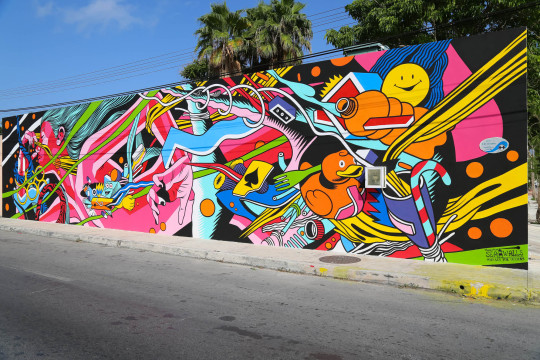
    First, I think the city is going to be left with some rad looking murals. Here is one from a similar event in Cozumel, Mexico called Sea Walls: Murals for Oceans in Cozumel:

    image

    Second, like many others, I care deeply about the environment. But until we put in place the right economic incentives / disincentives, we need all the awareness building that we can get.

    Third, seeing Jeff Hull on the list of collaborators reminded me that there’s a new breed of real estate developers emerging in our cities. The big bad developer is sometimes (often?) thought to be greedy and insensitive to local communities. But I think the next generation sees itself quite differently. They see themselves more as city and community builders.

    So if you’re in Toronto this week, get on your bike and head over to one or more of the mural sites. Tweet me if you decide to go and maybe we can connect.

  • The biggest international buyers of American homes

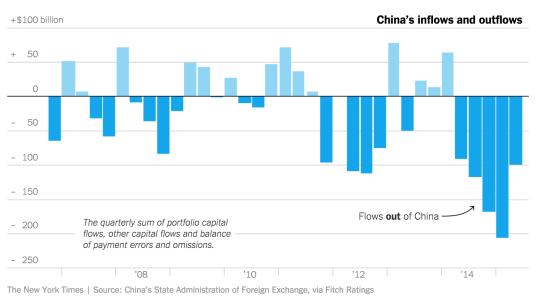
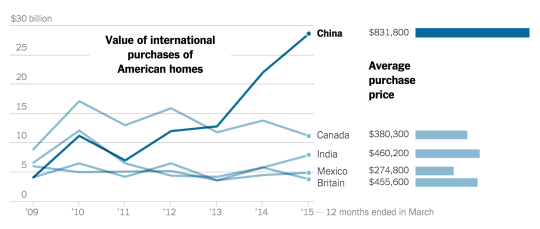
    A reader recently sent me a New York Times article talking about Chinese buyers flooding into the US residential real estate market. This is something that I’ve written about before, but I liked the “graphic” section called The Roots of China’s Real Estate Rush.

    Here are two of the graphs:

    imageimage

    The second chart shows you just how much more significant Chinese buyers are compared to the next biggest foreign customer of American homes: Canadians. And with the Canadian dollar where it is, it is no surprise that we are trending downwards. That doesn’t seem to be the case with the Chinese.

  • A cold ski town is building one of the first vertical farms in the world

    image

    I have a soft spot for Jackson Hole, Wyoming. It’s a beautiful town and, out of all the places I’ve snowboarded, it’s easily my favorite.

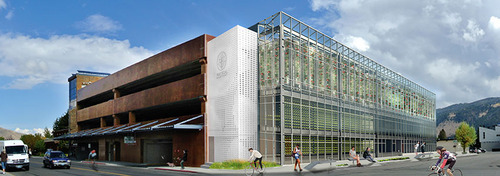
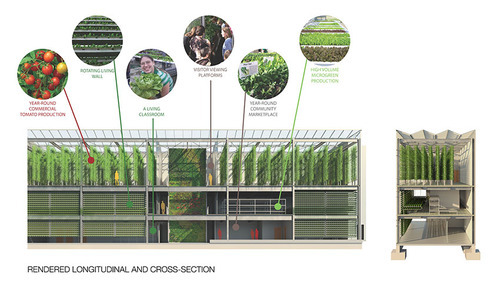
    That’s why I was excited to learn that Jackson is currently building one of the first vertical farms in the world (and in a cold ski town at that). Using a vacant site in the middle of town, a new venture called Vertical Harvest is building a three storey, 13,500 square foot hydroponic greenhouse. It’s being done as a public/private partnership.

    image

    The business will operate year round and supply fresh produce to the local community – replacing food that was previously being shipped in from Mexico and California. 

    The site itself is 1/10 of an acre, but it’s expected to have the same output as a 5 acre piece of land using conventional agriculture methods. 95% of their product is already committed through pre-purchase agreements. 

    Here are some of the businesses that have jumped onboard:

    • Rendezvous Bistro
    • Il Villaggio Osteria
    • Q Roadhouse
    • The Kitchen
    • Jackson Hole Mountain Resort’s five restaurants
    • Snake River Brewery
    • St. John’s Medical Center’s Refuge Grill

    What makes this project even more exciting is their commitment to employing members of the local community with disabilities. This is apparently a growing concern in Jackson, and so Vertical Harvest will be doing their part to address that.

    If you’d like to learn about the design of the facility, check out this article by Fast Company. The team was was very methodical in ensuring that this facility would consume less energy than the status quo of shipping in food from out of state.

    The go-live date is this fall (2015). I should probably plan another trip to Jackson.

    Images from Vertical Harvest

  • Why the homeownership rate is higher in Mexico than in the US

    If you check out the “What I read” page that I recently added to Architect This City, you might notice a blog by Charlie Gardner called the Old Urbanist. I discovered it a few months ago (when he added ATC to his blog roll) and it’s good stuff.

    Last week he posted this interesting piece comparing homeownership rates and house sizes in both Mexico and the US. His finding is that there’s a fundamental mismatch in America in terms of the size of housing and the size of households. One and two person households now represent more than half of the market, and are on the rise, and yet 40% of houses in the US have 3 bedrooms.

    Because of this mismatch, he’s arguing that households are being poorly served by the US housing market and that it’s driving down homeownership levels. It currently sits around 65%, which is a drop from over 69% during the mid 2000s. Contrast this to Mexico, where there’s a greater number of one and two person households and the homeownership rate is 80%! Oh, and where only 6% of homes are financed using a mortgage.

    So what the Old Urbanist is suggesting is that we need to embrace smaller homes. He doesn’t explicitly say it, but he mentions the opportunity to redevelop laneways and alleys, which many of you will know I fully agree with. It’s a great post and I suggest you have a read if this topic interests you.