Daily insights for city builders, delivered every morning at 6 AM ET. I’m Brandon Donnelly — a Toronto-based real estate developer and founder of Globizen. I’ve been writing here since 2013.

Tag: mediterranean

  • Cité Radieuse, Duplex Type E

    Le Corbusier’s Cité Radieuse in Marseille is, as I have mentioned before, one of the most important and influential multi-family buildings of the 20th century. As an architecture student, this is one of those buildings that you get indoctrinated with, so I was excited to visit it for the first time with Neat B in 2022 on what was our second visit to Marseille. We’re big fans of the city. Here is the post I wrote following that visit.

    Today, let’s look at one of the actual suites, which is currently listed for sale through Architecture de Collection. But first, a reminder: The complex was originally constructed between 1948-1952 and was meant to serve as a new housing model for post-war France. In 2016, the building was designated a UNESCO World Heritage Site and, today, you’ll sometimes find things like a Chanel fashion show taking place on its rooftop.

    The suite that is for sale is Type E, which is about 100 m2. It has 3 bedrooms and 2 bathrooms. A balcony. And a view of the Mediterranean. It is listed for 650 000 €, which works out 6,500 € per square meter. For Toronto readers, this is right now the equivalent of C$965,485 or about C$897 per square foot. The monthly copropriété charge is about 300 € and the annual property taxes are about 2000 €.

    Does this seem reasonable or expensive to you?

    For more info, click here.

    Photo by Louis Charron on Unsplash

  • Swimming in coves

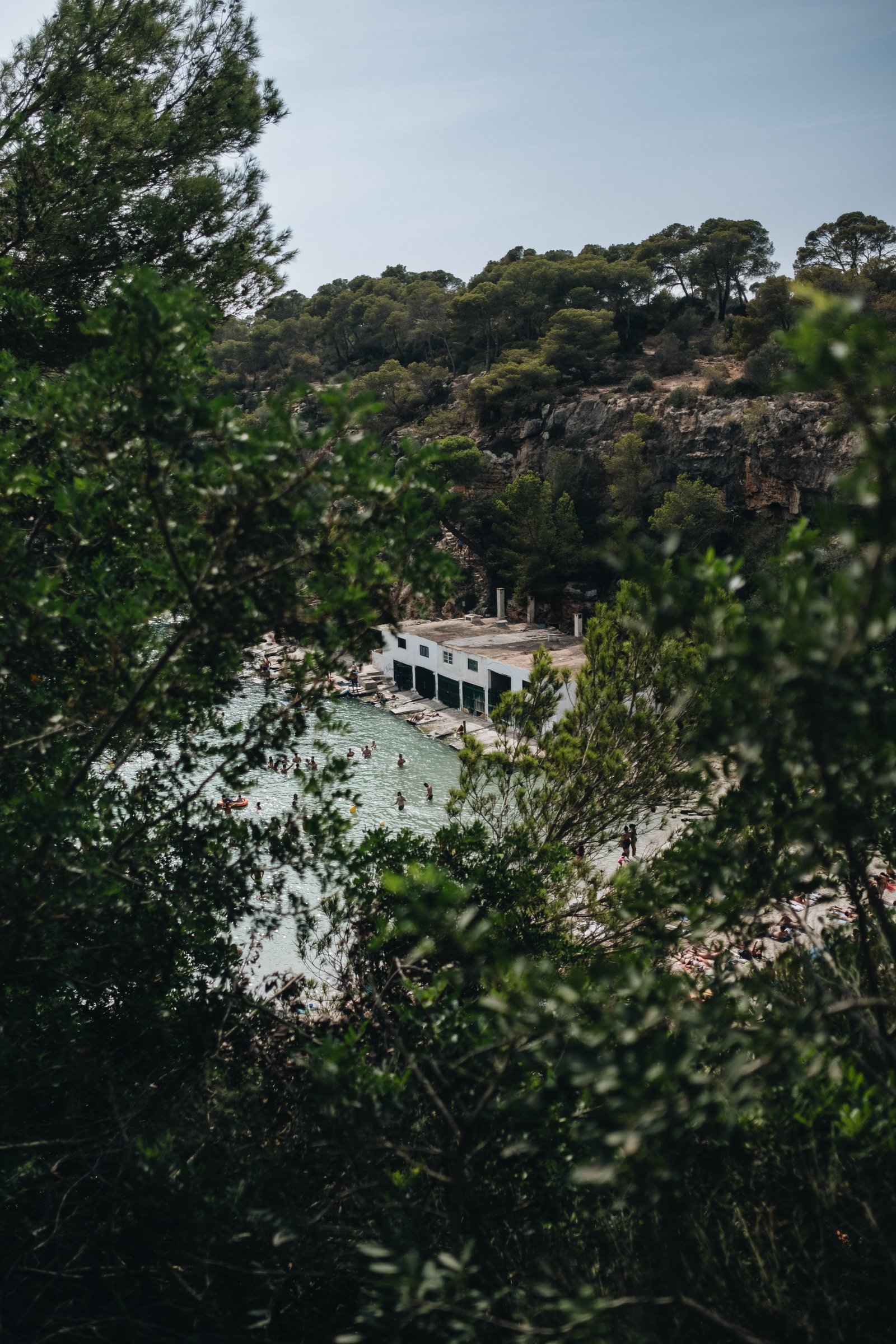
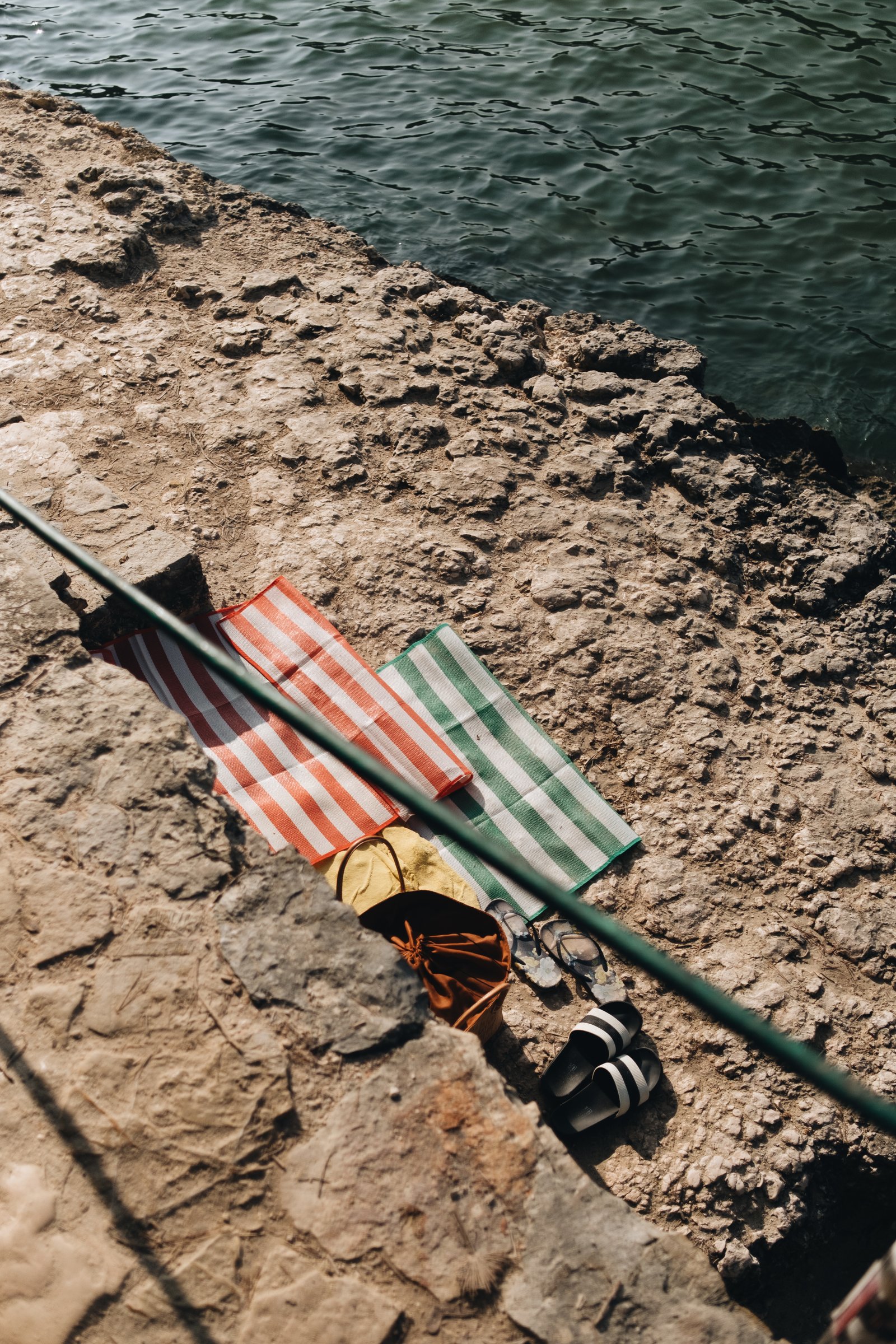
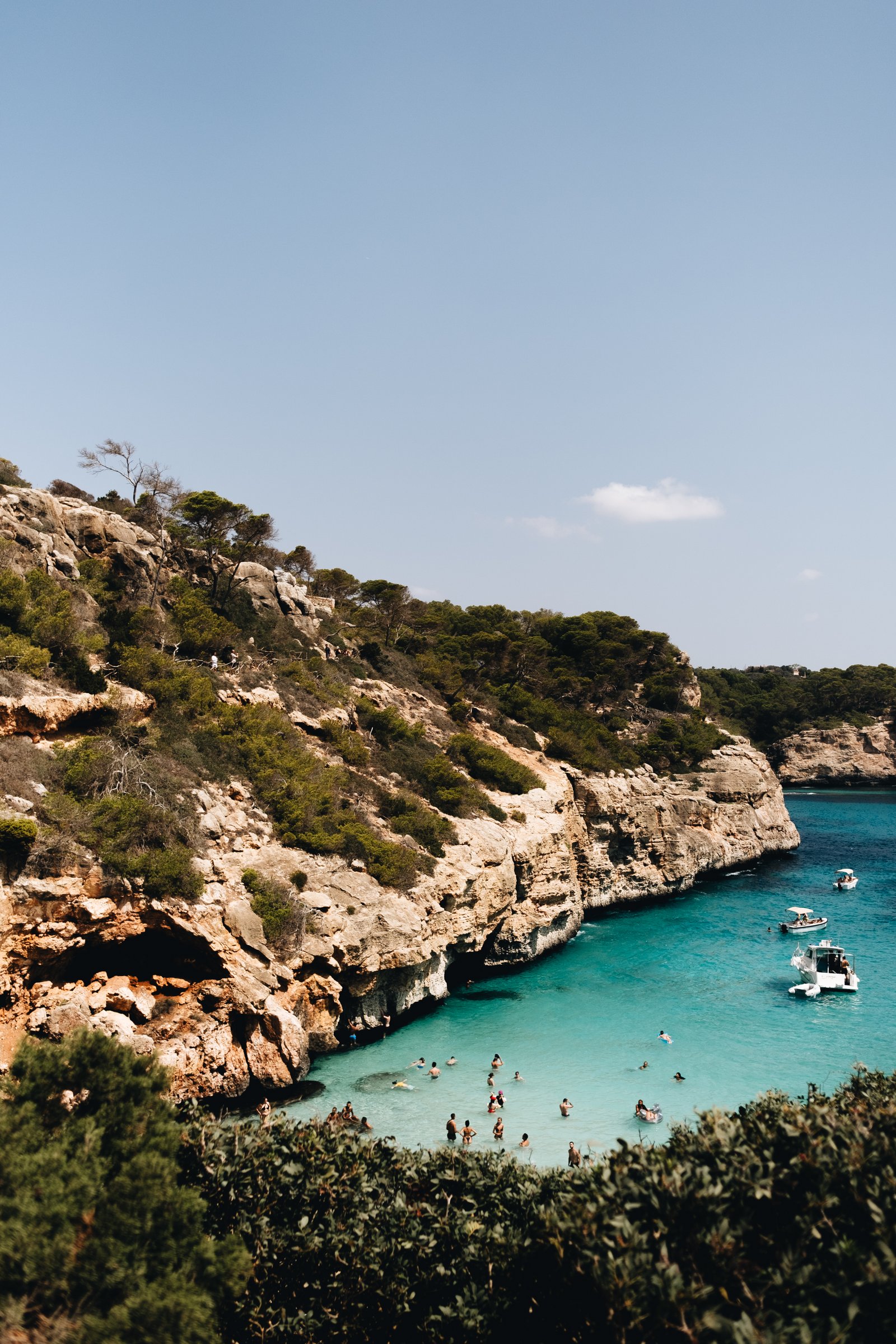
    Here are some photos from Caló del Moro, Cala s’Almonia, Cala Llombards, and Cala Pi (all in Mallorca). As I mentioned two days ago, these are some of the most beautiful public spaces that I have ever seen. We loved swimming in these coves. The Mediterranean is such a special place in the summer. But here’s a tip: If you’re planning to roam around on and jump off of the rocks, you’re going to want to invest in a good pair of water shoes.

    Next up: Marrakesh, Morocco.

    Camera: Fujifilm X-T3 (23mm lens)

  • The greatest photo of Venice I have ever seen

    This afternoon we went to the Mucem (Museum of Civilizations of Europe and the Mediterranean) here in Marseille. By far, my favorite exhibition was one that dealt with the urbanization of five cities surrounding the Mediterranean — namely Marseille, Venice, Istanbul, Cairo, and Alger. At one point, this was the center of the commercial world. Great empires were forged and great fortunes were made here. But things have changed a little since then. And in some cases, what we are now left with are scenes like the one you see above (photograph by Martin Parr). This is easily the greatest photo of Venice I have ever seen. Venice is a tiny city, but it receives tens of millions of tourists each year. This photo does an extraordinary job of capturing what that might feel like.

  • 🌊 Front door of our room

    Les Goudes, Marseille, France

  • Daydreaming about traveling again

    One of my favorite pastimes these days is planning out all of the places I am going to travel to once it is safe to do so and the world fully reopens. Traveling was something that I prioritized before COVID-19 and it is something that I know I will get back to sooner rather than later. But in the short-term, the travel and tourism industry is of course feeling it. According to this recent article from FT, there were 67 million fewer tourists around the world in March 2020 compared to last year. And in April, passenger demand was down even further with a 94% year-over-year decline. This is something, because globally, tourism is believed to account for about 10% of the world’s economic output. Over the last five years, 1 out of every 4 new jobs around the world was in the travel and tourism space. And for some countries, such as Cambodia, tourism accounts for over 30% of overall GDP.

    What has also happened over the last decade is that South and East Asia & Pacific has begun collecting a greater share of global tourism dollars, which is or was at about US$1.6 trillion in total. East Asia is now comparable to Europe & Central Asia — it may even be receiving a few more dollars at this point. However, there are some key differences. Tourism in Europe, more so than other region, relies on international travel. And since domestic travel is likely to recover before international travel, Europe is perhaps the most exposed in this regard. Europe also has a pretty pronounced peak. There is something magical about the Mediterranean in July and August and that is indeed when most people visit Europe (see above FT charts). Broadly speaking, the rest of the world doesn’t seem to experience this same overt seasonality. (If you think back to the start of COVID-19, you might remember that Asia’s travel “peak” usually happens in December.)

    Will international travellers feel confident enough by July and August? And if they don’t and Europe misses summer 2020, will travel plans get pushed to later in the year or will Europe need to wait for summer 2021? For me it’s feeling like a summer of road trips and local vacations. But that doesn’t mean I’m not thinking about and planning for much more. My suitcase and passport are ready. What about you?

    Charts: Financial Times

  • Revenue minus expenses

    One of the most important rules in personal finance is that you should live within your means. Sure you might be stretching to invest or start a business but, generally speaking, people who specialize in this sort of thing (which is not me) will tell you that it’s probably a good idea to spend less than you make.

    The same is, of course, true in business. Businesses generally try to make more money than they spend. Similar to what might happen in personal finance, there are instances where a company might decide to forgo current cash flow for future cash flow. i.e. Invest in future growth. But at some point, not making any money needs to stop and the company will need to post a profit.

    All of this probably sounds dreadfully obvious, but I often think of this very simple principle whenever I hear someone talking about something that should be done, but isn’t being done. Developers should be using triple glazed windows in all of their projects. The government needs to build a new subway line from here to over here. And the list goes on.

    There’s no question that triple glazed windows will perform better than double glazed windows. And there’s no question that a subway right outside of my single family home would be pretty darn convenient for my personal needs. But all of these things, unfortunately, cost money. They are expenses. And unless the revenues are there to support them, they, funny enough, tend not to happen.

    The same is true in personal finance. I should have a yacht in the Mediterranean. Why? Because having a yacht in the Mediterranean is typically better than not having a yacht in the Mediterranean. Sadly, the top line of my income statement tells me to, instead, focus my attention on the Toronto Island Ferry Docks.

    Update: One of our engineers has advised me that triple glazing is not always better from a noise control standpoint. Laminated and heavier glass typically performs better from this perspective.