
We are staying in our 6th hotel of this trip right now. And only 50% of these hotels have had air conditioning. This had led to a few restless sleeps where it was simply too hot. In one of our hotels, we had to ask them to bring a fan up to our room. But hey, this is Europe. I’m sure everyone thought we were spoiled North Americans. Interestingly enough, not having AC forces you to be more aware of the environment around you. Very quickly you learn that if you don’t shut the blinds or shutters when the afternoon sun is shining in, you are going to end up with a room that is too hot to sleep in. I try to be mindful of this back home in Toronto, where we do have AC, but there really isn’t the same imperative to both design and then operate around climate and local conditions. Active mechanical systems do much of this for us.
Tag: mechanical systems
-
Cities with perfect climates
Last year Nolan Gray mapped out “the cities of the world where you don’t need AC or heat.” And just recently he updated his data with the help of Guardian Cities for their “sweltering cities” series. As part of the study, they projected out average temperatures, in both the summer and winter, to 2059, showing which cities may become more dependent on air conditioning. The answer looks to be many.
In his original study, Gray had 9 climatic categories, all of which were based on average high and low temperatures throughout the year. Category 1 was you definitely don’t need AC or heat. These cities are essentially perfect year round. And category 9 was you definitely need heat and AC. These cities are basically the worst places on earth to occupy from a climate perspective.
Here is that climate classification system in lovely chart form (note his caption):
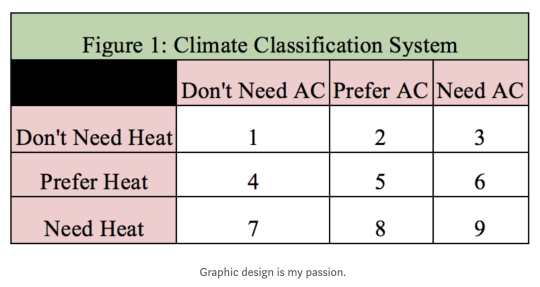
The climatic utopias ended up being places like Bogotá, Guatemala City, Lima, Mexico City, San Diego, São Paulo, and Sydney. The worst places were the southeastern United States, Central Asia, and northern East Asia.
But one factor that is not included in the study is humidity, which Gray rightly points out has a meaningful impact on comfort. Toronto, for example, is classified in his system as category 7. Heat needed. But AC definitely not needed. Personally, I would bump us up to category 8: AC preferred, but not needed.
Still, this is an interesting study. There are relatively few cities with so-called perfect climates. And I have always found these sorts of climates fascinating because they empower a very different kind of relationship to outside spaces.
-
UNStudio announces new tech architecture company (and thoughts on the smart home)
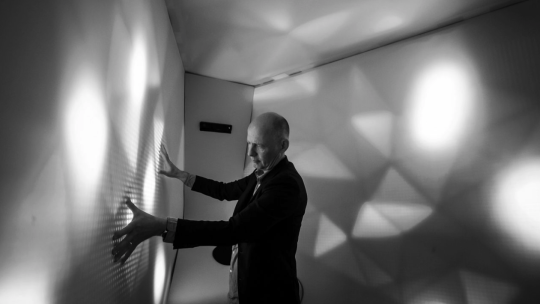
Dutch architecture firm UNStudio has just launched a new company called UNSense, whose purpose is to explore and develop “new sensor-based technologies that are specifically designed to positively impact people’s physical, mental and social health.” They are calling the new business an “arch tech company” and it is their belief that, at some point, all architecture firms will become arch tech companies. You can learn more about UNSense, here.
This announcement got me thinking about the state of smart home technologies, which, of course, is this massive buzzword that everyone is throwing around these days. Many of us have smart thermostats, voice assistants (that may be listening to our every word), wifi lights, and so on. And you can do some pretty neat things with software like IFTT, such as program your lights to come on at sunset or when you walk in the door.
But as cool as they may be, these smart home devices have always felt like patchwork add-ons to me. I understand that this is partially driven by what customers can easily adopt and I don’t mean to discredit the value that they bring, but today’s post is about reminding us to also think more fundamentally, as opposed to just incrementally.
Smart thermostats, for instance, give us the functionality to adjust our heating/cooling from our phone. But at the end of the day, they still control the same underlying system, which, by the way, is a fairly simple one. When it gets cold (because of our R-3 windows), the heat turns on. When it gets warm enough, the heat turns off. Zoned systems certainly add another layer of sophistication, but are we optimizing for the right variables?
UNSense works at three scales: Cities, Buildings, and Interiors. And if you look at what they are trying to do at the building scale, it is around the interface between inside and out. Designing transformable facade systems and buildings that can respond to their environment and our changing needs. These are not new ideas, but in today’s tech-driven world, the timing may just be right.
If you think about the climate we have here in Toronto, it is actually an incredibly difficult design problem. We have cold winters and hot humid summers, which means we have to solve for two different extremes. Mechanical systems have made that a lot easier to do, but if we’re going to meet the energy and greenhouse gas emission targets that we’re all talking about, we’re going to need a hell of a lot more than just smart thermostats.
Image: UNSense
-
4 design strategies for your cold-climate waterfront

Sugar Beach in Toronto by christophmarten on 500px
Since we’ve been discussing waterfronts lately, I thought I would share this post from ArchDaily talking about 4 ways that cold-climate cities can make the most of their waterfronts.
They are:
- Plan for winter sun
- Create plazas that block wind
- Break up outdoor spaces with comfort stations (not sure why they just have to be stations)
- Design for active winter programming
These, of course, aren’t new design strategies. Cities have been built around their climates since, probably, the beginning of cities. It wasn’t until more recently that we started basically ignoring local climates and focusing more on what mechanical systems can do to make us feel comfortable.
But I think that was a mistake. I don’t think that mechanical systems are bad though. I just think that there’s a lot that we can do first – without mechanical systems – to address local climates.
If you’ve ever sat on a patio during a swing season (i.e. right now) where the wind was blocked and you were in the direct sun, you already know that there’s a lot that can be done without relying on active systems.
But the other thing I like about this post is that it acknowledges the fact that winter waterfronts require just as much, if not more, design attention than a warm-climate waterfront.
Saying that we’ll (insert cold-climate city name here) never be Miami or Barcelona or Sydney is just giving up.
-
Sliding House
[youtube https://www.youtube.com/watch?v=ZxmvRDTELy8?rel=0]
A close friend of mine (from Urban Capital) sent me the above video this morning. It’s of the “Sliding House” in Suffolk, UK. If you can’t see it above, click here. You have to watch the video to fully appreciate the house.
Built as a place to retire, the Sliding House consists of a building envelope with fairly typical punched windows that physically slides overtop of a minimal glass structure. This allows the building to adapt to the changing seasons (or to the moods of its occupants).
This concept of adaptable architecture is incredibly interesting to me. Because for a lot of climates — where the temperatures can swing dramatically from hot to cold and vice versa — it can actually be incredibly difficult to design an efficient building.
When it’s cold, you’re trying to trap heat inside the house. And when it’s hot, you’re trying to exhaust heat to the outside. So by default, the building has to be adaptable.
In its simplest form, this could mean an operable window. But in a more elaborate form — like in the case of the Sliding House — the entire skin of the building might adapt.
And if it means having to rely less on active mechanical systems then I think it’s a step in the right direction.
-
How Energy Recovery Ventilation units work in a condo building
Lately I’ve been thinking that I don’t talk enough about architecture and about buildings on Architect This City. So today I’m going to step away from transit, driverless cars, and the other topics I’ve been discussing lately, and instead talk about something a bit more technical: mechanical systems and Energy Recovery Ventilation (ERV) units. If you’re thinking about buying or investing in a condo, I think you’ll find it useful.
Buildings work in many ways just like people do. They breathe in fresh air and they exhale out stale air. And just like you and I, once air has been exhausted out, it needs to be replaced, or made up, with more fresh air. In the world of buildings, this replacement air is called “makeup air.”
It’s for this reason that you’ll often see no smoking signs directly outside of buildings. It’s because if you happen to be smoking next to a fresh air intake, you’d actually be distributing cigarette smoke throughout the entire building. The same goes for idling trucks and other pollutants.
The amount of fresh air that needs to be pumped into a building will vary. For some uses – like hospitals and laboratories – the requirement for fresh air can be significantly higher. Sometimes as high as 100%. And that’s because you don’t want a building with toxic smells or lots of sick people to be relying on too much recirculating air.
You might then be wondering why we don’t rely on 100% fresh air in all buildings. And the reason is that it is incredibly expensive to do so. When you take in fresh air from outside, it needs to be conditioned before it can be distributed. And that takes energy. In the winter when it’s -10 degrees outside (hello Toronto), you need to heat up that air. Whereas recirculating air is already conditioned. So you just, well, recirculate it.
In most condo buildings, makeup air is supplied by dumping air into the corridors. To check if your condo functions like this, just look for a big vent outside in your hallway. This air then gets sucked into the individual suites by way of slits or openings around your front door.
So another way to check if your building operates this way is to see if your front door is letting in air from the hallway (or if it’s sealed). There’s nothing necessarily wrong with this approach, but sometimes you might end up pulling in smells from outside of your suite.
This now brings us to Energy Recovery Ventilation (ERV) units.
The way an ERV works is very simple. Let’s use our winter example, where it’s -10 outside (and you’re questioning why you live in a place that’s so cold). In this scenario, you’d be pulling in freezing air and exhausting out warm air from your apartment.
What the ERV does is transfer some of the warmth from the warm exhaust air to the cold intake air. This means the fresh air ends up coming inside your place at a warmer temperature and doesn’t need to be heated up as much. It’s “preconditioned.”
This saves energy. And it saves in utility costs.
But the other benefit of these ERV units is that, instead of pulling fresh air (or makeup air) from the corridor, it pulls it directly from outside of your condo suite. In other words, your front door is sealed and each suite is responsible for its own fresh air demands. The overall result is typically better indoor air quality, better energy efficiency, and lower utility costs.
At both DUKE and Kingston&Co, which are two condo projects that I’m currently working on a TAS, we’re putting an ERV unit into every suite. We think it make sense. But there are always questions around how much purchasers actually care about measures like this. Things like fancy countertops and appliances are usually what sells. Not some hidden mechanical unit that you’ll never see or even know exists.
But I think details like this matter. What about you?