Daily insights for city builders, delivered every morning at 6 AM ET. I’m Brandon Donnelly — a Toronto-based real estate developer and founder of Globizen. I’ve been writing here since 2013.

Tag: MBA

  • What you should study to become a real estate developer

    One of the most common questions I receive from readers is about what to study in school in order to become a real estate developer. Here’s one of those questions:

    “Thank you so much for your insight into the real estate development process! I was wondering if you could do a post on what educational degrees you think would best prepare someone for a career in real estate development?”

    I’m not surprised that a lot of aspiring real estate developers have this question on their mind. Compared to many other career options, the path to real estate development has traditionally been pretty informal. It’s much less structured compared to other professions such as law or medicine.

    But as the real estate industry continues to institutionalize (transition from rich families to institutions), I’m sure we’ll see recruitment become more structured as well.

    Already the MBA and Master in Real Estate Development (or some other permutation of that degree) have become — for many large real estate organizations — the prerequisite to getting in the door. So if you’re looking for a simple and safe answer, just get one of these degrees.

    To more fully answer this question though, I thought I would just share my own strategy for getting into real estate development. Because at the end of the day, there’s no one way to become a developer. Lots of people start out in other industries, only to fall into real estate later on.

    The way I started was by first identifying the skills that I thought I would need as a real estate developer and that I felt employers would be looking for. And I assembled this list by going on lots of informational coffee meetings with developers to make sure I was headed in the right direction with my assumptions. 

    In the end, this is more or less what I decided I needed to know:

    Planning: An understanding of local planning policies, zoning, and so on. For this one, it’ll help if you can pick a particular place and commit to learning it (which is what I did with Toronto). There are a lot of local particularities that you’ll need to grasp. Real estate is very much a local business.

    Finance & Economics: The ability to understand markets, build models, and crunch numbers just like a banker. That was my goal before I got an MBA. This includes discounted cash flow analyses, net present value calculations, internal rates of return, and so on.

    Sales & Leasing: There are a lot of people who think that this is the best way to start in real estate (particularly on the commercial side). Learn the nitty gritty of leases and deal negotiations and then figure out where you want to be in real estate. Because at the end of the day, development projects are only viable when you have sales and/or signed leases in place.

    Design & Construction: This was the easy one for me because I was coming from an architecture background. I could “read plans” and I didn’t need to convince people that I understood how buildings worked and how they were built. Instead, I needed to convince people that I had all the other skills.

    And I knew this because that was the feedback I received my informational coffee meetings while I was in architecture school. One CEO (of a large publicly traded REIT in the US) told me flat out: “I need to feel comfortable that you can negotiate and that you won’t fuck up the numbers.”

    And that stuck with me. I realized that I had an image to shed.

    To round out my skill set, I decided to specialize in real estate in my first masters and then get an MBA. And given the chance, I would do it the same all over again. But even if you don’t have the opportunity or inclination to do that, there are a lot of other things you can do to shore up your knowledge base.

    I took a number of ARGUS and Excel classes to learn how to build robust real estate models. You might be surprised at how much you end up learning about the real estate business by doing that. I also became involved in organizations like the Urban Land Institute and started going to every real estate panel I could find. And before committing to doing an MBA, I even thought about taking some accounting classes at a local College.

    So my point is that I think you should identify the skills and strengths that you have today and then figure out some way to acquire the missing ones. Go buy a real estate textbook. Take an online class. Go to industry events. Do whatever it takes to round out your skill set so that you can sit in front a prospective employer (developer) and tell them that you’re able to create value for them and their organization across every facet of the development process. That was my goal when I was trying to get in.

    Of course, those aren’t your only options. 

    You could also just work your way up by taking any job with a real estate developer. One of my closest friends did exactly that and today is doing incredibly well with no formal training in real estate or even a related field. You could also just go out and buy your first property and have a go at it. Many great fortunes have been created by doing exactly that.

    Either way, real estate development is an exciting business to be in. It can often be hard to get your foot in the door given the size of most development teams, but if it’s truly what you want to do and you work on acquiring the skills, I think you’ll eventually find your path.

  • STEM + Art = STEAM

    image

    Most of you have probably heard of the STEM subjects. STEM stands for Science, Technology, Engineering, and Mathematics. These academic fields have been the focus of many federal governments around the world as they have been seen as the key to driving innovation.

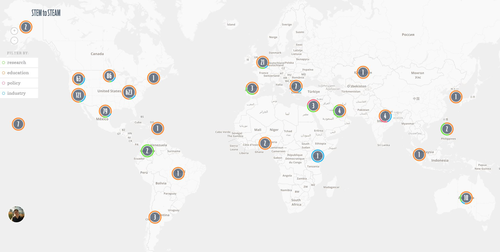
    But what you may not have heard of is something called STEAM. I hadn’t heard about it until this morning. STEAM is an initiative being led by the Rhode Island School of Design to integrate art and design into national agendas pertaining to STEM. STEM + Art = STEAM.

    Here’s a snippet from RISD:

    The goal is to foster the true innovation that comes with combining the mind of a scientist or technologist with that of an artist or designer. RISD offers endless examples of how art and design education teaches the flexible thinking, risk-taking and creative problem solving needed to solve today’s most complex and pressing challenges – from healthcare to urban revitalization to global warming.

    I couldn’t agree more with this initiative. As somebody who thought a lot about how to combine design and technology in my own career, I believe that there are huge benefits to a multidisciplinary approach to problem solving and innovation. In fact, it’s one of the reasons I decided to go to Rotman for my MBA (see Business Design).

    So if you feel the same way, I would encourage you to add yourself and/or your company to the “STEM to STEAM map” that RISD has created. Click here to do that.

  • The unmet demand for real estate education in Canada

    image

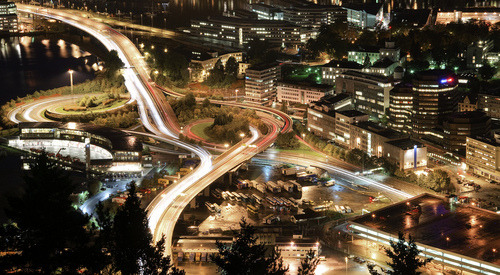
    I continue to be amazed by the unmet demand for real estate (development) education here in Canada.

    Following yesterday’s post on the real estate development process, I received a few emails from readers asking about the best university programs (MBA, MRED, etc.) and the best approaches for becoming a developer.

    I also had a good conversation on Twitter, which covered off some details that I had left out from my post (for simplicity) and which resulted in me suggesting that a real estate development school needs to be started here in Toronto:

    //platform.twitter.com/widgets.js

    //platform.twitter.com/widgets.js

    Now, part of the reason things are the way that they are, I think, is because the real estate industry has been historically dominated by private rich families. People didn’t go to school to learn how to be developers. They learned by doing and that was then passed down to the next generation. All it took was chutzpah.

    But as the real estate industry continues to institutionalize and become run by pension funds and large publicly traded companies, I think the point of entry will also become increasingly institutionalized. And that’s where dedicated real estate programs will continue to come in. 

    I’ve spoken to a few people at the Rotman School – where I did my MBA – and there doesn’t seem to be a huge interest in a dedicated program such as a Master of Real Estate Development (they already offer real estate courses). It’s more of a “longer term” strategy. 

    But I think that’s a mistake.

    I’m confident there’s strong demand from the student side, so hopefully a wealthy donor will step forward to help make this happen. The University of Toronto has both a great business school and a great architecture school. That feels like a great recipe for a first-in-kind joint degree offering.

    Image: Urban Learning (via Flickr)

  • The MFA is the new MBA

    Harvard Business Review recently published a conversation between Roger Martin – who is the former dean of the Rotman School – and Tim Brown – who is CEO of the global design firm IDEO. The title of the talk is “Capitalism Needs Design Thinking.” But I decided to call this post something else after reading Roger say this:

    My friend Dan Pink argued in an HBR piece in 2004 that the MFA is the new MBA. I wrote to Dan to say that if that’s the case we have a problem because America pumps out a mere 1,500 MFAs a year versus 150,000 MBAs. Thirty MFAs per state per year is just a rounding error. This is one of the reasons I was so keen on transforming business education. It’s a huge infrastructure: 27% of all graduate students in America are in an MBA program. If they’re all being taught how to analyze things to death, that’s going to affect how they’ll shape the future of business.

    But what this conversation is really about is the future of democratic capitalism, which is why I think it’s a nice tie-in to yesterday’s Architect This City post about startups and inequality.

    I’m very worried about the fact that in America we’ve now gone 24 years without the median household income rising — it was the same in 2013 as it was in 1989. That’s unprecedented in American history. The longest that’s ever happened before is when it took just under 20 years to recover, after the Great Depression. This long period of stagnation has coincided with the top 1% of the economy doing spectacularly.

    And so while it’s easy to point fingers at the tech community and say that it’s to blame for rising income inequality, the reality, I think, is that there are other more fundamental issues that need addressing. Roger and Tim believe that design thinking can help. Here’s another great snippet from the former:

    I think the way that government generally works is to think, think, think, think, and then finally create legislation that brings about some change, and then they ignore their legislation and say okay, we’re finished with that. Then people go and figure out how to game that legislation, and the government doesn’t do anything about it. Whereas if they had a design view of it, they’d say when they passed a bill, that’s just the best idea we’ve got now, we have to go see how it works in practice, and then fix it. That’s just not the mentality.

    Technology is having a profound impact on the world. And it’s something that is very visible. But part of the challenge is that governments aren’t keeping up. They are almost never out in front.

    So when something new comes along, like Airbnb or Uber, the reaction is to just stop it. It doesn’t conform to the rules and regulations currently in place, and so it shouldn’t exist.

    But as Roger and Tim point out, maybe we need to look at our rules and regulations as simply part of an iterative process (like designers do). Because if we did that, maybe we’d be better equipped to transfer the benefits of innovation over to society as a whole.

    Image: HBR

  • Doing new things

    image

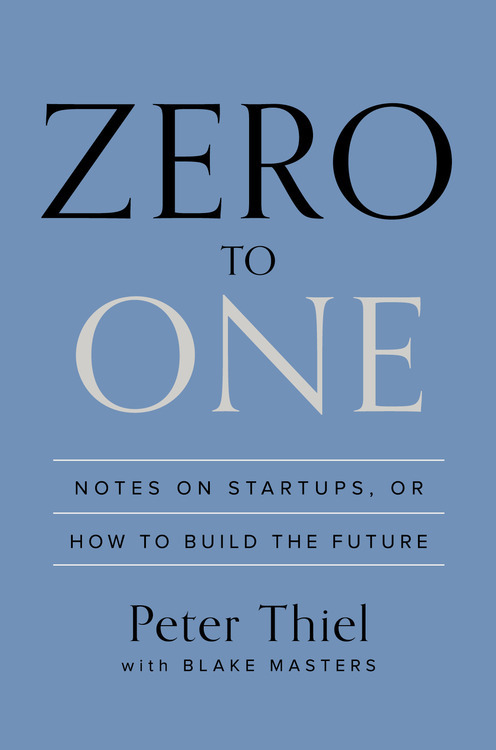
    I just finished reading Peter Thiel’s new book, Zero to One: Notes on Startups, or How to Build the Future. For those of you who may not be well-versed in the world of technology geeks, Peter Thiel is an entrepreneur and investor. He was one of the founders of PayPal back in 1998 and was the first outside investor in Facebook in 2004. He invested $500,000 for a 10.2% stake in the company!

    While the focus of the book is obviously on technology startups, it’s less about “here’s how you build a startup” (there is no formula) and more about “here’s how to think about the world, humanity, and the future of our civilization.” So even if you’re not a founder, or startup and technology enthusiast, I think you’d still find it really interesting.

    As one example, Thiel makes the distinction early on in the book between what he calls “vertical or intensive progress” and “horizontal or extensive progress.” The specific example he gives is of typewriters and word processors. If you take one typewriter and figure out how to make 100 of them, you’ve made horizontal progress. However, if you’ve just replaced typewriters with word processors, you’ve made vertical progress.

    In other words, vertical progress is doing new things and horizontal progress is just copying things that we know already work. In the grand scheme of the world, he argues that globalization is really just a form of horizontal progress. The rise of China is a result of them copying what has already worked in developed countries. But the true way to advance our economy and civilization is to not just copy – that’s easy – it’s to do, new, things.

    That, of course, is a lot harder to do. But to build the future, you need to build things and do things that haven’t been done before.

    Which is why Thiel actually gives $100,000 to a handful of college students every year so that they can drop-out and pursue a startup. In his mind, our education system is just perpetuating the status quo. MBAs move money around without creating anything new. Lawyers just preserve value and mitigate risk, also without creating anything new (Thiel is trained as a lawyer). And so he doesn’t believe that is the best way forward.

    This may not sit right with many of you, but questioning the status quo is a prerequisite if you’re trying to do new things.

  • An MBA post-mortem from a real estate guy

    image

    This post originally appeared on the Rotman Morning & Evening MBA blog

    As a recent graduate of Rotman’s Morning MBA program (and presumably because somebody over there reads Architect This City), I was asked to write a guest post for their MBA blog. More specifically, I was asked to share my thoughts on the real estate industry and on my time at Rotman. And since I haven’t really done a post like this before, I thought it would be worthwhile to do.

    But before I begin, I think it’s important to explain a bit about my background and my motivations for doing an MBA in the first place. Before going to Rotman, my first master’s degree was in architecture and real estate from the University of Pennsylvania. Basically it was a Master of Architecture combined with their MBA real estate concentration. So it included everything from real estate finance to real estate development.

    Having already done this 3-year program, there were a couple of things I wanted out of an MBA program. First of all, I wasn’t prepared to go full-time. Five years out of the workforce was simply too high of an opportunity cost for me and so part-time was all I considered. I also only applied to Rotman because I didn’t want to waste any time traveling outside of the city (or to other parts of the city). I also saw Rotman as a rising star and one of, if not the, best option in Canada.

    At the same time, I didn’t give much thought to the real estate curriculum being offered even though I fully planned to stay working in the real estate industry. I felt like I already had that sort of formal training and so, unlike some of my classmates who were looking to switch into real estate, I was after something else. I ended up majoring in Innovation & Entrepreneurship.

    What I was trying to do was really round out my skillset and fill in some of the missing holes: accounting, marketing, and so on. But even more importantly, I had drunk the kool-aid around Rotman’s focus on integrative thinking (renamed “business problem solving”) and “design thinking”. And since there will always be a part of me that thinks of itself as a designer, it seemed like the perfect program for me. 

    Because at the end of the day, it’s not that hard to learn how to create a real estate development pro forma or calculate your expected exit cap rate on some piece of real estate. That stuff is all fairly mechanical. It might seem quite mythical when you don’t know how to do it, but once you do, you quickly realize that a financial model is only as good as the assumptions you put in. As we’re told in school, garbage in = garbage out.

    The real value gets created in the assumptions. It’s created in the way you think about the market, your product, and your customers. And a lot of the time, the most value is created when you know or believe something that nobody else believes to be true. If you’re a lemming, you’re going to get lemming like returns and outcomes. So in a lot of ways, I went to Rotman to help me think better and think differently.

    In some industries, resting on your laurels can kill you in a relatively short period of time. See Blackberry. Real estate, on the other hand, is generally a bit slower moving. But that doesn’t mean that change doesn’t happen and that there isn’t room for loads of innovation.

    Just look at the Toronto of today versus the Toronto of 10-15 years ago. We’ve transformed ourselves into a city of high-rises where more and more people now want to live in the core of the city. This has brought commercial landlords back to the city center so that employers have downtown office space to attract the best human capital (see South Core) and it’s brought suburban retailers into the core to sell to these same urbanites. We’re seeing a complete reversal of the trends experienced with the last generation.

    Amidst all of this, I’ve been noticing a growing awareness and passion around cities. My blog Architect This City started as a forum for architects, planners, and developers, but it has grown into a community of thousands of people who simply love cities. They’re passionate about everything from architecture to grade-separated bike lanes (as geeky as that probably sounds).

    So I think that it’s not only the real estate market that’s changing, but also the professions involved with it. I’ve written a lot about the future of the architecture profession because I think we’re starting to see the emergence of new business models. Architects are becoming developers and developers are starting to become much more heavily involved in the shaping of the communities in which they build. Which is why in many ways, I think of my self as a city builder more than anything else.

    Finally, to make matters even more complicated, technology is starting to have a huge impact on the business. Zillow.com just bought Trulia.com for $3.5 billion to form a portal that will now serve around ¼ of the online US residential market. And Opendoor.com is getting ready to launch a product that seems entirely poised to disrupt the way homes are bought and sold in America.

    So what I’m getting at is that there’s absolutely no guarantee that the way we used to do something, is the way we’re going to continue doing it. In fact, I operate under the assumption that everything can and will be changed by somebody at some point. And if this is the way you approach things, then it should become abundantly clear to you that being able think critically is going to be one of your most important assets.

    When I was just starting at Rotman, I met for lunch with an upper year classmate who told me that one of the best things he’s taken away from the program is the ability to think about the way he thinks. That may sound silly to some, but in our uncertain world, it’s actually a great skill to have.

  • MBA

    image

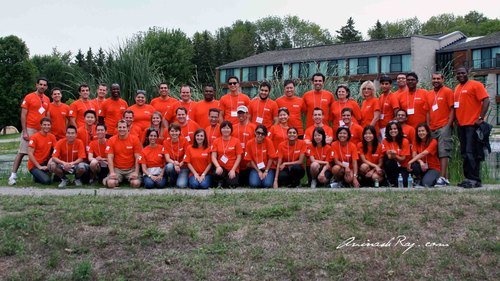
    Today was my MBA convocation at the University of Toronto’s Rotman School. Though I actually finished my degree last year (with a bit of fast-tracking), I had to wait until today in order to formally graduate with the rest of my cohort. I did what’s called the 3-year morning MBA. What that means is that I took most of my classes at 7am.

    The picture above is from our weekend retreat right before we started the program (I’m in the back row in the middle). It was taken in the summer of 2011. That feels like eons ago. It has been a tough slog.

    So today I’m taking the day off from writing about cities. Instead, I’m just going to enjoy the day off and the closing of this chapter in my life. An MBA is something I had been planning on doing even while I was in architecture school–so it’s nice to be able to check it off. But as I told my parents today after convocation: you ain’t seen nothing yet.

  • Studying to become a real estate developer

    Earlier this week I received a message from an undergraduate architecture student interested in moving into real estate development after school. That was his 10 year plan. And he had clearly read my blog post, “Transitioning from architecture to development.”

    In his message, he asked me if there were any books I would recommend he read to improve his real estate and finance knowledge, and, if I could have a “redo”, if I would still do a M.Arch (Master of Architecture) or just go straight to the MBA?

    After responding to his message, I thought: “This would make a good blog post, as well as an opportunity to talk about the current state of real estate education in Canada.” So here goes.

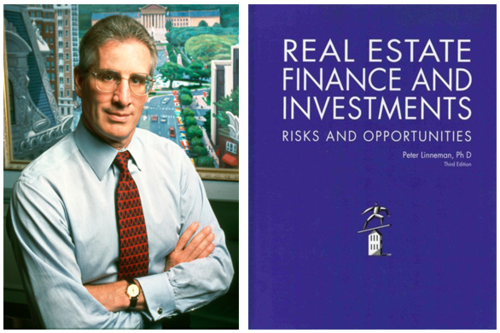
    If you’re looking for a good real estate book to get you started, I recommend checking out “Real Estate Finance and Investments: Risks and Opportunities" by Peter Linneman. It’s a much easier read and way more casual compared to most textbooks. When I was in grad school, people referred to this book as the "blue bible.” The cover on the previous edition was less purple and more blue. Unfortunately, he has also changed his glasses since the photo below.

    image

    To his second question, if I were to do it all over again, I wouldn’t change a thing about my education. I loved architecture school and combining it with business school classes and a real estate concentration was the best thing for me. I never wanted to be just a “numbers guy”, but I also never wanted to be a fanciful artist type who didn’t know how to build and manage a pro forma.

    Now, let’s talk about real estate education in Canada.

    I think we’re way behind. In the US, you can do a Master of Science in Real Estate Development, a Master of Real Estate Development, and all sorts of other real estate degrees. In Canada, you’re probably doing a MBA with a few elective real estate classes. Real estate is the largest asset class in the world. Does that not justify a dedicated degree?

    Part of the reason for this, I think, is because real estate development is still very much an entrepreneur’s business–though it has become more institutionalized in recent years. Because of this, people get into development from a variety of different professions. They just need that entrepreneurial hutzpah. And that’s all fine, but I still think that the profession, the economy and our cities would benefit from University trained developers.

    So if you’re reading this University of Toronto, I think–and I’ve thought this for awhile now–that The John H. Daniels Faculty of Architecture, Landscape and Design and The Rotman School of Management should get together and collectively form a real estate program. Who’s with me?

  • Real artists ship

    Last night at 10pm I finished my last MBA exam, ever.

    I’ve spent the past 2.5 years completing my MBA part-time at the Rotman School (at the University of Toronto). Since I had already done a 3-year masters (I know, it’s a lot of school), I had decided that my opportunity costs were simply too high and I wanted to remain working.

    But in order to do that, it meant I had classes from 7-9am and then went to work for the day. This past semester I had those morning classes 3 times a week. It’s made for an intense 2.5 years, especially when you add in group meetings, tutorials and other commitments.

    But as much as I’m happy to be finished the program (I fast tracked to finish a semester early), there’s always something bittersweet about closing one chapter and moving onto another.

    Since 2011, being a “MBA student” has been part of my personal brand. I would talk about the classes I was taking, and I would try and apply what I was learning to what I was doing in real life—both professional and personal. Believe it or not, I once had a debate with a Baptist Minister over the discount rate I used in one my calculations for a lease agreement.

    And while I have learned a lot through almost 6 years of graduate education in both Canada and the US, this is in many ways only the beginning. When I was younger I used to tell myself that my 20s should be about formal education, exploring, and crafting my identity, and that my 30s should be about execution.

    Well now it’s time to execute. In the words of the Steve Jobs: “Real artists ship.

  • The case for electronic road pricing

    I just finished reading an HBS business case on road pricing in Hong Kong for a class I’m taking as part of my MBA. Since it’s a topic that’s integral to cities, I thought I would post my case prep here. Below are the questions I was asked to my prepare, with my answers below.

    The case is essentially about traffic congestion in Hong Kong and a decision to either build more road (a bypass route running adjacent to the harbour: The Central-Wan Chai Bypass) or implement an Electronic Road Pricing (ERP) system, similar to what was implemented in Singapore in the 70s and in London in 2003.

    If you’re a reader of this blog, you can probably guess which side I’m going to lean towards. I believe fundamentally that the only way to construct a large well functioning urban region is on the shoulders of mass transit. 

    Q: For a typical commuter, what are the costs and benefits involved in using a car over using public transportation? Why would a commuter choose to drive? Who are the most likely to drive?

    A: In my view it’s a trade off between cost, time and, to some extent convenience, although convenience and time are somewhat linked.

    From a cost standpoint, your typical driver has the fixed cost of owning a car (payments, insurance, maintenance, etc.) and the variable costs of driving (gas, parking, applicable road prices, etc.). For those who have already committed to purchasing a car, probably as a result of where they’ve decided to live, it then becomes largely a question of variable costs. In most cases, these costs are higher for driving than they are for public transportation.

    But then comes the question of time and convenience. Residents of global cities, such as Hong Kong, are becoming increasingly cash rich and time poor. There’s a real value to time. And driving often offers speed, as well as the convenience of a personalized and “comfortable” ride (personally, I find gridlock highly uncomfortable). So if the value of the time you’re going to save by driving exceeds the variable cost of driving, you’re likely going to drive. In other words, higher income individuals should choose to drive.

    Q: What are the costs of traffic and congestion for society?

    A: The costs of traffic and congestion to society are huge. You have the lost productivity as a result of people and goods sitting idle. You have the strain on family life caused by working parents struggling to find enough time outside of work. And you have the environmental impact of idling cars.

    Here’s a few stats from Natural Resources Canada:

    “In fact, if Canadian motorists avoided idling for just three minutes every day of the year, CO2 emissions could be reduced by 1.4 million tonnes annually. This would be equal to saving 630 million litres of fuel and equivalent to taking 320,000 cars off of the road for the entire year. Eliminating unnecessary idling is one easy action that Canadians can take to reduce their GHG emissions that are contributing to climate change.”

    Q: Discuss the effect of electronic road pricing (ERP) on: (a) urban re-development and town planning, as well as residential property prices; (b) fare faced by public transport.

    A:

    (a) Based on London’s experience, their property market “recorded no impact, positive or negative, in or around the charging zone.” (Case) However, intuitively, I would expect development pressures and pricing to increase within the boundary of any charging zone and for prices to fall outside, along the periphery. The reason for this is that urban real estate models, such as the Monocentric City Model, argue that as you move out from the center of a city, land prices fall, but transportation costs increase. It ties into the whole “drive to affordability” notion. In the case of ERP, transportation costs have now increased for the periphery, so it could drive down land/property prices. 

    (b) Relatively speaking, an ERP system should make pubic transportation fares appear cheaper since the marginal cost of driving has now increased. Therefore, in the longer term, it may create an opportunity to raise fares.

    Q: Why is the use of road usually free of charge?

    A: Roads are thought of as a public good. And so they’ve been typically priced as such. However, roads, and in particular highways, are also thought of as an economic development engine. They’re a heavily subsidized form of infrastructure that have been used as a tool to spur suburban and exurban growth. By driving down the cost of transportation (without factoring in the environmental costs, of course), extensive highway networks have been used to unlock the value of previously under utilized outlying land. However, I disagree with the notion that all roads should be “free.”

    Q: Why roads are often provided and managed by the government and not by profit- maximizing firms?

    A: Because typically profit-maximizing firms require paying customers. Also, since they’re viewed as a public good, governments typically want to control them.

    Q: What are the differences between ERP and a classic toll?

    A: A classic toll is typically based on a fixed price that is paid regardless of the time of day. ERP is variable. Pricing fluctuates based on the time of day and/or the traffic and congestion levels. It’s the idea that as demand for the public good in question rises, so does the price of using it.

    Q: What are the advantages of implementing ERP?

    A: There are number of advantages. The first is that you get an immediate drop in traffic/congestion. This has been clearly shown through previous case studies in Singapore, London and Scandinavia. As a result of this, the city is then able to offer an improved user experience for those who are willing to pay the increased transportation costs. At the same time, the city now has a new revenue source that it can dedicate towards other infrastructure improvements, such as public transportation. Indirectly, the city will also benefit from increased productivity levels and a smaller environmental footprint.

    Q: Why are there such few cities that have successfully adopted ERP despite the fact that the idea is praised by many economists? Singapore is one of the few successful examples, why?

    A: It’s politically unfavourable. Nobody likes any sort of new “tax”. When Livingston first proposed a congestion charge in London residents called it “Carmageddon.” Few leaders have the guts to push something like this through.

    Singapore, on the other hand, had no choice. Geographically they couldn’t afford not to discourage car use and so the political will was there. I think that Hong Kong is in a similar boat.

    Q: Imagine that you were the government official responsible for the introduction of ERP. What would be your strategy to persuade the public to support your implementation?

    A: I would focus on two main ideas: (1) the value proposition being offered and (2) the future use of the funds being collected through ERP. 

    The main value proposition is reduced congestion for a segment of the population that I suspect would be willing to pay for the convenience. Again, I return to the idea of being cash rich and time poor. 

    For those with absolutely no willingness to pay for this convenience, the value proposition becomes increased investment in public transportation (as a result of the ERP funds). This is how I believe the funds should be allocated.

    I also think it’s critical to be open and transparent to the public about how exactly the funds will be used. You don’t want the public to think of ERP as a tax. You want them to think about it as investment in infrastructure in the region.

    However, it’ll take a change in mindset. People are accustomed to roads being “free.” But to paraphrase Harvard economist Edward Glaeser, from his recent book the Triumph of the City, if you offer a hugely valuable good—such as a road or highway—and make it free, you’ll never be able to keep up with demand. It’s for this reason that building new and more roads is rarely the answer. Traffic patterns simply adjust to take advantage of the increased supply.

    If you want to control usage, you need to slap a price tag on it.