Daily insights for city builders, delivered every morning at 6 AM ET. I’m Brandon Donnelly — a Toronto-based real estate developer and founder of Globizen. I’ve been writing here since 2013.

Tag: malcolm gladwell

  • Why traffic fatalities are lower in Canada than in the US

    We’ve talked about this before. If you live in New York City, you’re probably about a third as likely to die from a transportation-related accident as compared to the average American. And if you live in Paris, you’re probably about a third as likely to die from a transportation-related accident as compared to the average New Yorker.

    These stats might feel a bit intuitive to you. Both New York and Paris are big and dense metros with high public transit ridership. And that usually translates into less car accidents. As for the divide between these two cities, Paris is in Europe. It’s old. Most of its streets were built before the car had been invented. And all of these things are generally good for pedestrians. Makes sense.

    But David Zipper asked a good question today: So what’s going on with Canada? Canada is not in Europe (though some might argue that it sits culturally somewhere between the US and Europe). It’s not that old. And it generally has a car-oriented landscape just like the US. So why is it that in 2020, Americans were 2.5x more likely than Canadians to die in a car crash? The trend lines are also diverging between these two countries. Between 2010 to 2020, US road deaths increased 19% on a per capita basis, whereas Canada’s rate declined by about the same rate, according to David.

    Ultimately, we are probably going to need Malcolm Gladwell to write a book about this so that we can really figure out what’s going on. But in the interim, David does propose a few possible explanations ranging from Canadians buying slightly smaller vehicles to Canadians being slightly more law-abiding than Americans and so less likely to run people over. But one of the most persuasive explanations for me is that maybe our urban landscapes aren’t actually the same.

    More than a third of Canadians live in our three biggest cities: Toronto, Montreal, and Vancouver. And this number would be even higher if you looked at the full urban catchment areas of each. Either way, this is a significantly higher concentration than in the US, where about 13% of Americans live in the metro areas of New York City, Los Angeles, and Chicago.

    Part of this difference is because the US has almost 9x more people and has many more big cities to choose from. But it doesn’t change the fact that, despite our reputed love for things like forests and beavers, Canadians are actually quite urban. And as we have discovered, that’s a good thing for pedestrians.

    Photo by Jamshed Khedri on Unsplash

  • Architecture is a zero-sum game

    Witold Rybczysnki recently had this to say about the American Institute of Architect’s plans to ensure better equity across the profession:

    But the architectural profession is not the post office. It depends on the availability and preferences of clients, it depends on the swings of the economy, and success relies on individual drive and talent. Architecture is a zero-sum game, of course: there are a limited number of building commissions at any one time and if one architect gets the job, another doesn’t. Some of the most prominent commissions—the ones that build a reputation—are the result of architectural competitions. In these blind auditions, only the most talented have a chance to shine. And talent is not evenly distributed; “cream rises” as Stewart Brand memorably wrote in the Whole Earth Catalog. Hard to put your thumb on that scale.

    When I read this I couldn’t help but think of Malcolm Gladwell’s account of what happened when orchestras first started conducting blind auditions in the 1980s. I think he talks about this in his book Blink. As soon as selection committees could no longer see the sex of candidates — and could only hear their musical output — orchestras immediately started hiring more females.

    This is a neat and tidy example that seems to demonstrate that women are perhaps better classical musicians than men, even though the opposite was believed to be true before large screens started obfuscating our inherent biases.

    But the selections process for architects isn’t always as simple. This makes it a bit more difficult to determine if we truly have a meritocracy or if there are in fact some deep rooted prejudices that we maybe aren’t aware of.

    Of course, there is also the possibility that we have more or less a meritocracy, but that we have structural issues which are precluding certain people from fully developing their merits in quite the same way.

    Whatever the case may be, I agree with Witold that blind design competitions are probably a fairly reasonable way to level the playing field. The problem is that design competitions are not universally used. We have never done one when searching for an architect.

    I would like to think that we simply look at their portfolio (in search of both cool and relevant projects), objectively assess their abilities, and then consider their fees. But I also know that us humans are riddled with biases.

  • Suicides, cities, and the concept of coupling

    I am reading Malcolm Gladwell’s latest book right now, called Talking to Strangers: What We Should Know about the People We Don’t Know, and I am intrigued by the chapter on Sylvia Plath’s unfortunate suicide and the concept of “coupling.” The idea behind coupling, which stands in contrast to displacement, is that when someone makes the very sad decision to commit suicide, it can often be coupled to a particular place or context.

    Malcolm starts by giving the example of “town gas.” Prior to it being phased out in the 1960s and 1970s, most homes in Britain relied on a form of gas that contained carbon monoxide. And sadly, it became the most popular way for people to kill themselves. When Sylvia Plath took her own life in 1962, the death-by-carbon-monoxide-poisoning stat was 44.2% of all suicides in England and Wales.

    The concept of displacement, on the other hand, surmises that if somebody wants to kill themselves, they will eventually find another way. But Malcolm convincingly argues that that is not necessarily or very often the case. As town gas was phased out of British homes, the number of suicides also declined in lockstep. Turns out that many of the previous suicides had been coupled to that particular tool.

    Why this is potentially valuable to this blog audience is that this same coupling phenomenon can happen within our cities and to particular places. Malcolm gives the example of the Golden Gate Bridge in San Francisco, which has been the site of many suicides since it was first erected in 1937. The same, of course, can be the said about many subway systems around the world.

    But again, there’s evidence to suggest that if you can save somebody on the Golden Gate Bridge (a suicide barrier was erected in 2018) or on a subway system by installing safety doors, there’s a good chance that many of those people will never actually find another way to commit suicide. In other words, you can save a bunch of lives by having the right provisions in place and not assuming that something is a foregone conclusion.

    Photo by Chris Leipelt on Unsplash

  • The case for being a generalist

    As many of you know, I am huge of Malcolm Gladwell. And one of the things that he has popularized through his writing is this idea that we all need to spend at least 10,000 hours specializing on someting in order to become truly exceptional at it. The Beatles did this because of all the time they spent playing music. Bill Gates did this because he was fortunate enough to have access to a computer at an early age. And Tiger Woods did this because his father gave him clubs as a toddler and got him to start practicing the game of golf. But is this truly the rule or the exception?

    In this recent TEDx Talk by David Epstein (embedded above), he argues that we’re actually ignoring one of the less intuitive but more common journeys. For every Tiger Woods, there are many Roger Federers. For every success story that hyperspecialized at an early age, there are countless examples of dilettantes who dabbled — and perhaps struggled — across different fields, only to find their true passion later in life. And so while it may seem like they’re not making progress, or even falling behind in the short term, this may not be the case in the long term.

    All of this reminded me of a post I wrote early last year about finding meaning in life and business. In it, I cited an article from New York Times Magazine recounting the outcomes of Harvard Business School graduates — some of which went on to be happy and wildly successful, and some of which ended up miserable after school. The takeaway here was that non-linear paths, experimentation, and a bit of struggle along the way, is nothing to be ashamed about. In fact, it may be exactly what is needed in order to prepare for today’s increasingly complex and wicked world.

  • Malcolm Gladwell on the world after COVID19

    [facebook url=”https://www.facebook.com/munkdebates/videos/785234722004262/” /]

    I am a huge fan of Malcolm Gladwell (and not just because he is Canadian and also went to the University of Toronto). Last week he kicked off a new Munk Dialogues series focused on the world after COVID19. (The next Munk Dialogue will be with Fareed Zakaria on Wednesday, April 15 from 8 PM to 9PM Toronto time.)

    In case you’re not familiar with the Munk Debates, they are normally a biannual event held here in Toronto. Their mission is to help people rediscover the “art of public debate” and they do that by convening some of the world’s brightest and most creative thinkers. Right now they are doing that online.

    In this Q&A with Gladwell, they touch on a lot of the topics that we are all debating right now on Zoom calls with our colleagues and friends. When will we get back to “normal?” What will change forever? Is working from home the new normal? Will people still want to go for Mandarin buffet? I won’t spoil it for all of you, but I did want to mention three points that I found myself agreeing with (I guess that is partially spoiling it).

    The first is his analogy to weak link sports such as soccer. Here you’re only as good as your weakest player. This is in contrast to strong link sports such as basketball. In this case, you’re only as good as your best player. If you want to win a championship, you get someone like Kawhi Leonard. Gladwell argues that this pandemic has further exposed us as a complex weak link society. We don’t even have the basic PPE and testing in place to fight this virus.

    The second is about whether this will create a more permanent shift to working from home. I have said before on the blog that I think it’s easy to overreach at a time like this. We might think that everything will change, but we also have short memories. Gladwell takes it a step further and argues that the exact opposite will happen. This pandemic will actually set working from home back a generation. We are going to be so sick of isolating that we will race back to what we had before.

    Finally, I like the point that right now is an opportunity for experimentation. This is true of all crises. It’s a lot easier to question the status quo when the status quo has already been disrupted. And we are seeing this happen at all scales, from people experimenting and learning new things at home to new companies being formed. Hopefully there will also be lasting benefits to our public health systems.

    Anyway, I would encourage to watch the video. If you can’t see it embedded at the top of this post, click here.

  • Blue Zones

    Over the weekend I learned about Dan Buettner’s Blue Zones. These are cities and parts of the world where, according to Dan, people have a much longer life expectancy. The five regions he identifies as Blue Zones are: Okinawa (Japan); Sardinia (Italy); Nicoya (Costa Rica); Icaria (Greece); and Loma Linda (California).

    Many of you have probably heard of this finding from Malcolm Gladwell. I think he writes about it in Outliers. I had. But I didn’t know about Dan Buettner and his efforts to teach these “secrets” to other regions around the world. 

    I can’t speak for the efficacy of his consulting practice, but I think it’s interesting that some of the characteristics of these Blue Zones include a strong sense of family and community, as well as constant moderate physical activity. In other words, activity that is integral to normal life, such as lots of hills in a mountain town.

    The links between urban form, walking and biking (instead of driving), and health outcomes are something that get a lot of air time. It is, of course, one of the reasons why denser cities are thought to be healthier cities. They encourage more active forms of mobility.

    But what else could we be doing to make physical activity an inseparable part of urban life? In Rio de Janeiro, they often incorporate fitness facilities into their public spaces, whether it’s a parklet or the beach. That probably doesn’t qualify as inseparable, but it’s certainly a start.

  • “I hate golf”

    I am a big fan of Malcolm Gladwell, and not just because he’s Canadian and went to the University of Toronto (my alma mater), although those facts certainly don’t hurt.

    I’m late to his podcast, Revisionist History, so in case some of you are as well, I would encourage you to check it out. Every episode reexamines something from the past and questions: Did we get it right the first time? It’s very Gladwell. It’s a must listen.

    The episodes span a secret research project setup by the Pentagon in downtown Saigon during the Vietnam War to why rich people are obsessed with the game of golf. Spoiler: He hates golf.

    The golf episode will be of particular interest to many of you because it deals with real estate. Malcolm wades into something known as California Proposition 13, which is a constitutional exemption that keeps property taxes artificially low.

    It is what has allowed these “vast, gorgeous, and private” golf courses to continue to exist in expensive cities like Los Angeles. Otherwise they would have long ago drowned under the property taxes following reassessment.

    This also leads to a philosophical debate about what constitutes a change in ownership, since many clubs are member owned and Proposition 13 requires that there not be a change in more than 50% of the ownership. 

    But I’ll stop there. Give it a listen. Malcolm is just excellent.

    Photo by Rémi Müller on Unsplash

  • Gigantic shopping machines

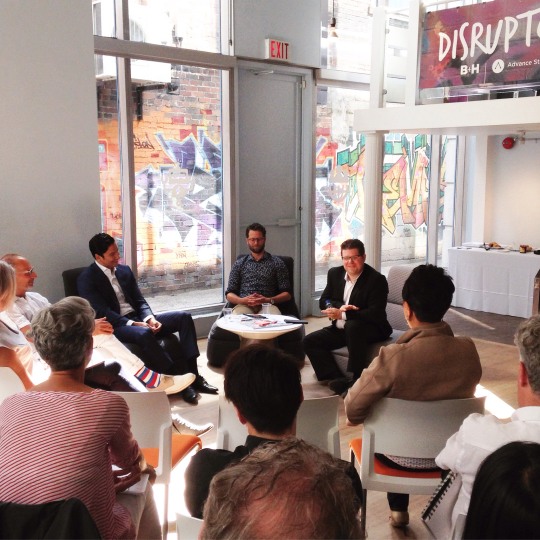
    image

    This morning I gave a presentation and participated in a design charrette that was organized by B+H Advance Strategy about the “mall of the future.” (See photo above.) It’s a 2-day event and I was only able to stick around for a few hours in the morning, but I think it’s great that B+H Architects takes the time to research and get a deeper level of understanding in the areas in which they work. Great design demands that.

    The way the charrette was structured was around a handful of future scenarios. The idea being that it’s impossible to accurately predict the future, but it is possible to play out different possible futures to see what you get. I’m looking forward to seeing what the teams ultimately come up with at the end. I would also be really curious to hear your thoughts in the comment section below.

    But before we decide on what malls are going to become in the future, it’s perhaps useful to think about how they got their start. The man largely credited with inventing the fully enclosed mall typology is a man by the name of Victor Gruen. He was a Vienna-born architect who moved to the US in 1938. 

    In the words of Malcolm Gladwell:

    “Fifty years ago, Victor Gruen designed a fully enclosed, introverted, multitiered, double-anchor-tenant shopping complex with a garden court under a skylight—and today virtually every regional shopping center in America is a fully enclosed, introverted, multitiered, double-anchor-tenant complex with a garden court under a skylight. Victor Gruen didn’t design a building; he designed an archetype.”

    The most interesting thing about this story though is that Gruen’s initial hope was that the mall would urbanize America’s suburbs. The garden court was supposed to be a kind of town square. And his broader vision included a mix of higher density uses surrounding the perimeter. But in reality the opposite happened: The mall helped to further suburbanize America.

    However, as our malls begin to show their age (or die) and as we relearn to appreciate walkable urban environments, mall landlords are increasingly thinking mixed-use and higher density. And ironically, many of the plans probably don’t look all that dissimilar to Gruen’s original ideas. So maybe one possible future is simply the one that Gruen wanted to create all along.

    Image: Kinetic Commerce

  • This building is shit. Or is it?

    I was looking through my photo archive this past week (which is all on an Apple Time Capsule) and I came across this photo:

    I took this photo in the winter of 2011 on a snowboarding trip to Lake Tahoe. It’s of the San Francisco Federal Building, which was designed by Morphosis and completed in 2007.

    The reason this photo stands out for me is because as my friends and I were taking photos of this building a man walked by us and said:

    “Why are you taking photos of this shit?

    …you guys must be architects.”

    To me this was a frank reminder that the designs that my architecture friends and I obsess over (at least the contemporary stuff) often go completely unappreciated by a lot of other people – perhaps the majority of people.

    This, of course, raises an interesting debate. 

    If the majority of the public think a building is shit, is it a failure? Should a building’s success be judged more by how its occupants feel about it? Or is it the “expert” opinion that really matters? (Expert is in quotations because I don’t like this term.)

    While important, I don’t think it’s as simple as these questions. Architecture can take years, decades, or even longer to settle in and become fully appreciated. Think about the buildings that your city may have demolished in the past but now regrets. Tastes change.

    With that, below is an excerpt from the architect’s own description of the Federal Building. Keep in mind that this project started construction in 2003 and so design would have started years before that. Hopefully it’s clear just how relevant the ambitions of this project remain some 15 or so years later.

    The re–definition of circulation and vertical movement paths provides opportunities for chance encounters, a critical mass in circulation, and places for employees to gather across the typical confines of cubicles, departments, or floor plates. The democratic layout locates open work areas at the building perimeter and private offices and conference spaces at the central cores. As Gladwell’s article points out, “…one study after another has demonstrated [that] the best ideas in any workplace arise out of casual contact among different groups within the same company.” Skip stop elevators, sky gardens, tea salons, large open stairs, flexible floor plans, and the elimination of corner offices endow the tower with a Jacobsian “sidewalk life” of cross-sectional interactions.

    Many of the same design decisions that create high quality workspace also maximize energy efficiency. The Federal Building is the first office tower in the U.S. to forgo air-conditioning in favor of natural ventilation. As a result of the tower’s narrow profile and strategic integration of structural, mechanical and electrical systems, the building provides natural ventilation to 70% of the work area in lieu of air conditioning, and affords natural light and operable windows to 90% of the workstations. A folded, perforated metal sunscreen shades the full-height glass window wall system and a mutable skin of computer–controlled panels adjusts to daily and seasonal climate fluctuations. With an energy performance that surpasses the GSA’s criteria by more than 50%, the project sets new standards for applications of passive climate control, while physically democratizing the workplace and enhancing employees’ health, comfort, and sense of control over their environment.

  • Conversational investing

    I’ve been spending my mornings this weekend, listening, watching, and reading things. I’m always reading to find content for this blog, but I’ve allocating more time to consumption this weekend. So you might be noticing a slightly different varietal of posts over the past few days.

    This morning it’s a podcast called Dorm Room Tycoon. It’s an interview with Andy Weissman, who is a partner with the New York venture capital firm, Union Square Ventures. The topic is “how we invest” and I’m enjoying the discussion.

    Andy describes their firm as being boutique and thesis-driven. Meaning they have theses and they look for companies that dovetail with them. But in addition, he also labels their approach as “conversational investing.”

    What does that mean?

    It means they listen, watch, and read. They blog (all the partners write their own personal blog). They engage and discuss. They put themselves and the firm “out there”. And they don’t pretend to have all the answers or to be able to predict the future. Instead they let their conversations – both internal and with the broader market – help them make their investing decisions.

    So why do I bring this up?

    Because in my own small way, I am trying to do the same with real estate development, architecture, and city building. I write every day to learn and because I am infinitely curious. If you want to know what I’m thinking about, read this blog.

    It’s for this reason that my favorite blog posts are the ones in which there’s lots of discussion in the comment section. It’s the market talking back, telling me whether I’m out to lunch or not. Ultimately, this idea of “conversational investing” is really about iterative decision making.

    Here’s the podcast embed in case you would also like to listen:

    [soundcloud url=”https://api.soundcloud.com/tracks/266734055″ params=”auto_play=false&hide_related=false&show_comments=true&show_user=true&show_reposts=false&visual=true” width=”100%” height=”450″ iframe=”true” /]

    Regardless, the Dorm Room Tycoon is worth checking out. They have other interviews with people like Malcolm Gladwell and Simon Sinek.