Daily insights for city builders, delivered every morning at 6 AM ET. I’m Brandon Donnelly — a Toronto-based real estate developer and founder of Globizen. I’ve been writing here since 2013.

Tag: main street

  • Roncesvalles is a great, single-sided, street

    Roncesvalles Avenue is a successful north-south main street in the west end of Toronto. I say successful, because it is truly a great street. It has transit, bike lanes, a fine-grained built form, and lots of interesting retail:

    But it is somewhat unique in that a large section of it is a one-sided retail street. Meaning, it looks like this:

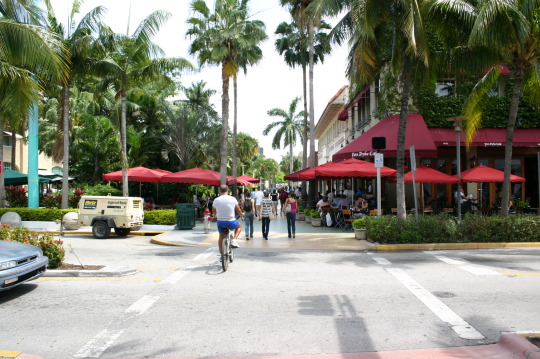
    This obviously isn’t a fatal flaw. It remains a wonderful street. And there are lots of examples of thriving one-sided retail streets. Ocean Drive in Miami Beach immediately comes to mind (notwithstanding the fact that locals tend not to go to it).

    But conventional retail wisdom does dictate that two sides are better than one. Consider this 2023 report by Cushman & Wakefield ranking the top global main streets across the world. All of the streets that I have been to before are two-sided:

    • 5th Avenue in New York between 49th and 60th (above 60th is, incidentally, when the street converts to single-sided because of Central Park)
    • Montenapoleone in Milan
    • The main street of Tsim Sha Tsui in Hong Kong
    • New Bond Street in London
    • Avenues des Champs-Élysées in Paris
    • Grafton Street in in Dublin
    • Passeig de Gracia in Barcelona
    • Bloor Street in Toronto

    These are all two-sided retail streets.

    None of this is to say that the west side of Roncesvalles has nothing going on. It has a diverse mixture of uses, including churches, libraries, apartments, and many other things. But I think there is still an argument to be made that it has been hamstrung by restrictive zoning.

    That said, Roncevalles is defined as a “major street” in Toronto’s Official Plan and so it does fall under the city’s new Major Street Study. Maybe that changes things.

  • Salt Lake City wants to turn Main Street into a pedestrian promenade

    Last year, I wrote about how Salt Lake City wants to build a new linear park around its downtown. That post can be found, here.

    Fast forward to today, and the city’s Department of Economic Development has just published a new comprehensive 215-page study that supports turning Main Street into a pedestrian promenade.

    Specifically, the area running from South Temple to 400 South, and including 100 South from Main to West Temple:

    As part of the study, they highlight a number of successful case studies from around the world, including 16th Street Mall in Denver, Bourke Street Mall in Melbourne, and Queens Quay here in Toronto.

    In the case of Denver, they cite the one-mile stretch as single-handedly generating over 40% of the city’s total downtown tax revenue! And in the case of Toronto, they refer to Queens Quay as a global destination. (Toronto readers, do you agree?)

    Like most city building initiatives, this vision is will take years to realize. But it’s interesting to note that, of the eight design alternatives included in the study, there is already one clear preference within the local community — option B.

    Option B is a pedestrian/transit mall, but with multi-use trails. In other words, it is a no-cars-allowed alternative that would still allow bicycles and scooters. Here’s the street section:

    If you’d like to download a copy of the full Main Street Pedestrian Promenade Study, click here.

  • Big global events, small mountain towns

    I was speaking with our lawyer in Park City this week, and he commented to me that he wouldn’t be going into the office next week because Old Town would be too hectic with the Sundance Film Festival going on. His office is right on Main Street.

    When small mountain towns host major international events, there are going to be spillover effects. This is true of Sundance in Park City (population ~8,500) and it is true of the World Economic Forum, which was hosted in Davos (population ~10,000) this past week.

    Perhaps the most obvious impact is that people can rent out their homes for large sums of money. And so lots of people both do that and try to profit maximize while doing it. Here are some anecdotes from Davos (via NZZ):

    Ten days before the WEF, there are still 25 listings on the Airbnb internet platform. The prices here range from 8,000 to 56,000 Swiss francs. The son of an apartment owner says that his family receives 12,000 francs a week for their three-room apartment, which is quite close to the convention center. However, he says he assumes that they could achieve significantly more. The family rents out the apartment through an intermediary.

    Another interesting impact in Davos happens on the retail side (also via NZZ):

    According to expert Robert Weinert, the average rent per square meter of retail space in Davos is 248 Swiss francs. A businessperson renting a storefront of 80 square meters must therefore pay almost 20,000 francs in rent per year. However, if that business vacates the store during the WEF, it can earn 60,000 francs – three times the annual rent for the facilities.

    What this means is that some retail spaces remain vacant all year, just so that they can be available for when the WEF arrives and people need temporary commercial spaces. And why wouldn’t this be the case: 20,000 francs for the year or 60,000 francs for a week. If I’m the landlord, I’ll take the additional 40,000 francs and not think about the property for the rest of the year.

    Of course, if you’re trying to create a vibrant community with things, like, occupied retail spaces, then this isn’t ideal.

  • How would you make this street better?

    Let’s resume looking at sidewalks and public spaces.

    If you look in the City of Toronto’s Official Plan for the stretch of Dundas Street West that runs between Dupont Street and Bloor Street West, you’ll find a map that looks like this:

    Red signifies “Mixed Use.” And so if you were to just look at this map, you might naturally assume that, in the real world, this is a continuous main street that connects The Junction neighborhood down to Bloor. But that’s not actually the case. Instead, it looks like this:

    Because of the rail corridor on the east side, it is a single-sided street. And generally speaking, these don’t make for the best retail streets. But it also has narrow sidewalks and a compromised public realm. If you go back to the map I shared yesterday, you get this:

    I don’t think 30cm is entirely accurate here, but that’s beside the point. What matters is that this is just one of many examples in the city of a discontinuous public realm. (Here’s another, undignified example, from Parkside Drive.)

    Over the years, there have been a number of design concepts proposed. Below is one by Brown + Storey Architects that was done I don’t know how many years ago. Their proposal widened the sidewalks along this stretch, and added bike lanes. They also proposed a roundabout at the intersection of Dundas, Dupont, and Annette, which is another matter that needs addressing.

    But none of this has been implemented and I don’t know of any plans to do it. When we were going through the rezoning process for Junction House, we were made aware of some transportation studies that had been done for the above intersection. But that’s about it. There wasn’t an actual ETA.

    However, now that my commute consists of walking up and down this part of Dundas, I’ve been thinking more about how it could be improved.

    I think there’s no question that the sidewalks need to be widened. It would also be helpful if there were crosswalks to facilitate getting off the south end of this exotic island:

    But equally important, I think that something should be done about the single-sided nature of the street. Given that there’s limited width, my mind immediately goes to shipping containers, or something similar, to start activating the east side of the street.

    This has already been done further south on Dundas (east of Bathurst):

    And it could work here too. Already there’s a Blondie’s Pizza anchoring the south end of this stretch (really fantastic pizza, by the way):

    But I would love to hear your ideas, as I’m currently in the market. I also don’t think that you necessarily need to be from Toronto in order to comment. Great streets are great streets. So if it were up to you, what would you change, if anything, about this part of Dundas Street West? Let me know in the comment section below.

  • Masterplanning a successful main street

    I had a discussion with a friend of mine over the weekend about what it takes to masterplan a successful retail main street. We talked about street networks, storefront sizes, the impact of Toronto’s PATH on ground level experiences, and a bunch of other things. Ultimately, we both agreed that this is really not an easy feat to accomplish. More often than not, we screw it up. Many of the most cherished retail spines in this city rely on buildings that were primarily built during a different era. They’re old stock.

    All of this got me wondering:

    Some people responded by saying it doesn’t exist. Hmm. Is our track record that bad? Let’s dig a bit deeper and expand the scope of this question. What are some of the best retail streets around the world that comprise of buildings that were all or mostly built in the last 50 years? I would love to hear from you. Please leave any responses and/or thoughts in the comment section below. I plan to look at this topic in more detail and share specific examples in the coming weeks.

  • Prerequisites for a successful pedestrian-only street

    image

    A few of us had a really great discussion on Twitter recently about pedestrian-only streets. It was kicked-off by a tweet about Spark Street Mall in Ottawa, which many argue needs a rethink.

    One of the comments was that a lot of people tend to overvalue their worth. And I will admit that I am probably one of those people. If you’ve ever visited places like Grafton Street in Dublin, Lincoln Road in Miami Beach, or Kensington Market in Toronto on a pedestrian Sunday, you can’t help but think to yourself: why don’t we do more of this? They’re such great places to be.

    But the research suggests that these success stories are few and far between. 

    Below are the key findings from a report that was shared on Twitter during our discussion. It’s by Cole E. Judge and it’s called, The Experiment of American Pedestrian Malls: Trends Analysis, Necessary Indicators for Success and Recommendations for Fresno’s Fulton Mall.

    – Pedestrian malls in the United States have an 89% rate of failure. Most have been removed or repurposed. Only 11% have been successful.

    – Of the 11% successful pedestrian malls, 80% are in areas with populations under 100,000.

    – Certain indicators need to be present for a pedestrian mall to be successful in the United States: near or attached to a major anchor such as a university, situated in close proximity to a beach, designed to be a short length in terms of blocks, in a town/city with a population under 100,000, and/or located in a major tourist location such as Las Vegas or New Orleans.

    – Cities that have embraced the Main Street and Complete Streets models have experienced turn-arounds in their downtowns with more investment, higher occupancy rates and more pedestrian traffic.

    Though the report lists proximity to a beach as helping pedestrian malls, this is more about having a strong anchor than it is about climate – which is a commonly held excuse for why they don’t work. The report cites lots of failed pedestrian malls in California.

    Furthermore, if you look at the list of successful pedestrian malls, about half of them are in colder climates. And if you search the report for the word “weather” it only comes up once. The word “climate” doesn’t come up at all. 

    So I don’t believe that they’re not possible in colder climates. Ski resorts, for example, usually have great pedestrian-only spaces because they have a strong anchor – the mountain.

    But I do agree that pedestrian-only streets aren’t possible everywhere. And the more I think about this topic, the more I agree that we are overvaluing pedestrian-only. I guess that’s why our focus today is more on complete streets.

  • The perfect high street

    How do you create and maintain a thriving high street in this era of increasing online shopping? This was one of the questions that Monocle asked at its recent Quality of Life Conference in Lisbon and here’s a video with its recommendations. Click here if you can’t see the video below.

    [youtube https://www.youtube.com/watch?v=Ox2WJwDbuIo?rel=0&w=560&h=315]

  • Mall or Main Street?

    It’s December. You’re in Toronto. The high for today is 5 degrees celsius. But the overnight low is expected to reach -11. Would you rather shop inside a warm mall or outside along a hip urban Main Street?

    This is a question that has come up a number of times in retail real estate meetings here in Toronto and the general consensus is often that people in our climate don’t want open air malls and Main Streets. They prefer enclosed malls.

    However, this is not to say that we don’t have open air malls and that we don’t have a thriving downtown, because we do.

    What I am saying though is that when the pension funds sit around contemplating what retail investments to make, they’re still largely thinking enclosed shopping centers. That’s why it seems like every major mall in Toronto is going through an expansion.

    But still, I wonder what the actual consumer preference is. Is it really our climate? Or have we just become accustomed to driving to the mall? Here’s a similar blog post talking about the Finnish obsession with shopping centers and malls.

    Generally speaking, I don’t love malls. There’s no urban authenticity. I find it much more enjoyable shopping at one-off and independent stores. But is this just a snobby architect, planning thing? I’d love to continue the conversation on twitter.