Daily insights for city builders, delivered every morning at 6 AM ET. I’m Brandon Donnelly — a Toronto-based real estate developer and founder of Globizen. I’ve been writing here since 2013.

Tag: luxury

  • Branded residences are a luxury good

    Elevate Miami, which I wrote about last month, just announced a number of new speakers and, more specifically, a number of new high-rise development projects that will be discussed at the conference. They are (not an exhaustive list):

    • Dolce & Gabbana Residences, Miami
    • Mercedes-Benz Places, Miami
    • Aman and One High Line Residences, New York
    • Indian Creek Residences & Yacht Club, Miami Beach
    • Edition Residences, Miami
    • AGE360, Curitiba, Brazil

    What should be clear from this list is that Miami is like a different planet. It is one of the places where the richest people in the world go to spend their money, much of it on real estate. Because of this, you can think of this real estate as a luxury good, which is why so many of them are now branded.

    In economic terms, a luxury good is typically defined as a good where demand increases — more than what is proportional — as incomes rise. For example, if a person’s income goes up by 1%, but their demand for a particular thing goes up by 5%, then this thing would be considered a “luxury good,” as opposed to a “normal good.”

    The technical definition is an income elasticity of demand that is greater than 1. More simply, this just means that as someone starts making more money, they will start spending a greater percentage of their income on luxury goods. This is in contrast to “necessity goods,” where it doesn’t matter how much money you make, you only need so much toilet paper, for example.

    What all of this suggests is that as people from all over the world get rich, they are likely to want more branded residences in a place like Miami. However, the flip side of this dynamic is that as incomes fall, the demand for luxury goods should, in theory, also fall more than what is proportional. It works both ways.

    So I’ll be curious to hear — from the developers at Elevate — how things are going right now. We’re at a time in the real estate cycle where everyone is rethinking their strategies. Or maybe, Miami truly is a different planet.

  • Condominiums — affordable or luxury?

    It is disappointing to me that we often vilify all condominiums as being “luxury condos.” I think the rhetoric is disingenuous and I think it distracts us from finding more productive solutions. As Mike Moffatt points out in this thread, if you look at virtually all major cities in Canada, the most affordable housing options are going to be condominiums and not low-rise freehold houses.

    In his case, he looked at current for sale listings in London, Ontario, and found that for homes under $400k, about 81% of them were condominiums, and for homes over $1,200,000, only 4% of them were condominiums. Again: the real “luxury homes” are the low-rise houses that not the condos.

    Now to be fair, John Pasalis is not wrong in responding to the thread and saying that on a per pound basis, or a per square foot basis, condominiums are actually more expensive. I’ve been saying this for years on the blog. When measured this way, mid-rise buildings are one of if not the most expensive housing typologies.

    So John’s argument is that, while condominiums may be the more affordable option for 1-2 person households, if you’re a family in need of more space, low-rise housing is likely going to be more affordable for you on a per square foot basis. And I would agree with this statement.

    The problem with this approach in the real world, though, is that people don’t buy and afford homes based on this metric. You can’t go to a bank and say, “I want to buy this house for $1.7 million dollars because it’s only $680 per square foot when I include the basement, and that’s better value than this 700 square foot condominium selling for $1,400 psf.”

    Sorry, the bank is going to tell you what total price you can afford based on your income. And that’s why condominiums in our market have tended to serve as a critical entry point for first-time buyers. They’re the most affordable option in terms of their total sale price.

    So in my view, labelling all condominiums as “luxury” is not exactly productive. It ignores their role in providing more affordable homes; it overlooks the supply constraint that low-rise houses represent in most of our cities; and it’s a distraction from the more systemic issue at hand: how do we make housing more affordable for everyone, including families?

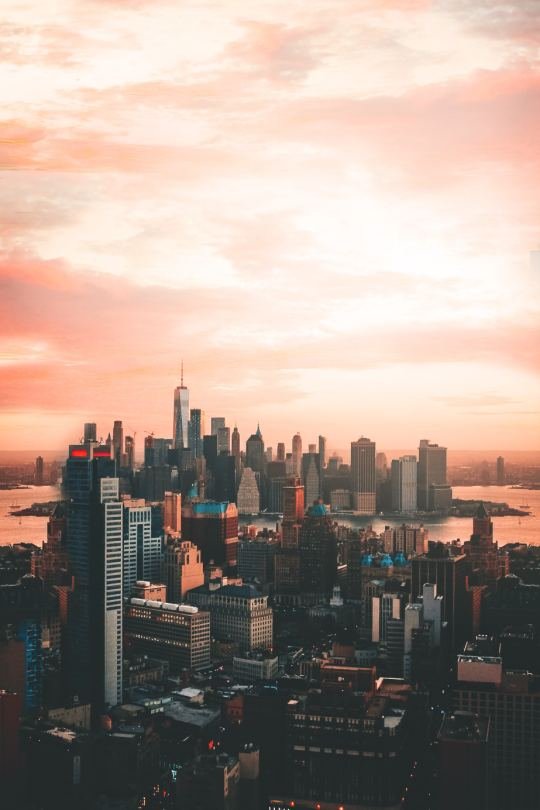
    Photo by Marcos Paulo Prado on Unsplash

  • Modern luxury

    “Luxury” is an overused term in the world of real estate. If you call everything luxury, then ultimately nothing is luxury, right? But let’s ignore this particular debate for right now. I was recently in a meeting where our interior design team — Mason Studio — made what I think is an important distinction between “classic luxury” and “modern luxury.”

    Classic luxury is old school luxury. It is the kind of luxury that says, “you can’t come in here unless you look like this.” And I’m sure that all of you can think of brands that might speak to you in this way.

    But I think this idea of luxury is quickly changing. Perhaps a good example of “modern luxury” is the recent collaboration between RTFKT — the web3 digital fashion company that Nike bought last year — and high-end luggage company RIMOWA.

    This, to me, is a brilliant collaboration. It is a sign of what’s to come — an ongoing blurring of our physical and digital worlds — and it is a less fussy kind of luxury; maybe I’ll mint an exceptionally expensive piece of luggage, maybe I’ll mint a digital collectible, or maybe I’ll just hang out on Discord.

    Now, one could argue that nothing has really changed and we’re just talking about different kinds of trappings. But that doesn’t feel exactly right. There is something about modern luxury that feels more inclusive to me. And I think that is why it is quickly becoming the dominant form of “luxury” — whatever that means.

  • How New York City became boring

    image

    On the cover of the July 2018 issue of Harper’s Magazine is a picture of New York City – with Rafael Viñoly’s 432 Park Avenue as the focal point – and the title: Death of a Great American City. New York and the Urban Crisis of Affluence.

    The long-form article is by Kevin Baker and it is an account of how New York City has transformed itself over the past few decades from a place of culture and character (and of cockroaches and discarded crack vials) into a place for the ultra-wealthy to buy ultra-luxury real estate that may or may not sit empty for more often than it is occupied.

    “As New York enters the third decade of the twenty-first century, it is in imminent danger of becoming something it has never been before: unremarkable. It is approaching a state where it is no longer a significant cultural entity but the world’s largest gated community, with a few cupcake shops here and there. For the first time in its history, New York is, well, boring.”

    This narrative and/or phenomenon is of course not unique to New York City, though it is surely more pronounced when you are one of, if not the, preeminent global city. In fact, I was sent this article by a reader who was wondering about the possible parallels here in Toronto. Thank you Natasha.

    The desire, which is how Baker ends his article, is that New York City should be a city of “workers and eccentrics” as well as “visionaries and billionaires.” It should be a place for “street photographers” and “hedge fund operators.” That sounds like a pretty cool place to me.

    But we all know how challenging this has proven to be for cities.

    Photo by Dean Rose on Unsplash

  • Waste and efficiency

    Here are a couple of cut-up snippets from a recent post by Seth Godin titled: “Waste and the new luxury.”

    Luxury goods are built on a foundation of waste.

    The front lawn is a luxury good, a sign that you don’t need to graze your cows on every square inch, and that you’re willing to waste the lawn.

    There’s a new luxury that’s occurring, though, one that’s based on efficiency.

    A luxury that’s based on investing in renewables, in resources that might be seen as endless, in smart design, in the satisfaction of knowing that others are benefitting, not paying, for the experience or the object you’re buying.

    Waste vs. efficiency.

    (Above is a photo I took this week in Dundas Square.)