Daily insights for city builders, delivered every morning at 6 AM ET. I’m Brandon Donnelly — a Toronto-based real estate developer and founder of Globizen. I’ve been writing here since 2013.

Tag: los angeles

  • Railway architecture and design

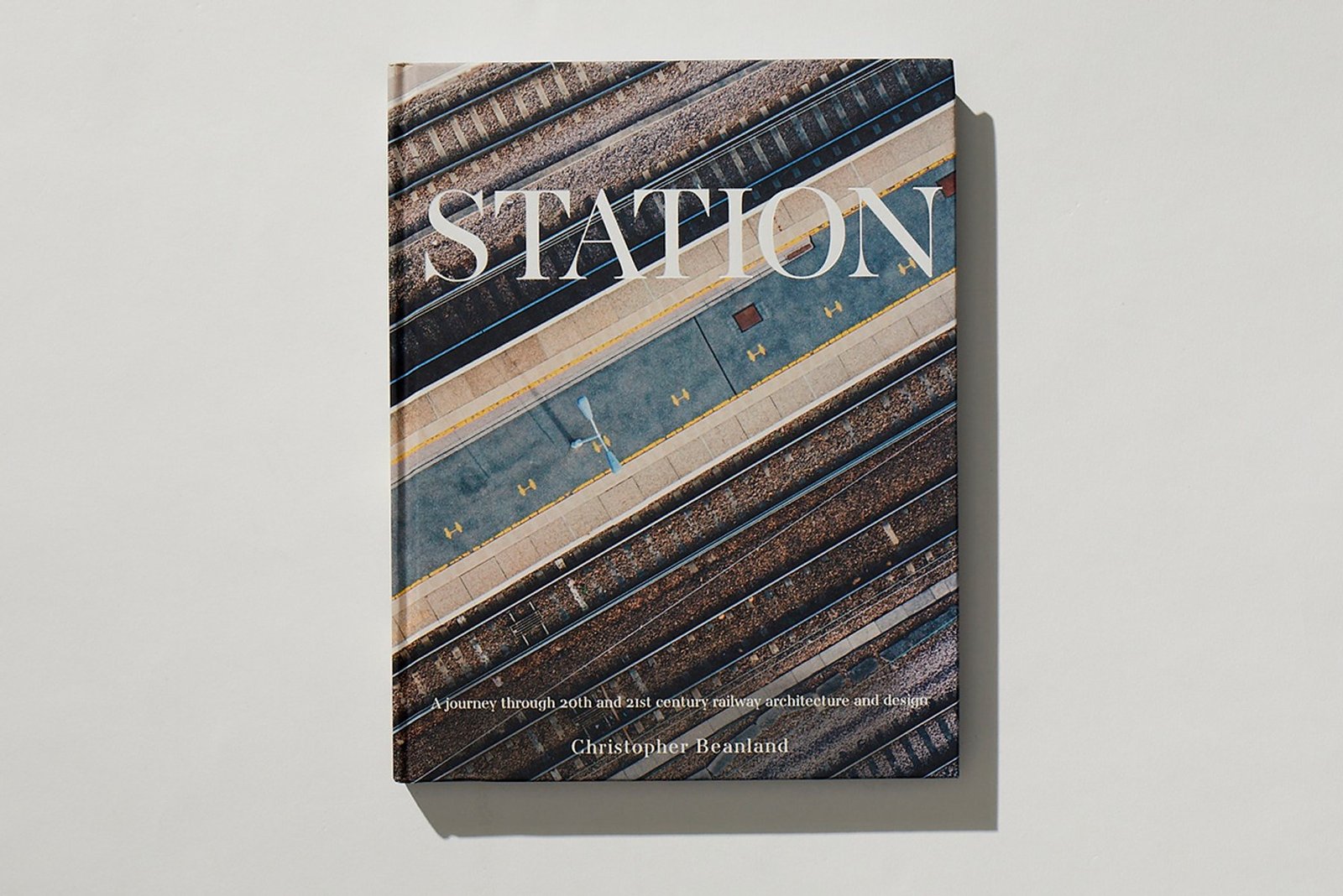
    I would rather take a train to the office than drive. And given reasonable options, I would rather take a train than get on a plane. I like trains. So by default, it means that I’m interested in Christopher Beanland’s new book, Station. In it, he profiles some of the best railway architecture from the 20th and 21st centuries. Places like Union Station in Los Angeles, Hauptbanhof in Berlin, and Byappanahalli in Bengaluru. But as cool as these places are on their own, I think it’s important to keep in mind that trains exist as part of a network. And like all transport, they promote time-space convergence. This is part of what makes these spaces so interesting — they’re like a portal to somewhere else.

  • Waymo’s robotaxis now make 50,000 paid trips every week

    A few days ago, Waymo announced (on X) that its robotaxis are now doing more than 50,000 paid trips every week across Phoenix, San Francisco, and Los Angeles.

    This means that the company is getting an average of 300 bookings every hour or five bookings every minute. And if you add in Austin, where it’s currently offering a limited number of rides, the company has completed a total of over one million rider-only trips.

    In the announcement, Waymo also went on to say that “fully autonomous ride-hailing is a reality and a preferred mobility option for people navigating their cities every day.” All of this is something.

    But perhaps the most important takeaway, right now, is that the company continues to claim — by way of a study from Swiss Re — that its robotaxis are already significantly safer than human-driven vehicles.

    I don’t personally know if this is true, but it’s not hard to believe. I mean, human drivers suck. And assuming it is true, we should all want more robotaxis on the road, because statistically, we would be significantly safer.

    The problem, though, is that autonomous vehicles suffer from a perception bias. We’re all looking for them to fail. If a robotaxi gets into an accident, it’s news. But if a human driver gets into an accident, it’s standard operating procedure. It’ll be interesting to see how and when this flips.

  • Wuhan is right now a driverless car capital

    Remember Wuhan? Well, it turns out that it is emerging as an important hub for driverless vehicles. Right now it is home to the largest fleet in the world:

    In Wuhan, 500 robotaxis, mostly run by Baidu, China’s rival to Google, recorded more than 730,000 ride-hailing trips last year. That compares with combined orders of more than 700,000 last year in Phoenix, San Francisco and Los Angeles, according to Waymo, the self-driving car developer of Google’s parent company Alphabet. Waymo told the Financial Times that it had “a couple of hundred cars” in each of the three fully autonomous zones.

    One of the things that is allegedly helping Chinese companies is that they have access to more data. The networks of cameras and other infrastructure that make Chinese cities the most surveilled in the world are, coincidentally, also good for training machine learning models.

    This has some industry experts speculating that China could reach an autonomous vehicle “tipping point” sometime around 2027. Meaning, the technologies will be significantly safer than human drivers (at least 10x) and ready for mass adoption.

    I don’t know if this is the right timeline. There have been many forecasts made over the years. But I do know that competition is good for progress and that having a rival can be an important motivator. And right now, this is yet another example of the US vs. China.

  • High-rise graffiti in downtown Los Angeles

    About five years ago, a project in downtown Los Angeles, called Oceanwide Plaza, halted construction. I don’t know exactly what happened, but the reports suggest corruption, financing problems, and the Chinese developer running out of money.

    Under typical circumstances, once you secure your financing and start construction, it should mean that you have enough money to finish the project. That is unless there are significant cost overruns, you experience a cash crunch somewhere else, and/or somebody does something bad.

    In fact, on some projects, the peak equity requirement occurs before construction commencement, meaning that once you do secure your construction facility, you should be able to reduce the amount of equity that you have remaining in the project (i.e. you can pull out some cash).

    Here it sounds like a combination of things went sideways. And now today, Oceanwide Plaza looks like this:

    The towers have been tagged pretty much all the way up. And it kind of looks like each artist commandeered their own suite in the building. Not surprisingly, this has been attracting a lot of attention and debate. The project is also across the street from the Crypto.com Arena and so there are a lot of eyeballs on it.

    On the one hand, you have artists being creative and doing something with an abandoned set of buildings — ones that are beset with corruption charges and that people are generally upset about. But on the other hand, you have a busted project, and you have artists trespassing and creating what others see as another symbol for a spiralling downtown.

    LA police are reporting that the site is going to be better secured and that all of the graffiti will be removed. But until then, this has got to be one of the tallest expressions of graffiti ever created.

  • How effective will a catalog of home designs be at improving housing supply?

    Last week, the Canadian federal government announced that it will be developing a catalog of pre-approved housing designs in order to accelerate the delivery of new homes.

    This is not a new idea. A similar approach was taken after the Second World War in order to quickly house veterans returning home. But in this current iteration, the catalog is expected to be focused on missing middle housing such as small multiplexes and student housing, and then later on higher-density construction.

    We have also spoken about this idea before in the context of ADUs in Los Angeles. And at that time, I wrote that the way to encourage more of something is to reduce friction. I continue to believe that this is the case, and so I do think that pre-approved designs are a positive thing, especially for smaller projects.

    However, it’s important to keep in mind that this is not the biggest barrier to new housing supply. The problem is not that developers and builders are all sitting around thinking “if only I had a design for a 5-unit multiplex.” The problem is that they’re sitting around thinking “if only I could make some money building a 5-unit multiplex.”

    So while reducing the barriers to entry is a good thing, the really important question for the designs in this upcoming catalog is: Can developers actually make any money building them? Because if the answer is no, it doesn’t matter that they’re pre-approved and ready to go. They won’t be built.

    Hopefully somebody is thinking about this because it will take some work. Every market is different. What works in one place, may not work in another. On top of this, what works today, may not work tomorrow.

  • It shouldn’t take 17 years to build affordable housing

    If you are the Los Angeles County Metropolitan Transportation Authority and you own excess land next to a transit line that you’ve just recently built, one possible option could be to give this land to a non-profit housing developer so that they can build some affordable housing. And this is exactly what was agreed to in 2007 with the Lorena Plaza site in the Boyle Heights neighborhood of LA. The proposal: 49 affordable units geared toward people making 50% of the AMI.

    However, like all things in development, things do take time. And when building new 4-storey housing complexes, there is always the real possibility that you might face several years (or longer) of fierce opposition. In the case of Lorena Plaza, it apparently took the developers from 2013 to 2020 to reach a settlement with the local councilman and their immediate neighbor (a commercial plaza). In the end, this project is now expected to occupy next summer (2024), which brings the total project timeline to 17 years.

    This is probably an extreme example and, thankfully, some of the rules have since been changed to help speed up projects like this one. Still, it is no wonder we can’t build enough new housing. (Los Angeles wants to build some 450,000 new homes by 2029.) Time isn’t free. And according to the WSJ, this relatively small project ended up costing US$34.2 million to build. That’s nearly US$700k per suite. A number that will buy you a lot of home in many cities across the US.

  • You don’t want a version of Las Vegas’ Sphere

    Full disclosure: I’ve never really been to Las Vegas.

    I say “really” because I did pass through it as a kid. But I’ve never been during a time in my life when I could actually remember it and, to be honest, I’ve never had a huge desire. Though, I was interested in the work that Tony Hsieh was doing in downtown Vegas. And I have had people try to tempt me with the lure of good electronic music (and by good I mean not EDM).

    Then all of a sudden, Refik Anadol revealed this enormous sphere that shows happy faces. And now I really want to go to Vegas. So at some point, I will endeavor to do that. But the other thought that came to mind when I first learned about the sphere was “this seems to be working, which means other cities will likely copy it and want their own version of Vegas’ sphere.”

    This is, of course, an understandable desire. And today I learned that Los Angeles is working on a “tiny Las Vegas sphere replica” for Sunset Boulevard. Despite being “tiny”, I’m sure it’ll be pretty cool too. But in the end, who wants to be a replica? The aim should never be to recreate some version of what another city has already done (see “Two very different beans“).

    The aim should be to create something new and truly remarkable. And Las Vegas did exactly that with its sphere. So much so that, one day, I may actually visit the place.

  • Is less people walking bad for traffic fatalities?

    Here’s some recent data, via CityLab, suggesting that Americans are walking less and driving less, but killing more people when they do drive around. (The report is based on data from 2019 to 2022.)

    My first reaction to these high-level findings is that they seem to make sense. This time period was the pandemic. And people were locked away at home (though I used to take some seriously long walks around downtown during this dark time).

    So I don’t know, I’m not sure we can conclude that walking less is truly a structural phenomenon. Similarly, I’m not sure that we can immediately conclude that cars are becoming increasingly more dangerous.

    According to Wikipedia, deaths per capita, deaths per billion vehicle miles traveled, and total deaths, have all been generally declining in the US since the 1960s.

    However, I do wonder if there’s some sort of correlation between people walking less and car-related fatalities. The most dangerous streets, in my mind, are often the ones that don’t have a lot of pedestrians.

    That’s why, broadly speaking, it feels safer walking around Manhattan than it does Los Angeles. So maybe less people walking is enough to trigger an increase in pedestrian fatalities.

  • What makes cities grow faster?

    In may ways, this recent article by Brian Potter about how fast cities can grow, feels intuitive: Small cities tend to grow faster than big cities (on a percentage basis) and, as cities get bigger, their growth rates tend to decline. It is, however, still interesting to see the data behind this intuition:

    A city of less than 100,000 might be able to have growth rates of 10-20% or more, and cities of up to 3-400,000 can potentially have growth rates in the neighborhood of 10-15%. Potential growth rates tend to fall as cities grow larger, and cities above 1 million people almost all grow at less than 10% per year, and usually less than 5% per year. The US, the Middle East, Southeast Asia, Africa, and South America all seem to have followed this basic pattern, assuming the data is reliable.

    It is also a good reminder just how much of an outlier China is:

    Unsurprisingly, since 1950, Chinese cities have mostly exhibited higher growth rates than US cities. Only around 12% of US data points are above a 5% growth rate, whereas for China this is close to 50%. China also has 2.5x the fraction of cities growing above 10% per year, and 3.3x the fraction of cities growing above 15% per year.

    And some cities are outliers even within China. The most notable here is Shenzhen, which saw enormous growth after it became China’s first special economic zone in 1980. At a population of around 200,000, Shenzhen was growing at 35% annually, and it was still growing at over 20% annually when its population crossed 2 million.

    Just imagine these numbers compounded. Even small variances can result in significantly different outcomes over time:

    New York’s growth rate, however, declined less than Los Angeles or Chicago as the city grew larger. At around 3.5 million people, New York was still growing at over 3% per year, compared to less than 1% for LA and Chicago. This may not sound like much, but it’s the difference between doubling in size every 23 years vs. every 70 years.

    Now here’s what I’m wondering after reading the article: Should we be thinking of city size as the single most important factor in determining urban growth? Because my mind immediately went to population densities, zoning controls, and other factors that might constrain or encourage growth.

    But the data seems to suggest that, for many cities, this doesn’t seem to matter over the long run. It is as simple as saying, “this city has X number of people and so it’s more than likely growing at somewhere around Y% per year.”

    That said, what’s up with China? What is it that allows a city of 2 million people to still grow at over 20%? Is it the sheer influx of people migrating from rural to urban areas? Or is it that you need a one-party authoritarian state to really clear the way for growth?

    As cities get bigger there does appear to be a natural tendency toward slower growth. Part of this is the low base effect. But the declines are not always consistent and there are meaningful outliers. I am now curious to know what, for the most part, causes these differences.

  • Los Angeles and the automobile

    Oftentimes when I think about Los Angeles, I think about the fact that you generally have to drive everywhere. And since I have a personal preference for dense and walkable cities, this thought helps me feel slightly less envious about their perfect weather.

    Los Angeles is probably the original car city. Here is an excerpt from this excellent post by Brian Potter, where he summarizes a 1987 book by Scott Bottles called, “Los Angeles and the Automobile”:

    Los Angeles was especially quick to adopt the car. By 1920 Los Angeles had the highest per-capita rate of car ownership in the US, four times more automobiles per capita than the US average, and eight times more than the much-denser Chicago. In 1920, 9 times as many people entered downtown LA via streetcar as via automobile. By 1924, that had nearly equaled.

    And interestingly enough, people started using them, almost immediately, to create Uber-like services:

    A popular early use of the car for public transit was the jitney. Car owners would pick up passengers (often waiting at streetcar stops) and drive them to their destination for the same price as a streetcar ride (5 cents). Car owners would often simply put their destination in their windshields, and pick up anyone along the way who was headed in the same direction. Because jitney travel was much faster than streetcars, and wasn’t limited to the fixed streetcar routes, jitneys often had better service than streetcars.

    Jitney travel first appeared in Los Angeles in 1914, and by November of that year was being used for thousands of trips per day. The jitney quickly spread to other cities. By early 1915, an estimated 62,000 jitneys operated around the country in cities such as San Francisco, Seattle, Denver, and Birmingham. As jitney travel became more popular, electric rail companies found that they were losing significant ridership

    What this again underscores is just how disruptive the car was — right from the outset. It was quickly seen as being more convenient, especially in a city like Los Angeles, which wasn’t as dense as its counterparts on the east coast.

    Sadly, and as Potter suggests in his post, it is not clear that the headwinds facing public transit have changed all that much since the first jitneys started appearing on the streets of Los Angeles a century ago.