
Daily insights for city builders, delivered every morning at 6 AM ET. I’m Brandon Donnelly — a Toronto-based real estate developer and founder of Globizen. I’ve been writing here since 2013.

Tag: life

  • Zaha Hadid dies at 65

    Today the world lost one of the most important architects of our time: Zaha Hadid. She was only 65.

    But the thing about architects, particularly famous “starchitects” such as Zaha Hadid, is that when they pass, they leave behind a rich legacy through their buildings. So probably the best way to write a sad post like this one is to just share her work. Courtesy of the Guardian (she was an Iraqi-British architect after all), here are: Zaha Hadid’s 10 best buildings in pictures.

    I did, however, want to add a few more thoughts. 

    When I found out about her death I was sitting in the St. Lawrence Market having lunch. I had my phone out and the news had completely flooded my social feeds. I immediately started messaging a few people because, well, she was Zaha Hadid – a figure you don’t go through architecture school not talking about. But it also hit me because she was only 65. This is the age that some people retire at. It’s the age that some people work their entire lives for.

    Whenever this happens I can’t help but think to myself: Why are we so afraid of risks? (I know that this is part of the reason.) And are we even focused on the right risks? So many of us are afraid of sticking our neck out and potentially failing, and yet we all have an expiry date, which means there’s the big risk of potentially dying without having done all the things we want to do. Logically, this should probably be the greater risk.

    I realize that this may sound a bit trite, but it feels appropriate. Zaha Hadid took big risks. Her architecture was way out there and that meant she struggled early on. Not only was she a female in a male dominated industry (she was the first woman to win the Pritzker Prize), but her work carved out an entirely new architectural language. She embedded technology into the world of architecture – something we talk a lot about on this blog.

    The sad thing about death – besides the obvious death part – is that it can take someone dying to remind you of the shortness of life. So to end, I’m going to leave you all with an excerpt from a recent essay by Paul Graham aptly called, Life is Short.

    “If life is short, we should expect its shortness to take us by surprise. And that is just what tends to happen. You take things for granted, and then they’re gone. You think you can always write that book, or climb that mountain, or whatever, and then you realize the window has closed. The saddest windows close when other people die. Their lives are short too. After my mother died, I wished I’d spent more time with her. I lived as if she’d always be there. And in her typical quiet way she encouraged that illusion. But an illusion it was. I think a lot of people make the same mistake I did.”

    I promise that tomorrow’s post will be less sad.
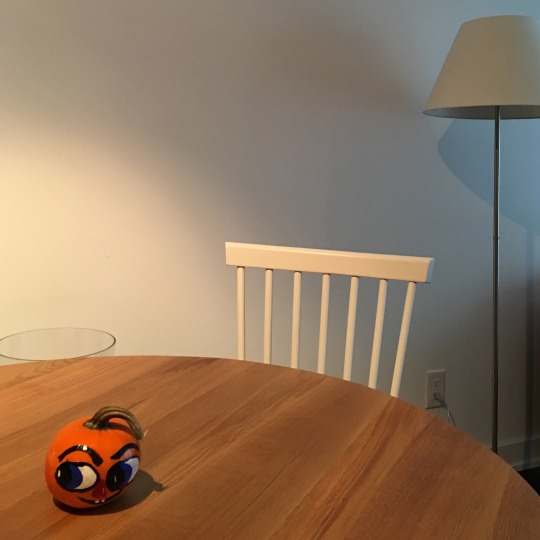
  • Living minimally

    “The wisdom of life consists in the elimination of non-essentials.”
    – Lin Yutang

    Yesterday I posted the above photo on social media with the caption: 

    “This year I decided to go ALL OUT for Halloween.” 

    A friend then responded and said: 

    “A minimalist does Halloween. Love it.”

    I’ve been called a minimalist many times before. And it is certainly something that I think about. Oftentimes I feel like life is a constant battle against physical and mental clutter. But that the more you can rid yourself of that clutter, the happier and freer you will feel.

    It’s why I scan most of my paperwork into Evernote and then throw out the hard copies. It’s why I tend to wear a lot of white dress shirts and black t-shirts – it keeps life simple and reduces decision making. And it’s one of the reasons I’m so attracted to laneway houses and small spaces. I don’t think most of us need as much home as we think we do.

    If this is something that also interests you, I recommend checking out a blog called The Minimalists. I just recently subscribed to them.

  • Formula for life

    https://500px.com/embed.js

    Earlier this week I somehow stumbled on an old (2012) Medium story by Ev Williams, called, Formula for Entrepreneurial Success. (Ev is the cofounder of Medium, Twitter, and Blogger. He basically invented blogging.)

    His post includes 5 short recommendations, and is obviously aimed at entrepreneurs, but I think the lessons also apply more broadly to life in general. They resonated with me, so I thought they might also resonate with you.

    So whether you’re starting a company, developing a new building, or just living life, here are Ev’s 5 points:

    1. Work with amazing people. Don’t compromise on who you choose to found your company with and hire. Do not put up with ego-centric personalities or downer attitudes.

    2. Take on big challenges. It’s pretty simple: Hard things are valuable; easy things are not so valuable. Reaching the mountaintop is rewarding because it is hard. If it was easy, everybody would do it.

    3. Focus. Say no to most things: Features. People. Partnerships. “Coffees.” Projects. Only a few of them really matter. (Yes, it’s hard to know which.) Don’t get distracted.

    4. Take care of yourself. When you don’t sleep, eat crap, don’t exercise, and are living off adrenaline for too long, your performance suffers. Your decisions suffer. Your company suffers.

    5. Love those close to you. Failure of your company is not failure in life. Failure in your relationships is.

    If I had to pick one of the items from this list, I’d say I struggle the most with focus. It’s not that I can’t focus and complete tasks, it’s that I’m the kind of person who wants to fill every second of the day with something meaningful. And when people email me wanting to go for coffee or help with something, I want to do it.

    But unfortunately, time is a hugely valuable commodity and you have to be selective.

    So surround yourself with amazing people. Don’t be afraid of big challenges and risks. Focus. Eat well and lift weights (my preference). And love the important people in your life.

  • Positivity in life (The happy secret to better work)

    https://embed-ssl.ted.com/talks/shawn_achor_the_happy_secret_to_better_work.html

    Earlier this week I watched the above TED talk called, The happy secret to better work. It’s only 12 minutes long.

    In it, Shawn Achor argues that we’ve got it all wrong and backwards when it comes to our happiness. We constantly set (moving) goals and then tell ourselves that once we achieve those goals we’ll be happy.

    We tell ourselves that once we get that degree, buy that new home, or secure that new promotion, that we’ll be happier. And I’m definitely guilty of that sometimes. I think many goal oriented people are.

    But his argument is that if happiness sits outside of those moving targets, we’ll never be as happy as we could be. Happiness needs to sit within those goals. In other words, we need to focus on being happy today, not tomorrow.

    But the other powerful thing about this approach is that greater happiness has been shown to improve productivity. So if you simply flip this equation, you’ll probably be not only happier but more successful.

    At the end of last year, somebody told me that they were really enjoying my blog because of how positive I always seem to be about the future of cities and the world.

    And that was honestly one of the nicest things to hear from a reader, because I truly believe that optimism, not pessimism, is what moves the world forward.

  • When you grow up, you tend to get told that the world is the way it is and your life is just to live your life inside the world, try not to bash into the walls too much, try to have a nice family, have fun, save a little money. That’s a very limited life. Life can be much broader, once you discover one simple fact, and that is that everything around you that you call life was made up by people that were no smarter than you. And you can change it, you can influence it, you can build your own things that other people can use. Once you learn that, you’ll never be the same again.

    Steve Jobs