Daily insights for city builders, delivered every morning at 6 AM ET. I’m Brandon Donnelly — a Toronto-based real estate developer and founder of Globizen. I’ve been writing here since 2013.
Despite having somewhere around 4,000 employees and being valued at upwards of $15 billion (2021 figure), CloudKitchens remains an incredibly secretive company. In 2020, it was reported that they had spent over $130 million in the preceding two years on properties in about two dozen cities, and this week the Financial Times reported that they have been quietly building “dark kitchens” across Latin America, alongside a new food and convenience goods business called Pik N’ Pak.
The way this all supposedly works is that the “dark kitchens” prepare the food for delivery and pick-up takeaway, and any excess space within these buildings is used to store convenience goods like over-the-counter medicines and pet foods. I guess it is literally about picking and packing various items that you can then attach to takeout orders. In both cases, the food and goods are delivered to customers using local app companies such as Uber Eats.
All of this appears to represent a shift in the supply chain for takeout food and various convenience goods. But what I am really curious about right now is what the real estate footprint of this network looks like within our cities. What is the optimal square footage of a ghost kitchen? What radius do they serve? And how does this ultimately change the landscape of our cities? I don’t know the answers to these questions, but change appears to be underway. Here’s an excerpt from the above FT article:
“…the growth of dark kitchens across Latin America has caused controversy in certain cities. The proliferation in São Paulo, the largest city in the Americas, sparked objections from residents living nearby, with banners against new facilities appearing in well-heeled neighbourhoods. The town hall has proposed local regulation of dark kitchens and earlier this year placed a temporary ban on the issue of new licences. People have complained about noise, smells, smoke and motorcycle drivers — known colloquially as motoboys — waiting outside to collect orders. One unhappy local said his son had been nicknamed “bacon” and bullied in school because of the odour on his clothes, according to Cris Monteiro, a city councilwoman.”
Travis Kalanick seems to have a knack for upsetting people and changing the way our cities operate. Although, the same could be said about a lot of other startups.
Art Basel Miami Beach was cancelled this year for obvious reasons. It had originally been scheduled to kick off on December 3rd. But Design Miami is still hosting some physical exhibitions and naturally a lot of online programming. They also partnered up with Dezeen (and others) to host a series of online talks as part of the festival. Here is one about Latin American architecture and its symbiotic relationship with Miami. For some, Miami is known as “the capital of Latin America.” This talk explores that idea, but also how the relationship really runs both ways. It’s with architects Tatiana Bilbao and Carlos Zapata, and developer Joseph Schwarzkopf.
Many of us are now working out from home. The Financial Times just reported that Peloton experienced its highest level of participation last week. Some 23,000 people tuned in for one of its streamed classes. Naturally, anything that was possible to go online has gone online.
I’ve never really been a class guy, but I’ve been a regular at a gym since high school and it’s one of the things I’m most looking forward to getting back to as things subside. For many, the gym is a kind of third place. Though I would imagine it’s not the best place to hangout during a pandemic.
According to FT, the fitness industry was among the first to suffer in the UK (~£5.1bn industry), showing signs of decline even before any government lockdown. The UK also had one of the most profitable fitness industries in Europe. Here’s an interesting chart comparing gym penetration to revenue per club.
It’s interesting to note some of the outliers. Latin America has low penetration and low average revenue per club. And parts of Asia — notably Hong Kong and China — have relatively high average revenue per club, but still have fairly low penetration percentages. Do only rich people go to the gym in Hong Kong?
This chart maybe makes it seem like nobody in Latin America is working out. But if you, instead, look at the number of fitness clubs in each country, the data looks vastly different. In this case, there are two very clear outliers: the United States and Brazil. (The below chart is from Statista and is based on 2017 data.)
But Brazil also happens to be the most populous country in Latin America with around 209 million people. So let’s consider this chart on a per capita basis against, oh I don’t know, the US (~328 million), the UK (~67 million), and Canada (~38 million). Once again, the ranking switches. Brazil and Canada now come out on top with around 16 fitness clubs per 100,000 people. (I guess we’re just as body conscious as the Brazilians.) This is in comparison to 12 per for the US and 10 per for the UK.
So what does this all mean for our post-COVID-19 world? Who knows. But I’ll sure as hell be at the gym.
I’m off this week to South Florida to check out Art Basel (among other things). This week isn’t a great week to be leaving the city since it’s the Toronto Real Estate Forum and lots of people are coming to the city for that. But I’ve wanted to go to Art Basel for over a decade, so it was about time I did that.
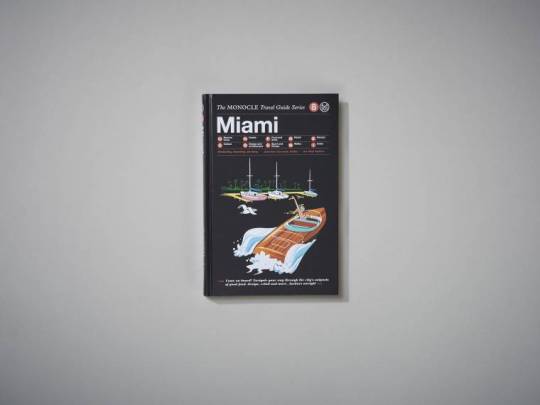
I also decided to pick up the new Monocle Travel Guide to Miami. This is the 8th city that they’ve covered and, as you might know from reading this blog, I’m a big fan of Monocle. (I’m still waiting for the Toronto edition, guys.)
As part of this guide launch – which was timed to coincide with Art Basel Miami Beach – they also released a short video that is worth watching.
When most people think of Miami they probably think of sun and flash. And that is certainly part of the DNA of the city. But Miami has also grown into a global city with important and extensive connections to Latin America. It’s also an incredible place for those who love art, architecture, and design. If you watch the Monocle video, I’m sure you’ll feel that.
If you’re looking for the petition to Prime Minister Stephen Harper, click here.
Last Monday the Premier of the Turks and Caicos Islands, Rufus Ewing, was in Canada visiting with Prime Minister Stephen Harper. The purpose of the trip was to “boost ties” between the two countries. It was about trade, which most people would agree is a fairly typical kind of meeting.
However, this meeting struck a different headline in the media. And that’s because–for almost a century–there have been discussions and proposals put forward in this country to annex the Turks and Caicos Islands. The earliest record appears to be from 1917 when Prime Minister Robert Borden first suggested it.
Since then, the idea has been raised on many other occasions. In fact, both Nova Scotia and Saskatchewan have actually stepped forward and formally invited the Turks and Caicos to join their provinces. Here’s what Saskatchewan Premier Brad Wall had to say during this most recent visit:
“I think we want to be constructive in Saskatchewan. If the Prime Minister’s looking for a way to make this happen and doesn’t want to go through the challenge of creating a province or territory, and Turks and Caicos want to make this happen, just, you know, we’d like a tropical island.“
Presumably this approach would be easier than creating an 11th province or 4th territory. But despite these offers and efforts over the years, the idea has always been ultimately rejected. Following this week’s meeting, Foreign Affairs Minister John Baird stepped forward and also firmly rejected the idea:
"We’re not in the business of annexing islands in the Caribbean to be part of Canada. So that’s not something that we’re exploring. We’re not looking at any sort of formal association with the islands.”
But before I dive in, here’s a bit of background on the Turks and Caicos. The country is a collection of approximately 40 islands–most of which are uninhabited. They are a British Overseas Territory, but are self governing. However, from August 2009 to November 2012 the UK temporarily suspended its ability to self govern following allegations of corruption and fiscal mismanagement.
The land area of the country is approximately 613 square kilometres, which results in a population density of 51 people per square kilometre. For comparison, the land area of the City of Toronto alone (not the Greater Toronto Area) is almost equal at roughly 630 square kilometres. The population density averages around 4,150 people per square kilometre.
Now, onto why I believe we should be looking at a union. Here are 5 reasons.
1. They are open to the idea
Canada is not globally known as an imperialistic country and I’m not suggesting we change that. But here we have a case where the Turks and Caicos appears clearly open to the idea of some form of union. Why would we not consider it? And as long as they remain open to the idea, travellers will be able to continue placing the Canadian flag on their backpacks as a way to win friends overseas.
2. We’re aligned
Given that the Turks and Caicos is a British Overseas Territory, the country uses the common law system and the official language is English. (They’re missing French, but I’m sure that could be worked out.) We even share the same monarch. (Although, deep down inside I wish Canada was a republic.) These commonalities would make a proposed union all that much easier.
3. Vacationing and retirement
This is the obvious one that is getting most of the attention in the press. Canada is cold and we spend a lot of money traveling to warmer places. But if Canada had a province that was blessed with the weather of a place like the Turks and Caicos, I’d wager that it would receive a disproportionate amount of our travel and retirement dollars. All of a sudden you eliminate currency risk and the fear of foreign health care, which are both particularly important for retirees. This means that a lot more money would be kept within the Canadian economy. Sorry, Florida.
4. Access to education
53% of the labour force in the Turks and Caicos is made up of unskilled and manual labour. If they are serious about developing their economy beyond tourism, then I believe that education needs to become a significant part of their economic development platform. Thankfully, a union between our country and theirs would open up Canadian universities to the roughly 36,000 people who live in the Turks and Caicos Islands. Our universities are some of the most highly ranked in the world.
5. Economic development
Finally, let’s talk economic development.
Canada is one of the wealthiest countries in the world. And we consistently rank amongt the highest in the world in terms of education, transparency, quality of life and economic opportunities. It’s for these reasons that we’re perceived as a great place to live and invest. About one of the only things we don’t typically offer is great weather.
A union with the Turks and Caicos would obviously change that. But beyond just weather, it would also give Canada a foothold in an important region of the world and provide a stable locale for foreign investment. Similar to the way in which Miami has become the “Capital of Latin America”, the Turks and Caicos could become a meaningful center for trade and investment backed by Canadian stability.
This would benefit not only Canada, but also the Turks and Caicos, who have struggled over the years with fiscal mismanagement and corruption. In fact, the biggest challenge, I think, would be managing overdevelopment and ensuring that the growth and development happens in the most environmentally sustainable way possible.
Petitioning Stephen Harper
So there you have it, 5 reasons for why Canada should seriously consider a union and/or the potential annexation of the Turks and Caicos Islands. If you have any other ideas, or if you completely disagree with everything I said, I would love to hear from you in the comment section below.