Daily insights for city builders, delivered every morning at 6 AM ET. I’m Brandon Donnelly — a Toronto-based real estate developer and founder of Globizen. I’ve been writing here since 2013.

Tag: laneway love

  • The laneway love continues

    The momentum around wanting mixed-use laneways in Toronto continues, or the algorithms just know what gets me going. Either way, I continue to be both impressed and surprised by the number of “hidden” laneway-based businesses that exist in this city and that keep surfacing online.

    Here are some further examples:

    I honestly think that someone should create a directory/mapping of these businesses. If anyone wants to do this or help do this, I own lanewaylove.com and I’ve been reserving it for projects just like this.

    I also think that this has the potential to become a hallmark of Toronto urbanism. It’s already somewhat endemic, it would seem. So imagine what will happen once we actually allow and encourage these uses to their fullest extent. Yes, once.

    If you know of any other laneway-based businesses, whether here in Toronto or in your city, please share them in the comment section below.

  • An imperfect laneway worth replicating

    We stumbled on Bar Volo last night on our evening walk (pictured above). It’s on St. Nicholas Street, which I guess is technically a street. But it feels and acts more like a laneway. I was naturally pretty excited by this discovery and so I tweeted this out. I was then called out for glorifying this laneway because: 1) this is only one small storefront, 2) the rest of the laneway is kind of pooey, and 3) there are other, better, examples of complete laneways in the city such as throughout Toronto’s Yorkville neighborhood. Okay.

    What got me excited is that this is a recent development — there’s a residential building above this welcoming bottle shop — that managed to successfully create fine-grained urbanism and activate a laneway frontage that could have very easily gone underutilized. Now imagine if every new development with some sort of laneway frontage did things as meaningful as this. Piece by piece, we would be building another layer to our city. (I like to think that we’re contributing to this vision with our laneway towns at Junction House. They are, by the way, 100% sold out. Go laneway living.)

    It’s easy to get excited by the bigger urban moves. A new tall building or a Ferris wheel on the waterfront, perhaps. But sometimes the answer is as simple as a small brewery, a narrow and imperfect laneway, and a roll up garage door.

  • The city refused my laneway house

    image

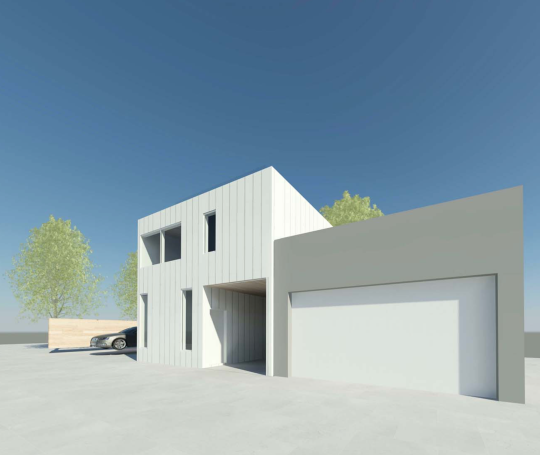
    This afternoon I stood up at the Committee of Adjustment (Etobicoke York) to present the laneway house proposal that Gabriel Fain Architects and I have been working on for the past year and that I have been working on since 2009.

    But before I could start I was told that Councillor Palacio had just submitted a last minute letter to the Committee. I was given a few minutes to read it, but the big bold “REFUSE” was probably the only word I needed to read.

    I was then asked if I had read planning staff’s report. I acknowledged that I had read it and that I was aware that they were also recommending refusal of the application. I also noted that a number of my immediate neighbors sitting behind me were also opposed to the proposal.

    That’s how my presentation started. 

    At this point you might be wondering: why bother?

    I stood up today because, as most of you already know, laneway housing is something that I feel strongly about. This isn’t just about my individual project. I mean, why do all of this work for one small dwelling unit? For me, this is about city building and trying to affect positive change. (I would also love to live on a laneway.)

    I could go on here about how the proposal was shorter than other existing structures on the lane, how the FSI was in check, how we had carefully studied shadows, and how planning staff had already supported greater densities and multiple dwellings on lots of similar size in the area. 

    But that’s not what today was really about.

    Today I heard loud and clear that whether the proposal was a laneway tiki hut or a 2 storey laneway suite, the community did not want more people living in the area and they most certainly did not want more renters living in the area.

    My message to the Committee was that in my humble opinion this is inevitable. Look to Vancouver. Look to Edmonton. Look to many other cities. What we are debating today, or at least what we should be debating today, is what these laneway houses or suites or tiki huts are going to look like.

    Right or wrong, our proposal was an attempt to answer that question. We looked carefully at what others had done before us, including our friends at Lanescape and Evergreen, and we proposed something that we believed was sensitive to its context.

    We were unsuccessful.

    But here’s the silver lining. At the end of it all, and right before a motion was made to refuse the application, one of the committee members said something very impactful. He more or less said: “I agree with you. This is inevitable.”

    Sadly today was not that day.

    I would like to thank everyone who came out today and everyone who got up to speak in support of laneway housing. It meant a lot to me. Some of you are also readers of this blog and it was great to meet you in person. Thank you.

  • What’s happening in Melbourne?

    image

    I’ve never been to Australia, so take everything I’m about to say in this post for what it’s worth. I also don’t know much about Sydney and Melbourne, other than the fact that I’ve studied the latter’s laneways and the tremendous impact they’ve had on revitalizing the CBD.

    However, recently I’ve had a few close friends visit these cities for the first time and, since then, I have started noticing a trend. All of them come back and tell me the same thing, that they prefer Melbourne to Sydney. They say: “Yeah, Sydney is nice and beautiful and all, but it’s not all that exciting. Melbourne feels way more dynamic. Oh, and have you seen their laneways? You would love them.” That’s what they tell me.

    So that’s what I have in my head when I read that Melbourne is now the fastest growing city in Australia; that it’s one of the most liveable cities in the world; and that by as early as 2031 it could take Sydney’s place as the biggest city in the country. Below is a chart from The Australian. If you can’t see it, click here.

    //platform.twitter.com/widgets.js

    Some argue that this is happening because housing is cheaper in Melbourne (median dwelling price of ~$700,000 versus ~$1 million). And some argue it’s because the jobs are there and the city has become a cultural and sporting destination. Whatever the case may be, net migration is estimated to be somewhere around 100,000 people per year.

    My own view – and I’ve made this argument before on the blog – is that we shouldn’t underestimate the importance of cool shit when it comes to cities. People vote with their feet more than ever today. And for a growing segment of the population, cities are a consumer good.

    Indeed, in 2001, Edward Glaeser, Jed Kolko, and Albert Saiz penned a research paper called the Consumer city, where they argued precisely that. The premise was that historically we have tended to think of cities as being centers of production, but we should also be thinking about them as places of consumption.

    Here’s an excerpt:

    “But we believe that too little attention has been paid to the role of cities as centers of consumption. In the next century, as human beings continue to get richer, quality of life will become increasingly critical in determining the attractiveness of particular areas. After all, choosing a pleasant place to live is among the most natural ways to spend one’s money.”

    This is why those coffee shops and cool laneways matter. Some cities have unfair natural advantages. Los Angeles has weather. Vancouver has mountains. Montreal has poutine. But for the rest of us, the amenities typically form part of the built environment. They are a product of our choices.

  • Show some laneway love

    I just want to do a quick follow-up to my recent post about the momentum currently developing around laneway housing here in Toronto. 

    In the post, I mentioned that two councillors have come out in support of this housing typology. However, I neglected to mention that Evergreen CityWorks is also at the table, as well as a housing advocacy group called Lanescape. It was mentioned in the comments, but I know that not everyone checks that part of the blog.

    I say this for two reasons:

    1) I thought about starting a similar initiative to Lanescape. (I’ve had lanewaylove.com registered for many years. Brand identity shown above.) But after meeting one of the Lanescape founders this past week, I think it only makes sense for me to instead throw my support behind them. They are accomplishing a lot in this space.

    2) Lanescape has a survey up on their website and the results will be used to guide a laneway suite planning framework that will (hopefully) be implemented by the City of Toronto. So I wanted to encourage you all to complete it. Even if you don’t live in Toronto, still fill it out. It’s important for cities to learn from each other.

    Your support will go a long way in making laneway housing a reality in the city.