Daily insights for city builders, delivered every morning at 6 AM ET. I’m Brandon Donnelly — a Toronto-based real estate developer and founder of Globizen. I’ve been writing here since 2013.

Tag: king street

  • The 14th Street busway

    On October 3, New York City did something very similar to what Toronto did on King Street. It restricted through traffic on 14th Street to only trucks and buses, and turned the street into the city’s first “busway.”

    Under the new rules, cars, vans, and taxis are restricted every day of the week from 6am to 10pm, unless they’re dropping off or picking someone up, or entering into a parking garage (i.e. local traffic only). But after this, they need to make the first available right and turn off the street. Again, it’s pretty similar to the way things work here on King.

    https://twitter.com/travis_robert/status/1179813054235721728?s=20

    On the first day of the 18-month pilot program, the buses actually had to slow down in order to keep to their schedule. They were moving too quickly. Previously one of the slowest routes in the city, the M14 bus is now expected to increase its average speed by about 25%.

    Not surprisingly, a number of people were concerned that this new busway would hurt businesses along the route. This same concern has been an issue in Toronto. But this is New York. We’re talking about the US city with the highest percentage of households without a vehicle.

    The reality is that we need to get better at moving people around our cities without a car. This is one way to do it and we know it works. My prediction is that the 14th Street pilot will prove to be a success. It will then get replicated in other parts of Manhattan. Probably on other crosstown streets.
  • One year anniversary of the King Street Transit Pilot

    I had dinner tonight on King Street and I was reminded that this week marks the one year anniversary of the King Street Transit Pilot here in Toronto.

    The pilot has certainly had its share of controversy, but the improvements to both transit reliability and ridership are clear. Average travel times (in each direction) have increased by as much as 7 minutes on the route.

    Here’s the latest data from July and August of this year. Steve Munro can also tell you everything you ever wanted to know about the King streetcar.

    As our city continues to grow, many are naturally concerned about the ability of our infrastructure to handle the additional demands. Where will all the cars go?

    But the reality is that we will never be able to accommodate everybody driving around in their own car. Which is why we have to rely on transit and solutions like the King Street Transit Pilot.

    What’s your opinion of the pilot now that it has been in place for a year? I almost forget what it was like before we had it.

  • Rules are meant to be broken

    Things are busy right now as we get ready to unveil Junction House this fall and so I’m a bit behind on my news and reading. 

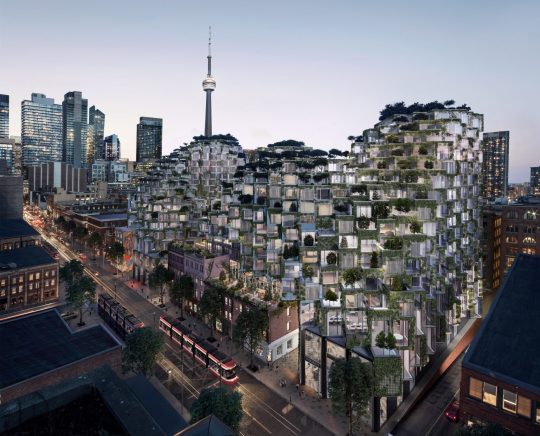
    I just finished reading Alex Bozikovic’s Globe article on BIG’s new KING Toronto project (official name). It is an interesting piece about creating villages and a sense of community in new developments – something that Bjarke Ingels has been focused on for many years. 

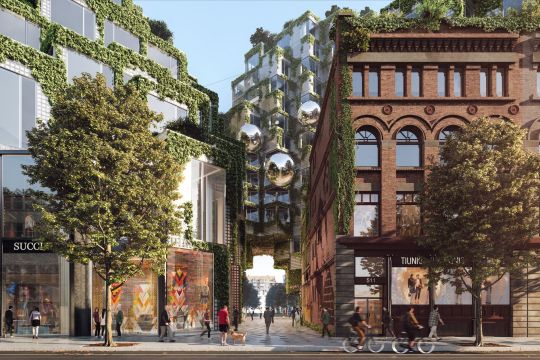
    Below are a few renderings of the project. I’m excited for this one. And as I said before on the blog, I am sure it will be precedent setting in a number of ways.

    One remark from the article that stood out for me is this one here:

    Still: The design breaks a lot of rules. Which is why it took two years of difficult negotiations with city planners to reach approvals. “We wanted it to be quieter,” says Lynda MacDonald, a senior Toronto planner who was involved in overseeing the project. “It’s a very large project, and we wanted to make sure it respected the character of King Street.”

    I am often asked why we don’t see more innovation in architecture and real estate. There are a number of reasons for that. One of them is risk. Development is in many ways a game of risk mitigation. 

    But another reason is that when you try and do something unconventional that disrupts the status quo, you also call into question the typical planning criteria used to evaluate projects. And that may slow you down.

    Alex accurately points out in his article that we are used to doing things around here in one of two ways:

    The King Street project is also an ambitious experiment with urban design. There are basically two species of tower in Toronto: a midrise slab of six to 10 storeys, which steps back at the top; and a “tower-and-podium,” a model borrowed from Vancouver that combines a fat, squared-off base (or “podium”) with a tall, skinny residential tower. Both can work, but can also create the big-box blandness that many people dislike about new urban housing.

    None of this is to suggest that we should ignore the character of a particular area. It is critical and I believe that KING Toronto has been mindful of that. 

    But I also firmly believe in ambitious city building and I think there’s no question that KING Toronto is doing exactly that.

    Images: Hayes Davison via Dezeen and courtesy of Westbank

  • The King Street Transit Pilot has started

    Back in January 2016, I wrote about Toronto’s ambition to transform King into a “transit first” street across the downtown core. 

    The King streetcar is the busiest surface transit route in the entire city (65,000 riders / day on average) and it was – and continues to be – my opinion that the route was broken. Something had to be done.

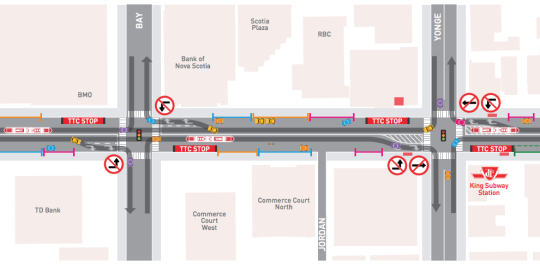
    Well, that something is now happening. The “King Street Transit Pilot” officially started on Sunday, November 12, 2017 at 7am. Here are some of the key changes, many of which are also depicted in the above image:

    – No more on-street parking in the pilot area.

    – Cars can no longer turn left or drive through the intersections of the pilot area (except for taxis picking up drunk people from 10pm to 5am).

    – Cars must now follow a right-in/right-out approach. They can turn right onto King, but then they have to turn right off of King at the next intersection.

    – Most of the streetcar stops have been moved to the “far side” of each intersection. That is, after the lights. Passenger waiting areas are now in the curbside lane and protected by jersey barriers.

    – Cyclists can go through the intersections of the pilot area. “Bike boxes” have been added to intersections where there are north-south bike lanes to help with turning left.

    As to be expected, some people are upset about the above changes. There are also concerns that drivers aren’t going to obey the rules and continue to drive through the intersections in the streetcar lane. But this is a pilot project. It’s about learning and adjusting.

    It’s also important to keep in mind that King has at least 3x more transit riders than cars. This pilot is about figuring out how to best optimize the street so that it moves the greatest number of people as efficiently as possible.

    I’ll report back here on the blog once the pilot has settled in and there is a better understanding of its impact.

  • 3 pilot options for Toronto’s King Street corridor

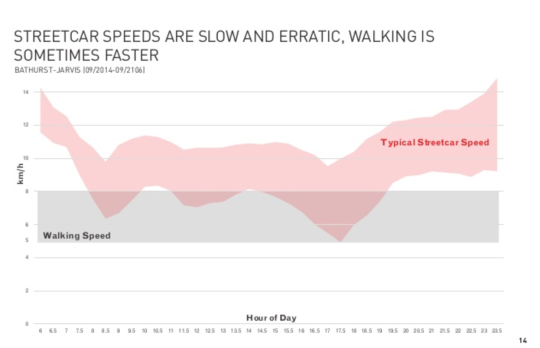
    Anyone who has ridden Toronto’s King streetcar during rush hour can tell you that the service is broken. It’s unreliable. It’s overcrowded. And during peak times it can be faster to walk. Chart below.

    Part of the problem is a misallocation of resources. Only 16% of the people who use the corridor are in cars. And yet 64% of the physical space is allocated to drivers.

    Not surprisingly, this creates a bottleneck for the ~65,000 transit riders who use the service daily. (Busiest surface route in the region.) We are not optimizing for the right variable.

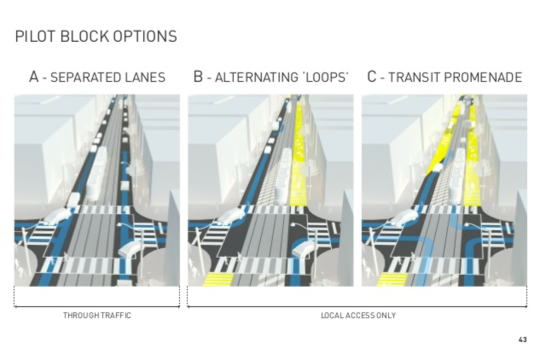
    It’s for this reason that the city is working on a rethink of the corridor. I wrote about this initiative last year, but earlier this week it got a bit more real with the release of the following 3 pilot block options.

    The plan is to launch a pilot sometime this fall (2017). This is good news. 

    If you’d like to go through the full King Street Pilot Study Public Meeting presentation, you can do that by clicking here. The above images were taken from that presentation.

  • Ziggurats and gondolas

    Yesterday was an exciting day for Toronto city building announcements. 

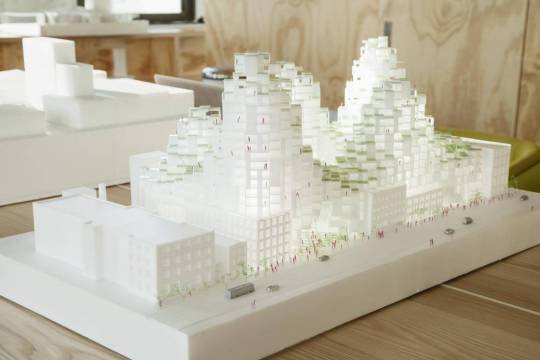
    Firstly, Alex Bozikovic of the Globe and Mail published an exclusive preview of architect Bjarke Ingel’s plan for King Street West. Here’s a photo of the architectural model (it’s by Landon Speers):

    My favorite quote from the article is this one from Bjarke:

    “It would be sad if the most diverse city in the world had the most homogenous real estate.”

    It’s true.

    For those of you who emailed me about the details of his talk next week (there were a lot of you!), I believe I emailed you all back. But in case I missed some of you, you can click here for the event details. I should have included it in my original post about BIG, but I thought the event was already oversubscribed.

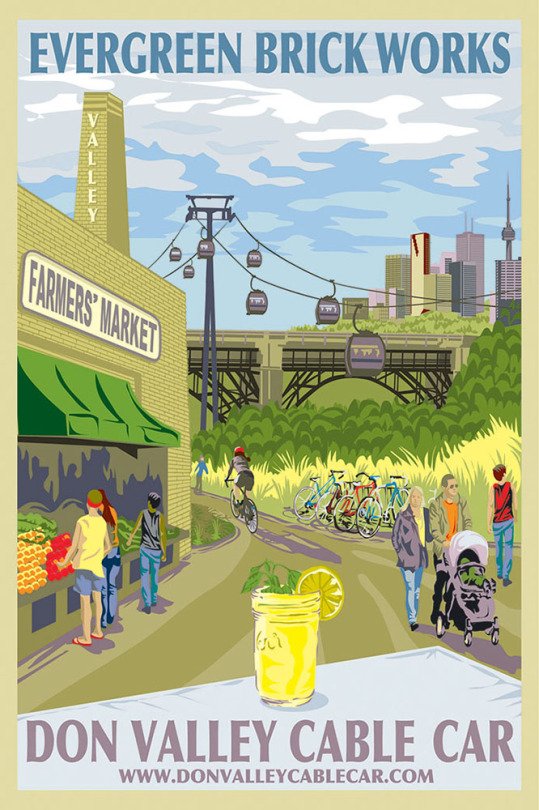
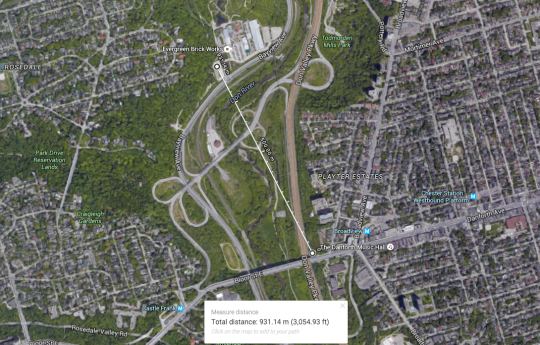
    Secondly, a private company called Bullwheel International Cable Car Corp. has just proposed to build a $20 to $25 million gondola running from Danforth Avenue (near Broadview subway station) to the Evergreen Brickworks. The total length would be almost 1 km and it, allegedly, wouldn’t require any public money. Here is their website.

    The timing of this proposal feels a bit serendipitous to me. When I was in Park City, Utah a few weeks ago, snowboarding right into the town and then taking their “town lifts” back up to traverse the mountain, I remember thinking to myself: what a wonderful form of transportation this is.

    Of course, Park City has giant mountains and Toronto, unfortunately, does not. But we do have spectacular ravines and a spectacular institution known as the Evergreen Brickworks.

    But one of the challenges with our ravines is that they can be a bit hidden – particularly for visitors to the city. Part of this is because we are trying to figure out the right balance between natural preservation and active use. But that’s one of the things that makes this proposal so intriguing. It’s a way to celebrate our ravines and natural landscape, without physically encroaching it.

    Here’s a map of the proposed gondola path:

    What do you think about these announcements?

  • Toronto’s King Street to be transformed into a transit + pedestrian corridor

    Take The Car by Jason Cook on 500px.com

    https://500px.com/embed.js

    I try not to focus on local Toronto issues this much, but this morning an important initiative was announced and it’s blowing up my Twitter feed.

    By spring 2017, the city hopes to have a pilot project in place that will transform King Street – running from Liberty Village in the west to the Distillery District in the east – into a priority-transit and pedestrian corridor.

    This isn’t to say the street will be closed to cars. I would imagine that at least 1 lane would remain for cars going each way. Instead it will be redesigned to prioritize transit, pedestrians, and cyclists.

    So why is this exciting?

    The King streetcar is currently broken. If you’ve ever taken it across downtown during rush hour, you know exactly what I mean. It’s infuriating. You might as well be crawling on your hands and knees. One of the goals of this initiative will be to get it working again. Good.

    The shoulders of downtown – along King West and King East – are seeing some of the greatest intensification in the region. So much that it’s common for people in this city to complain that Toronto misplanned it all by allowing this development before the transit was there. Well, this is a quick and inexpensive way to get the transit there. Remember that when the inevitable “war on car” rhetoric ratchets up over the next year.

    The project will be deployed, first, as a pilot project. That will allow the project team to test and iterate. It has also become the way you get things approved in cities. You first make them temporary. 

    But I am certain that we will quickly discover how necessary these changes were.

  • Where should Toronto’s relief subway line go?

    Those of you from Toronto might be aware that the city is currently assessing the possibility of a “relief subway line” that would connect the downtown core back up to the Bloor-Danforth subway line in the form of a stretched out “U”.

    The reason this line is being called a “relief line” is that – in addition to providing local service all across downtown and its “shoulders” – it would also relieve much of the pressure that the Yonge-Bloor interchange is facing today. Instead of always having to connect at that location, passengers coming from the east and west would be able to do so sooner as a result of this new subway line (bypassing Yonge-Bloor).

    For those of you who are regular readers of ATC, you might know that I’m a big supporter of this relief line. I believe it should be our number one transit priority. It’s going to cut through areas of the city that have some of the highest population and employment densities, and so it’s an area where I think subway makes sense. The ridership would be there.

    Many people at the city also seem to agree:

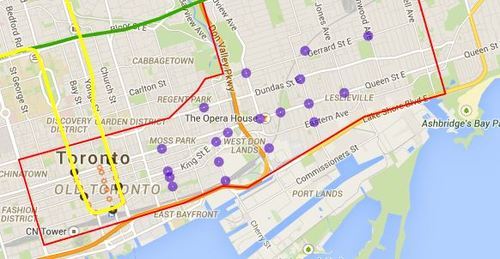
    Given that an assessment is currently underway, the city is looking for feedback from the public. One of the ways you can do that is by clicking here. The site will allow you to comment on the potential station locations (shown below using purple circles). I did it this morning and I would encourage you to do the same if you’re from Toronto.

    For clarity, this current study is only for the eastern portion of the relief line (study area is outlined in red below).

    image

    Once you’ve given this some thought, I’d love to have a discussion in the comments about where you think the relief subway line should go (or if you even think it’s a good idea in the first place).

    My initial thought is that it should connect into King station, run along King Street East, merge with Queen Street East near the Don Valley, go through Riverside and Leslieville, and then start making its way north to Danforth Avenue.

    My reasons are as follows:

    • King Street East is the most vibrant pedestrian street on the east side of downtown. There isn’t enough commercial activity further south.
    • King Street would allow it to eventually cut right through the Financial District when it heads westward.
    • The connection to Union station (for GO Transit, VIA Rail, and the Union-Pearson Express Train) would be manageable from King Street. Plus, SmartTrack may feed directly into Union.
    • King Street is roughly the midpoint between Queen Street and Lakeshore Boulevard. And if you place it too far south, it would take away from the proposed Queen’s Quay LRT line.
    • Having it merge into Queen Street near the Don Valley would allow it to service both Regent Park to the north, as well as the West Don Lands neighborhood to the south. It would also allow for a connection to a Cherry Street LRT line servicing the future Portlands neighborhood.
    • Queen & Broadview is emerging as a major node with a significant amount of density in the pipeline. And further north, Dundas & Carlaw is similarly seeing a lot of intensification.

    But I may have missed a few things. These are just my thoughts. What are yours?

  • TIFF: Getting ready for guests on King Street

    image

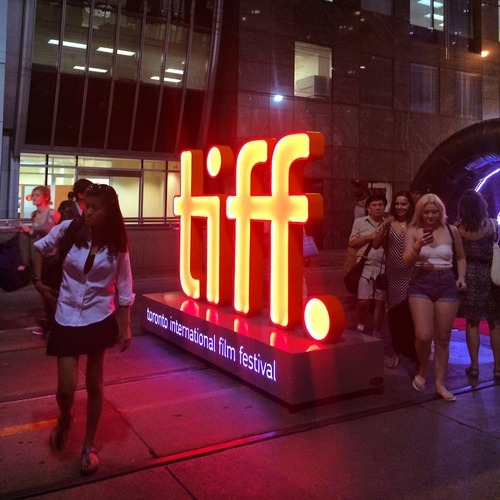
    Right now the Toronto International Film Festival is going on in the city. It’s actually one of my favorite times in Toronto. There’s so much going on and the city generally does things that it doesn’t normally allow, but that it should do all throughout the year, such as extending last call at bars and closing down streets to cars.

    This year, King Street between University Avenue and Peter Street has been made pedestrian-only. It encompasses an area known as the Entertainment District and includes the Bell Lightbox, which is the TIFF HQ. The street was closed last Thursday and will reopen this Monday. So it’s a 4 day thing, that TIFF is calling “Festival Street.”

    Some people – like me – are really excited about this. Here’s s picture I tweeted out on Thursday night. Given the engagement (retweets/favorites), I think there are others who feel the same way I do:

    //platform.twitter.com/widgets.js

    But there are others who are furious that their commute was disrupted last week and that we’re inconveniencing locals for the sake of hosting one of the top film festivals in the world. (King Street typically moves about 60,000 people per day on the streetcar and 20,000 vehicles.)

    But when I walked the entire 650 meter stretch on Thursday night, it was completely full of people. There were people playing large-scale chess. There were people eating at picnic benches. And there were lots of people just enjoying a wonderful summer stroll in the city.

    And all I could think about is that this is an unmet need in the city. King Street is a wonderful place to be right now and we don’t have an equivalent during the other 361 days of the year here in Toronto. So rather than be upset that we’ve closed down 6 blocks of downtown, I’m only upset that we don’t do more of this and make it permanent during the rest of the year. 

    I’m not necessarily saying that King Street is the best place to do this. Yonge Street initially strikes me as being a better place to start. But I am saying that if we have to reconfigure things to make our city more awesome for when guests come over, that maybe we should think about how to make it more awesome all the time.

  • Do you love or hate streetcars?

    image

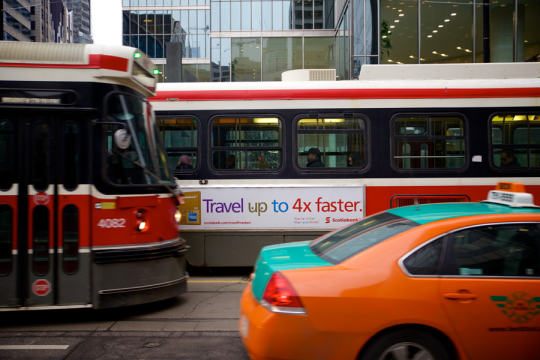
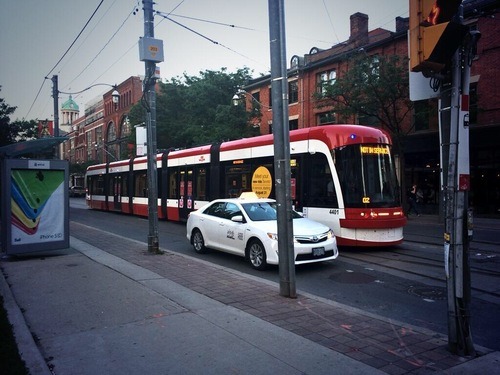
    Tonight I saw one of Toronto’s new streetcars cruising down King Street. They’re still in test mode and the first batch won’t go into operation until this August, but every now and then you’ll see one circulating around the city. This was the first one I’d seen in person.

    If you’re a transit geek or urbanist, you’re probably excited about the arrival of these new streetcars. But I know that there are a lot of people who aren’t. They hate streetcars and they think of them as basically rolling stop signs on our congested downtown streets. And since these new streetcars are even longer than our existing ones, they’re worried they’ll just make the situation worse.

    Personally, I think that streetcars mixed into traffic is generally pretty inefficient. But I know that surface light rail has the potential, when executed properly, to be a cost-effective and sustainable way of efficiently moving lots of people around a city. When I lived in Dublin I took the Luas every day. It was great.

    So I’m curious to hear from you. What do you think of Toronto’s new streetcars? Let me know in the comment section below.