Daily insights for city builders, delivered every morning at 6 AM ET. I’m Brandon Donnelly — a Toronto-based real estate developer and founder of Globizen. I’ve been writing here since 2013.

Tag: kids

  • Raising kids in the city

    This week, Matthew Yglesias of Vox makes the case for raising kids in the city. Spoiler: Driving sucks. Cities have lots to do. And parks can be better than lawns. However, he also talks about why this proposition is becoming increasingly difficult for many families. Here are a couple of excerpts:

    Now the father of a 4-year-old son, I live in Washington, DC, a city that is, mercifully, marginally more affordable than New York, and I wouldn’t want to raise a family any place other than the city.

    But unfortunately, families are disappearing from American cities even as city living in general has become fashionable again for those who can afford it.

    Children cost money. And they take up space. And urban space has become much more expensive — repelling growing families. This suits the proclivities of smug suburbanites just fine, but as someone who grew up in a big city in the 1980s and 1990s when city living was both less fashionable and more affordable, it seems like a tragedy to me.

    I didn’t grow up in the city. Though, I spent time in apartments and other higher density housing. And I don’t have kids. But I find this topic interesting. It’s also an important one. I don’t believe that the childless city is a good thing.

    For the full article, click here.

  • Where are all the kids?

    This evening, when I was reading the internet, I came across this New York Times article from 2017 talking about how San Francisco has the lowest percentage of children of any of the largest cities in the U.S. It’s around 13% of the population. (Supposedly it was the second lowest in 2015. Pittsburgh was first.)

    The article goes on to claim that the city has approximately the same number of dogs as it does children. That number is somewhere around 120,000. Not surprisingly, many blame the city’s prohibitive housing costs as the main culprit for the lack of kids. Families simply cannot afford to live in the city.

    This got me searching for more information. Richard Florida looked at similar data back in 2015, but it’s important to note that he looked at metro areas and not the city propers. So the data doesn’t speak to whether families were forced to move out from the urban core to the suburbs in search of more affordable housing or for more space.

    Nevertheless, he finds no statistical association between the share of children in a city and things like urban density, economic output per capita, or median home prices. He instead finds that the share of children is positively correlated with two main factors: immigration and with ethnicity – specifically people of Latin origin.

    Click here if you’d like to read the rest of Florida’s analysis. And if any of you have additional data on this topic, please do share it below. I think I’m going to continue digging into this question of kids and cities.

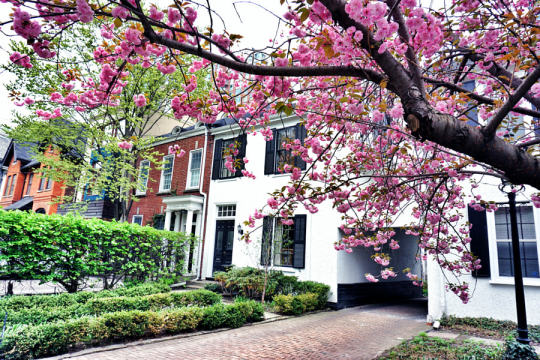
    Image: Photo by William Bout on Unsplash

  • Most people still want to raise kids in a house (not an apartment)

    https://500px.com/embed.js

    Yesterday I ran a quick 3-4 question survey on ATC called homes for families. The objective was to get a sense of people’s preferences for apartment vs. ground-related housing (house or townhouse) when it comes time to raise a family.

    The results are public so anybody can take a look at the data. At the time of writing this post there were already 70 responses. That’s not a huge data set, but the data is more or less what I expected to see. 

    Here’s what I found (if the data set was larger, I would have made charts):

    The vast majority of respondents were from Toronto. No surprise there. That reflects the readership of this blog, which itself can be quite Toronto-centric at times. (I’ve been trying to branch out more, I swear.) That said, I was thrilled to also see respondents from cities like Seattle, Denver, Chicago, Porto, and Sydney.

    Of the people who specified that they have kids, 11% live in an apartment. 17% live in a townhouse. And 72% live in a house. If you add houses and townhouses together, you get 89% of people with kids living in some kind of ground-related dwelling.

    Of the people who specified that they don’t have kids, 61% live in an apartment. 6% live in a townhouse. And 33% live in a house. This is the kind of split that I generally expected to see for Toronto.

    For the people who specified that they don’t have kids, they were then asked where they plan to move if/when they do have kids. 13% plan to move to another apartment. 8% plan to move to a townhouse. 33% plan to move to a house. 23% don’t plan to move (i.e. they are planning to stay put). And 23% don’t plan to have a family.

    Interestingly enough, 100% of the people who said that they were not planning to move, were already living in a ground-related housing unit (a house in almost all of the cases). So in reality – and if you exclude the people who don’t plan to have kids – about 83% of respondents expect to raise their kids in a house or townhouse.

    Again, this isn’t a big sample size, but the trend appears more or less flat. 89% of respondents who already have kids are already living in a ground-related unit. And when people were asked to project where they would like to be living once they have kids, 83% said they want a house or townhouse.

    Do you think these numbers accurately reflect consumer preferences in your city?

  • Stuck in condoland?

    Toronto Life recently published an interesting article called Stuck in Condoland. A lot of people have mentioned it to me, so there seems to be a lot of interest in the topic. It basically profiles the lives of a few young families who live downtown and are trying to raise young children in relatively small condos (think 700 square feet).

    I thought it was interesting because I like the idea of small and efficient living. The average post-war bungalow in Toronto was probably less than 1,000 square feet. And so this modern notion that you need a big house in order to properly raise a family is a relatively recent phenomenon. Although we’re a richer city today and that’s what happens when people become wealthier: they consume more.

    But the article also makes it seem that developers only want to build small condos and that larger condos and single-family homes just aren’t profitable enough. Thus the reason all these families are being forced to into tiny shoeboxes in the sky. But that’s not really true.

    Look, just like every other for-profit business on the planet, developers are concerned with making money. And so they will always look for ways to increase efficiency, drive down costs, and so on. But there are certain realities of the market that developers don’t have control over.

    First, developers aren’t building new single family homes in the city (at any sort of meaningful scale) because there’s no land to do so. And because the land use policies in place and the current thinking around how we can more sustainably build our cities for the future dictate that we should be building more intensely. In other words, building up. So it’s not a question of developers not wanting to build single family homes; it’s a question of not being able to.

    Second, trust me when I say that if the market wanted large 3 bedroom family units, developers would build them. Mandating them is a useless exercise if people don’t want them or are unable to afford them.

    The challenge we face is that a reinforced concrete condo tower is more expensive to build than a wood-framed single family house. So until land values get to a point where single family homes become the more expensive option (compared to condos), I don’t think we’ll see a huge rush towards 3+ bedroom suites.

    This is my hypothesis at least. Because when you buy house, you’re really buying two things: the house itself and the land. If the house itself (wood) is cheaper to build on a per square foot basis than a condo (concrete), then the variable that will make a difference is the land. And as people like to say: “buy land, they ain’t making any more of it.”

    So what I’m saying is that I just don’t think the situation is as simple as: “developers are bad, all they want to do is build tiny condos and make lots of money.” It’s more complicated than that. But I do believe the question of how families are going to live in the city is an important one.