
I really like photography and I really like cool light things. And so this Kickstarter project — called the Looking Glass Portrait — caught my eye today. I haven’t backed it (yet), but it strikes me that three-dimensional image capture and creation is going to be something pretty important going forward. I can’t wait for that to happen.
Tag: kickstarter
-
Minimalist smart biking device
I just came across this smart biking device on Kickstarter. It is the next generation of their original SmartHalo, which did very well and is now sold in Apple Stores. The company is based in Montréal.
Here’s how it works:
I know that a lot of you are cyclists, so I figured some of you might appreciate this. It looks pretty awesome. Delivery of SmartHalo 2 is expected by December 2019.
Their Kickstarter campaign ended on July 2. The project got funded with about CAD 1.7 million from over 10,000 backers. But you can still pre-order a device, here.
-
DANCHI DREAMS
Below is an interesting Kickstarter project by photographer and art director Cody Ellingham. I think many of you will appreciate it. It is a photobook of Japanese public housing apartments, which are known as Danchi. All of the photos were taken by Cory at night, hence the dream part. The book is about the promise that these projects represented in the post-war years, but it is also about their decline in the subsequent decades.
-
Drip, subscription platform for artists and creators
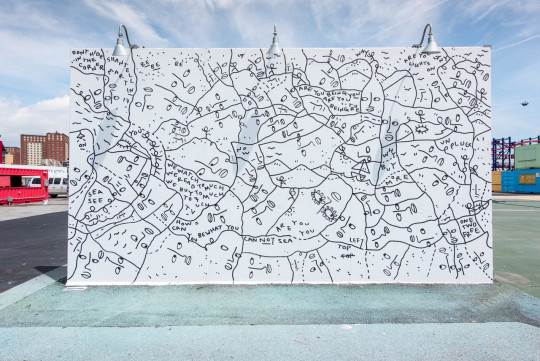
Kickstarter has just relaunched a subscription service for artists and creators called Drip. It is an acquisition that Kickstarter made a few years ago and so that’s why it’s a relaunch. Here is the blog post announcement.
The simplest way to describe Drip is as follows: “Kickstarter is for projects, Drip is for people.” In other words, instead of backing a specific project, you back the human for, say, $10 a month. It’s a tool for people to fund creators so that they have the freedom to make their work.
Now compare this model to that of the 19th century Salon in Paris. Arguably the greatest art event in the Western world during its prime, getting exhibited at the Salon was basically a right of passage for artists.
But the Salon had specific criteria for what it considered to be good and acceptable art. Perhaps most famously, 19th century Impressionism – which some would call the first truly modern art movement in painting – was not considered acceptable.
The Impressionists routinely had their work refused by the Salon, which is why they ended up having to organize their own shows. Good for them.
So when I see something like Drip, I think about how amazing it is that we now have platforms where artists and creators have the freedom to make what they want to make and the market – instead of a stuffy institution – can decide what is good and worth supporting.
Check out Shantell Martin if you’re looking to explore Drip. I recently discovered her work and I’m a fan.
-
Kickstarter: Modern map art
It has been a while since I shared a Kickstarter campaign on the blog and this one caught my attention:
https://www.kickstarter.com/projects/1505932940/map-art-prints/widget/card.html?v=2
If you can’t see the project embedded above, click here.
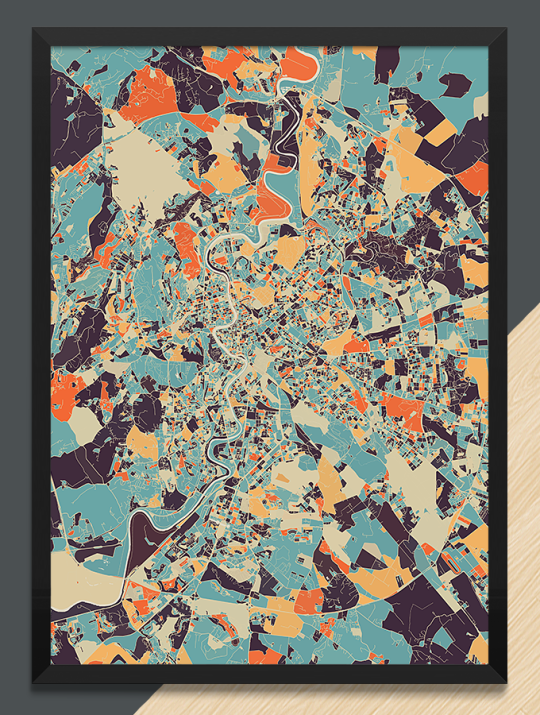
The project is colorful abstract art maps of anywhere in the world. You can also choose whatever color theme you want.
I think these are beautiful. The print at the top of this post is Rome.
-
Design Canada
Canada has a rich graphic design history and that story needs to be told. Here is a Kickstarter project that’s absolutely worth checking out: Design Canada.
https://www.kickstarter.com/projects/1002969621/design-canada/widget/video.html
Greg Durrell (a graphic designer from Vancouver) and Jessica Edwards and Gary Hustwit (of Film First in Brooklyn) have partnered up, and they are looking for your support to produce the very first documentary about Canadian graphic design.
As a proud Canadian, I am thrilled to see this project. Because this is obviously not just a documentary about graphic design (though in the 60′s and 70′s we were the best in the world). It’s a story about Canada, our history, and our evolving identity.
If you can’t see the embedded video above, click here to make your way over to Kickstarter.
-
Mapping the creative soul of US cities
Polygraph (visually-driven essays) has a great piece called, The Entire History of Kickstarter Projects, Broken Down by City. What they did was look at 88,475 Kickstarter projects to map the various creative communities across the US.
Here’s a snapshot (you may need to zoom in):
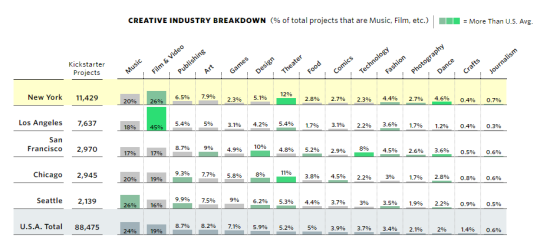
In general, Kickstarter in the US sees a high concentration of music projects (24%) and film & video projects (19%). But where it gets interesting is to see which cities over-represent in certain categories.
New York = film & video, theater, and dance
Los Angeles = film & video (not surprisingly 45% of all projects)
San Francisco = design and tech
Chicago = theater
Detroit = music
Nashville = music (76% of all projects!)
They also measured the size of each project (number of backers) and created these neat bubble diagrams:
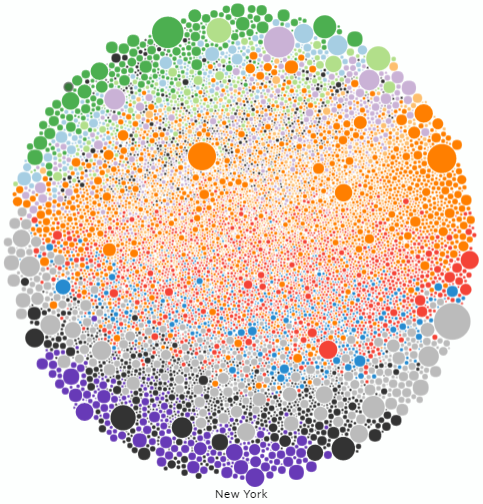
Above is New York. Red is music. Orange is film. And yellow is theater.
I also like their explanation for why they did this project:
Pretty much all existing attempts to map creative communities use census and jobs data. But creative efforts are often side-hustles. They’re garage/basement/cottage industries that will not appear in a census.
It’s true. This data should be a much better capture of each city’s creative soul.
-
Forest
I just backed the following project on Kickstarter:
It is a new watch line from two Montreal designers. The brand is called Forest Time Co. There’s so much creative talent in that city.
I was immediately drawn to the focus on minimalism and on high quality materials. That’s a philosophy I can get behind. I plan to go for the black band with copper case.
I know nothing about watch movements, but it’s a “Japanese Miyota.” I assume that’s pretty basic.
I love finding interesting projects on Kickstarter. There’s something about backing a team and their new creation. We should all aspire to make and create more.
At the time of writing this post, they’re about $1,000 shy of their funding goal of $24,000. I hope they reach it by this Sunday. I’m sure they will.
-
When the crowd builds a city
I’ve been following and checking out Kickstarter pretty much since the beginning. But it wasn’t until last night that I backed my first project.
After doing that, I immediately started thinking about urban projects that might be able to also get crowdfunded using Kickstarter. How could it be used for city building? A Kickstarter project, after all, just has to be something with a defined scope and a clear end goal.
Not surprisingly, this has already been happening for many years now.
A great example is +Pool in New York, which is an initiative to build a publicly accessible floating pool that also filters river water. The project launched in June 2011 and by July 2011 they had raised $41,648 USD to build and test different filtration techniques.
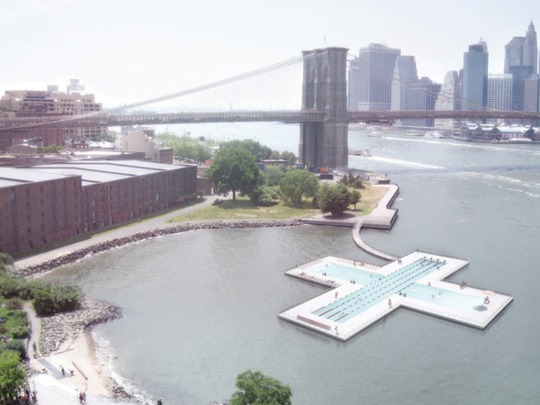
Today, the project is still moving ahead and they are now offering up the opportunity to buy and have your name engraved on tiles within the pool. If I lived in New York, I would be all over this.
But what’s powerful here is the ability for crowd-based platforms (like Kickstarter) to both get radical new ideas off the ground and to empower local communities to affect change. Here’s a quote from PSFK:
It’s very difficult to get funding for these ‘out there’ ideas that regular systems might not support. Creators have to take risks and be imaginative, as well as put their ideas out there and let the public decide. There are no traditional guidelines on crowd-sourced platforms—they’re much more meritocratic. You can think in big scope and that changes what gets made and who can access it. Anybody with a couple of doubles can voice what they want to be built, and in that way we see the entire community having a huge say in the design world.
And when I see projects and platforms like this, I can’t help but wonder if (when) city building is going to become even more decentralized.
Last night I was also at an event – being put on by Ryerson University’s City Building Institute – called Bridging Divides: What Can Cities Do? And one of the suggestions that came up was that Toronto needs more local and granular community councils (there are currently 4) in order to bridge some of the divides that are happening in our city.
But in a world where it’s possible for each and every person in a city to not only have a say but to quickly say it from their smartphones, why can’t we go even more local? Instead of 4, 10, or 90 community councils, why can’t we have everyone more engaged?
I think we’re headed in that direction.