Daily insights for city builders, delivered every morning at 6 AM ET. I’m Brandon Donnelly — a Toronto-based real estate developer and founder of Globizen. I’ve been writing here since 2013.

Tag: italians

  • Is the world urbanizing or suburbanizing?

    The Economist recently published an essay called, A Planet of Suburbs – The world is becoming ever more suburban, and the better for it. The argument is basically that the “great urbanization” that everyone loves to talk about these days is actually a misnomer. From Chicago to Chennai, it’s not the urban core that’s growing. It’s the suburbs. And so what we’re seeing should actually be called the great suburbanization.

    The basis for this argument is that wealth fuels sprawl. As people become richer, they naturally consume more of everything – including space. It’s a natural market outcome.

    Take for example, the path of many of Toronto’s ethnic groups. In the first half of the 20th century, College Street was the Little Italy. Then it shifted north and St. Clair Avenue West became the more authentic Little Italy. Today, many Italians now live north of the city in Woodbridge. In fact, last weekend I was on St. Clair West and was disappointed to learn that one of my favorite butchers had closed up shop and “moved to Woodbridge.”

    However, there are also many supporters of the exact opposite outcome. From Edward Glaeser to Alan Ehrenhalt, many have argued that we’re in the midst of a “great inversion.” The suburbs are no longer a threat to urban centers. It’s the urban centers who are threatening the suburbs. The suburbs are dead. Long live the city.

    So which is it?

    Well, The Economist does cite two examples where true urbanization is actually taking place. It’s happening in Tokyo and London. In both cases, it’s the city center that is growing the fastest – not the suburbs. The explanation for Tokyo is its aging population. And the explanation for London is its restrictive greenbelt, which effectively stops the possibility of any further sprawl.

    Here in Toronto – where there is also a greenbelt in place – we know that the population of the downtown core is growing at an incredible pace. A recent report by the city – called Comprehensive to the Core – revealed that the downtown core is growing at 4 times the rate of the rest of the city.

    But what about the suburbs?

    If we look at the province of Ontario’s growth projections, it is indeed the suburbs which are expected to grow the fastest up until 2036. Here is a diagram showing percentage growth rates:

    image

    In absolute numbers, the city of Toronto alone is expected to add about 0.66 million people between 2012 and 2036, and the suburbs are expected to add almost 1.9 million.

    There are a number of potential explanations for this differential, but I think it’s largely because land is cheaper in the suburbs, it’s easier to add new housing supply, population densities are lower, and we’re talking about very different land areas.

    The city of Toronto is 630 square kilometers. If you tack on the suburbs, the Greater Toronto Area is 7,124 square kilometers. That means Toronto makes up less than 9% of the total land area. And yet it is expected to contribute 25% of the region’s population growth. 

    Still, the suburbs are where the bulk of the population growth is expected to happen over the coming decades.

    However, the “great inversion” that authors like Alan Ehrenhalt have been talking about should not really be interpreted as the death of the suburbs. What he’s instead talking about is a socioeconomic or demographic reversal: center cities used to be poor and now they’re becoming rich.

    Here’s how he put it:

    What we are seeing is a reversal in which the words “inner city,” which a generation ago connoted poverty and slums, [are going to mean] the home of wealthier people and people who have a choice about where they live, and the suburbs are going to be the home of immigrants and poorer people. And Census figures show that that’s taking place.

    In this context, we are still living through the great urbanization. We’re seeing a shift in consumer preference and a shift in where wealth is choosing to locate. That’s a profound change.

    And while we’re obviously still suburbanizing, I don’t agree that we’re better for it. In fact, left unchecked, this demographic inversion could actually prove to be quite damaging to our suburbs.

    Image: Flickr
  • How Toronto became cool

    image

    After yesterday’s post about Toronto, I had a friend ask me on Facebook what it is exactly that I think happened to make this city so much cooler. Was it because of one iconic building like Toronto’s new City Hall? Was it because of our recent condo boom? Or was it something else? What changed exactly?

    My response was that it’s a generational thing. Let me explain.

    Toronto used to have the reputation of being a boring and staid city, and that’s because it was a boring and staid city. In the immediate post-war years, Toronto was overwhelmingly Protestant and the immigration policies at the time were specifically designed to exclude anyone who wasn’t white and from Western Europe or America. If you were Asian, Southern or Eastern Europe (especially Jewish), then you were at the bottom of the entry list.

    Here’s how Prime Minister Mackenzie King felt in 1947:

    Prime Minister Mackenzie King reflected the national mood when he observed that “the people of Canada do not wish to make a fundamental alteration in the character of their population through mass immigration.” Discrimination and ethnic selectivity in immigration would remain. “Canada is perfectly within her rights in selecting the persons whom we regard as desirable future citizens. It is not a ‘fundamental human right’ of any alien to enter Canada. It is a privilege. It is a matter of domestic policy.”

    In the 1950s and 1960s, Canada started to slowly open up, but only because it needed to. It was in need of labour to fuel its robust post-war economy. Reluctantly, Canada began to look for workers in places like Italy. Initially, Canada had hoped to attract more northern and Germanic-like Italians, but with the European economy picking up, it was the southern Italians who came in the greatest number. In the 1950s, Canada’s Italian population jumped from around 150,000 to 450,000.

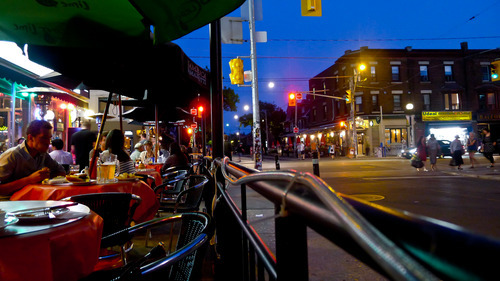
    But this influx of espresso drinking Catholics was hard for Toronto to adapt to at first. They were so alien compared to Toronto’s population at the time. They wanted to do weird things like eat outside on patios, and that just wasn’t the way we did things here in Protestant and conservative Toronto. We ate inside. That’s where food belonged.

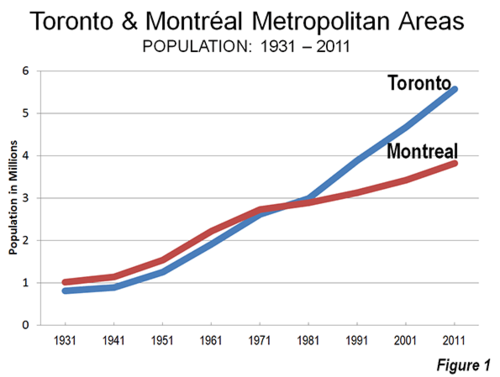
    In the 1970s, multiculturalism finally became a federal mandate and Toronto’s population took off, quickly surpassing that of Montreal. In the end, we were left with the most multicultural city on the planet.

    image

    My best friend’s father – who’s also in the real estate development business – once told me that when he first moved to Toronto in the 1970s the real estate business was virtually run by two groups of people: Italians and Jews. In other words, the people building our city were the people that we were once afraid to let come here in the first place.

    But in their quest for wealth and a better life (I have so much respect for people who are able to build something from nothing), these new Canadians also reshaped Toronto both physically (through building) and socially (by doing crazy things like eat outside on patios). They were not only building new lives for themselves, they were also rebuilding Toronto. They helped us grow up and not be so stuffy. And I absolutely believe that we’re a better city because of it.

    However, I think the true impact of their efforts is happening right now through the next generation – their children. Millennials and Generation Xs (at least the younger ones) don’t remember when Italians were considered aliens. They remember growing up with martini bars on College Street (which is the original Little Italy for those of you unfamiliar with Toronto). They know a different and cooler version of this city.

    But most importantly, those subsequent generations are now old enough (and have a lot more generational wealth behind them) to reshape this city even further. And with much deeper roots here, they have the passion to do just that. When I went to graduate school in the US, my parents were afraid I would never come back. That’s what they told me. But the more I traveled and the more I lived outside of Toronto, the more I wanted to come back.

    Just like those early wave of pioneering aliens who got us to dine al fresco and taught us that if we shop on Sundays we’re not going to go straight to hell, I feel like I too want to shape this city. I want to make it even better. No city is perfect, but if there’s something you don’t like about Toronto, then here’s my advice to you: Go change it. I can tell you it’s possible, because new immigrants with no money managed to do it.

    The first person who can tell me (in the comments below) which restaurant the patio shown above belongs to will get a free Architect This City t-shirt. If you’re from Toronto, this should be an easy one.

    Note: Most of the stats for this post were taken from this great research paper.

    Top Image: Wikipedia