Daily insights for city builders, delivered every morning at 6 AM ET. I’m Brandon Donnelly — a Toronto-based real estate developer and founder of Globizen. I’ve been writing here since 2013.

Tag: iphone

  • Spatial videos

    If you have an iPhone 15 Pro (and iOS 17.2), you can go into Settings -> Camera -> Formats and turn on a setting called “spatial video.” It will then enable this (excerpt from Om Malik):

    Spatial video is a mixed-reality video format that allows videos to record the depth and spatial information of the scene, and when you play it back, you get a more immersive, three-dimensional (3D) experience. The iPhone 15 Pro utilizes its main lens and the ultra-wide lens to capture the depth and spatial information of the videos. The spatial videos are captured at 1080p, 30 frames per second, and use the HEIC format.

    What you can then do is watch your videos on something like an Apple Vision Pro. It’s not going to be exactly perfect right now — given that the Vision Pro display is over 8k and the above is 1080p — but it will give you an indication of what’s to come for photography, video, and many other use cases.

    Some examples.

    As a regular consumer, this might allow you to capture videos from a trip and then more fully relive the moments once you’re at home. And as Om argues in his post, this will inevitably change photography/video. Because how we consume media, impacts how and what we capture.

    If you’re in the business of selling real estate to people, you can also imagine this set up having a profound impact on virtual tours. Because now you have something that’s pretty damn close to reality, if not eventually indistinguishable. Why even go in person until you have to?

    Of course, all of this will depend on whether Vision Pro actually sees widespread adoption. But if the technology is as good as everyone who has tested it seems to think, then surely there will be at least some initial users who find immediate value.

    And if that is the case, it opens the door for the masses. To once again quote Om: “It is not hard to be excited about the possibilities.”


  • 10 years of contactless payments on London’s public transport

    I was having coffee this week with a self-described luddite and, after we ordered our coffees, he surprised me by pulling out his iPhone and initiating ApplePay. Knowing him and his general views on technology, I said, “I’m surprised that you of all people are now using ApplePay.” To which he responded, “I can’t believe it took me this long to start using it. It’s so convenient! I now barely ever pull out my wallet.” Yup, it is very convenient.

    It also just so happens that this month marks the 10 year anniversary of contactless payments on London’s public transport network. This meaning payment via a bank or credit card, and not via an Oyster card. In fact, part of the reason why London did this was because bus drivers were struggling with both having to give change and having to deal with people who didn’t have enough funds on their Oyster cards.

    So Transport for London (TfL) decided to spend £11 million, design and code the entire thing in-house, and then roll it out across the network starting in 2012. Apparently, adoption started off relatively slowly. At the end of 2013, only about 6 million journeys were made using contactless payments — this is against an initial projection of 25 million. But fast forward to today, and around 70% of all bus journeys are now contactless.

    What is also interesting about this is that TfL now licenses their contactless technology to other cities around the world. Here is a £15 million deal that was announced in 2016, which suggests that they could be generating a fairly respectable return on their initial investment. But aside from this, contactless payments are an obviously good way to onboard people onto public transport. There’s no special card. No lining up at a ticket kiosk. And yes, you can even use your phone.

    Photo by Tomas Anton Escobar on Unsplash

  • The new AirTags and Apple’s global mesh network

    Apple recently released a new tracking device called AirTag. It is similar to the small Tile devices that have been in circulation for many years in that they help you find misplaced items like your keys or a bag. They locate your stuff and work like this. I pre-ordered a 4-pack of them last month but they aren’t scheduled to arrive until June. Maybe it’s because I got custom engravings on the back of them.

    Perhaps the most obvious use case for these new AirTags is to place one inside of your checked bag(s) when you travel. There’s nothing worse than an airline losing your luggage and you not knowing where it is. So I can see myself using one of these every time I travel. Hopefully that will be very soon.

    But the other really interesting thing about these devices is that they run on Apple’s “Find My” network, which is the same network that allows you to find your other iOS devices if you happen to misplace them. This is essentially a decentralized mesh network that is powered by all of Apple’s devices around the world, as opposed to some big telco network.

    According to Wikipedia, there is believed to be about 1 billion Apple devices around the world that are capable of transmitting anonymous signals. Your phone may be doing it right now. What this means is that these new AirTags are being located not by way of a cell network, but by way of some dude with an iPhone standing nearby to your AirTag.

    Why I find this so interesting is that the internet has way of decentralizing things and also cutting out intermediaries. We’ve seen that happen with travel agents and we are now seeing it take place with cryptocurrencies and blockchains. These new AirTags feels like a microcosm of that trend. They are running on a giant global network that has been created one device at a time.

  • Market power in tech

    Benedict Evan’s latest post on Microsoft, IBM, and anti-trust is excellent. In it he argues (reminds us) that market power during one generation of tech, doesn’t necessarily guarantee market power in the next. And that anti-trust intervention isn’t actually responsible for Microsoft missing out on, among other things, mobile. The rules of engagement simply changed. The PC is now a smartphone accessory.

    Here is an excerpt:

    The tech industry loves to talk about ‘moats’ around a business – some mechanic of the product or market that forms a fundamental structural barrier to competition, so that just having a better product isn‘t enough to break in. But there are several ways that a moat can stop working. Sometimes the King orders you to fill in the moat and knock down the walls. This is the deus ex machina of state intervention – of anti-trust investigations and trials. But sometimes the river changes course, or the harbour silts up, or someone opens a new pass over the mountains, or the trade routes move, and the castle is still there and still impregnable but slowly stops being important. This is what happened to IBM and Microsoft. The competition isn’t another mainframe company or another PC operating system – it’s something that solves the same underlying user needs in very different ways, or creates new ones that matter more. The web didn’t bridge Microsoft’s moat – it went around, and made it irrelevant. Of course, this isn’t limited to tech – railway and ocean liner companies didn’t make the jump into airlines either. But those companies had a run of a century – IBM and Microsoft each only got 20 years.

    For the full post, click here.

  • Before & After — Miami Beach

    We switched coasts today. Here is a photo of our Miami Beach hotel taken from the boardwalk with my iPhone:

    image

    And here is the after:

    image

    I took it into Lightroom. Fixed the alignment of the building. Whitened it, but brought out the beautiful warm sunset light on the north elevation. And I took the greenery in the foreground out of the shadows.

    The balconies remind me of one of Donald Judd’s “Untitled” pieces. He was one of my favorite artists. I also like the one dude leaning over that upper balcony. It gives the photo a tranquil feel, which is not usually how one would describe Miami Beach.

  • The scale of Apple’s iOS economy

    This is an interesting post on the size of “the iOS economy.” 

    About 70% of customer spending on Apple’s App Store goes to developers. The remaining ~30% is kept by Apple. 

    In 2017, iOS developers earned $26.5 billion. This is up about 33% from the year prior and is higher than McDonald’s revenue in 2016. Cumulatively, Apple has paid out about $86.5 billion to developers.

    And this past new year’s day, a new record was set with $300 million in App Store purchases. According to Horace Dediu, this year should average closer to $100 million per day.

    Also, this year’s App Store revenue is expected to surpass the film industry in terms of global box office sales. And we’re only talking about Apple. This does not include Android revenues.

    Click here to check out the full post.

    Photo by Ben Kolde on Unsplash

  • Why I write about tech on my city building blog

    I had a friend ask me this week about how I decide what to write on this blog. His comment was that I tend to write about a variety of different topics. He wondered: Isn’t it better to focus on one particular niche?

    The simple answer is that I write about what interests me. And secondary to that is any concern around what will get the most clicks. In fact, I try not to fall into the trap of worrying about the latter. Sometimes it can be paralyzing to fixate on what will appeal most to the tens of thousands of people who read this blog on a regular basis.

    The reality is that my interests are much broader than, say, just design and real estate; though these two topics are clearly central. 

    I learned a long time ago while studying architecture and art history that what we make as a society is generally a product of the cultural milieu at the time. In other words, the built environment doesn’t happen in a vacuum. It is the physical manifestation of what we believe to be true at a particular moment.

    Today, it’s pretty hard to ignore the importance of tech. Think of some of the most valuable companies in the world right now: Apple, Google, Amazon, Facebook, and so on. Now, technology has always shaped our cities, but what makes this moment different is the decisive shift toward software.

    It’s arguably no longer about who can build the best mousetrap. It’s about who can build the best software layer on top of that mousetrap.

    In 2011, venture capitalist Marc Andreessen (previously the co-founder of Netscape) published a widely shared essay called, “Why Software Is Eating the World.” And over the past 6 years he has been proven to be very right.

    The 3 main points he aimed to make with that essay are as follows:

    1. Every product or service that can become software will become software.
    2. Every company will have to become a software company.
    3. The winning companies will be the best software companies.

    Depending on your industry, this may sound ludicrous to you. Certainly in 2011 it probably seemed that way. 

    But a perfect example of this phenomenon is the iPhone. The phone itself is manufactured in China, albeit where a lot of great hardware innovation is taking place. 

    But at this point, phones have become fairly commoditized. The profits that Apple makes from the iPhone disproportionately come from the software layer and the app ecosystem it has developed.

    You could make a similar argument with Tesla. Autonomous navigation – which most of us can agree will have a profound impact on cities – is largely a software challenge. 

    And so if you believe that autonomous vehicles will be a fundamental part of the future of mobility, then it’s not that hard to believe in point number three: the winning car company will also have to be the best car software company.

    Some industries have been less touched by tech and software – real estate being one of them. But if Andreessen is right and it’s not a question of if, but a question of when, then it behooves all of us to think about the potential impacts.

    I love how Andreessen ends this podcast discussion with Barry Ritholtz of Bloomberg and so I’m going to repeat it here to close out this post. He says: “There are no bad ideas. There are only early ideas.” 

    And that’s why I write about tech on my city building blog.

    Photo by Michal Pechardo on Unsplash

  • Towards a walletless society, almost

    image

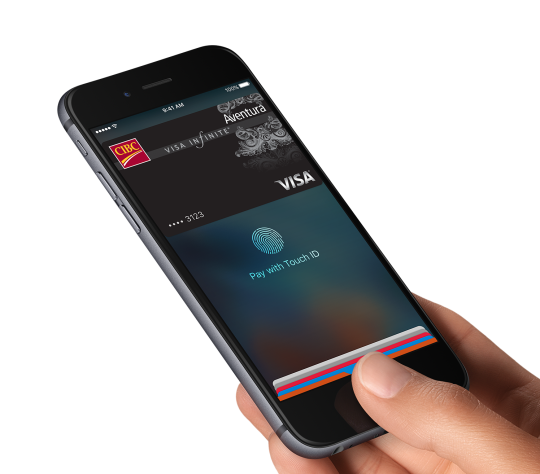
    Today I am one step closer to not only going cashless, but also going walletless.

    This is going to be old news for those of you in the U.S., but yesterday, all 5 of Canada’s big banks signed on to Apple Pay. Before yesterday, you had to have an American Express credit card – which I do not have – to use Apple Pay in Canada. Now you can use a debit and/or credit card from these institutions.

    What’s great about Apple Pay is that it can be used anywhere that contactless, or tap, payments are currently accepted. And since this is pretty commonplace in Canada – more so than in the U.S. I think – Apple Pay can, at least in theory, be used almost anywhere.

    Being the early adopter and geek that I am, I went out for lunch today determined to test out Apple Pay. As I pulled out my phone to pay for lunch, the guy told me: “That’s not going to work. Other people have tried before.” But I tried anyway and, boom, it worked like magic. The transaction amount popped right up on my screen.

    I am pretty excited about this for a couple of reasons. 

    Firstly, it’s more secure. Apple Pay works in tandem with the iPhone fingerprint scanner. So even if I were to lose my phone, nobody would be able to charge anything to it. That’s not the case with a lost wallet. Anyone can tap a credit card to buy something.

    Secondly, Apple is working on allowing reward cards to be stored in its Wallet app. I am terrible about remembering to collect rewards and use gift cards, so anything that consolidates and simplifies is a positive in my view.

    Thirdly, I like to go to the gym and go cycling with just my phone and headphones. I don’t like carrying around my wallet. I’m always afraid that I might lose it or someone might steal it from a locker. So I try and leave it at home. Now I can do that and still pay for stuff – assuming my battery will last that long.

    Of course, it’ll be awhile until we can all really go walletless. I’m not aware of any significant push to digitize government IDs. But it will happen. (Does that mean there will be no more fake IDs for underage drinking?)

    As this transition happens, I can’t help but think of all the small businesses that only accept/use cash and probably hide some of their earnings. I suspect it’s going to be a lot harder to do that in the future.

    I’m also thinking about how transit agencies are going to have to quickly get onboard with this technology. Here in Ontario, we’re still rolling out a card-based payment system. And cards are about to disappear; perhaps sooner than most people think.

    Image: Apple

  • Foursquare uses their global foot traffic data to accurately predict iPhone sales

    I am a fan and long time user of Foursquare – now known as both Foursquare and Swarm.

    Foursquare has struggled against competitors such as Yelp.com when it comes to local business recommendations. And I have less than 100 friends on my Swarm. It doesn’t seem to be that popular here in Toronto.

    But I’ve always loved the data collection aspect of Foursquare / Swarm. Even though most people don’t seem to care about that. When I check-in somewhere, such as the gym, it’ll tell me how many weeks in a row I’ve been there, whether it’s a new personal record, who else is nearby, and a host of other things.

    I’ve always felt like there was so much potential in all of the data it was collecting.

    Well the company is starting to make better use of that data. Recently they used their foot traffic data at Apple stores (I am assuming this goes beyond just check-in data) to predict the number of iPhones that Apple was going to sell globally following the launch of the 6s and 6s Plus.

    They predicted between 13 to 15 million handsets and it turns out they were right:

    This validates the accuracy of our prediction and while we’re proud of the result, we certainly aren’t surprised. Foursquare’s data is essentially the world’s biggest panel of foot traffic data — we have the best sense of the trends and patterns of the movement of people and their phones around the world.

    This is powerful stuff. If there were a way for me to be bullish on Foursquare beyond just writing this post, I would be.