Daily insights for city builders, delivered every morning at 6 AM ET. I’m Brandon Donnelly — a Toronto-based real estate developer and founder of Globizen. I’ve been writing here since 2013.

Tag: internal combustion engine

  • Nearly 1 out of every 10 cars sold is now electric

    I’ve said this before, but the car I currently have will certainly be the last internal combustion engine vehicle that I own. I truthfully even felt a bit weird buying it 6 years ago, but at the time, there weren’t that many options other than a Tesla. And I didn’t want a Tesla.

    Today, there are lots of EV options, and the numbers are starting to show that. When the final figures come in, it is estimated that the US will have sold 15.5 million new cars last year. And of these, about 1.44 million units are expected to have been electric.

    This means that we are just under 1 out of every 10 new cars sold in the US. The trend line is also working in the right direction. 1.44 million new EV units is roughly the total number of EVs sold between 2016 and 2021 in the US. 

    So things are accelerating. And presumably there are other people like me waiting on the sidelines. I am deliberately roughed in for an EV charging station in my new parking spot and, if/when it comes time to purchase a new car, that’s exactly what will get installed.

    (I added “if” because, depending on how mobility evolves over the next 5-10 years, there’s a chance I may no longer want to own a car.)

  • A roadmap for the global energy sector

    The International Energy Agency (IEA) has just published what it is calling the first comprehensive roadmap for transitioning the world to a net zero energy system by 2050. Turns out, it’s only going to take a complete overhaul of pretty much everything to hit this important target. We are going to need to start investing some $820 billion each year (starting in 2030) on our electrical grids to support the electrification of the global economy. 90% of electricity generation is going to need to come from renewables, with 70% likely coming from solar PV and wind alone. 60% of global car sales will need to be electric by 2030. We’ll need to completely halt the sale of internal combustion engine vehicles by 2035. And by 2040, we will need to have retrofitted at least half of our existing building stock.

    Make no little plans. For a copy of the report, click here.

  • Thoughts on electric vehicle adoption

    Nathaniel Bullard’s latest Sparklines article for Bloomberg Green makes some interesting arguments around EV adoption.

    First, he shows that cars in general have been getting a lot more expensive. Looking at new vehicle market share in the US according to price (above), you can see how quickly cars over $40k have become about half of the market. Only some of this is inflation.

    Nathaniel then goes on to show just how many people lease a luxury vehicle (apparently this is called lease penetration). For Infiniti it’s 55.6%, for BMW it’s 49%, and for Mercedes it’s about 40%.

    When you consider that “upfront cost parity” between EV and internal combustion vehicles is supposed to arrive sometime in 2024, there is an argument to be made that people are destined to start buying a lot more EVs in the near future.

    They’re already buying expensive cars and EVs will soon be cost neutral in that regard. At the same time, a lot of people lease their cars and will be in a position to easily switch when it makes sense to do that.

    I think the greater barrier to adoption at this point will be the charging network and “range anxiety.” Too many plug types and not enough charging stations, except maybe if you have a Tesla. But at some point that too will change, I’m sure.

  • EV and ICE vehicles expected to reach price parity by mid-2020s

    Each year, Bloomberg NEF (New Energy Finance) publishes a long-term forecast of how electric vehicles and shared mobility will/might impact our cities. Predicting the future is never easy. And forecasts are never right. But they’re valuable to do.

    By 2040, BNEF believes that 57% of global passenger vehicle sales and 30% of the global passenger vehicle fleet will have some form of an electric drivetrain. Either full battery electric (BEV) or plug-in-hybrid electric (PHEV). Looking at this another way, we have about 17 years (2037) until ICE and electric vehicles are expected to intersect and hit 50/50 in terms of global sales.

    A big part of what is driving the adoption of electric vehicles is that the price of lithium-ion batteries keeps coming down. Assuming this trend continues, the price of EVs and ICE vehicles (in most segments) should reach parity sometime in the mid-2020s. Meaning, yes, it’s more expensive to produce an EV today.

    All of this will also impact mobility services (ride-hailing and ride-sharing). Today, less than 5% of annual kilometers traveled by passenger vehicles around the world is thought to be done through some form of a ride-hailing app. That’s still a pretty significant number, actually. Though only about 1.8% of this fleet is electric.

    By 2040, shared mobility services are expected to rise to 19% (see above) and — because their costs are coming down — 80% of this fleet is expected to be electric. Autonomous vehicles are not expected to meaningfully impact global mobility until the 2030s. But the growth in shared mobility services is still expected to reduce the demand for car ownership, and likely parking.

    Other high-level findings from BNEF’s 2019 Electric Vehicle Outlook can be found here. If you want to access the full report, you’ll need to be a BNEF client.

    Images: Electric Vehicle Outlook 2019 (BNEF)

  • The post-combustion era

    Over the winter I visited BMW World, and its neighboring museum, in Munich, Germany.

    I loved seeing how the company got its start and how far it has come since it helped to invent the automobile at the beginning of the 20th century. I think their first product was actually an airplane engine.

    But you and I both know that the paradigm is changing. The internal combustion engine (ICE) is going away and pretty soon we won’t be driving, so much as being driven around by our cars.

    Bloomberg recently published an interesting article about this shift and about BMW. Here is an excerpt:

    The fact that both combustion engines and electric motors find themselves inside the same 18,000-person complex in Dingolfing, BMW’s largest in Europe, makes it a microcosm of a shift overtaking automakers the world over. A visitor can see that 625-horsepower engine—more than twice as powerful as the original from 1985, a luxury product relentlessly branded as “the ultimate driving machine”—then walk around the corner and see its puny electric replacement. You start thinking the better slogan might be “the ultimate combustion engine.” As in: last of its kind.

    Electric motors are a hell of a lot simpler to manufacture (and service) than gasoline engines. BMW estimates that they take about 30% less time to make. So the impacts of this transformation span everything from supply chain to human capital.

    Today, about 10% of the work that goes on in Dingolfing is related to electric vehicles.

  • Is Tesla the new iPhone?

    image

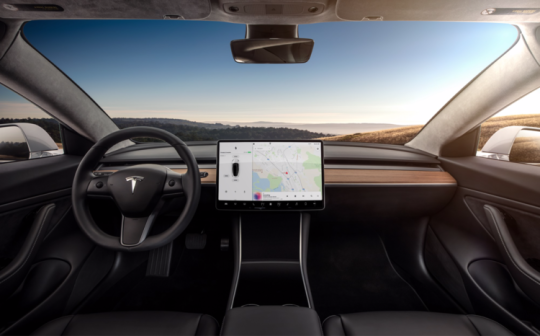
    Benedict Evans just published a great post on his blog about “Tesla, software and disruption.” I recommend a full read. In it, he tries to answer whether Tesla is really “the new iPhone” and if it will be as disruptive to the car landscape as some/many people think.

    In his line of thinking, electric (as opposed to an ICE vehicle) feels a lot more like a sustaining innovation, rather than a disruptive innovation. In other words, it something that incumbents will be able to incorporate. So it will not change the “basis of competition.”

    The more critical aspect is instead autonomy. Here are two snippets from the piece:

    All of this takes us to autonomy. Electric is compelling but will probably be a commodity, whereas Tesla’s improvements on top of electric may not be commodities but are not necessarily decisive. Autonomy changes the world in profound ways (I wrote about this here), and it’s a fundamentally new technology that doesn’t look at all like a commodity. And Tesla is doing this, too. Sort of.

    In this competition, Tesla’s thesis is that the data it can collect from its cars will give it a crucial advantage. The only reason that anyone is interested in autonomy today is that the emergence of machine learning (ML) in the last 5 years probably gives us a way to make it work. Machine learning, in turn, is about extracting patterns from large amounts of data, and then matching things against those patterns. So how much data do you have?

    But even if we are to all agree that autonomy is the “disruptive innovation”, it is not yet clear who will get there first. Maybe it is Tesla. Maybe it is Waymo. Regardless, many or most people seem to agree that it will arrive in 202x.

    Image: Tesla

  • The case for self-driving electric car fleets

    Below is a presentation by Frank Chen – head of research, deal, and investing at the venture firm Andreessen Horowitz – which makes the case for self-driving electric car fleets.

    He starts the presentation by talking about why he thinks this shift is going to happen faster than most people think. 

    One reason for this is that the batteries are becoming dramatically cheaper and the battery makes up a large part of the cost. By 2025, it is expected that electric vehicles will become cost neutral with ICE (internal combustion engine) vehicles assuming zero government subsidies.

    And by 2038, Bloomberg believes we will hit peak ICE vehicle sales. That is, electric vehicle and ICE vehicle sales globally will hit 50/50. Norway has already hit this threshold but they impose heavy financial penalties on ICE vehicles.

    2025 is not that far away.

    If you can’t see the presentation below, click here.

    [youtube https://www.youtube.com/watch?v=of5j-Lztqrg?rel=0&w=560&h=315]