Daily insights for city builders, delivered every morning at 6 AM ET. I’m Brandon Donnelly — a Toronto-based real estate developer and founder of Globizen. I’ve been writing here since 2013.

Tag: interiors

  • School gym turned two-storey 2,700 sf loft in Rotterdam

    I am working from home today, like many of you, I’m sure. The patio door is open and the news is on in the background talking about some sort of nasty bug that’s going around. It’s not half bad, except I prefer working in an office and being around other humans.

    But never mind that, this recent article from the WSJ has me wondering where I can buy a 2,700 square foot loft for €1 and end up with the following renovation for under US$450,000 (photo by Rene de Wit):

    A former school in Rotterdam, the city sold off the building as 7 residences. The loft you see here was the gym. Major foundation work was required (costing about US$565,000), but that got split up across all of the buyers/residences and factors into the number I threw around above.

    At 2,700 sf, it’s not your typical urban residence. But it is interesting to see how they designed the space to be suitable for a family. There’s a separate children’s “suite” hidden behind the millwork next to the dining area. Look closely and you’ll be able to see the door.

    For floor plans and more photos, including some before shots, click here. It’s worth seeing more of this place. Two storeys in the city is such a luxury.
  • A story about architecture, interiors, and branding

    I was recently having a debate with one of our architecture partners about the interrelationship between architecture, interiors, and branding. This came up because, in New York City, you almost need a name brand architect attached to your project in order to sell luxury condos.

    But this raises an interesting set of questions: How much value is driven by the quality of the architecture versus the architect’s brand? (Though, presumably you need the former in order to build the latter.) And how much of the value is actually just driven by the finishes (interiors) and the branding that you layer on after?

    This latter scenario is a depressing thought for architects. It is architecture as a kind of “empty vessel.” One that just gets dressed up for today’s Instagrammable moments. And I am sure that you can think of some examples of this. Not everything can be capital A architecture.

    But what is clear is that the most successful design-driven projects don’t think in this way. They are thoughtful and deliberate about each component, and they all work together to strengthen each other. Marketing, after all, is about telling the right story. It is always helpful when you actually have one to tell.

  • Attract and extract

    Chris Dixon’s recent piece on why decentralization matters is currently making the rounds online. It clearly explains the first two eras of the internet and how the third era is developing as we speak. Cue decentralized cryptonetworks.

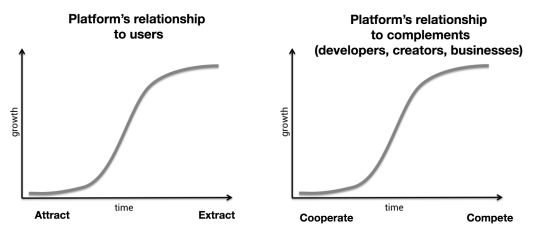
    I particularly like how he describes the relationship that centralized platforms – like Facebook – have to their users and to their complements (other businesses, software developers, creators, and so on). 

    Here are two graphs from his article:

    In the early days it’s all about cooperation and doing everything you can to attract users. The platform gets more valuable the more users are on it and so the immediate goal is to build up the network effects and lock people in.

    But as the platform grows, the relationship flips (top of the S-curve). In Dixon’s words, it becomes a zero-sum game whereby to continue growing the platform starts extracting data from its users and competing with its complements.

    The promise of cryptonetworks is that they will do away with many of these negative externalities, but at the same time empower the kind of sophistication that we see today with centralized platforms.

    The venture capitalists are circling because a fundamental shift in the architecture of the internet will mean disruption. I’m following it because I want to understand how it may apply to real estate and the built environment.

  • Total work of art

    image

    I toured 56 Leonard Street in New York today. The only picture I have on my phone is the above photo of the lobby. The rest of the photos are on my Fuji and so they’ll make their way to my Instagram over the coming days. 

    There’s lots that has already been said about the architecture of 56 Leonard, but one thing I wanted to point out was this idea of a “total work of art.” The German word for this: Gesamtkunstwerk. I’ve written about this before, here.

    With many/most development projects, there will be a separate architect and a separate interiors firm. There’s absolutely nothing wrong with this approach, but it could lead to a disconnect between the exterior and interior. Or at least, some architects will tell you that.

    In the case of 56 Leonard, the architect (Herzog & de Meuron) also designed all of the interiors – right down to the kitchens, the sinks and tubs, the light fixtures, and likely a few other things. Hence the “total work of art.”

    It’s incredible to see what happens when you have one design sensibility brought to an entire project. 56 Leonard is beautiful. For the rest of the photos, make sure to follow me on Instagram.

    In case you’re wondering, the condo prices in the building run between $3,500 and $5,000 psf. One of the penthouses recently sold for USD$47 million.

  • Fun Friday: Saltz, Zurich

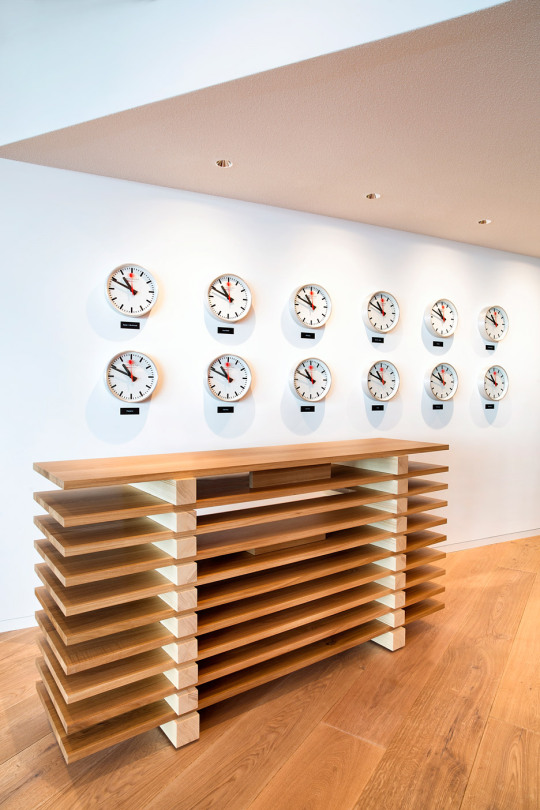
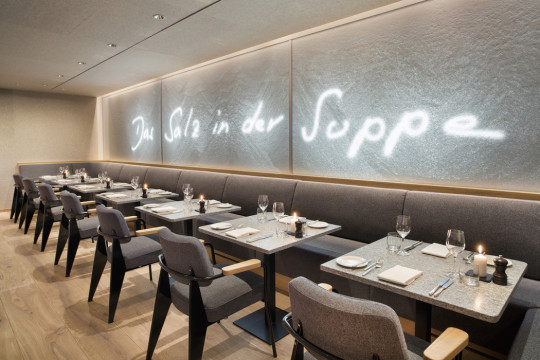
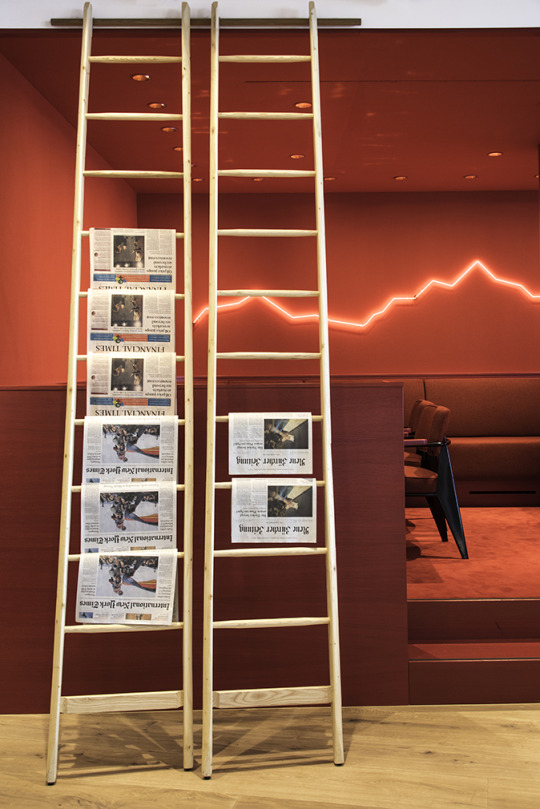
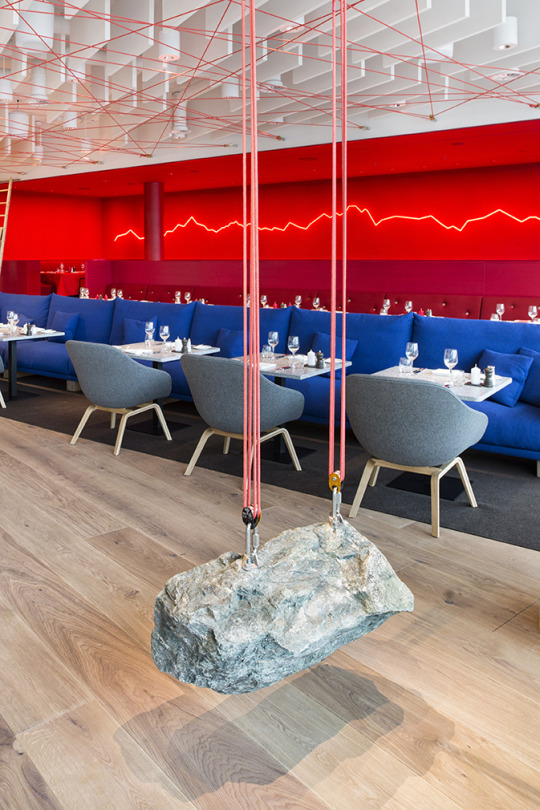
    Earlier this month a new restaurant – called Saltz – opened up in Zurich’s historic Dolder Grand Hotel. (The building was originally built in the late 19th century, but an extension was added in 2008 by architecture firm Foster + Partners.) 

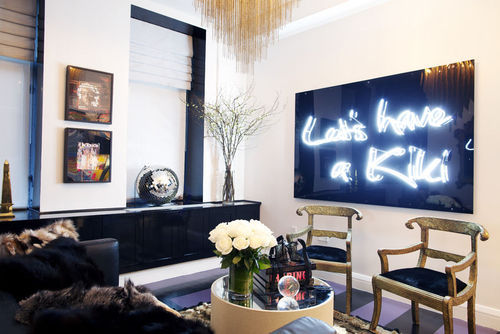
    Designed by artist Rolf Sachs, the 280 square meter restaurant is fitted out with an eclectic mix of unusual materials: neon, salt, rock, climbing rope, felt, and so on. And everything is intended to relate back to Swiss culture in some way.

    The interiors caught my attention as I was browsing through the press release this morning, so I have decided to post a few photos. All of the photography is by Nico Schaerer, courtesy of The Dolder Grand and artist Rolf Sachs.

  • Learning from boutique hotels

    At the beginning of this year, my friend Amy Bath wrote an interesting post on her blog comparing condos and boutique hotels. It’s called: Could condos be more like boutique hotels? It’s a great read and it touches on something that I think we will see more of going forward.

    The idea is that boutique hotels – many of which invest heavily in things like programming and “cultural engineering” – could serve as a model for condos and developers who want to further differentiate themselves by doing more with their common areas and amenities. I think it’s a great idea. 

    But let’s backup for a second.

    In many cases, I feel that developers tend to privilege the brands of their specific projects over their own corporate brands. This likely has something to do with the entrepreneurial nature of how development projects often come together, but I personally don’t think it’s the best approach.

    It’s the equivalent of a car company downplaying its own brand and instead creating a new one for each and every car model that it comes out with. That’s a lot of work and it’s harder to build brand equity that way. So I think the trend is probably away from this approach.

    But as that happens, developers will inevitably start to wonder how they can differentiate them themselves: How do I make my bricks and mortar less of a commodity? The same way that Apple made computers not about processor speeds and memory, but about something so much more. You create a brand story and an experience.

    And one of the best ways I think you could do that is through exactly what Amy is talking about: programming and cultural engineering.

  • Introducing YOO Architecture

    Back in 2006 when I was fresh out of architecture school and looking for work, I knocked on the door of a design company based in London with my polished resume in hand. I was sleeping on a friend’s couch at the time and the company seemed like a perfect fit for me – so I went for it.

    There’s no happy ending to this story though – because I didn’t get past the front door that day – but there’s never any harm in trying. As my friend told me the morning I went: fortune favors the bold.

    The firm I visited that day is called YOO.

    They call themselves “a residential and hotel design company”, but their model is actually more unique than that. Founded in 1999 by John Hitchcox (a property developer) and Philippe Starck (a rockstar designer), the firm partners with local real estate developers around the world and creates value through design, branding, and marketing expertise – as well as through celebrity names like Philippe Starck and Jade Jagger.

    They did one project in Toronto with local developer Peter Freed called 75 Portland.

    What makes their model interesting is that, unlike the real estate developers they partner with, they’re not assuming the same level of risk (unless, of course, they co-invest). They get paid (well) for the design services and marketing expertise they provide, as well as the brand equity that they bring.

    This is similar to what Donald Trump does with some (most?) of his developments now. Want the Trump name on your building? Pay $X. Want Philippe Starck at your condo sales launch? Pay $Y.

    When I was in architecture school, I used to wonder why we didn’t talk about the importance of branding and marketing. I thought we should. Which is probably why I ended up in business school afterwards.

    I think there’s a lot of potential in overlaps and hybrid business models, which is why I was excited to learn today that YOO has just launched a new architectural practice called YOO Architecture.

    You can read more about it here.

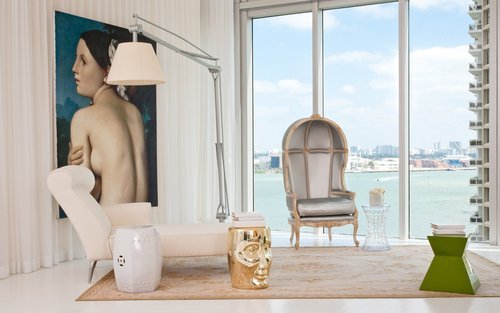
    Image: Icon Brickell, Miami via YOO

  • Firm Profile: ASH NYC

    A friend of mine recently introduced me to a young real estate company out of New York called ASH NYC (the founders are around 30). 

    But in reality, calling them just a real estate company is an oversimplification. They’re actually a vertically integrated firm that brings interior design, real estate development, property management, hospitality, and a few other disciplines all under one roof. The way they talk about it is in terms of “joining historically compatible disciplines” and “creating both aesthetic and economic value” – which is a pretty neat approach.

    I’ve written a few times before about the future of the architecture profession and so I think it’s really interesting to see yet another example of design being completely integrated with real estate. And I’m certain we’re going to see more of these kinds of hybrid and integrated business models across many other industries.

    In my own career, I’ve been (somewhat similarly) fascinated by the intersection of design, real estate, and technology. And I suspect that many of you also feel like you’re operating in some kind of overlap. Is that true?

    Image: ASH NYC

  • Before and after at 109 Hazelton Avenue

    I recently connected with one of the principals of a Toronto-based construction management firm called Ripple Projects, which focuses primarily on contemporary custom homes (credit to 52 Pick-up for the introduction).

    They’ve only been in business for a few years, but the founders spent many years prior to this doing similar projects at similar companies, such as Wilson Project Management.

    Since they don’t yet have a lot up on their website, I asked if he could share one of his recent projects with me. He was happy to do that and so, with his permission, I’d now like to share it with all of you.

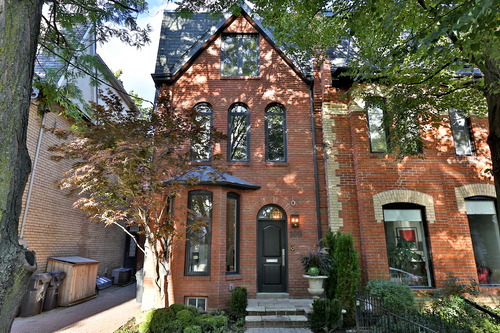
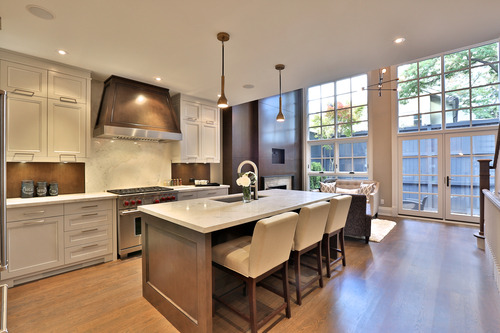
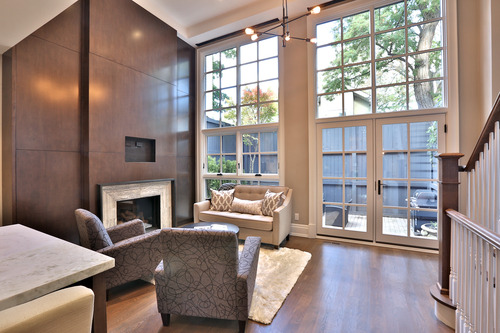
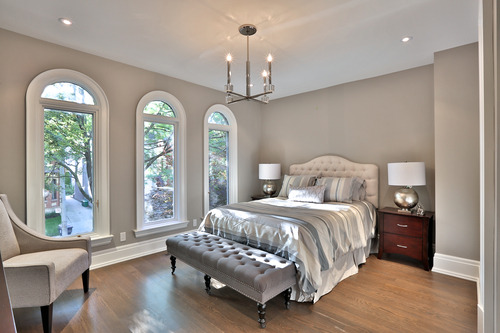
    It’s a renovation and expansion of a semi-detached house at 109 Hazelton Avenue in Toronto’s upscale Yorkville neighborhood. The end result is roughly 3,000 square feet with 3+1 bedrooms and 5 bathrooms. If I remember correctly, it sold for close to $3 million.

    Here are a few before pictures. It wasn’t in bad shape – just a bit dated.

    image

    image

    image

    And here are a few after photos.

    image

    image

    image

    image

    image

    I personally would have gone with something even more modern, but that’s just me and I wasn’t the client. It’s still a phenomenal project. So if you’re in the market for a new custom home, I would encourage you to give Ripple Projects a call. I was really impressed by our conversation.

    Note: I have zero affiliation to the company. I just believe that good people deserve exposure.