Daily insights for city builders, delivered every morning at 6 AM ET. I’m Brandon Donnelly — a Toronto-based real estate developer and founder of Globizen. I’ve been writing here since 2013.

Tag: information

  • Flood-prone areas see dip in real estate sales

    image

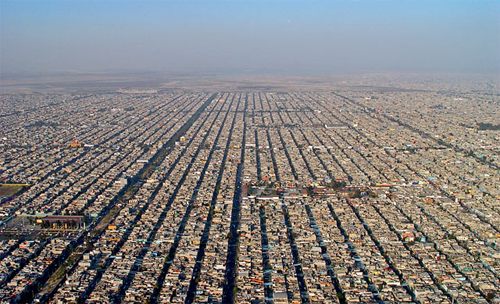
    The New York Times has an interesting article up talking about the possible impacts of climate change on coastal real estate in the United States. In it they make the argument that sales velocity is declining in flood-prone areas. Here are two snippets:

    Over the past five years, home sales in flood-prone areas grew about 25 percent less quickly than in counties that do not typically flood, according to county-by-county data from Attom Data Solutions, the parent company of RealtyTrac. Many coastal residents are rethinking their investments and heading for safer ground.

    In the past year, home sales have increased 2.6 percent nationally, but have dropped about 7.6 percent in high-risk flood zones in Miami-Dade County, according to housing data. Many coastal cities are taking steps toward mitigation, digging runoff tunnels, elevating roads and building detention ponds.

    I would like to see more data supporting this argument, but I can’t say I’m surprised. Flood risk is certainly something I would think about – particularly in high-risk areas such as South Florida. Florida has 6 of the 10 most vulnerable urban centers in the US.

    The other piece that caught my attention is this:

    Flood risks are easily overlooked because past flood damage often goes unreported and, as in Virginia, the burden of discovering it falls to the buyer. LexisNexis, a news and legal research company, can supply sellers a report with the history of flood claims on the property, but buyers usually do not know to ask for it. FEMA collects information on federal insurance claims for homes nationally, but the agency has been reluctant to make it public for privacy reasons.

    It is yet another example of how opaque the real estate industry is. A lot of the information – assuming it’s even available – is fragmented across a number of different sources. If you’re playing hot potato, this obviously works to your benefit. But I don’t believe it’s the best thing for the overall market.
  • #BuildHereNow — Crowdsourced city building

    image

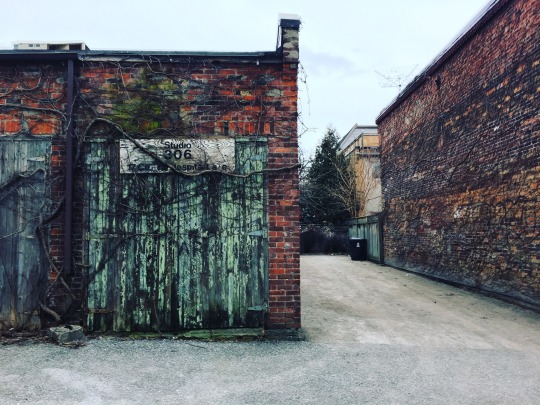
    This week Strong Towns has been running a great social media campaign called #BuildHereNow

    The way it works is very simple. They asked people to get outside and take photos of vacant and/or underutilized properties in their town or city and post them to Twitter or Instagram using the hashtag #BuildHereNow. The goal was to start to identify properties that could “use a little love" and to encourage city builders who might need a little push to develop a particular property.

    I’m a big fan of crowdsourcing information and I love the idea of digitally annotating buildings and spaces. In this case, it’s about pulling together the desires of the community,

    Hashtags are a great way to quickly make something like this happen, but I would love to see a purpose-built tech platform do this in a more permanent way. Of course, it doesn’t just have to be about developing. Buildings are rich in information; hopefully so rich that a platform like this could survive.

    If you think about it, property titles are already a form of annotating real property. So this isn’t really a new idea. 

    But now technology allows us to harvest all kinds of other information – such as what people would like to see built. Imagine the possibilities if we became more effective at collecting, organizing, and leveraging this data at scale.

  • How to apply for information

    This morning I was at Toronto City Hall looking for old drawings of a building that I’m now working on. While I was there, I also ran into John Tory, and so I was given the opportunity to congratulate him in person on his recent mayoral win. But that’s irrelevant to this discussion.

    What I instead want to talk about is access to information.

    We are living in a world that produces an unprecedented amount of data and information. Back in 2010, Eric Schmidt – the former CEO of Google – quite famously stated that we were creating as much information in the span of 2 days as we did from the dawn of civilization up until 2003. And that was 4 years ago. So I can only imagine what the numbers look like today. The internet is basically a giant data generating machine.

    But a lot of that information isn’t all that useful and much of the really useful information that’s out there isn’t yet digitally accessible in the ways that we have now become accustomed to. For example, for me to access old drawings and documents for a building in Toronto, I had to do the following…

    First, I had to file what’s called an Application for Routine Disclosure. It was a 2-page form that I was able to submit to the city over email. The fee for this application was $66.60. Once the city confirmed receipt of this application, they then went looking in their archives for any drawings and documents that might exist.

    After about a week, I called them up and they informed me that drawings had been found and I could now setup an appointment between the hours of 8:30am and 11:30am, Monday to Friday. I went in the next day and the lady – who was very helpful I must say – presented me with a stack of microfiche sheets (I think that’s what they’re called).

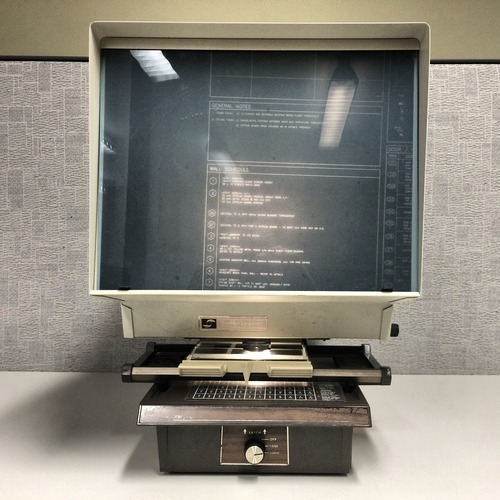
    I then took these sheets and walked over to a machine (shown below) where I could inspect the drawings. Everything about the machine had to be reversed. In order to get the drawings to show up properly, I had to put the microfiche sheets in upside down and mirrored left-to-right. 

    image

    As I looked through the sheets, I was then instructed to demarcate – with a post-it note – which drawings I wanted a copy of. At the end of it all, the lady filled out another form that would be sent to a printing shop who would then convert these microfiche drawings into PDF files for me. I think that will end up costing a few hundred dollars when it’s all said and done.

    However, at this point, I also learned that this procedure applied only to drawings, and not to any of the other documents that I was able to find on the microfiche sheets. For non-drawing documents, I actually had to file what’s called a Freedom of Information application at a separate counter upstairs. So I did that. I applied to free the information. It was only $5, but the turnaround time for that is 30 days.

    Now, I realize that we’re talking about old drawings and documents. Some of them were from the 1940s. But I’m a big believer in the value of open information. And so today was a good reminder to me that, even though we now have a tremendous amount of useful information at our fingertips, there’s still lots of valuable information that’s really difficult to get.

  • The death of planning expertise

    image

    Yesterday a friend of mine sent me this article written by a city planner talking about the death of planning expertise. The article talks specifically about the rise of “community participation” and how it has undermined the modern planning process. (I guess it’s not just architects who feel undermined.)

    …we have lost respect for “experts”—those who have knowledge and/or experience in a particular field—and have replaced it with a kind of “expertise egalitarianism” whereby everyone’s opinion is given equal weight. But it is not only that the layperson’s opinions are given equal weight, experts increasingly face outright hostility. Laypeople attack experts as being arrogant, elitist, and imposing, if not outright threatening, often because the expert insists he or she knows something the other does not. Even more ridiculous, rather than being viewed as helpful or even essential, expertise is viewed as harmful or even antithetical to community participation.

    But to be clear, the author is not arguing for technocratic rule. He simply believes that community input has reached a point where laypeople with only anecdotal evidence are given equal weight as planning experts, and that it’s miring the planning process and causing less than desirable outcomes.

    This topic is interesting to me for 2 reasons.

    First, it’s interesting because we’re basically talking about a form of decentralization, which, just so happens to be one of the macro trends being ushered in by technology and the internet. It used to be that we couldn’t decentralize. Communication costs were too high and the ability to share information in real time wasn’t possible.

    But today we can. So instead of, for example, only getting the news from one source (a newspaper, perhaps), we get it from millions of people on platforms like Twitter. We trust laypeople, just as much as we do “expert” reporters, to tell us and show us what’s happening in the world. Just yesterday I turned to Twitter to see what was happening with Toronto’s torrential rainfall (#TorontoStorm).

    And as a result of this trend, we’re seeing startups like Popularise that are, in some regards, trying to decentralize the planning process. The platform allows communities to decide what they want to see in their neighborhood and then share it. Think your neighborhood could use an organic grocery store? Great, you can spec that on Popularise.

    The second reason I find this topic interesting is because there’s a school of thought (let’s call it the “wisdom of crowds” school of thought, to name it after a book), which believes that in aggregation the opinions of many can actually be better than those of a few so-called experts.

    And in many ways I agree with this—though there are a number of prerequisites that need be met in order for this to hold true. For example, you can’t have groupthink taking place, which I think you could argue is what often happens with NIMBY movements.

    Nonetheless, there’s a shift taking place and it’s impacting not only the planning profession, but many others. In the end though, I don’t think it will make experts irrelevant. In fact, as industries continue to “open up” and as we harvest more and more data (that previously wasn’t available), I think we’ll all be surprised at how beneficial this ends up being. 

    Image: GSAPP

  • As a general rule, the most successful man in life is the one who has the best information.

    Benjamin Disraeli

  • What is Dirt?

    Dirt was founded to correct the problem of information in the real estate industry: too much of it is either fragmented, restricted or entirely unavailable. We believe that real estate consumers should be able to easily and freely access all the information they need through one consolidated source.

    What is Dirt?