Daily insights for city builders, delivered every morning at 6 AM ET. I’m Brandon Donnelly — a Toronto-based real estate developer and founder of Globizen. I’ve been writing here since 2013.
The Wall Street Journal reported today that the median home price across the United States rose 8% year-over-year in March to $280,600. One explanation for this is that while, yes, demand did drop off, so too did supply and that has led to a shortage of available housing. The other possible explanation is that these March deals were papered earlier in the year (or late last year) when most of us were blissfully unaware of what was about to happen and so the real impact of this pandemic isn’t yet showing up in these numbers.
Let’s drill down.
The Toronto Regional Real Estate Board also released numbers today, but for the month of April. Not surprisingly, residential resales across the region are down by 67% compared to April 2019. The number of listings is also down by a similar amount (-64.1%). Overall though, pricing remained relatively flat (0.1% increase). And by overall I mean for all housing types and for all areas of the region. There are larger variances within specific areas and for certain types. See below.
Drilling down even further, my friend and agent Christopher Bibby noted in his monthly newsletter over the weekend that transaction volumes in the central (resale) condominium market are down some 85-90%. So the market is effectively at a standstill. Those who do not need to sell or move are justifiably deciding not to right now. But just as Warren Buffet got on stage over the weekend — with some great flowy hair, I might add — and told us in Times New Roman never to bet against America, I am not about to bet against Toronto. This too shall pass.
This week it was reported that a South American family has bought and closed on ~$27 million worth of residential condos at Waterline Square in Manhattan. Apparently they went into contract (after the online showings) and closed on the same day, which I suppose you can do when it’s an all-cash deal like this was. The agent, Maria Velazquez, didn’t disclose who the family was, but apparently they’re from Peru and they wanted a safe place to park their money during this pandemic. Uncertain times usually create buying opportunities, and it sounds like the family did get a bit of a bulk discount here. But it’s also interesting to see where capital is flowing right now and what is perceived as a safe haven. Residential real estate in one of the world’s preeminent global cities probably won’t come as a surprise to any of you.
Yesterday I made a comment on Twitter about most people not understanding to what extent government bureaucracy inhibits the delivery of new housing in this city. It received a number of responses, including remarks about how development charges have also recently doubled and how this statement applies to pretty much every city out there. But there was also a comment about developers not being transparent and not properly explaining the impact to the public. In other words: please demystify the development pro forma. I thought that was a fair remark, and so this post is going to be a response to that comment.
Before I begin, it’s important to keep in mind that most developers have investors. These investors put up most of the money required for a project and in turn they take most of the profits. However, there is typically a “promote” in place, which is just an incentive structure that pays the developer more of the profits (disproportionate to the cash they invested in the project) if they perform and hit certain return benchmarks. All of this is to say that developers aren’t usually the ones holding all of the cash (which is what a lot of the public seems to think) and they are accountable to their investors to do what they said they would do.
Now let’s run through the costs that make up a “typical” development pro forma. For this example, I am going to assume that we’re talking about a 100,000 square foot mid-rise building; the kind that you might build and find along any one of Toronto’s Avenues. If we were doing this in real life, we would get more precise with the areas and consider gross construction area, gross floor area (city definition), and the net saleable/rentable areas. But to keep the math simple, we will ignore these differences. That’s the approach I’m going to take overall in the post. What you need to know, though, is that you have to pay to build the entire building, but you only get to collect revenue on a portion of it. That’s why the “efficiency” of a building matters.
Land
The value of development land is a function of what you can build and the revenue you can ultimately collect. So location matters a great deal. Based on the latest high-density land report from Bullpen and Batory, the average price of an unzoned mid-rise site in the City of Toronto is about $231 psf. So let’s assume a land cost for our project of $23.1 million. Assuming we can get land financing at 60% of the value of the land (loan-to-value), that would mean we’re putting up $9.24 million of cash (plus a loan guarantee!) and borrowing $13.86 million to start our project. At 5.25% per annum (interest-only loan), our annual interest charges would be about $727,650. From now on forward, we’re going to pay ~$60k in additional interest charges for every month that our project is delayed. Buckle up.
You should now begin to see why time is so valuable and why government bureaucracy can be so frustrating. As a developer, you’re heavily incentivized to move things forward, whereas it can often feel like everyone around you is trying to deliberately erect roadblocks in order to slow you down and make your project more expensive to build. Oftentimes, it is because it is less risky for them to punt things down the road and not make a decision. That is not the case for us and our project.
Hard Costs
Onto construction (or hard) costs. As many of you know, these have risen dramatically over the last 4 to 5 years. On some of our projects, we have added over $100 psf in hard costs alone. Part of this has to do with a busy construction market and part of this has to do with new building requirements: watertight undergrounds, new Green Standards, and so on. For our project, which is on the small side, let’s assume $360 psf for a total of $36 million. This would include our direct construction costs and our construction manager’s overhead (general conditions). We should also prepare for some of the trades to decline to bid on our project because it is too small and not worth their time.
Soft Costs
Soft costs include everything from consultant costs and interest charges to government levies and management fees. Like everything in your pro forma, these absolutely need to be broken out line by line. Don’t be lazy here. But for the purposes of this simplistic example, we’re going to use 75% of hard costs, which works out to be $27 million (or $270 psf). When I first started out in the development business, the rule of thumb was closer to 25% of hard costs. But times have changed. Government fees, alone, can make up about 1/4 of the price of a new condo in Toronto.
Adding up all of these costs, we’re at $861 psf or $86.1 million in costs. It’s now time to consider the revenue side. $1,000 psf seems like a nice round number, so let’s start there and assume we’re going to sell our condos for that. Typically in Toronto, the price you pay is inclusive of HST, so that liability will need to be deducted from our revenue line. It’s not a straight 13% because of the new home rebate, but the rebate also hasn’t been properly indexed since it was introduced and so the liability could still be upwards of 10%. (This is worthy of a separate blog post.) The result is $900 psf in revenue and a margin on costs that is less than 5%. No sensible developer would want to do this project. One misstep (or development charge increase) and you’re dead.
So let’s increase our condo prices to $1,100 psf. Maybe that will work. In doing that, we get to a margin on costs that is nearly 15%. Okay, now we’re in the range. But let’s say we just got delayed by 6 months (boom, interest charges) and our hard costs turned out to be off by $15. They’re actually working out to be $375 psf because of some new tariff and because the formworkers in the city are all tied up on bigger projects and couldn’t give a shit about our cute little infill project. Now we’re offside again in terms of our margin on costs. No problem, let’s try and push condo prices a bit more. Is $1,150 achievable? Perhaps. But ideally, given the above, we would want to be at $1,200 psf just to be safe.
This is an overly simplistic example of the math that goes into a development pro forma. But hopefully it begins to show you (1) just how many moving parts there are in a development project and (2) the kind of pricing that is required in today’s cost environment. Developers are reacting to the costs that they are being thrown and it is creating upward pressure on home prices. (See related post: Cost-plus pricing.) So far there has been enough elasticity in the market to absorb these price increases, but that may not always be the case. If you have questions about this post or disagree with any of my assumptions, feel free to leave a searing comment below.
I am working from home today, like many of you, I’m sure. The patio door is open and the news is on in the background talking about some sort of nasty bug that’s going around. It’s not half bad, except I prefer working in an office and being around other humans.
But never mind that, this recent article from the WSJ has me wondering where I can buy a 2,700 square foot loft for €1 and end up with the following renovation for under US$450,000 (photo by Rene de Wit):
A former school in Rotterdam, the city sold off the building as 7 residences. The loft you see here was the gym. Major foundation work was required (costing about US$565,000), but that got split up across all of the buyers/residences and factors into the number I threw around above.
At 2,700 sf, it’s not your typical urban residence. But it is interesting to see how they designed the space to be suitable for a family. There’s a separate children’s “suite” hidden behind the millwork next to the dining area. Look closely and you’ll be able to see the door.
For floor plans and more photos, including some before shots, click here. It’s worth seeing more of this place. Two storeys in the city is such a luxury.
LSE Cities has just published a new report called, Living in a denser London: How residents see their homes. The goal of the research project was to better understand how modern housing projects are working (or not working) for Londoners. And so they connected with over 500 residents from 14 completed housing projects and got their feedback on everything from built form to community engagement. Most of the housing projects were completed in the last ten years, but they also surveyed projects from 1980, 1947, and 1902. If you don’t feel like going through the full report, there is also this website and this short film.
This recent article about the kind of homes that “wealthy millennials” are buying is a useful reminder of just how expensive homes are in San Francisco. But it’s also interesting in that it speaks to the types of homes that people with options are deciding to buy. In other words: If you had all the money in the world, what would be your ideal home? (According to the article, there are about 618,000 people in the US between the ages of 24 and 38 who have a net worth of at least $1 million.)
Traditionally, “luxury” has meant lots of square footage and a big lot. But as we know, that view is changing for some/many people. We are placing a greater emphasis on being closer to the city and on living in more walkable communities. The article provides a number of examples where historically desirable areas have lost ground to areas that are now popular with the under 40 set. And in some cases, there has been a complete reversal; areas have gone from being more expensive to now less expensive (on a per square foot basis).
It would seem that being able to work from anywhere hasn’t made us forget the city.
A new 280 acre park is currently under construction in an old quarry on the westside of Atlanta. It’s called Westside Park. When it opens this spring (that’s at least the target), it will be by far the largest park in the city. But already there are concerns that this investment in new public space could be triggering “rapid gentrification” in the surrounding area.
So earlier this month, the mayor’s office issued an executive order that put in place a 6-month moratorium on all new construction permits in the communities surrounding the park. The order read like this: “…refuse to accept new applications for rezonings, building permits for new construction, land disturbance permits, special use permits, special administrative permits, subdivisions, replattings, and lot consolidations for non-public projects.”
The objective is to avoid displacement. And since new development means change, this is a way to stop change. (Don’t you just hate when things go and change?) The problem, of course, is that a moratorium on new housing doesn’t stop change and it does nothing to address the desire to live next to this new amenity. It only stymies the supply of new housing to meet this demand. (It’s also incongruent with the park investment being marketed as a “catalyst for new development.”)
In fact, Joe Cortright (of City Observatory) and Jenny Schuetz (of the Brookings Institution) have both argued — either directly or indirectly — that the above move could actually increase displacement in the surrounding area; because the moratorium on new housing could simply redirect demand toward the existing housing stock. The order does seem to suggest that you can still renovate an existing property.
I wonder if any studies have been done on the externalities associated with temporary housing supply moratoriums. If so, I would be interested in reading them.
Building new housing — in the places that really need it — is exceedingly difficult. This recent New York Times article by Conor Dougherty is a good example of that. It tells the story of a man named Steve Falk.
Steve was previously city manager for Lafayette, California (a suburb of San Francisco), but he eventually grew frustrated by his inability to affect positive change, and actually build things. He ended up resigning.
Below is a quote from the article. Steve is talking about housing affordability and supply.
“I’m not sure individual cities, left to their own devices, are going to solve this,” he told me once. “They don’t have the incentive to do so, because local voters are always going to protect their own interests instead of looking out for people who don’t live there yet.”
Steve is right in this assertion. I think it was Charlie Munger who once said, “Show me an incentive and I’ll show you an outcome.”
I don’t know the specifics of the proposed 315 unit apartment building in Lafayette (perhaps it was ugly), but the article claims it was an as-of-right proposal close to a BART station (transit).
How does that turn into 0 units and numerous lawsuits, while we all continue to debate housing affordability? Something is broken.
Aaron Renn’s latest article in the Manhattan Institute is about how America’s top cities can “grow to new heights.” Usually when we talk about urban problems, it is because of failures. But in this case, it is about problems of success (though I suppose you could argue these are still failures).
Cities such as New York and San Francisco have, in his view, stopped thinking like growth cities and that is leading to high home prices and overburdened infrastructure. But we all know that these problems are not unique to only “superstar cities.”
Not surprisingly, Aaron argues that we need to stop implementing land use policies that only exacerbate our housing supply problems. Things like rent control and inclusionary zoning. And in some cases, it may be time for states to start intervening in local planning decisions.
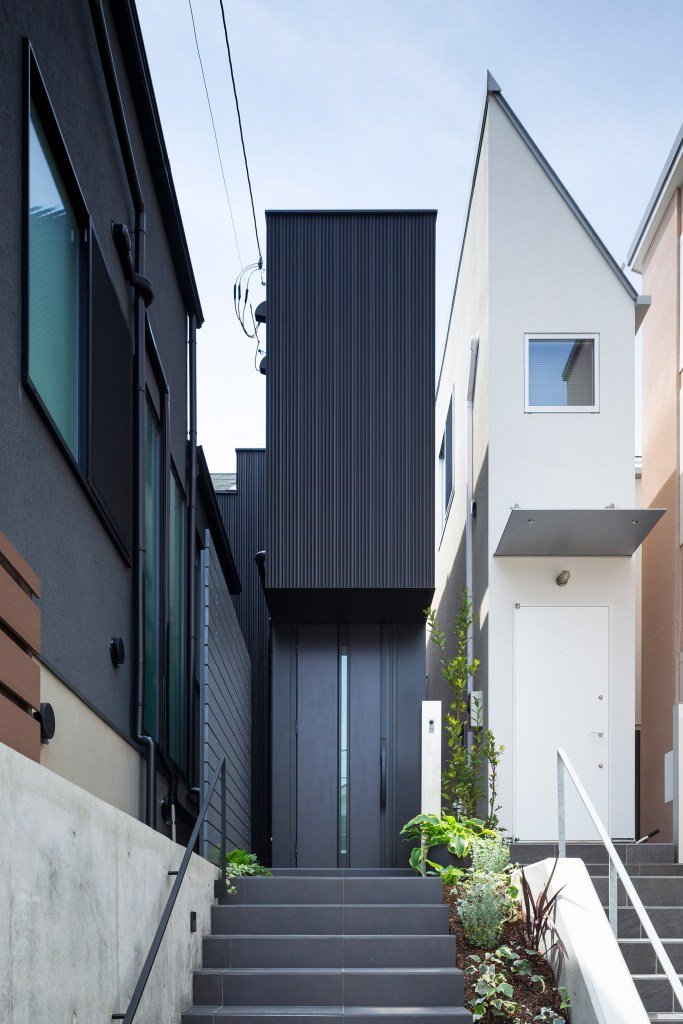
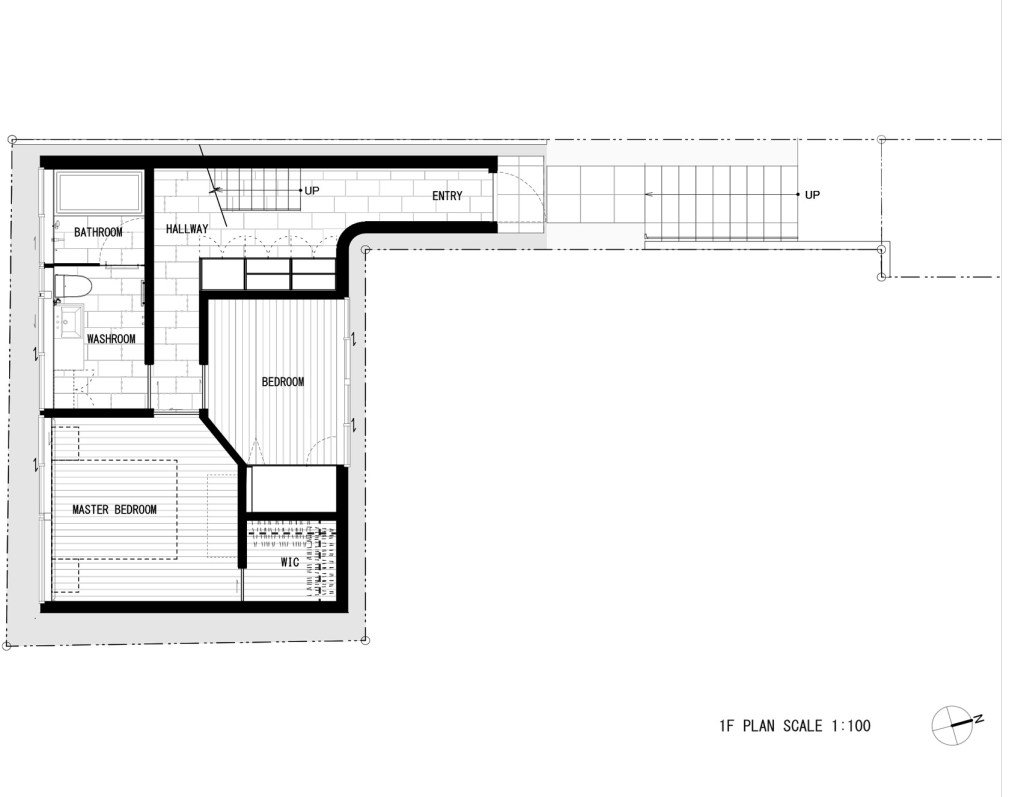
I have a fascination with “small” Japanese homes. Many, or perhaps most of them, would be illegal to build in a place like Toronto. This one here in Tokyo, called Jewel, is only 1.4m wide on its narrowest elevation. See above photo. Designed by Apollo Architects & Associates, the ~80m2 home was built on a “flagpole” site. Narrow approach. More site area in the back. Here is a plan of the ground floor (via Dezeen) to give you a better sense of what I’m talking about:
According to Dezeen, the client is a fan of minimal design and, in particular, the work of John Pawson. His work was a source of inspiration for the project. But if you read the article closely, you may notice that he is referred to as the “British architectural designer Pawson.” I learned last week, following this post, that John Pawson is not a licensed architect. Hence the carefully chosen language. I guess there’s hope for those of us who are not architects.