Daily insights for city builders, delivered every morning at 6 AM ET. I’m Brandon Donnelly — a Toronto-based real estate developer and founder of Globizen. I’ve been writing here since 2013.

Tag: houses

  • Toward more family condos

    The Ryerson City Building Institute and Urbanation recently published a terrific report called: Bedrooms in the Sky. Is Toronto Building the Right Condo Supply? 

    Here is a quick synopsis: The 35-44 year old age bracket in this city will see significant growth over the next decade; single family homes are really expensive; and we’re not building enough family-friendly condo units.

    When Urbanation looked at the data for all condo units currently under construction they found that the unit mixes still skewed toward 1-bedroom units, but that the number of 3-bedroom units is starting to trend upward. That feels right.

    The report also talks about the affordability gap between condos and houses. The average condo in the Greater Toronto Area costs about $511,000, while the average detached house costs $1,134,000.

    However, this isn’t exactly an accurate comparison because the average condo is smaller in size than the average house. I think a better metric is to look at price per square foot.

    Also, houses give you the flexibility of a secondary suite. Right now that usually means a basement apartment, but pretty soon it’ll likely include a laneway suite. That creates an additional income stream and helps with overall affordability.

    In any event, up until maybe recently, houses generally looked cheaper on a per square foot basis. And my view – which I have written about extensively on this blog – was that as soon as houses become “more expensive”, we’ll see an uptick in larger family-oriented condos.

    A few weeks ago I went to an open house in a desirable area of Toronto. It was for a 1,300 sf semi-detached house with good bones, but in need of a full gut. Basement was low, only suitable for humans around 5′ tall. It sold for $1 million.

    Let’s say that house needs $300,000 to bring it up to the level of a new condo. If that doesn’t include some sort of extension, now you’re in for $1.3 million or about $1,000 per square foot. You can still find a condo for less than that.

    Which is one of the reasons why I think we’re now starting to see an uptick in larger/family units. (We are trying to do it at Junction House.) 

    But like all things in real estate, these things move slowly. The condos under construction today were designed years ago. Changes take time to work themselves through the system.
  • From seigneurial land tenure to condominium plans

    One of the things I noticed this past weekend when I was on my Porter Escape in Quebec City was that there’s still evidence of the seigneurial land use system. I saw it on île d’Orléans.

    Established in 1627 in New France, the seigneurial system was a feudal way of distributing land and creating subsistence farming for those who occupied it. It was ultimately abolished in 1854, but you can still see vestiges of it.

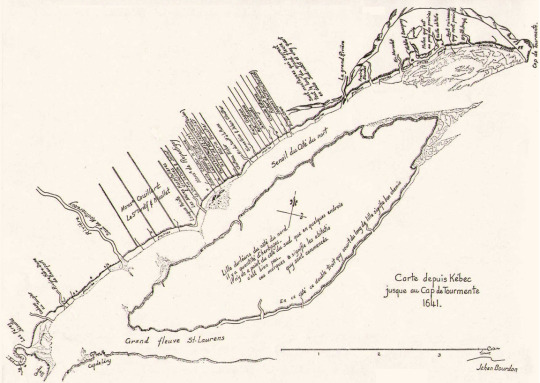
    With the seigneurial system, a typical farming lot was a long and narrow strip of land emanating from the water, which in this particular case was the St. Lawrence River. Here’s a map from 1641 showing what that looks like:

    image

    The reasoning behind this spatial arrangement was rather simple. By having long narrow lots, it meant that you could maximize the number of farmers who had direct access to water. This was needed for navigation, but also for many other obvious reasons. This was an efficient layout.

    At the same time, the long strips meant that each farmer had access to a broad cross section of different kinds of land. They had fertile land for growing, land for their home, and frequently land with trees so that they had material to build, fuel to burn, and so on. It also meant that, despite the overall lot sizes, people actually lived fairly close to each other. It created communities.

    Of course, there’s a lot more to the seigneurial system than just its physical form and there are reasons it was eventually abolished. But today I just want to focus on spatial layout. Because I think there are parallels to how we continue to plan our communities.

    If you live in a city you’ve probably come across a narrow rowhouse, a narrow townhouse, and/or a long and narrow condominium – which many people like to pejoratively refer to as a “bowling alley” plan. In these cases, the width of the home could be somewhere between 10 and 13 feet.

    If you stop and think about this, it’s exactly the same spatial principles as the seigneurial land use system. But instead of maximizing the number of people with access to the St. Lawrence River, it’s about maximizing the number of people who front onto the street and who have access to natural light.

    In tight urban conditions, it’s not uncommon to have no “side yard windows.” In my case, I live in a condominium with 20′ feet of windows on one side only. The other 3 sides of my box have none. And that’s a fairly common urban condition.

    I find this interesting because as much as the world is rapidly changing, some things don’t actually change all that much.

    Image: Wikipedia

  • Opendoor.com launches in Phoenix

    Yesterday Opendoor.com finally launched their product in Phoenix. If you’re a regular reader of Architect This City, you might remember that back in July of this year I wrote about how they had just raised $10M of funding to make selling your home as easy as a few clicks.

    Well, since then, I’ve been following them like a hawk. I had all the founders on Twitter notification (so I got notified every time they tweeted) and I was eagerly anticipating their launch.

    Now that they’ve launched, we have a much better idea of how their business model is going to work. I say “better idea” only because there’s still portions of it that are a question mark for me.

    In any event, Opendoor basically provides instant liquidity to homeowners. You go on, tell them about your home, and they then make you an offer to buy, which looks like this and lasts for 3 days. The offer they make you is calculated using comparable sales and adjustments based on your home’s unique characteristics.

    Upon accepting their offer, they then schedule a home inspection (at their cost) to confirm your home’s condition. Once this is done, you just select your move out date and Opendoor handles the rest. The fee for all this is 5.5%, which the company claims is less than the 6% that realtors typically charge (this would be high for Toronto).

    After buying your home, Opendoor plans to turn around and resell it.

    What this reminds me of is a “bought deal.” In the world of investment banking, a bought deal is when the bank itself agrees to buy the entire offering of a particular security, as opposed to going out to the market and trying to raise the money. The advantage to the company (offering the securities) is that there’s no financing risk. They know they’re going to get their money. But it usually means the company gets a lower price.

    So what I wonder, is if this is what’s going to happen here. Since Opendoor is effectively taking on the selling risk, does that mean their offers will be lower? Or are all their costs built into that 5.5% and that’s truly their core business model? I’m sure some of this will surface in the coming weeks.

    I do, however, think they are smart to be focusing on the supply-side of the marketplace and offering virtually perfect liquidity to homeowners. Real estate is a unique asset in that it’s difficult to bring supply to the market. And so if control the supply-side, I think you have a pretty good shot at controlling the market as a whole.

  • Your thoughts on the real estate marketplace, please

    If you know me at all, then you’ll know that I’m a big proponent of introducing more technology into the real estate space. I think the industry is one that has been incredibly slow to embrace technology, but that it’s only a matter of time before it does.

    Two months ago I wrote a post talking about how entrepreneur and venture capitalist Keith Rabois is working on a home buying startup codenamed Homerun — now called Opendoor. Here’s how he recently described the state of affairs:

    “My friend [PayPal and Palantir cofounder] Peter Thiel suggested that I come up with an idea to innovate in residential real estate,” Rabois told VentureBeat in April. “It’s the largest part of the economy unaffected by the Internet. And that was definitely true then, and even with things like Trulia and Zillow, it’s fundamentally true today. But the process of [selling a home] hasn’t been transformed by technology.”

    What Opendoor is trying to do is really interesting, but I have a different idea. It’s called Unlyst. And today I’d like to ask the ATC community for a small favor. I’ve created a short home buying and selling survey (embedded below) that will take you at most 2 minutes to complete.

    If you could please take the time to do that, I would greatly appreciate it. I’ve made the results public as well, so you’ll be able to see how buyers and sellers currently feel about the real estate marketplace. If you can’t see the survey below, please click here. Thanks for your help!

    [googleapps domain=”docs” dir=”forms/d/1bKvHYdSUfYH3AGX7LcLIK0_-i7nt7WIdTmHeaJ8P7pY/viewform” query=”embedded=true” width=”760″ height=”500″ /]

  • In your place

    image

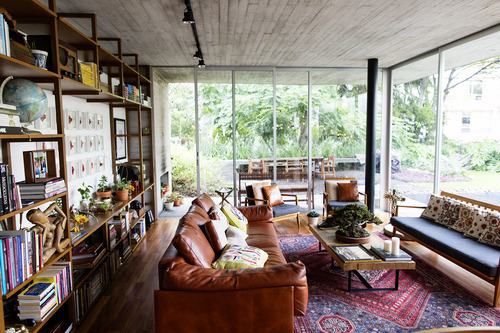
    Ever since I was a kid, I’ve always enjoyed seeing people’s places. I like seeing different homes and I like seeing how people decorate them. Which is why I’m a big fan of photographer Todd Selby’s project, The Selby Is In Your Place

    Starting in June 2008, Selby has gone around and photographed the personal spaces of creative people all around the world–everyone from fashion designers to artists to entrepreneurs. The most recent is the home of Carolina Castiglioni, who is Director of Special Projects at Marni in Milan.

    image

    The project has been a huge success for Todd and his website now receives over 100,000 unique visitors a day. He’s also gone on to publish 3 books. The first was simply called ‘The Selby is In Your Place’. If you’d like to pickup a copy for your coffee table, you can do so here.