Daily insights for city builders, delivered every morning at 6 AM ET. I’m Brandon Donnelly — a Toronto-based real estate developer and founder of Globizen. I’ve been writing here since 2013.

Tag: honest ed’s

  • Which building or structure would you say best symbolizes Toronto?

    I tweeted this out last night:

    https://twitter.com/donnelly_b/status/1473880198256934918?s=20

    blogTO then picked it up and it got quite a bit of engagement.

    Some people, okay a lot of people, used it as an opportunity to be tongue in cheek and respond with things like: cheaply built condos, boarded up Starbuckses, Hooker Harvey’s, Drake’s house in the Bridle Path, the crumbling Gardiner Expressway, and that McDonald’s at the northwest corner of Queen and Spadina (this one is no longer a contender for me now that they’ve gotten rid of their walk-up window).

    Of course, there were also a lot of the usual suspects: The Sky Dome, The Gooderham Building (our miniature Flatiron Building), Casa Loma, The Royal Ontario Museum (specifically the expansion by Studio Libeskind), “New City Hall”, The Royal York Hotel, Honest Ed’s, The St. Lawrence Market, Robarts Library (University of Toronto), and a bunch of others that you might find displayed on the seat screen on your next Air Canada flight.

    But I’d like to unpack the initial question a bit more. Because what does it really mean for something to be a symbol of a city? And is there an important distinction between the symbols that resonate with locals on a personal level and the symbols that get exported around the world as a city’s brand and identity? Indeed, one of the criteria in most global city rankings is a prominent and recognizable skyline. Icons are important.

    Let’s consider an example. I agree entirely with Sean Marshall that “New City Hall” is a deeply symbolic building. Built in the early 1960s after decades of work, New City Hall was the outcome of an international design competition. And it was decidedly modern at a time when Toronto really wasn’t that modern. Montréal was the biggest and most global city in the country and multiculturalism hadn’t yet become a federal mandate. And so New City Hall symbolized our genuine ambitions to becoming something more.

    But does the rest of the world care? If you were to ask somebody my question on the streets of Rio de Janeiro or Tokyo, what would they say? What would they remember? The thing about most tall buildings or other city symbols is that they become abstractions. They turn into pictures on social media — like logos of a company. But maybe that’s all we can reasonably ask of the world. Maybe all that really matters is that a symbol has local significance; it’s then up to us to export it and tell that story to the rest of the world.
  • An Honest Farewell

    image

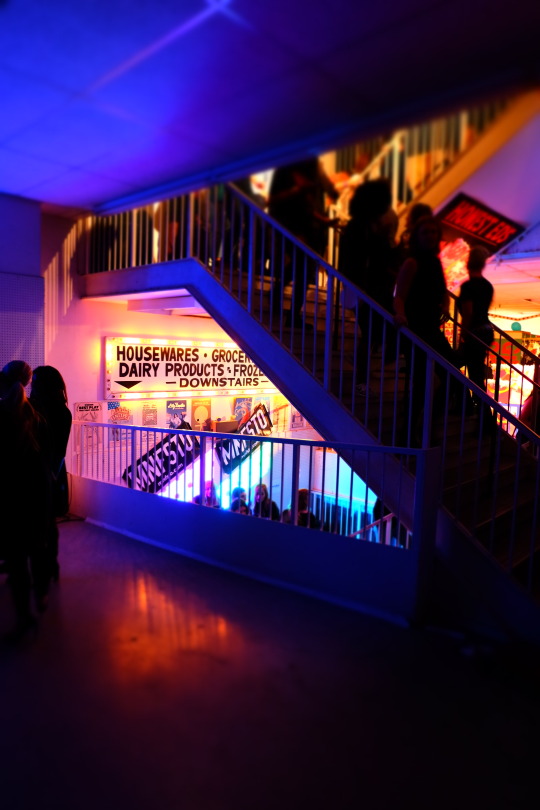
    I spent Saturday evening at Honest Ed’s for An Honest Farewell. It was a lot of fun. There were many familiar faces. And it felt very Toronto. See above photo.

    But part of me felt a bit phony pretending to celebrate the end of 68 years of operations. Truth be told, I’m not sure I ever bought anything from Honest Ed’s. Had it turned into a 3 floor super club sooner, perhaps I would have spent a bit more time there over the years.

    To me, Honest Ed’s was great big signage. 

    When I was a kid, my mom used to work on Bathurst Street just north of Bloor and I would go downtown with her early in the morning before school. It would still be dark out and I remember being so captivated by the bright lights of Honest Ed’s. That’s what the city meant to me. Lights. Flash. Excitement. It was where I wanted to be.

    A portion of the signage is being preserved and moved to Yonge and Dundas. But otherwise, this past weekend was the official end of an era. What matters now is the future of Mirvish Village. And the future is exciting.

    I’ll end with an excerpt from a recent Globe and Mail article by Alex Bozikovic:

    “The new development at Mirvish Village, after two years of conversation between developers Westbank, locals and the city, is inching closer to approval, with a new proposal submitted in January to the city. Westbank paid $72-million for the site, a big number, and yet the result is as good as private development gets in Toronto. It features meaningful preservation of heritage buildings, a serious sustainability agenda, and affordable housing – not to mention an architectural and leasing strategy geared at making the place as lively as possible, even a bit weird.”

  • Preserving place

    I was recently asked: How do you go into a neighborhood, build new, and not erase and/or sterilize what makes that neighborhood interesting in the first place? 

    Gentrification is a controversial topic in city building. Too often I think we ignore what happens when we don’t invest in communities, but that doesn’t mean we shouldn’t be deliberate when we do make investments.

    Development is filled with tensions. We are constantly trying to navigate through constraints and balance out the wants of each and every stakeholder. It becomes an art. It doesn’t always work out as planned.

    To state the obvious, I would say that it starts with caring. If you’re not interested in community and city building, then the default response will be to simply replicate what worked on the last project.

    But every place has a local culture. And if city builders are to have any hope of preserving and building upon what makes that place unique, we have to first understand it. What made it successful in the first place? What is its DNA?

    Because then you’re in a position to think about both built form and programming in a way that is culturally sensitive.

    One example that comes to mind is the proposed redevelopment of Honest Ed’s / Mirvish Village here in Toronto. 

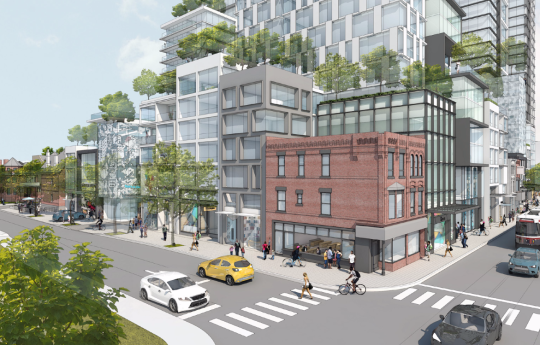
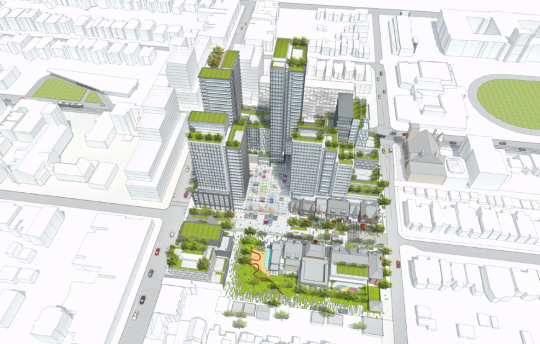
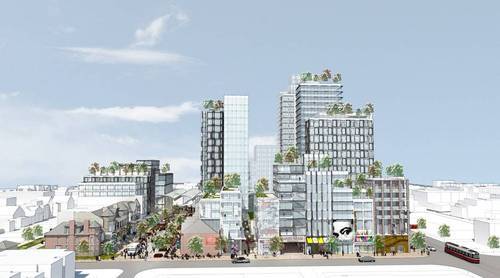
    The “micro tower” design is intended to create the sense that the area was built up organically over time. And the fine grain retail (50-60 individual retail spaces) is intended to house local retailers, micro retail startups, and pop-up shops. To me, both of these elements speak to the history and fabric of the area.

    Adopting a unique approach can also sometimes mean rethinking how you measure ROI. If all you care about is who will pay you the highest rent – right now – then you’re going to make a decision based on that metric.

    Maximizing revenue is not a bad thing. That’s what businesses are supposed to do. But sometimes there is or should be a larger vision at play. And sometimes you need to take a longer view.

    In Toronto’s Distillery District, the developers made the decision to eschew large chains and franchises (in favor of more local retailers) so that they could create a very particular place. Ultimately that particular place became a great place to sell condos, but they suffered early on for it.

    I like how Gary Vaynerchuk put it when he asked: What is the ROI of your mother? Sometimes you may not be able to measure it, but that doesn’t mean the ROI isn’t there.

    Any other suggestions?

  • Event: Community Consultation for Mirvish Village

    image

    One June 13, 2016 from 6:30 to 9:00 pm, the City of Toronto will be hosting a community consultation meeting for the proposed redevelopment of Honest Ed’s / Mirvish Village

    The meeting will be held at the Bickford Centre Auditorium at 777 Bloor Street West (across from Christie Pits Park).

    The purpose of the meeting is to present Westbank’s revised development proposal, which was submitted to the city last month. Their first proposal was submitted last summer (July 2015). 

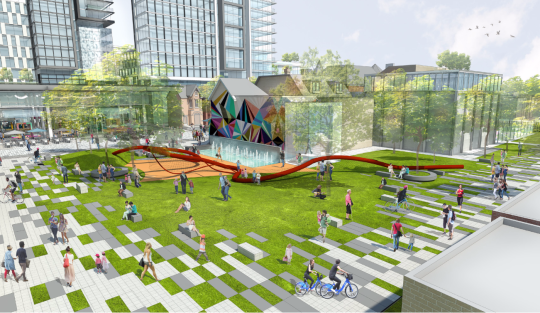
    Some of the key changes include a new on-site public park, the retention of additional heritage buildings (now 21 in total), more pedestrian porosity, and the retention of Honest Ed’s alley in its current location.

    I consider Westbank to be one of the most thoughtful developers in the city and so I’m pretty excited to see this one evolve. I’m planning to attend the community meeting and maybe I’ll see you there.

    Below are a couple of other renderings to give you a taste.

    imageimageimage

  • Westbank unveils #BloorAndBathurst before filing development application

    image

    Last night Westbank went public with their first design for the southwest corner of Bloor and Bathurst in Toronto (the Honest Ed’s site).

    There’s no name for the project yet and they haven’t even submitted a development application to the city, but I can tell you that there was a lot of excitement in the room last night. Over 500 people showed up at the Park Hyatt. And I think it only partially had to do with the fact that they were offering up free grilled cheese sandwiches.

    If you’d like to get a feel for last night’s open house, check out #BloorAndBathurst on Twitter. And if you’d like to learn more about the project, check out Alex Bozikovic’s piece in the Globe and Mail. It’s pretty exciting stuff. I’m not going to repeat all of the project details here because Alex has already eloquently done that. All of the developer’s information boards can also be found online, here.

    What I instead want to talk about is Westbank’s community engagement process. In Toronto, it’s quite rare to see this level of public consultation pre-application. And that’s because the city only requires it once a development application has been formally made.

    But I’m of the opinion that the status quo isn’t actually the optimal strategy for city building. In fact, I’ve argued before that public consultation is broken.

    And the reason I think that is because the typical process doesn’t allow for a critical mass of community feedback, both early on and throughout the process (think lean startup methodologies). In-person public meetings are too much friction for a lot people and getting feedback only once an application has been submitted means that a lot of work has already been done, which is the opposite of lean.

    In the case of #BloorAndBathurst, last night was part of an engagement process that began last year.

    Now, part of the reason that many developers don’t adopt this model is because of fear. There’s a belief that many communities just don’t like change, period. But is that really the public opinion? Or do we simply not have enough data and enough feedback loops built into the city building process?

    Time will tell how this approach works out for Westbank, but I have a pretty good feeling that they’ll do just fine.

    Image (Sketchup model + watercolor): Westbank via Globe and Mail

  • Mirvish + Gehry gets nod from City Council

    image

    Last week Toronto City Council voted to support planning staff’s recommendation to approve the landmark Mirvish + Gehry development on King Street West in the Theatre District. 

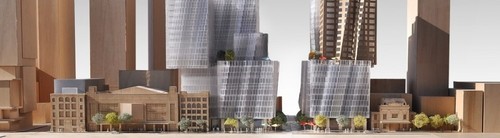
    The revised design now includes 2 towers (as opposed to 3) at 82 and 92 storeys tall. As a result of this change, 3 of the 5 existing buildings on the site will now be retained. I think this represents a good balance between (historic) preservation and progress.

    If you’re interested in a bit more of the backstory, Toronto Life published an article today called David Mirvish on the Edge. It talks about his father (Ed Mirvish), his upbringing, and how he got into the real estate development business.

    I thought you all might enjoy it.

    Image: Projectcore