Daily insights for city builders, delivered every morning at 6 AM ET. I’m Brandon Donnelly — a Toronto-based real estate developer and founder of Globizen. I’ve been writing here since 2013.

Tag: home selling

  • People are camping out in Opendoor’s homes

    Inc. Magazine just did a profile on Opendoor, which is a company that we have, of course, talked a lot about on this blog and that I continue to follow closely.

    It’s interesting to read about some of the challenges that they’ve been having as a result of their frictionless open houses. Since all you need is a smartphone, the company has been having the ongoing problem of people camping out in their listed homes. Sometimes for weeks. They’ve been working to address this by restricting the hours (6AM to 9PM) and by installing motion detectors. I am sure they will figure it out.

    The company is also having to be careful in terms of how it positions itself alongside realtors. There are many livelihoods at stake here. Here’s an excerpt from the article:

    During interviews, Wu has chosen his words carefully when discussing Opendoor’s potential to replace Realtors. “The reality with Realtors today,” he said on stage at the Startup Grind Global Conference in Silicon Valley in February, “is their role is shifting from project management–especially in our ecosystem, where we’re automating a lot of the processes–to advisement.”

    Fred Wilson (venture capitalist) has argued many times before on his blog that business model innovation is far more disruptive than technical innovation. I think it’s valuable to keep that in mind in the context of this discussion.

    Opendoor continues to charge a commission fee (sometimes a higher one than is typical), but it also makes money on the flipping of homes and it has plans to vertically integrate other aspects of the real estate business.

    Will that do it?

  • Real estate startup Knock raises $400 million

    I have been writing about the real estate startup Opendoor for many years here on the blog. Another promising startup in this space is Knock, and today it was announced that they just raised a $400 million Series B round (led by Foundry Group).

    They share some similarities with Opendoor, but they are also different in that their focus is on home trade-ins. They tell you what your current home is worth, help you find a new home, and then coordinate “a seamless swap.” For more on how they work, go here.

    One of the ways in which they are similar to Opendoor is that they front the cash for new home purchases. In the case of Opendoor, they buy your home with the plan of selling it in the future. And with Knock, they buy your home with the understanding that your old home will get sold.

    It is certainly a more capital intensive model compared to the way that home sales are handled today. But many investors are clearly betting that it is exactly what is needed to change the status quo. 

    (Credit to Jeremiah Shamess for sharing the above news with me today.)

  • Opendoor.com is so risky that it may just work

    image

    I have been writing about the startup Opendoor.com for over 2 years now. And I continue to believe that they are the most promising disruptor in the residential real estate space. 

    Here is the first post that I wrote back in July 2014 after they raised their first round of funding. Here is the second post that I wrote after they launched in Phoenix. And here is another post that I wrote 6 months ago where I argued, once again, that they are doing something worth paying attention to. (This last post explains how the platform works.)

    Well, about a week ago it was announced that they have raised another round of funding: a $210 million Series D. In all likelihood, the company’s valuation is now over $1 billion. Here’s the Techcrunch announcement where the message was: huge ass number; risky business model.

    In response to this, Ben Thompson wrote a terrific and widely shared blog post called, Opendoor: A Startup Worth Emulating. I love his post because he says what I have firmly believed and argued for many years: Zillow and Redfin are not disruptive real estate startups.

    This is what he says about Zillow:

    “And yet, the most successful real estate startup, Zillow (which acquired its largest competitor Trulia a couple of years ago), is little more than a glorified marketing tool: the company makes most of its revenue by getting real estate agents — the ones collecting 6% of fees, split between the buying and selling agents — to pay to advertise their houses on the site. Certainly a free tool that makes it easier to find houses in a more intuitive way is valuable — Zillow has acquired the sort of userbase that allow it to build an advertising business for a reason — but at the end of the day the company is a tax on a system that hasn’t really changed in decades.”

    And though very risky, he argues that Opendoor is far better positioned to shake up the status quo. 

    Here are two of his key points:

    “Sellers are uniquely disadvantaged under the current system, which is another way of saying they are an underserved market with unmet needs.” [Sellers are the side of the market that Opendoor is specifically targeting.]

    “Opendoor has a new business model: taking advantage of a theoretical arbitrage opportunity (earning fees on houses sold at a slight mark-up) by leveraging technology in pursuit of previously impossible scale that should, in theory, ameliorate risk.”

    And here’s what that could ultimately mean for the industry:

    “Opendoor has many more reasons why it might fail than Zillow or Redfin, but its potential upside is far greater as a result. First is the immediate opportunity: sellers who can’t wait. However, as Opendoor grows its seller base, especially geographically, its risk will start to decrease thanks to diversification and sheer size; that will allow it to lower its “market risk” charge which will lead to more sellers. More sellers means both less risk and an increasingly compelling product for buyers to access, first with a real estate agent and eventually directly. More buyers will mean lower marketing costs and faster sell-through, which will lower risk further and thus lower prices, pushing the cycle forward. It’s even possible to envision a future where Opendoor actually does uproot the anachronistic real estate agent system that is a relic of the pre-Internet era, and they will have done so with realtors not only not fighting them but, on the buying side, helping them.”

    I’m with Ben on this.

  • Why do more people in Quebec sell their home without an agent?

    If you ask most people, they’ll tell you that real estate agents will never ever disappear. 

    Despite the internet, mobile phones, social networks, and companies (here in Canada) such as comFree and PropertyGuys, the bulk of the market still employs an agent when it comes time to buy and/or sell a home. This is true both in Canada and the United States. And it may always be true.

    But there are lots of entrepreneurs and people in the real estate community experimenting with different models. OpenDoor and Open Listings are two new startups out of the US that I’ve been following closely.

    At the same time, there is a certain fraction of the market that is willing to go at it alone. By some estimates this number could be as high as 25% in Canada. Of course, this is a hard number to measure accurately since there isn’t just one method of selling a home privately and many transactions likely go untracked.

    But one thing that I’ve been wondering for awhile now is why the percentage of private home sales is seemingly so much higher in the province of Quebec. According to Wikipedia, this number might be greater than 50%. And a quick search on comFree (duProprio in Quebec) seems to suggest that this may indeed be the case.

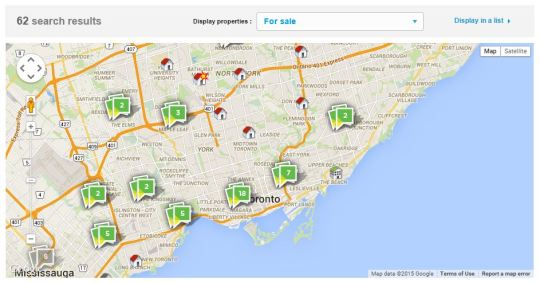
    Here are the comFree search results for downtown Toronto. There are 62 properties.

    image

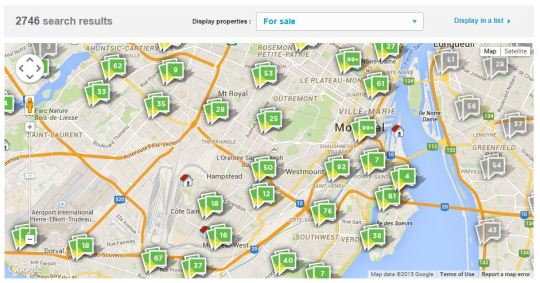
    And here are the duProprio search results for downtown Montreal (notice I tried to maintain the same zoom level). There are 2,746 properties.

    image

    If anyone has any insights on this phenomenon, I would love to hear from you in the comment section below. I don’t know why this is the way it is.

  • Thoughts on real estate marketplaces

    The responses are still coming in from yesterday’s real estate marketplace survey, but I wanted to thank everyone who took the time to complete it. I really appreciate it. I was reviewing the responses this morning and I thought there were a couple of interesting takeaways.

    First, most people who own a home have at one point or another thought about selling that home. And even the people who haven’t thought about it, said they would be willing to sell under the right circumstances. That is, they would sell for the right price, for a better place, and so on. At the time of writing this, nobody said they would never ever sell.

    I think this is interesting because, even though the real estate market is a highly illiquid market, my hunch is that it could be made a lot more liquid with the right frameworks in place and if the barriers to selling could be reduced.

    And sure enough, many of the folks who said they have thought about selling (but haven’t yet), said it’s partially because it’s too expensive and too much work to sell. But in addition to these barriers, two other points emerged that I hadn’t given a lot of thought to before – but make total sense. 

    Homeowners also said that they haven’t sold because they’re too emotionally attached to their home and because they’re afraid they won’t be able to find another place to move into. 

    Because of how illiquid the real estate market is and because home transactions are typically asymmetric (that is, buying and selling are independent actions), there appears to be a real concern that you could sell your home and never find anything better.

    And since a home is such an emotion filled asset (as opposed to, say, a stock), people are naturally afraid of making the wrong choice. But then that begs the question: Are we, as real estate consumers, being left with suboptimal outcomes because we’re simply too afraid of the making the wrong choice?

  • Your thoughts on the real estate marketplace, please

    If you know me at all, then you’ll know that I’m a big proponent of introducing more technology into the real estate space. I think the industry is one that has been incredibly slow to embrace technology, but that it’s only a matter of time before it does.

    Two months ago I wrote a post talking about how entrepreneur and venture capitalist Keith Rabois is working on a home buying startup codenamed Homerun — now called Opendoor. Here’s how he recently described the state of affairs:

    “My friend [PayPal and Palantir cofounder] Peter Thiel suggested that I come up with an idea to innovate in residential real estate,” Rabois told VentureBeat in April. “It’s the largest part of the economy unaffected by the Internet. And that was definitely true then, and even with things like Trulia and Zillow, it’s fundamentally true today. But the process of [selling a home] hasn’t been transformed by technology.”

    What Opendoor is trying to do is really interesting, but I have a different idea. It’s called Unlyst. And today I’d like to ask the ATC community for a small favor. I’ve created a short home buying and selling survey (embedded below) that will take you at most 2 minutes to complete.

    If you could please take the time to do that, I would greatly appreciate it. I’ve made the results public as well, so you’ll be able to see how buyers and sellers currently feel about the real estate marketplace. If you can’t see the survey below, please click here. Thanks for your help!

    [googleapps domain=”docs” dir=”forms/d/1bKvHYdSUfYH3AGX7LcLIK0_-i7nt7WIdTmHeaJ8P7pY/viewform” query=”embedded=true” width=”760″ height=”500″ /]