Daily insights for city builders, delivered every morning at 6 AM ET. I’m Brandon Donnelly — a Toronto-based real estate developer and founder of Globizen. I’ve been writing here since 2013.

Tag: great recession

  • The next hot thing

    When I was in grad school at Penn I was active in two clubs: the real estate club and some tech/entrepreneurship club (I can’t remember the exact name). These were two areas that I was interested in and so I wanted to hang out with people who were also interested in these things and I wanted to hear from experienced people who were active in these fields.

    At that time, which was before the Great Recession, the real estate club was bigger and more active than the tech club. I think it was something like 3 to 1. But I remember one of my professors telling me that participation across the various clubs generally ebbs and flows. Before the dot-com bubble, the tech club was where you wanted to be. But that asset bubble had burst, and so people had moved onto real estate, which, at that time, was in the midst of creating its own asset bubble.

    What we students were effectively doing — by way of deciding where to spend our time — was chasing the next hot thing. They were chasing where they thought they’d be able to make the most money coming out of school. There is, of course, nothing wrong with this. The pursuit of profit is fundamental to capitalism. But at the same time, I think it’s crucially important to have some conviction.

    Right now we are going through another cycle. Real estate was hot last year and it is not right now. Tech was hot last year and it is not right now. NFTs were hot last year and they are not right now. The list goes on. But if you like these things and if you have some conviction, is it really the time to move onto the next club? You may find the opposite to be true. Now is actually the time to ramp up participation.
  • We’re driving again

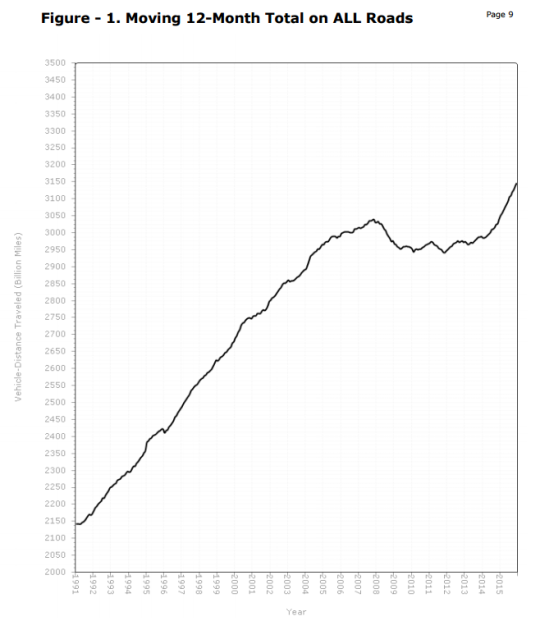
    For a number of years now, urbanists – including myself – have been thinking about “peak car.” And that’s because if you looked at vehicle miles traveled (VMT) in the United States since about 2007, the trend line was more or less flat. 

    This had us wondering whether or it was simply an outcome of the recession or some sort of broader shift.

    Well, if you look at the December 2015 numbers from the U.S. Department of Transportation, VMTs are once again growing. In fact, it’s now above the 2007 “peak.” Compared to December 2014, travel on all roads and streets in December 2015 was up by 4.2% or 10.6 billion vehicle miles traveled. 

    Here’s the chart:

    A lot of this could be because of lower gas prices. But I would be curious to hear your thoughts in the comments about whether or not you think 2007 to 2014 was (1) a recessionary blip or (2) a longer term trend in the making.

  • This U.S. housing boom is different

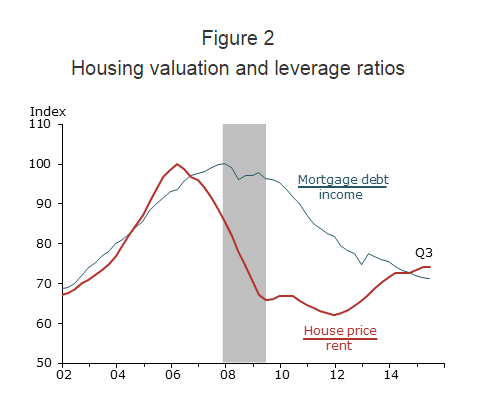
    Just a few days ago, The Federal Reserve Bank of San Francisco published an interesting research study where they argue that this U.S. housing boom is different than that of the early 2000s.

    During the last boom, U.S. home prices peaked in 2006 and then dropped about 30% in the wake of The Great Recession. Since then prices have rebounded – almost to their pre-recession levels. This has some people asking whether this story is headed towards the same ending.

    But the FRBSF is saying no:

    “We find that the increase in U.S. house prices since 2011 differs in significant ways from the mid-2000s housing boom. The prior episode can be described as a credit-fueled bubble in which housing valuation—as measured by the house price-to-rent ratio—and household leverage—as measured by the mortgage debt-to-income ratio—rose together in a self-reinforcing feedback loop. In contrast, the more recent episode exhibits a less-pronounced increase in housing valuation together with an outright decline in household leverage—a pattern that is not suggestive of a credit-fueled bubble.”

    And here’s the chart:

    Source: Flow of funds, Bureau of Economic Analysis (BEA), CoreLogic, and BLS. Data are seasonally adjusted and indexed to 100 at pre-recession peak.

  • Dublin 2007

    image

    In 2007, I spent the summer working in Dublin, Ireland for a boutique real estate consulting firm called Urban Capital. (For those of you who are from Toronto and know the industry, there’s no connection between the Urban Capital in Dublin and the Urban Capital in Toronto.)

    At the time, they were working with a number of government agencies on the development of masterplanned communities, as well as on specific development projects. Real estate was booming and everyone wanted to be a part of it – including the band U2.

    But as you all know, the following year (2008) wasn’t kind to the real estate industry and, in particular, to Ireland. That year the country fell into recession for the first time since the 1980s and became labeled as one of the “PIGS.”

    I really wish I had started this blog by that point because it would be interesting to look back today on my posts from that summer and see how I was thinking about the Dublin real estate market. I remember having many Guinness-fueled discussions about whether the bull market could continue.

    In any event, the Irish economy is coming back.

    This year GDP is expected to grow by 5.4%, which would make it the fastest growing economy in Europe. National debt is also falling. At the end of 2013 it stood at €215 billion or about 123% of GDP. And at the end of 2014 it had fallen to €203 billion or about 109% of GDP. The national debt is expected to fall below 100% of GDP by 2018.

    At the same time, Ireland also got permission to pay off its bailout loans early. That’s a good sign.

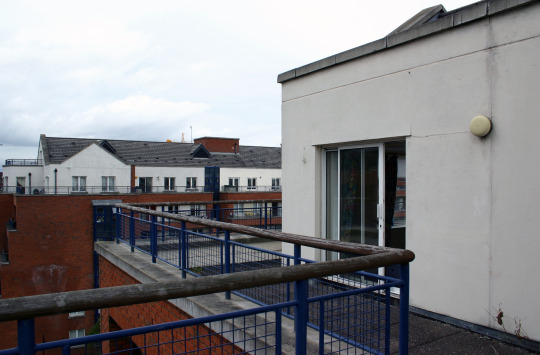
    I’m thinking and reading about all of this today because I was looking through my photo collection this morning and I stumbled upon a folder titled “Dublin 2007.” The photo at the top of this post was the terrace that I had outside of my apartment in the Docklands area. I don’t think I used it once that summer. 

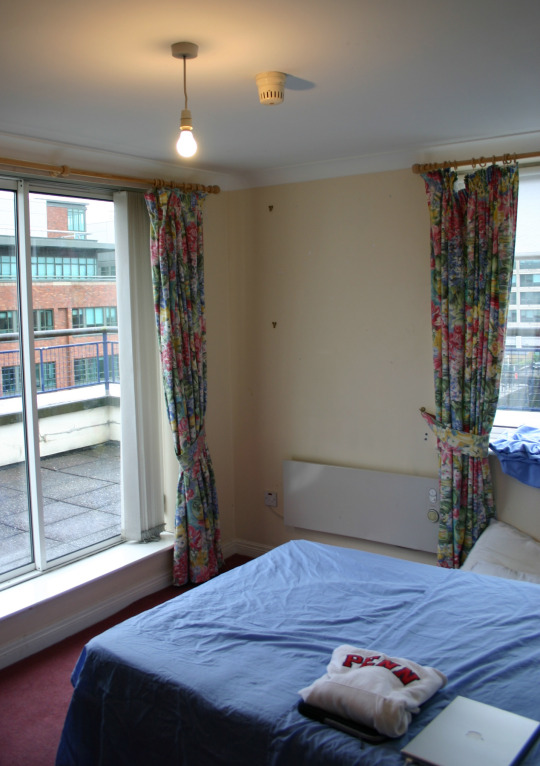
    And here’s a photo of my bedroom. It must have been the curtains that sold me on the apartment.

    image

    I had a great time in Dublin that summer. It’s a fun and young city and I remember being incredibly impressed by the quality of city building that was going on. I’m sure that wasn’t lost in the Great Recession.

  • Where the jobs are being created in cities

    According to a new report released by City Observatory, US cities have officially reversed a 50-year trend towards decentralization.

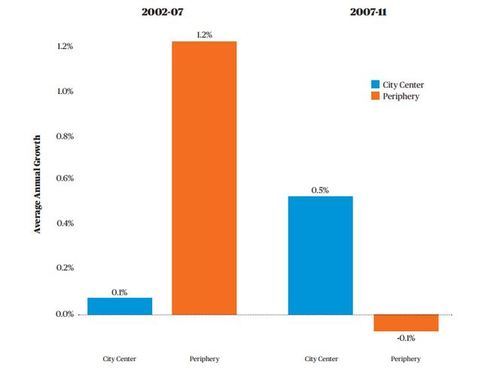
    We know that urban living has been seeing a renaissance over the last decade or so, but as recently as 2002 – 2007 (pre-Great Recession), the suburbs and peripheral areas were still seeing significantly higher job growth: 1.2% per year in the periphery versus 0.1% in the city center. The “city center” is defined as a 3 mile radius around the center of the city in this study.

    However since 2007 things have flipped:

    image

    Chart Source: City Observatory

    Why is this happening? Here’s a snippet from City Observatory:

    The strength of city centers appears to be driven by a combination of the growing attractiveness of urban living, and the relatively stronger performance of urban-centered industries (business and professional services, software) relative to decentralized industries (construction, manufacturing) in this economic cycle. While it remains to be seen whether these same patterns continue to hold as the recovery progresses, (the latest LEHD data on city center job growth are for calendar year 2011), there are structural forces that suggest the trend of center-led growth will continue.

    In some ways, it just makes intuitive sense. People started returning to cities and so the jobs followed (although there were also structural changes to the economy). 

    The big question, however, is whether this trend will continue? My bet is on yes. What do you think?