Daily insights for city builders, delivered every morning at 6 AM ET. I’m Brandon Donnelly — a Toronto-based real estate developer and founder of Globizen. I’ve been writing here since 2013.

Tag: golf

  • Homes for as low as $1

    I was reading today about some houses in Boca Raton, Florida selling for as low as $1.

    The reason they’re selling for nothing, in some cases, is because you’re required to join the local golf/country club as part of the purchase. Initiation fees could be in the range of $70,000 and that doesn’t include whatever ongoing fees you would also be responsible for paying.

    What this demonstrates is that there isn’t enough demand from the next generation to sustain the pricing for this housing type. Part of this probably has to do with simply cohort size (the number of people retiring), but I suspect that there may have also been some changes in consumer preference.

    Some of it is probably golf related. Participation in the sport is relatively tepid among Millennials. And some of it may be related to the fact that these communities don’t have the kind of (urban?) amenities that the next generation is looking for.

    But if you derived enjoyment from the home during your retirement years, maybe it’s not the end of the world that there isn’t a strong resale market.
  • Project Profile: Golf Exécutif Montréal Clubhouse

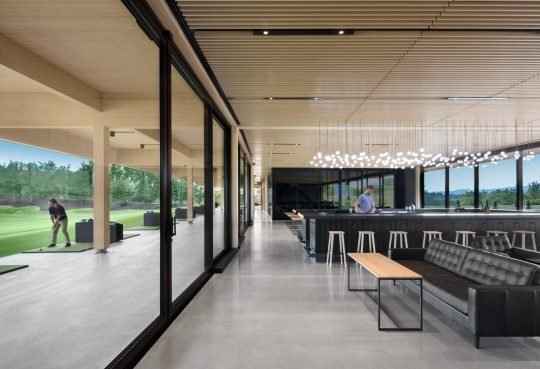
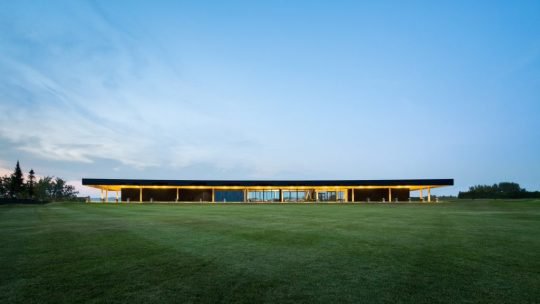
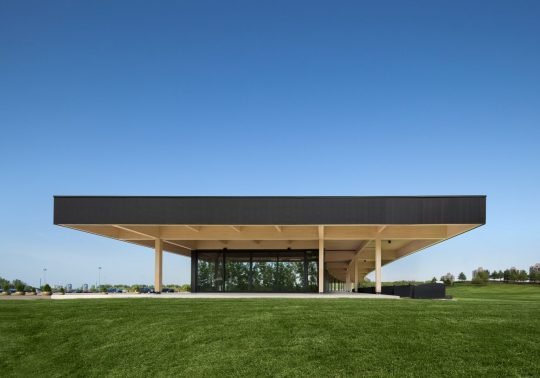
    I’m not a very good golfer (probably because I don’t golf), but this clubhouse in Montréal has me wanting to try my hand at the driving range again. Designed by Architecture49, the clubhouse itself is 855 square meters, but the roof area is around 1,800 square meters – so more than double as a result of the overhangs that protect golfers from poor weather. Black zinc panels and pale wood get me every time.

    Images: Dezeen

  • From country club to urban basecamp

    CityLab recently published an article talking about the difficult time that golf-centric country clubs are having in attracting young people (and minorities and women). Their reasoning is that Millennials are saddled with student debt and can’t afford the fees; Millennials find these sorts of clubs stuffy and overly formal; and Millennials are put off by the long history of these places being only for rich white males.

    The result is that golf and country club memberships are down about 20% since 1990. In the 90s there were more than 5,000 full service clubs of this type in the US. And today it’s somewhere south of 4,000. In the 90s, about 9 million people aged 18 to 34 played golf (again in the US). And today that number is somewhere around 6.2 million. All stats taken from the article.

    But at the same time, the article argues that Millennials may still like country clubs, they’re just about 10 years behind because of higher education, travel, and delayed family formation. The article also talks about the rise of private clubs like Soho House, as well as others. And so here’s one counter argument: Millennials are open to private clubs and many have the means. They just want them to be, well, cooler and more urban.

    As a young person who largely fits within the trend line described in the CityLab article, my gut tells me that this is largely a case of changing consumer preferences and urbanizing wealth. That’s why we’re seeing established country club operators open up “urban basecamps.” But that’s my view. What is yours? Let us know in the comments below.

    Photo by Andrew Rice on Unsplash

  • “I hate golf”

    I am a big fan of Malcolm Gladwell, and not just because he’s Canadian and went to the University of Toronto (my alma mater), although those facts certainly don’t hurt.

    I’m late to his podcast, Revisionist History, so in case some of you are as well, I would encourage you to check it out. Every episode reexamines something from the past and questions: Did we get it right the first time? It’s very Gladwell. It’s a must listen.

    The episodes span a secret research project setup by the Pentagon in downtown Saigon during the Vietnam War to why rich people are obsessed with the game of golf. Spoiler: He hates golf.

    The golf episode will be of particular interest to many of you because it deals with real estate. Malcolm wades into something known as California Proposition 13, which is a constitutional exemption that keeps property taxes artificially low.

    It is what has allowed these “vast, gorgeous, and private” golf courses to continue to exist in expensive cities like Los Angeles. Otherwise they would have long ago drowned under the property taxes following reassessment.

    This also leads to a philosophical debate about what constitutes a change in ownership, since many clubs are member owned and Proposition 13 requires that there not be a change in more than 50% of the ownership. 

    But I’ll stop there. Give it a listen. Malcolm is just excellent.

    Photo by Rémi Müller on Unsplash