Daily insights for city builders, delivered every morning at 6 AM ET. I’m Brandon Donnelly — a Toronto-based real estate developer and founder of Globizen. I’ve been writing here since 2013.

Tag: globe and mail

  • The Globe and Mail: Why Toronto is still a streetcar city

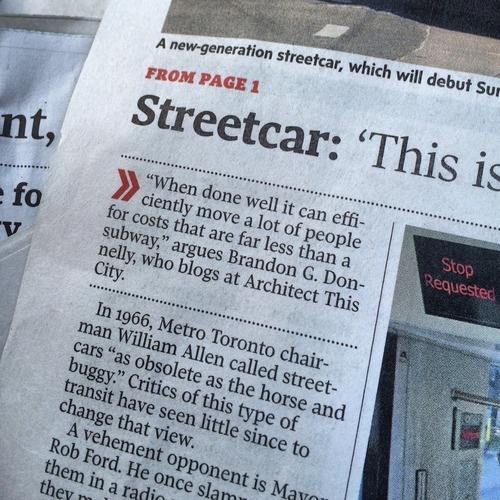
    In anticipation of our new streetcars beginning service this Sunday, the Globe and Mail published an article on Friday called: Why Toronto is still a streetcar city. And I was quoted as saying the following:

    I had no idea that I was going to be cited, but I like the quote that was chosen. The key words are: “when done well.” There are a myriad of different ways in which a city can implement streetcars, and each will have varying degrees of performance.

    So if you’re one of those people who are critical of streetcars, I would encourage you to think about streetcars not just in terms of how they’re implemented today in Toronto, but also in terms of how they could be implemented going forward.

    All streetcars lines are not created equal.

  • Toronto approves 755 storeys of new development

    image

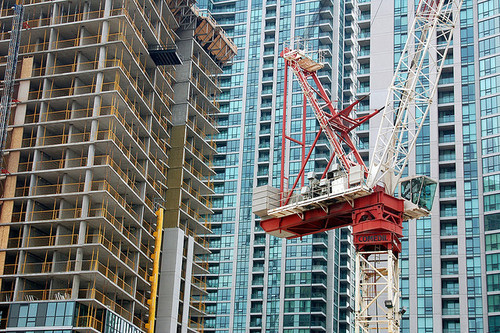
    Earlier this week, Toronto City Council approved the equivalent of 755 storeys of new development, a lot of which will end up in the downtown core. The translates into 6,887 new housing units and roughly 4 million square feet of new commercial space. The Globe and Mail called it the Manhattanization of downtown.

    If you’d like to go through the complete City Council meeting agenda, you can do that here. (I warn you though, it won’t be an exciting read.)

    One notable project that was approved is 50 Bloor Street West, which is a 71-storey mixed-use building in Yorkville adjacent to and on top of Holt Renfrew (It includes a $6 million Section 37 contribution). I mention this one because it’s impressively tall and because it’s a project that I was involved with when I was at Morguard. Watch for Yorkville in the coming years, there’s a lot in the pipeline.

    While I think this is all incredibly exciting, our chief planner, Jennifer Keesmaat, is entirely correct in pointing out that all of this highlights the desperate need for better infrastructure, the most critical of which is a relief subway line that cuts across downtown.

    But to be clear, this isn’t a question of just planning for growth. This is a question of planning for growth and making up for decades of infrastructure disinvestment. That’s the position we’re in today, which means we have a lot of hard work to do. Though I’m confident we’ll get it done.

    The other thing that this level of intensification should highlight for you is that public transit, and other forms of mobility such as biking and car sharing, have to be central to our goals. It’s simply infeasible for everybody to be driving around in a car. We’re currently demonstrating how efficient that ends up being.

    So as Toronto continues to intensify, I think we’ll quickly discover that traffic and private cars aren’t the answer or even the right question to be asking.

    Image: Flickr

  • 2 parents, 2 kids, and 1 cat in 1,000 square feet

    Yesterday a colleague at the office sent around this Globe and Mail article talking about a Vancouver family of 4 (plus one cat) who live in a 1,000 square foot loft near downtown that they purchased in 2003 for $269,900. There weren’t really any photos of the place, but the article makes it sound like they have 3 beds crammed into one room. (I wonder how the parents ever manage to have sex. There are better ways to lay out 1,000 sf.)

    In any event, the point of the article is that there’s a growing number of families who are clinging to the downtown lifestyle that they’ve grown accustomed to and are refusing to follow the path of a conventional suburban house – regardless of how tight their current quarters might be. It’s happening in Toronto (here’s an article from the Toronto Star and here’s a post I wrote) and it’s happening in New York:

    A recent New York Times article on a similar trend noted that the number of white professionals with one or more children living in one-bedroom condo units in that city had jumped by almost a third between 2000 to 2006. Prof. Andrew Beveridge, from Queens College of the City University of New York, said the pattern was showing up in other expensive American cities. In Toronto, the 2011 National Household Survey showed there are about 72,000 families living in 71,500 units in buildings with five or more storeys – undoubtedly many of them the new, tiny condos proliferating there.

    To some this might sound crazy. I mean, why would a dual income family–such as the one in Vancouver–subject themselves to a smaller space when they could easily afford a bigger place somewhere else? Isn’t that the dream – to have a big house?

    The answer is that these families are considering–in addition to the direct costs of a bigger place–both the indirect costs of living further away from the core (such as longer commute times) and the inevitable lifestyle changes that would happen should they move out from their downtown neighborhoods. The urban lifestyle is different.

    But what I find interesting about this phenomenon is that if this trend continues (and I think it will), we’re going to have a new generation of people in North America who grew up in apartments, condos, and lofts, and don’t have the same biases around single family houses and suburban living. To them, an apartment will be a perfectly normal place to raise a family.

  • Information wants to be free

    The Globe and Mail ran a piece this morning called, The Realtors of Oz: Bidding wars are unnecessarily sleazy.

    For anyone who has recently tried to buy a house in Toronto, you’ll know that multiple offer scenarios, also known as “bidding wars”, are a fairly common occurrence. Demand for housing in the city is great and interest rates are low. And so homes are frequently being priced below market to generate a feeding frenzy.

    When I read articles like this, I’m reminded of how much frustration I have for the way the real estate market operates today. There’s poor liquidity, there’s a lack of transparency, and there are high transaction costs. I’m a free market kind of a guy and so I’m bothered by how “imperfect” the real estate market remains.

    A lot of people in the business like things just the way they are, but I believe that markets function better, for everyone, when they are open and transparent, and all participants have access to information. Thankfully, I do believe that we’re headed towards a world with more transparency, not less. Information wants to be free.

  • Development Profile: The Well

    The Globe and Mail lands in Toronto, located between Front Street and Wellington Street, west of Spadina Avenue, have been in play for quite some time. But since the Globe and Mail confirmed last year that it would be moving its headquarters to a new First Gulf office building on King Street East, the lands opened up as a prime redevelopment opportunity.

    Earlier this week I discovered the plans. It’s a new mixed-use neighborhood called The Well. And it’s a partnership between Allied Properties REIT, RioCan and Diamond Corp, with the master plan design being prepared by Hariri Pontarini Architects.

    Here are a few photos.

    Wellington Street looking east:

    image

    Wellington Street looking west:

    image

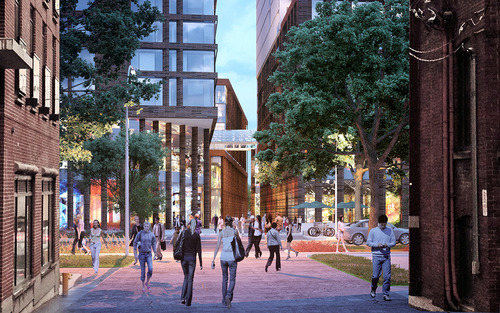
    Laneway looking south into the development site:

    image

    And here are some high level stats:

    • 7.7 acre site (Globe and Mail lands)
    • Encompasses Draper Street, which is a heritage designated street
    • Approximately 500,000 square feet of retail space
    • More than 1,000,000 square feet of commercial office space
    • More than 1,000,000 square feet of residential space

    From the early renderings, the project looks incredibly promising. Wellington Street East is a great street, but the south side of it is currently a mess. With a new lining of well designed midrise buildings on it, the street could be spectacular.

    I like that there seems to be a focus on creating a fine grain network of streets and laneways. And it’s making me think that this stretch of Wellington could work really well as pedestrian only. Both ends of the street terminate in a park (Victoria Park on the west and Clarence Square on the east), which would make it a really beautiful (dumbbell shaped) urban space.

    This is something Toronto doesn’t have today. This could be our opportunity.

  • Mirvish+Gehry and the story of 4 heritage buildings

    I am a real estate developer and I believe in progress. But I also fundamentally believe in balancing progress and preservation. I’ve said this before.

    This morning, Alex Bozikovic of the Globe and Mail, published a piece on the epic Mirvish + Gehry proposal for Toronto’s Entertainment District. It’s called, “Frank Gehry and David Mirvish’s tall order in Toronto.

    Now, I’ve said before that I like this project. I don’t mind the height and I don’t buy the argument that there aren’t enough public spaces in the area. There’s David Pecaut Square directly to the south that could use a few more warm bodies in it.

    But as I also said before, I think the key concern here is one of heritage. There are 4 heritage designated buildings on the site dating back to as early as 1901. Here’s where they sit:

    image

    The Anderson Building (1915) is particularly unique. Here’s a larger photo (via blogTO):

    image

    So while I’m excited by the prospect of a real Gehry project in Toronto, I think we need to figure out a way to find a balance. Preserve the facades, build on top, or relocate them. Do something besides wipe the slate clean.

    As Bozikovic rightly points out in his article, “Toronto has a sophisticated culture of working with heritage buildings.” There are lots of great examples of how we managed to move forward as a city, without erasing our past.

    And in many ways, I see this ability to work with and build upon heritage buildings as an emerging Toronto vernacular. I mean, what could be more appropriate for the most diverse city on the planet than an architectural style—of our own—that blends and layers history with disparate design ideologies.

    I sense an opportunity.

    We could have Gehry’s white sinuous curves drape over the heritage buildings. Make them become a literal unveiling of Toronto’s past and a metaphor for the sophisticated way in which we build upon legacy.

    It’s too easy to just demolish everything. We’re better than that.

  • Starting from the bottom in real estate and healthcare

    Earlier this week when I responded to a Globe and Mail article that was arguing condo rents were on the decline in Toronto, I talked about how imperfect and opaque I feel the real estate market is. Today I’d like expand on that.

    The reason I call the real estate industry imperfect is because of 2 main reasons: first, there’s a lot of friction when it comes to buying and selling as a result of high transaction costs (amongst other things); and, second, there are massive information asymmetries between marketplace participants. This could be buyers and sellers, purchasers and developers, clients and real estate agents, and so on.

    But it’s only a matter of time before these issues get resolved. And I think it’ll happen through better access to data and more transparency in the marketplace. The question, however, is: Where is this big data going to come from?

    I was reading Fred Wilson’s post this morning on Large Networks, Big Data, and Healthcare, and I was struck by a parallel. Here’s what stood out for me:

    “The question is who will control the input of the patient data, the aggregated data sets, and the results the data science produces. If the answer is the current healthcare system; the insurance companies, the hospitals, and the doctors, then we will have missed a big opportunity to reshape healthcare. If, on the other hand, the data is entered by patients, controlled by patients, and benefits patients, then we would have something new, different, and disruptive.”

    In both healthcare and real estate, we have large bureaucratic institutions and bodies that control the industry. And in both instances, we’ve seen that they’ve been slow to adapt to the changing times. Therefore, I think the billion dollar opportunity is the same in both: the data is going to have to come from the ground up via patients and real estate consumers. Only then will we have something truly innovative.

  • Are condo rents really declining?

    Yesterday the Globe and Mail published an article titled, “Weakening rental picture latest condo market worry.” At first glance, this title seems worrisome. Particularly since Toronto’s condo rental market was supposed to be so robust, with vacancy rates hovering around historic lows.

    But as I read the article, I was reminded, once again, about how opaque the real estate marketplace is. To make this prediction, the research group quoted in the article mined craigslist postings. Granted, craigslist is probably the largest source for condo rental listings (even more so than MLS), but I don’t think it necessarily makes it a reliable source.

    Craigslist is a messy marketplace. You have expired listings; brokers posting listings in the owner section; brokers posting fake listings for the purpose of lead generation; and so on. It seems to me that there could be a huge margin of error if you tried to rely on this data. So I’m not so sure I would put a lot of weight on a supposed 1.6% rental rate decline.

    But what does worry me is how imperfect the real estate marketplace is. It’s incredibly hard to get good data and I think that this is bad for everybody involved in real estate. But network effects are a hard thing to overcome, which is why a messy and ugly marketplace such as craigslist can remain so dominant.

  • Globe and Mail moving to the east side of downtown

    This past Wednesday the Globe & Mail newspaper announced that they signed a 15-year lease to be the lead tenant in a new office tower now under construction at 351 King Street East (just west of Parliament Street). This means that the newspaper will be leaving its current digs on the west side of downtown at Front & Spadina.

    I have to admit that I was pretty excited when I read the news. The design looks incredibly promising and, as some of you might know, I’m bullish on the east side of downtown.

    One of my favourite areas of the city is the Distillery District. But today it still feels very much like an island. And it’s because the city hasn’t really caught up to it. It’s a destination.

    However, between the West Don Lands and major office projects such as this one (it’s 500,000 sf), I think the east side of downtown is about to hit its stride.

    It’s continuing to “fill in” and this will make more and more people realize how central it actually is to the core – especially in comparison to west side neighbourhoods like Liberty Village.

    Amongst my excitement, I did however stop to think about the fact that a newspaper company was taking top spot in a new office tower. Will newspapers even be around for another 15 years?

  • Tower renewal

    Before I went to bed last night, I stumbled upon this Globe and Mail article talking about Toronto’s Tower Renewal programHere’s a snippet:

    “In the postwar period, Canadian cities, particularly Toronto, grew differently from those in the United States, following a European-style model of regional planning. Regional governments insisted on building suburbs that were dense and housed people of all income levels. Apartment towers helped balance out the pricier single-family houses that middle-class people preferred – and a generation of new Canadians, and those migrating from rural Canada, arrived to fill those apartments. It was good planning on a massive scale, in line with the market.”

    If you know Toronto’s urban landscape, you’ll know that this is true. The city is dotted with suburban tower clusters, many of which were built in the 60s and 70s during our last high rise boom. But these towers have now aged and the Corbusier style “tower in the park” planning ideology has proven to be a failure.

    The Tower Renewal program is designed to not only retrofit those buildings, but also reposition how those buildings fit in with the larger urban fabric. In most cases, that’ll mean adding more density to the site and activating the street level through retail and other uses.

    It’s absolutely the right move. I think that suburban intensification is something we’re going to have to do all across the board to correct some of the planning mistakes we’ve made in the past and to make our cities more livable.

    But the real question in my mind is whether we can transform the way people think about high rise living.

    If you take a look at the snippet I included above, what is basically being said is that we built towers for poor people and immigrants coming to Canada. We slapped a “park” on the end of the neighbourhood’s name (Regent Park, Flemingdon Park, Thorncliffe Park, etc.) and thought we had created something really quite nice.

    Some neighbourhoods, such as St. James Town, were initially intended to attract young and hip urbanites. But was it ever really the King West of its day? The middle class preferred single family houses and that’s where they went, leaving the tower communities to those who had no other choice.

    Today, many of these tower communities represent one of Toronto’s 13 “priority neighbourhoods.” These are neighbourhoods considered to be in social and economic need. Given this outcome, there’s no shortage of people comparing our new high rise communities, such as CityPlace, to older ones such as St. James Town. Is history repeating itself?

    But I think things are a bit different this time around. We’re building more condos than rental apartments and we know that housing tenure can matter. There’s been a return to cities. People genuinely like living in walkable communities close to amenities. The region is becoming increasingly harder to navigate by car. And the price of single family homes is no longer within the reach of many middle class families.

    What all this mean is that I think Toronto is in the early stages of transitioning to a city where more and more people actually live and raise families in multi-family dwellings. I disagree with the notion that we’re already there, because even though we have lots of high rises, they’re often viewed as a stepping stone towards a more desirable form of housing.

    The true test will be when this generation of condo dwellers grows up and decides to have a family. Will they stay put or once again search out the seemingly necessary single family home?