
In 2023, the City of Toronto announced a deal that would “upload” the Gardiner Expressway and Don Valley Parkway from the city to the province. This was a big deal because these highways were previously the city’s largest state-of-good-repair liabilities, and so, before this deal, the city was, you know, trying to figure out how to pay for them.
One option was road pricing (or expressway tolls). And in 2016, this became a real possibility with City Council overwhelmingly endorsing the plan, before it got rejected by the province. It will come as no surprise to regular readers that I was in support of it and writing about it at the time.
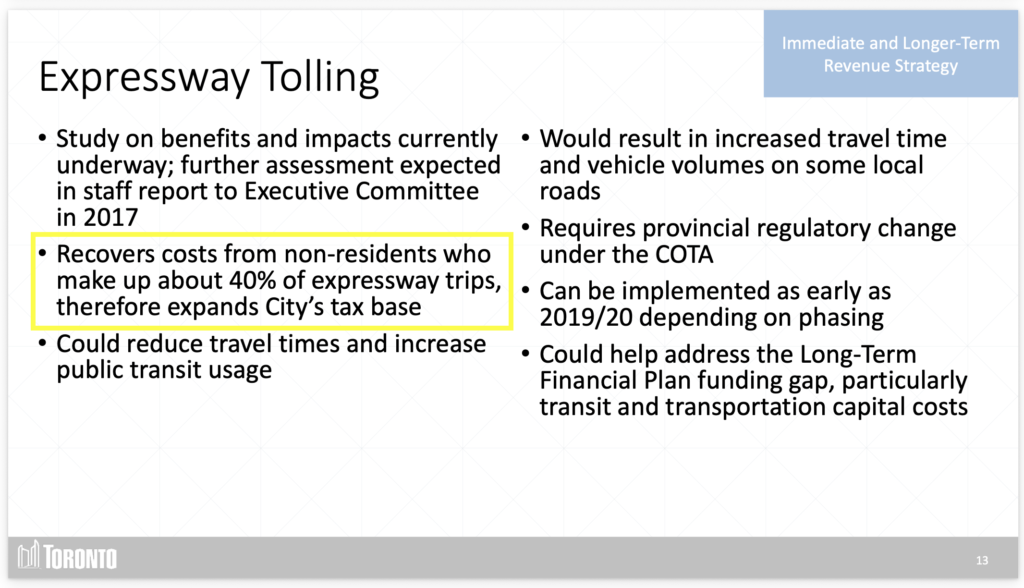
In 2016, Toronto estimated that 40% of all trips on these two expressways were by non-residents, and yet they were being funded by Toronto taxpayers. When I said this on Twitter, many of you got upset and argued that people coming in from the suburbs are a boon for the city. No doubt. But the reality is that this was an inequitable funding structure.
Let’s look at the 2022 Transportation Tomorrow Survey results, which I wrote about here.
The mode share for all trips to downtown Toronto (from within the city) was 75% non-car, with transit making up the largest share at 40.4%. And the mode share for home-based work trips to downtown Toronto (people who leave home in Toronto to go to work downtown and then come home) was about 80% non-car! In this case, transit made up nearly 50% of the trips.
The effective result is that the people who tended to drive the least to work were paying for the highways with their tax dollars, and the people driving into downtown were not. This is in no way intended to be an attack on the latter camp. The simple reality is that driving into downtown and buying a chicken souvlaki pita from Jimmy the Greek at lunch isn’t enough to offset the road usage costs.
The uploading of the highways to the province (which is still advancing but has already relieved Toronto of its financial obligations) is a more equitable solution. It shifts the cost burden to Ontario taxpayers, reflecting that people from all over the region use these highways and that Toronto is part of a broader economic agglomeration.
But this only solved the jurisdictional problem. We still have worsening congestion and an inefficient funding model. The problem with using broad-based taxation to obfuscate infrastructure costs is that direct usage then goes unpriced, and that leads to what is known as a “tragedy of the commons.”
We all tend to act in our own short-term self-interest, and the result is that road demand constantly outstrips the available supply. There’s zero marginal cost to actual usage, whether you drive 100 kilometres each day or bike to work. The most effective way to manage traffic congestion is to remove the hidden subsidy for driving and price the costs and negative externalities.