Daily insights for city builders, delivered every morning at 6 AM ET. I’m Brandon Donnelly — a Toronto-based real estate developer and founder of Globizen. I’ve been writing here since 2013.

Tag: gardiner east

  • Walking the West Side Highway

    image

    I am in New York this weekend. Every now and then I need to get my fix of this city. I just love it here.

    Given the debate that’s going on in Toronto right now about the elevated Gardiner Expressway, one of the things I wanted to do this weekend was walk the West Side Highway. The West Side Highway runs along the western edge of Manhattan from 72nd Street all the way down to the southern tip of the island. It used to be an elevated highway, but it runs mostly at grade now.

    I’ve been to and on it many times before, but I wanted revisit it with a different lens. Many people in Toronto seem to think that if we remove the Gardiner East and replace it with an enlarged Lake Shore Blvd that it would pose just as much of a physical barrier as an elevated structure.

    So I walked the West Side Highway and filmed this (Hyperlapse) video:

    //platform.twitter.com/widgets.js

    I think it’s a big improvement over an elevated structure. What do you think?

    There is, however, an elevated highway uptown. So tomorrow I plan to travel it on a scooter that I’ve rented to see how the urban fabric changes around it. I suspect it’ll be quite different.

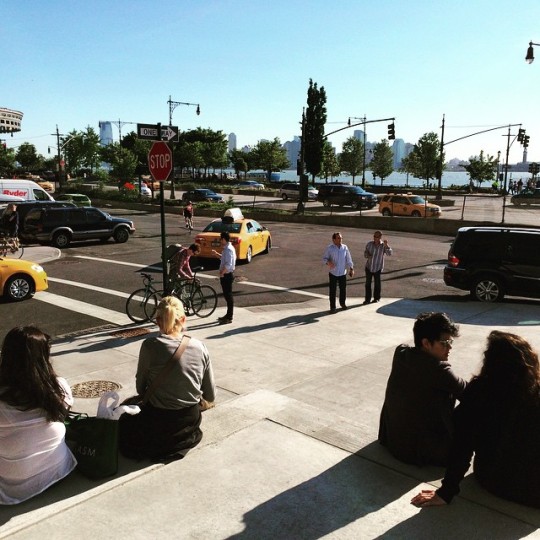
    In case you were wondering, the picture at the top of this post is from the steps at the Whitney Museum. They face the West Side Highway and the water. It’s a great public space, but I’m pretty sure that Renzo Piano wouldn’t have designed it that way (and with that orientation) had there been an elevated highway in front of it.

  • A petition to Toronto City Council to remove the Gardiner Expressway East

    image

    “If the decision ultimately of the council is to support the hybrid I think frankly it’ll be a major step backwards and you’re going to miss a once in a lifetime opportunity, and I’ll be very frank, we’ll be the laughingstock of the world.” 

    -Paul Bedford, former chief planner of Toronto

    As many of you I’m sure know, I have been a vocal and passionate supporter of removing the eastern portion of the elevated Gardiner Expressway in downtown Toronto. I have written about it so many times that a lot of you are probably sick of hearing about it.

    I’m sorry if that’s the case. But it’s a hot and important topic in Toronto right now. We’re just over 3 weeks away from City Council finally making a decision. That is scheduled to happen on June 9th and/or 10th. 

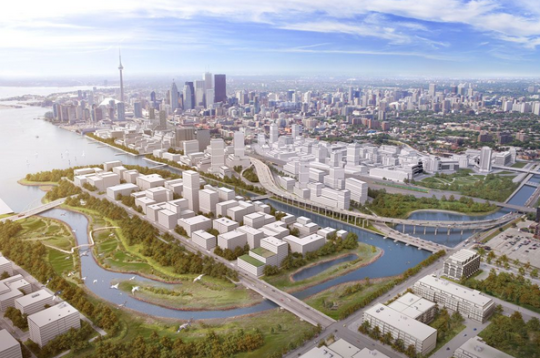
    For the most part though, I was pretty confident that we would ultimately make what many of us believe is the right decision. But then this past week Mayor John Tory went public in his support for the “hybrid” option, which is basically to rebuild the elevated expressway in a slightly different configuration. And that really upset me.

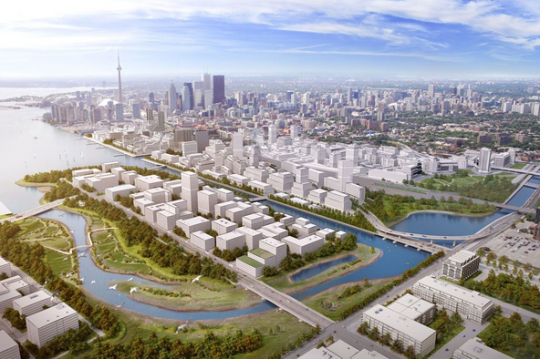
    Here’s what that looks like (versus the remove option shown at the top of this post):

    image

    Have we learned nothing from our past city building mistakes?

    Since that announcement, I went on Twitter every night this week to check out the discussions that were happening around #GardinerEast. And every night it got me so worked up that I then had trouble falling asleep. I have since stopped reading about the Gardiner East before bed.

    But rather than just get frustrated, my friend (a fellow city builder named Stephen Job) and I decided to do something about it and create a petition using Change.org.

    It is a petition that we will ultimately be sending to Toronto’s entire City Council prior to their June 9 meeting and we hope that you will consider signing it and sharing it with your network – regardless of whether or not you happen to live in Toronto. (Although it’ll certainly help if you’re a taxpayer and voter in the City of Toronto.)

    We just finished getting it up and you can check it out and sign it by clicking here.

    Images: Toronto Star

  • Driverless cars, urban mobility, and Toronto’s Gardiner Expressway

    image

    About a week ago I wrote a post questioning what driverless cars will mean for cities. I ended by saying that that it feels as if we’re going to see increasing tension between private and public transport.

    What I meant by that was simply that conventional notions around private car use are going to change. And ultimately that is going to mean that we need to rethink public transport and how that fits into a broader urban mobility framework.

    What do I mean by this?

    The International Transport Forum at the OECD recently published a fascinating report called, Urban Mobility System Upgrade: How shared self-driving cars could change city traffic. And it deals with exactly the sorts of things I am thinking about.

    The study looked of what might happen when all cars become self-driving in a mid-sized European city (specifically Lisbon, Portugal). They leveraged existing transportation data from the city, but replaced 100% of the human powered cars with two types of self-driving cars: TaxiBots and AutoVots.

    TaxiBots were driverless cars that would be shared with multiple people at the same time. In other words, they were a kind of pseudo-public transit. And AutoVots we’re your more conventional private taxi. They picked up one person at a time.

    So, what did they find?

    In the first scenario, they combined their TaxiBots and AutoVots with public transit (light rail) and discovered that the same number of people could be moved around with only 10% of the cars currently on the road. That’s a 90% reduction!

    They also found that the city needed 20% less on-street parking and 80% less off-street parking since driverless cars don’t need to sit idle waiting for a driver.

    In the second scenario, they removed mass transit from the equation. And in this instance they found that the city was still able to get around, but with an 80% reduction in the number of cars on the road. Remarkably, it also led to a 10% reduction in rush hour commute times.

    These are pretty profound changes. Reducing the number of cars on the road by 80-90% is a significant change. 

    But it’s also why I’ve been thinking about the tension between private and public transport. As we get better at optimizing “cars” (their definition will change), what becomes the role of true public transit?

    Ultimately, I think what will happen is a blurring of the two. In the example above, the TaxiBots served basically as small scale public transit. But that does not necessarily mean that true mass transit will become irrelevant. We’re just going to need to rethink how the entire mobility network fits together.

    I’d now like to bring this discussion back to Toronto for a minute.

    As many of you probably know from this blog, Toronto is on the cusp of deciding what to do with the eastern portion of the Gardiner Expressway (an elevated highway that runs across the downtown waterfront). It will go to City Council next month. 

    I firmly believe that we should remove it, but there many people who believe we shouldn’t. The main objection seems to be that the traffic projections indicate that removing it could make commuting into downtown – by car – 3 to 5 minutes longer by 2031

    By today’s standards, I believe this concern represents an outdated way of thinking about cities and urban mobility. Adding more lanes is like loosening your belt to deal with obesity. However, it gets even worse when you think about urban mobility in the context of this post.

    Given the profound transportation changes that are currently underway, I think there’s a strong likelihood that the Gardiner projections we have today will be completely wrong by 2031. I don’t know know for sure, but I’m guessing the models don’t account for the efficiencies being created by driverless cars and peer-to-peer networks.

    In other words, I am suggesting that those 3 to 5 minutes could prove to be a red herring. The relevant question should be: Which decision will allow Toronto to build the absolute best waterfront in the world? And in my opinion that leads to removing the Gardiner East.

    If you feel similarly, I would encourage you to write your local City Councillor.

  • 32

    Today is my 32nd birthday. It felt like a beautiful summer day here in Toronto and so I mostly took the day off from anything too serious.

    At 1:00pm though, I did participate in a Jane’s Walk taking place right around the corner from me. As part of that, I spoke briefly about why I think Toronto should remove the eastern portion of the Gardiner Expressway and replace it with a surface boulevard.

    Given what the other speakers had to say and given some of what I heard at the event, this is definitely not a universal position. In fact, one person commended me on taking a “courageous stance.”

    A number of people seemed to support Quadrangle Architect’s Green Ribbon proposal and/or the notion that, whatever is done, the Gardiner Expressway must remain in operation.

    At the same time, quite a few of the people I spoke to seemed unsure of any position and instead came to the walk simply to learn more about the options. Hopefully by the end of it they were closer to one.

    If I have one piece of constructive feedback on the walk it’s that it wasn’t interactive enough. It’s fine to standup and talk for 5 minutes, but it would have been great to also have a discussion and debate. At the very least, I would have liked to see where most people stand. Hopefully you will all share that in the comment section of this post.

    I continue to believe that removing the Gardiner East is the right city building decision. But I also respect anyone who is willing to take a firm stance. Toronto City Council has already punted this decision before. It’s now time to make a decision and own it.

  • Recommendation to remove the elevated Gardiner Expressway

    I’ve written a lot lately about the Gardiner Expressway East. First to argue that I think it should be torn down and, second, to provide a counter argument as to why some people think North America’s urban freeways are here to stay. I wanted to avoid confirmation bias.

    Well a recommendation has been made to City Council and it is, indeed, to remove the eastern portion of the Gardiner Expressway. They are now asking Council to approve it. The item will first go to the Public Works and Infrastructure Committee on March 4, 2014 and, subject to the results of that meeting, will then go to City Council on April 1, 2014. 

    The recommendation to Council identified the following 4 key features of the preferred “remove” option:

    1. Widening of Lake Shore Boulevard east of Jarvis Street by two lanes into an eight-lane landscaped at-grade boulevard;
    2. The lowest overall public investment at $240 million net present value (NPV) because of significantly lower lifecycle costs despite a higher upfront capital cost than Maintain;
    3. Public land disposition proceeds of approximately $80 to 90 million NPV from the release of about 4 hectares of land (which could support 260,000 square metres of development)
    4. Highest compatibility with Official Plan and Central Waterfront Secondary Plan principles and objectives as well as approved plans, such as the Don Mouth Naturalization and Flood Protection EA, Lower Don Lands Framework Plan, Keating Channel Precinct Plan and the Port Lands Acceleration Initiative.

    If you’d like to read more about what’s going to Public Works and City Council, click here.

    One thing I didn’t mention in my previous posts is the land disposition piece (item #3 above). By removing the Gardiner East, roughly 10 acres of public land will be freed up which, according to their estimates, could allow for 2.8 million square feet of new development. That’s roughly the size of our 72-storey First Canadian Place.

    I’ve been crystal clear about my position on the Gardiner East and so I’m delighted to see it seemingly move forward in that direction. I know a lot of people are concerned that the removal option could result in some commute times being 5 to 10 minutes longer by 2031, but I think we’ll have even bigger problems by 2031 if we continue with the status quo.

    Urban theorist Richard Florida has argued many times before that when cities get to around 5-6 million people they come to a point where they have to make tough decisions about the way they’re going to continue to grow and prosper. Toronto is at that moment. Our car dependent ways are already crippling productivity levels.

    What kind of city do we want to be by 2031? I don’t think that we can afford to just “maintain.”

  • Revisiting the Gardiner East debate

    Last week I argued that the eastern portion of the Gardiner Expressway (Jarvis Street over to the Don Valley Expressway) should be torn down and replaced by an enlarged Lake Shore Boulevard.

    To quickly summarize, here’s why I support removing the Gardiner East:

    • Now is the time to do it (before we develop the surrounding area and it becomes both more expensive and more difficult to do it).
    • It would go a long way to stitching our disconnected downtown back to the lake and realizing our ambitions for the revitalization of the waterfront.
    • Unlocking the full potential of our waterfront is hugely important.
    • In my opinion, the only way to build a big, well functioning city, is on the backbone of public transportation. And this—the tearing down of the Gardiner East—could represent that paradigm shift.
    • It is a portion of the Expressway that has relatively low traffic volumes.
    • It’s the cheapest option on the table.

    Somewhat surprisingly though, a lot of people disagreed with me. They told me that adding anything to our already long commutes would be simply unconscionable and that they would not support it, no matter how much it improved our waterfront.

    So in the spirit of avoiding confirmation bias (that is, only seeking out things that reinforce an already established belief), I thought I would share the following article: “Like It or Not, Most Urban Freeways Are Here to Stay.” It’s from Atlantic Cities and there are 3 key take-aways that I’d like to point out.

    First, I thought it was interesting that the interstate system in the United States was, from the onset, always conceived of as a solution to urban congestion. I always thought it was about connecting the country, but that, apparently, was a secondary goal.

    Second, cities all across North America are engaging in the same debate about what to do with their aging highways. Detroit is debating. New Orleans is debating. And so is Syracuse. Toronto is not alone. But we could be alone in taking the lead on this issue.

    Third, the author basically acknowledges that, while not ideal, we’re stuck for the time being with all these freeways and that the better solution is going to be a really tough slog:

    “This is not an easy assignment, seeing as how cars are purchases we make with our hearts, more than our heads. Logic won’t convince Americans to change their ways. What will? Maybe, over time, prohibitive fuel prices and withering tolls, and, most importantly, investment in useful and convenient public transit. Only when the carrot is irresistible, and the stick stings too sharply to bear, will the shift begin, and it will take years to play out.”

    And while I would agree that it’s not going to be easy, that’s par for the course with anything truly worthwhile. If it were easy, everyone would be doing it. But they’re not. And that’s why there are leaders and there are followers.

    People in Toronto like to talk about how our City sometimes lacks vision. Well, here’s our chance. I’m not worrying about what the commute is going to be like tomorrow, because I know there’s an even better solution for that problem. I’m worried about something even bigger. I’m worried about the kind of city we’re all going to leave behind to our children.

  • Why the Gardiner East should be torn down

    Warning: This post turns into a bit of a rant near the end 🙂

    Since 2009 (well, much earlier actually), Toronto has been trying to figure out what to do with the eastern portion of the elevated Gardiner Expressway (the portion from Jarvis Street to the Don Valley Parkway). The process used to help make this decision is called an Environmental Assessment (or EA) and that’s what is currently underway. But it’s a painstakingly slow process.

    Recently though, a third public meeting was held in order to solicit feedback on the various design solutions and so there’s been a renewed interest in this city building issue. Since the beginning, my position has been that we should tear it down. And in this post I’m going to explain why I think that is exactly what the city should do. 

    But first, a bit of background.

    The EA started by identifying four “Alternative Solutions” to the problem of the Gardiner East. And they are: 

    1. Maintain the elevated expressway (Basically do nothing)
    2. Improve the urban fabric while maintaining the existing expressway
    3. Replace with a new above or below grade expressway
    4. Remove the elevated expressway and build a new boulevard

    They then went out and assigned these solutions to a bunch of architects and designers—whom are some of the world’s best—and asked them to come up with specific design proposals. These proposals are available online and that’s part of what the public has been commenting on.

    City Council seems to generally want the Gardiner down, but there are some naysayers. 

    Rob Ford doesn’t want it removed (option #1) because it’ll add to driver commute times (no surprise there) and Councillor Denzil Minnan-Wong is worried that tearing it down will just lead to another wall—a wall of waterfront condos.

    But I think these views are terribly shortsighted and I’ve made my position clear by submitting a formal response through the City’s public engagement portal. To explain my view here on Architect This City, I thought the best way would be to simply share my answers. So here they are.

    What do you like?

    [slideshare id=22945545&sc=no]

    I can honestly say that I love my city. I was born in this city. And I was raised in this city. This city has given me so much, which is why I feel so compelled to try and give back to it. It’s also the reason why I’m first to defend it when people talk about how great this or that city’s waterfront is and how much ours sucks. I mean, I know ours sucks. But we’re fixing it.

    We have a lot of great plans in the pipeline for our waterfront, but there’s a remaining obstacle: our elevated expressway. Boston buried theirs. And San Francisco transformed theirs into a magnificent public space. What are we going to do with ours? Now is the time to be bold and not settle for the status quo. That’s too easy. We need to remove the eastern portion of the Gardiner Expressway today and the design proposal by Field Operations offers a brilliant way to do it.

    Not only is removing the Gardiner the most cost effective solution ($470M, versus $870M to maintain, $865M to improve and $1.4 billion to replace), but it’s also the most desirable from a city building standpoint.

    The Gardiner is not the only barrier. We also have the rail lines. So while repurposing the Gardiner might be doable in isolation, we simply have too much friction standing between us and the lake. We need to remove the barriers that we can. It’s for this precise reason that Field Operations spent so much time worrying about the north-south connections. And I think their “architectural sleeves” are a really interesting way to solve this problem.

    At the same time, timing is an important consideration. As the surrounding East Bayfront area develops, it’s only going to become more costly to remove this stretch of the Gardiner. If we’re going to do this, now is the time.

    Finally, I think it’s important to note that Field Operations is the landscape architecture firm behind the wildly successful High Line in New York. So what we have is a firm that made a name for itself repurposing an old elevated rail line, telling us that our own elevated structure is worthless and uninspiring. Think about that for a minute. Should we really be spending more money to salvage the Gardiner East?

    What concerns do you have?

    That we’re getting hung up on commute times as one of the key decision making criteria. It’s a red herring. Let’s face it: irrespective of whether we tear down the eastern portion of the Gardiner or not, Toronto is fucked from a transportation and infrastructure standpoint. We’re sitting on decades of disinvestment and some of the longest commute times in North America.

    Field Operations put it well when they said that the tearing down of the Gardiner East needs to be thought of as a paradigm shift. We have a 25-year transportation plan waiting to be funded. Let’s go out and do that instead of trying to sacrifice our waterfront so that suburban commuters can save a few minutes. Let’s give them a shiny new train instead. They’ll like that.

    Either that or Torontonians need to stop talking about how great Chicago’s waterfront is, because we can do it too. Now is our chance.

    What advice do you have for the Project Team as the study moves into the next phase?

    Don’t listen to Rob Ford.