Daily insights for city builders, delivered every morning at 6 AM ET. I’m Brandon Donnelly — a Toronto-based real estate developer and founder of Globizen. I’ve been writing here since 2013.

Tag: foundation

  • Cul-de-sacs and Dutch auctions

    I am, of course, more grid than cul-de-sac, but here is an interesting NFT art project that is launching on December 12, 2023 at 1PM EST. It’s called Cul-de-Sacs:

    “Cul-de-Sacs” explores the banality of suburban sprawl through the anachronistic stylization of American folk art. The algorithm generates flattened representations of suburbia at range of scales, interspersed with the remnants of rural life.

    The starting price is 0.2 ETH and the resting price is 0.05 ETH. What this ultimately means is that these NFTs are being offered by way of a Dutch action.

    Dutch auctions are a price discovery mechanism. They start with a high asking price and then gradually lower it until a price is reached where the quantity demanded equals all of the available supply.

    In other words, it’s a way to determine what the market thinks a particular thing is worth. In this case, though, the resting price is 0.05 ETH. Meaning there’s a floor.

    If lots of people are willing to pay 0.2 ETH for this art, it could sell out right away and that will prove to be the market price.

    But if few people want to buy it, then the price will gradually fall to 0.05 ETH, and that is where it will hang out until all of the available supply is absorbed. If/when that happens.

    Another important feature of this auction process is that if you buy early, and the price subsequently drops, you get a refund equal to the difference between what you paid and the final achieved price (thought to be the market price).

    So there is zero incentive to wait for a possible price decline; everyone ends up paying the same price no matter what. You’re encouraged to bid aggressively.

    And because all of this is now happening on a blockchain and enshrined in code, you can be confident that this is exactly how the process will work and that you’ll get any refunds that you deserve.

  • Real estate marketplaces are not like NFT marketplaces

    A lot less people are buying NFTs today compared to last year. But that’s okay, everything will be fine. So let’s talk about some of the characteristics of NFT marketplaces and how they differ from real estate marketplaces today:

    • When you create or “mint” an NFT, you are doing so on a particular blockchain, such as on the Ethereum blockchain. You might do that minting through a marketplace like OpenSea, but at the end of the day, your NFT now lives on a public blockchain and not on private OpenSea.
    • What that means is that if OpenSea suddenly decides to do something bad that you don’t like (I am in no way picking on OpenSea), you can simply stop using them and just access and trade your NFTs from some other marketplace. As I understand it, there are also lots of smart people working on blockchain interoperability.
    • Once you have your NFT on a blockchain, you can choose, through various applications, to list it for sale, run auctions with a reserve price, or just hold it and do nothing, among other things. You can also set it up so that any proceeds from a future sale are automatically split with someone else — maybe they are a co-creator of the NFT that you minted.
    • Whether you’ve decided to list your NFT for sale or not, there is also the option for the market to make unsolicited offers on it. It is up to you whether or not you’d like to accept any of the offers, but in all cases the offers you receive are made fully public to the market. As a bidder, it’s easy to hide behind “burner” wallets, but you generally can’t hide real intent.
    • If/when you do sell, that sale becomes public record for all to see. The blockchain never forgets and it doesn’t matter which marketplace you decide to use.

    In some real estate markets, it’s fairly easy to see the sales history of a property. But in other markets, such as here in Toronto, it’s still fairly gated. Generally speaking, you are accessing a controlled database and so you need to abide by whatever rules might be in place. If you want to build a new application on top of your local real estate board’s database, that is going to be tricky and it will likely involve more than a few lawyers.

    It is, however, fun to imagine how this might all change with public blockchains. And I think that NFT marketplaces do offer some clues in terms of what could happen to our real estate markets.

    Consider this potentially unexpected scenario:

    In the world of NFTs, there is something known as creator royalties. And they function just as you might expect. As the creator of an NFT, you can set a royalty % that gets paid to you each and every time the NFT is sold. And because the blockchain never forgets, you never have to worry about enforcing and collecting your royalty fee. It just gets automatically distributed.

    Now imagine a world where people like the architect and the developer of a new property are able to attach their own creator royalties. This would be massively cumbersome to administer today, but it’s entirely straightforward once you’ve got everything on a blockchain. And it would be a huge boon for business models that today do not benefit from reoccurring revenues.

    In theory, it might also better align interests, because if you’re a “creator” who wants a good solid royalty fee stream, maybe you’re a little more motivated to do good long-term work. Who knows? This model might never actually happen, but I do think it is indicative of the kind of changes and innovations that we might see as crypto continues to filter through the economy.

  • New NFT collection — Utah

    Our week of working remotely in the mountains of Utah has come to an end. Being on mountain time meant early mornings every day. But it also meant being able to enjoy the evenings, including sunsets like the one shown here at the top of Ensign Peak. This was my first time really experiencing the Salt Lake City area in the summer, and I’m grateful for the opportunity. It is a beautiful place, and one that still feels under the radar once you exclude its global draw as a ski and snowboard destination. I also had a great time capturing it on my camera. So I’m excited to share my latest NFT photography collection — Utah. All of the photos were taken on my Fujifilm X-T3 (35mm) and can be viewed and purchased over here on Foundation.

  • Who cares if there’s an NFT bubble?

    The Financial Times recently reported on “the great NFT sell-off” here in this article. Daily trading volumes on OpenSea, which is the largest NFT marketplace, are down 80% ($50M) from their high in February ($248M). Bored Ape Yacht Club, which is the most expensive NFT collection out there, has seen its average daily price come down by about a third (see above). Of course, they still remain extremely valuable NFTs. And a recent CryptoPunks auction was just pulled from Sotheby’s so that the owner could “HODL” until things recover.

    I don’t think any of this should surprise both NFT holders and the naysayers. This is a high-risk space and it is all very speculative. You can’t run a discounted cash flow (DCF) model on a Bored Ape and most other NFTs (though some might actually produce cash flow through, for example, secondary sale royalties). The more important point of all of this is that we are living through what many people believe is the creation of a new kind of internet. Cryptocurrencies are what underpin these new digital economies, but we are still figuring out how they will function and what their long-term business models will be.

    For me, this is an exciting thing to be a part of. I’m not a venture capitalist, but buying NFTs and doing other crypto things feels a bit like I am an amateur one. Holding ETH or SOL is similar to holding Canadian or US dollars (currencies that underpin economies). So what I am doing is using these currencies to put money into ventures (NFTs) that seem interesting. And to do that, you look at the art, the team behind the project, the roadmap, and how well they appear to be executing against that plan. Indeed, many of the most successful NFT projects are naturally run by teams who are constantly building and shipping.

    At the same time, I mentally write off every NFT I buy to $0 as soon as I purchase it. I am also limiting my total crypto allocation to between 5-10% of my non-real estate investments and buying with a scheduled dollar-cost averaging approach. So if this whole web3 thing went to zero tomorrow (which I firmly do not believe will be the case), my life would still go on. None of this is, of course, investment advice. Please do your own research and make your own decisions. But I can tell you that it is a lot of fun following and learning about what smart, creative, and entrepreneurial people are doing in this emerging space.

    If you’re interested in NFT photography, check out my global citizen collection on Foundation.

    Chart: Financial Times

  • Be a global citizen — my new NFT photography collection

    I have enjoyed photography for as long as I can remember. But I got into it in earnest during undergrad while studying architecture. At that time, Toronto-based photographer Sam Javanrouh was in the early days of running his decade-long photoblog called daily dose of imagery. And I remember checking it religiously to see his captures of the city. This was a fairly novel medium for photos at the time. Instagram wouldn’t arrive for another 7 or so years. So I found it deeply inspiring.

    So much so that I went over to Henry’s at the corner of Queen and Church, bought a refurbished Canon Rebel, and started capturing my own photos of Toronto — often at night after school. I’m positive that I’d be embarrassed if I ever pulled out those old photos from the archives, but regardless, photography more or less stuck with me as a hobby. It also formed an integral part of the design portfolio that I used to get into graduate architecture school. (My photos proved to be less useful for business school.)

    I later moved onto shooting with Fujifilm cameras (currently a Fujifilm X-T3). And nowadays I mostly shoot when I’m traveling and have some free time. But two decades after buying that refurbed Rebel, I can’t help but feel like we are at yet another important turning point in the evolution of photography (and, of course, art more broadly). We now have tools and technologies that allow for the ownership of digital assets. (See non-fungible tokens.)

    So I have decided to start minting and making my photography available for sale on Foundation. The first collection is called “Be a global citizen”, and the plan is to slowly add my photography from around the world to it. The floor price is currently set at 0.25 ETH. And all of the photos were taken on my Fujifilm X-T3. I hope you like it. To check out the collection, click here.

  • 🖼 Fondation Marguerite et Aimé Maeght

    Saint-Paul-de-Vence

  • The Oklahoma Land Rush of 1889

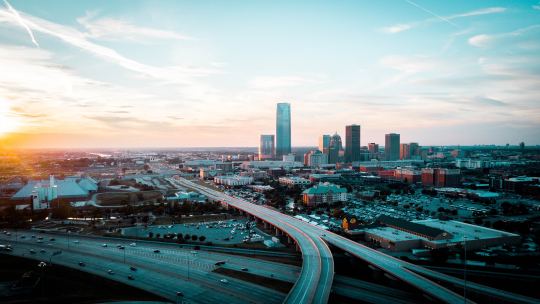
    One of our partners sent me a terrific article last week by Sam Anderson on the founding of Oklahoma City

    I have said this before on the blog, but I am deeply fascinated by the origins of cities because, oftentimes, the story isn’t all that lucid. Why right here? As Anderson points out in his article, usually cities “creep into existence.” 

    But not Oklahoma City:

    Oklahoma City was born in an event called, with extreme dramatic understatement, the Land Run. The Land Run should be called something like “Chaos Explosion Apocalypse Town” or “Reckoning of the DoomSettlers: Clusterfuck on the Prairie.” It should be one of the major events in American history. Dramatizations of it should be projected onto IMAX screens with 3-D explosions, in endless loops, forever. Every time you walk into a mall, you should be accosted by fuzzy-headed Land Run characters shouting, “What is America?!” “What does America even mean?!” Because the Land Run was, even by the standards of this very weird nation, absurd. It was a very bad idea, executed very badly. It would be hard to think of a worse way to start a city. Harper’s Weekly, which had a reporter on the ground, called it “one of the most bizarre and chaotic episodes of town founding in world history.” A century later, the scholar John William Reps reviewed the evidence and concurred. The founding of Oklahoma City, he wrote, was “the most disorderly episode of urban settlement this country, and perhaps the world, has ever witnessed.”

    To learn how Oklahoma City went from a population of 0 to 10,000 in about half a day, check out the full article.

    Photo by Gerson Repreza on Unsplash

  • Sinking tower solution

    Many of you are probably aware of the 58-storey Millennium Tower in San Francisco which is estimated to have sunk about 17 inches and to have tilted about 14 inches to the west since it was built.

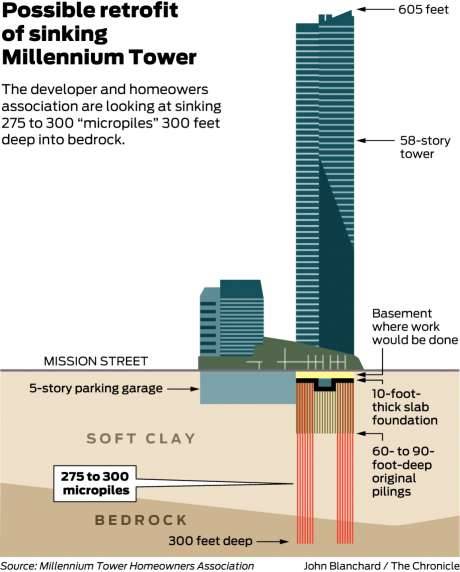
    Well today it was announced that they may have a fix. Here is what is apparently being proposed as a retrofit (image from SFGate):

    image

    The tower was originally built on top of a 10 foot thick raft or mat foundation, which was then supported by concrete piles that went down 60-90 feet into soft clay. Notably, the piles didn’t reach bedrock.

    The proposed solution involves drilling 275-300 new micropiles into the bedrock below. But here’s where things get really interesting: The plan is to stabilize the west side of the building first and allow the east side of the building to continue sinking. In theory, this will give the building an opportunity to level out before they fully stabilize it. 

    According to SFGate, the entire retrofit is expected to take anywhere from 2 to 5 years, and cost somewhere in the range of $200 to $500 million. The original tower cost $350 million to build. (I’m assuming that’s just the hard cost number.)