Daily insights for city builders, delivered every morning at 6 AM ET. I’m Brandon Donnelly — a Toronto-based real estate developer and founder of Globizen. I’ve been writing here since 2013.

Tag: food trucks

  • More food trucks, please

    There’s no real secret to having a vibrant food truck and street vendor ecosystem. You basically just need to allow it, and then get out of the way and let entrepreneurs do what they do best.

    When I went to grad school in Philly, I used to eat from food trucks all the time. I could get a breakfast sandwich and coffee in the morning. I could get a burrito for lunch. And I could get a vegetarian lasagna for dinner. There was no shortage of options.

    This same kind of ecosystem does not exist in Toronto, but it’s only because we’ve decided we don’t want it to.

    Images: New York City

  • Some Sicilian inspiration for #KioskTO

    I have written before about how Lisbon’s kiosks both anchor and beautify the city’s public spaces. I have also written about how Toronto should have something similar — #KioskTO anyone?

    Some of you might remember an expanded street food program that the city piloted many years ago. It was a complete and utter failure. In my opinion (and from what I can remember), it was too heavily regulated. The food ended up being far too expensive and, frankly, none of it was very good.

    That’s not how this should work. The entire point of things like food trucks and street kiosks is that they are cheaper alternatives to a conventional physical location. You can also more easily place them in locations where demand is being underserved.

    The one pictured here is in Catania, Sicily. I carried my beer over from a panini shop down the street and then we ordered three espressos for a total of 2€. I tried to sit on a crate they had lying on the ground but I ended up breaking it. Sorry, guys. So we stood instead. It was all rather civilized.

    Let entrepreneurs figure out what to sell and where. It will be a boon for both small business and for our public spaces.

    P.S. I tweeted this photo out earlier today and it elicited a good discussion on Twitter. Toronto wants this.

  • Tokyo’s kitchen cars (or food trucks)

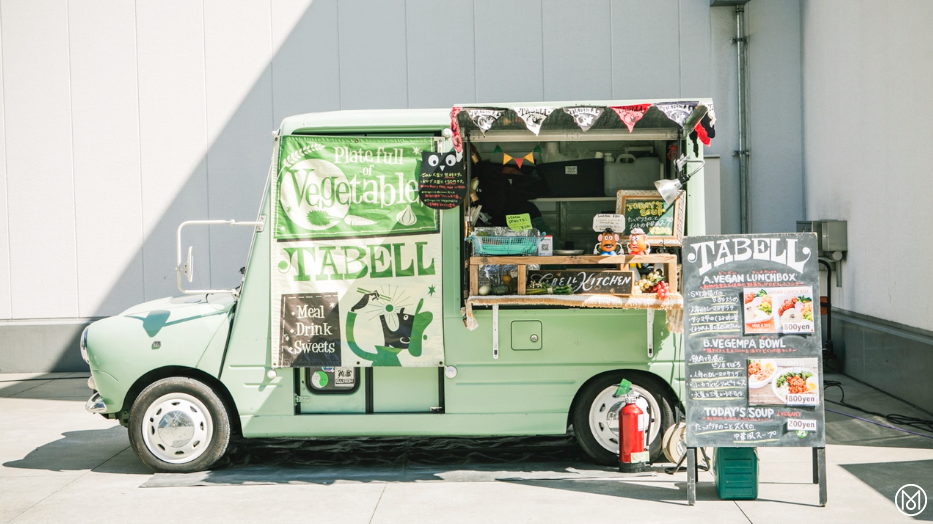
    Click here for a short video (by Monocle) about Tokyo’s nascent “kitchen car”, or food truck, scene. (The soundtrack is fun.) Historically, street food stands, or “yatai,” have had a questionable reputation in Japan. They proliferated across the country following World War II when times were tough and food was being rationed. But as Tokyo prepared to host the 1964 Olympics, local governments began to clamp down on yatai. They were seen as unhygienic and a place for drunks to hang out. There may have also been a sense of shame around the country’s post-war struggles. Whatever the case may be, these new food trucks have — aided by technology — changed the way people eat on the street.

  • Empowering food truck entrepreneurs

    When I lived in Philadelphia I survived on food truck food. My go-tos were an egg and cheese breakfast sandwich for $2.50, a bowl of spaghetti for $4.50, and a pretty substantial chicken burrito for somewhere around $5 or $6. The food was good. It was filling. And it was all priced perfectly for a poor student, which I was at the time.

    I still remember when Renzo Piano came to the University to talk about potentially renovating the design school. Somebody stood up and asked if he had considered the placement of food trucks in his plans. Piano responded by saying: “I am Italian. Don’t worry. I will provide for the food.” This is how ingrained food trucks were and are in the culture of the city.

    The other great thing about these food trucks is that they are a low-cost way of starting your own culinary business. Many were run by immigrants. And some of these “trucks” were so small that I used to have to duck in order to make my way to the concession window. There was nothing fancy about them. But they worked.

    These days I don’t really eat at food trucks anymore. They are not as widespread here in Toronto as they are in Philly. I also find them expensive and the portions are usually so small that you have to order 2 or 3 things. They feel like the anti-food truck.

    I appreciate that there’s a growing market for trendy and “gourmet.” But there’s value in low-cost options and in lowering the barriers to entry for aspiring food entrepreneurs. There are numerous examples of humble food trucks growing into full fledged restaurants. Let’s encourage more of that.

  • How to revive the American Heartland

    “Every unemployed American is a failure of entrepreneurial imagination.” -Edward Glaeser

    At the end of September, economist Edward Glaeser returned to the Manhattan Institute to deliver the 2017 James Q. Wilson Lecture. If you’re a regular reader of this blog, you may remember that he was there in 2016 and delivered a presentation called “The End of Work.” 

    This year’s talk continues that theme, but focuses on joblessness and economic stagnation in the US Heartland. 

    The solutions he puts forward are based on a very simple economic model for growth that he refers to as “rules and schools.” Simply put: The rules of a place need to support business and entrepreneurship and the people need to be educated.

    One example he gives is of a woman in Detroit who was trying to start a food truck business but had to wait 18 months for a permit. There’s no reason that should happen. He blames the insider restaurant lobby for working to keep competition at bay. The rules are bad. We have similar problems here in Toronto with our food trucks. I think it’s wrong.

    He also pokes fun at the Bilbao effect. Yes, Frank Gehry created a beautiful piece of architecture. But did it lower the unemployment rate?

    The last thing I’ll mention are his comments regarding Amazon HQ2 because I like how he frames it. 

    Firstly, Amazon is going select a city that doesn’t need Amazon. It’s going to go where there’s already abundant human capital. 

    Secondly, “smokestack chasing” is not the right economic development strategy. The key questions should be: How will this benefit our human capital and how many new firms could it create?

    If you have an hour, check out Ed Glaeser’s talk. If you can’t see it below, click here.

    [youtube https://www.youtube.com/watch?v=e8LvHpRCUYk?rel=0&w=560&h=315]

  • Why food trucks won’t destroy Toronto’s restaurant scene

    Yesterday City Council voted 34 to 3 in favor of allowing more food trucks on the streets of Toronto (125 of them to be exact).

    Food trucks will be allowed to roam and park in pay-and-display spots on city streets as well as in private lots. However, the total number of trucks can’t exceed 125; they’re not allowed to park for more than 3 hours in one spot; and they can’t park within 50 metres of a restaurant.

    Most supporters of food trucks in this city are calling it a baby step forward. A lot of the reforms that they had been advocating for were not achieved with this vote. Frankly, I find it surprising how long this discussion has been going on for and how we’re still at the point of baby steps.

    But perhaps even more surprising, is the fact that I agree with Rob Ford on this issue:

    Mayor Rob Ford advocated for less regulation, arguing that people who make a date to go to a restaurant don’t change their mind and buy a hot dog when they pass a cart. “I think putting all this red tape around people, that’s not very friendly,” he said. “This is free enterprise. This is capitalism. Let them sell what they want and let the customer decide.”

    The concern from the other side is that food carts are going to threaten Toronto’s restaurant industry and turn our streets into the wild west of food service–hence the 50m rule. But I actually think the opposite could end up proving to be true. I think food trucks could end up empowering entrepreneurs.

    When I used to live in Philadelphia, which is a city with a thriving food truck scene (people publish food truck guides), I practically lived off the things. For breakfast I would go to this couple who barely spoke English and they would make me an egg and cheese sandwich for $2.50. And for lunch, I would go to the guy some people called the “nice little Mexican boy” for a burrito. It was somewhere around $5. And his food truck was so small that I had to duck while ordering food so I didn’t hit my head.

    At first I actually found it odd to be consuming egg sandwiches and burritos from trucks that would pack up and leave at the end of the day. I kept thinking I was going to get sick. But I warmed to the idea and learned to love them. As does everybody else.

    In fact, we loved our food trucks so much that when Renzo Piano–the Italian Pritzker Prize-winning architect–came to Penn to talk about how he had been retained to redesign the School of Design’s building, somebody stood up and asked: “How are you going to accommodate the food trucks in your design?” Renzo responded perfectly and said something along the lines of: “I’m Italian. Don’t worry, I will provide for the food.”

    But my point of all this is to say that instead of looking at food trucks as a threat to our restaurant industry, we should be looking at them as a way to empower more entrepreneurs to take the risk on starting something for themselves–many of which could end up being new Canadians. The “nice little Mexican boy” also barely spoke English and looked young enough to be in high school. But he was a business owner.

    Starting a restaurant is a risky proposition. You need to lease space, you need to buy equipment, and so on. And everybody knows the failure rate is high. But what if you could test that killer recipe of yours on a few hundred people at lunch in front of First Canadian Place? That sounds like a much easier proposition to me.

    So what I hope happens is that people in Toronto start to see food trucks, not as a threat to our restaurant scene, but as an opportunity to get more entrepreneurs into it and make our city even more vibrant. Because if we do that, I’m positive we’ll end up with an even better restaurant scene than what we have today in our great city.