Daily insights for city builders, delivered every morning at 6 AM ET. I’m Brandon Donnelly — a Toronto-based real estate developer and founder of Globizen. I’ve been writing here since 2013.

Tag: exhibition

  • The greatest photo of Venice I have ever seen

    This afternoon we went to the Mucem (Museum of Civilizations of Europe and the Mediterranean) here in Marseille. By far, my favorite exhibition was one that dealt with the urbanization of five cities surrounding the Mediterranean — namely Marseille, Venice, Istanbul, Cairo, and Alger. At one point, this was the center of the commercial world. Great empires were forged and great fortunes were made here. But things have changed a little since then. And in some cases, what we are now left with are scenes like the one you see above (photograph by Martin Parr). This is easily the greatest photo of Venice I have ever seen. Venice is a tiny city, but it receives tens of millions of tourists each year. This photo does an extraordinary job of capturing what that might feel like.

  • This is not an art show

    Later this month a new exhibition will open at the Guggenheim Museum called Countryside, The Future. Produced by architect Rem Koolhaas and Samir Bantal (Director of AMO), the focus of the exhibition is on non-urban areas — or, the 98% of the earth’s surface not occupied by cities. The 21st century is being called an urban century. But the argument here is that “the countryside is now the site where the most radical, modern components of our civilisation are taking place.” If you’re going to be in New York, this one should be worth checking out. It’s on my list. Here is a teaser video that was just released by the Guggenheim:

  • Exploring KING Toronto

    Today I stopped by the Exploring KING exhibit that is currently on at 134 Peter Street. It is an exhibition celebrating the design of KING Toronto.

    It explains how the design came about. Note all the different unit layouts on the floor.

    It includes (foam) study models that go as far back as 2015. That’s four years of design iterations.

    It has samples of the glass blocks that will be used on the building’s facades.

    Related article: Glass blocks, that staple of 1980s kitsch, are trendy again. Sorry, it’s behind a paywall.

    It has a VR setup that allows you to explore the building’s inner courtyard. It’s going to be a fun space.

    And there’s even a KING Toronto candle for sale. (Aromatic woods with spicy overtones.)

    I thought the overall exhibition was very well done and I am thrilled to see architecture and design so front and center. It is an exciting time to be living in this city.

  • Toward a Concrete Utopia: Architecture in Yugoslavia, 1948–1980

    image

    A new exhibition on postwar architecture in (the former) Yugoslavia opens up today (July 15) at the Museum of Modern Art in New York. It’s called, Toward a Concrete Utopia: Architecture in Yugoslavia, 1948–1980and it runs until January 13, 2019.

    Here is a bit more about the exhibition:

    Situated between the capitalist West and the socialist East, Yugoslavia’s architects responded to contradictory demands and influences, developing a postwar architecture both in line with and distinct from the design approaches seen elsewhere in Europe and beyond. The architecture that emerged—from International Style skyscrapers to Brutalist “social condensers”—is a manifestation of the radical diversity, hybridity, and idealism that characterized the Yugoslav state itself.

    And here is a panel discussion about the exhibition (click here if you can’t see the video below):

    [youtube https://www.youtube.com/watch?v=M2S0bBTHu-8&w=560&h=315]

    Architecture tells you a lot about a place and what was happening at the time in which it was built. I would love to see this exhibition and I hope to do exactly that if I’m in New York City before the new year.

    Image: MoMA

  • Should the Olympic Games be held in the same place every 4 years?

    I have argued before that hosting major events, such as the Olympics, can serve as a catalyst for completing meaningful public projects. But there is also an argument to be made that it’s not entirely worth it. The economic legacy is weak. The ROI simply isn’t there.

    Recently Harvard Business Review interviewed a gentleman named Chris Dempsey. Dempsey was a former Bain & Company consultant and the cofounder of the No Boston Olympics organization. He played a big part in Boston withdrawing their bid to host the 2024 Summer Games. Los Angeles ending up taking its place.

    His rationale is as follows.

    The International Olympic Committee was founded on June 23, 1894 by a Frenchman by the name of Pierre de Coubertin. At the time of its creation, the World’s Fair had already pioneered the rotational model of traveling to different cities.

    The most famous of these exhibitions was arguably “The Great Exhibition” held in London in 1851. Indeed, the plate-glass Crystal Palace structure which actually hosted the event was later seen as an important turning point in the history of architecture. It was designed by Joseph Paxton, who was an English gardener and architect.

    Of course, the world was a different place at the end of the 19th century.

    The events weren’t being broadcasted around the world in HD. We didn’t have social media. And transportation costs were high (economist Edward Glaeser reminds us of this in the talk I posted yesterday). So rather than ask people to spend weeks traveling the world by boat, it was decided that the show should travel to them. It should rotate places.

    This made sense then, but does it make sense now? I would love to hear your thoughts on this in the comment section below.

  • Where will we live?

    image

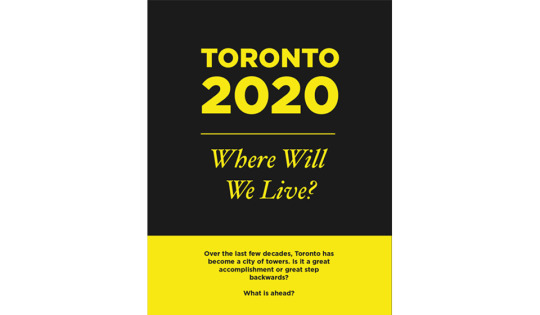
    This evening I participated in a roundtable discussion at WORKshop here in Toronto. It was part of an exhibition that they currently have on called, Toronto 2020: Where Will We Live? They are located in the concourse level of 80 Bloor Street West, so go check them out.

    The discussion this evening was all about the dramatic change in Toronto’s urban form over the last decade. In other words, the condo boom. We covered everything from the life cycle of buildings and urban design to demographics and policy. It was a lot of fun and I am certain the group could have continued talking all night.

    But one thing that I was reminded of this evening is how important it is for great city building to be cross-disciplinary.

    Take, for example, architects and (real estate) developers. 

    The stereotypical developer is greedy and only concerned with money. They don’t care about the impact that their buildings have on the built environment. On the other hand, the stereotypical architect is only concerned with design and not with the economic feasibility of projects. (I’m exaggerating here for effect.)

    The point is that neither of these participants in isolation could build a great city. A beautiful design doesn’t have much value if it can’t be financed and built. And a highly financeable project could end up contributing nothing to the city. In some cases it could actually detract from the built environment.

    So if we really want to build truly great cities, I believe it needs to be a collaborative effort. We need to bridge the divides in thinking and leverage each other’s strengths. 

    I have felt very strongly about this since I first started studying architecture as an undergraduate student, which is how I ended up taking business and real estate classes. I felt and continue to feel that the greatest opportunities exist at the intersection of different ways of thinking.

  • Assembled realities of the New York landscape

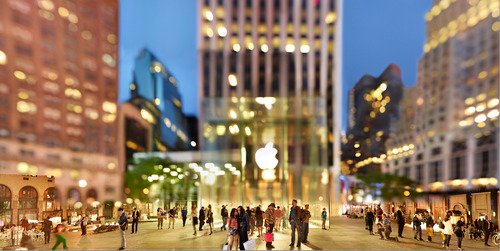
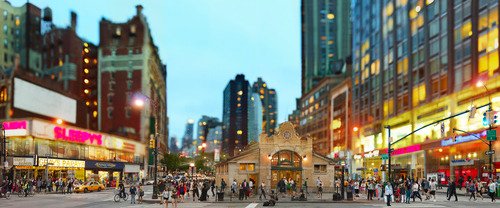
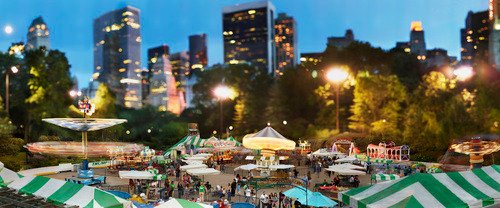
    New York photographer Jeff Chien-Hsing Liao has an upcoming solo exhibition at the Museum of the City of New York next month called Assembled Realities. I just heard about it through CityLab.

    Here’s a bit of background on his work:

    Pushing the boundaries of traditional documentary photography, Liao (b. 1977) creates large-scale panoramas by combining multiple exposures of the same location taken over the course of several hours. The resulting composite photographs are often fantastical; complex, hyper-real views that no single shot—or the eye—could capture.

    And here’s two more of his photos:

    For higher resolution versions, click here.

    I love how his photos begin to distort reality and how they focus your attention – in many cases – on New York’s vibrant street life. I thought you might all enjoy them as well.

  • What use could driverless cars serve beyond just transport?

    image

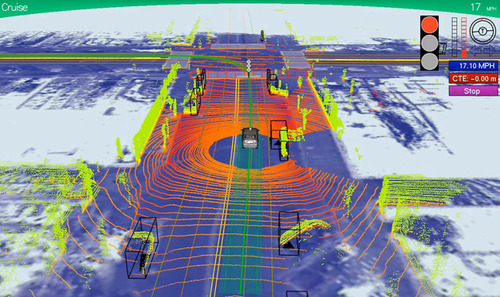
    Here’s further evidence that technology is starting to infiltrate into many other industries, including architecture. London-based architect and designer Pernilla Ohrstedt is currently working on an exhibition for Dezeen and MINI Frontiers that will architecturally visualize the 3D data that driverless cars collect in order to navigate around.

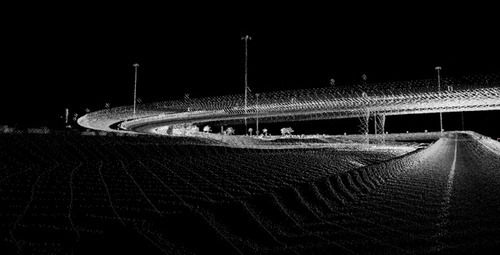
    I had never thought of this before, but as a byproduct of driverless cars, we’re about to start collecting detailed replicas of all of our cities – well beyond the static images we currently have with Google Streetview. In order to navigate by themselves, driverless cars are constantly scanning their surroundings to create a “point cloud” replica of the built environment. This point cloud basically tells the car where they are, where they should drive, and what obstacles might be around.

    It could look something like this:

    image

    Already there are firms like ScanLAB emerging to provide 3D scanning, publishing, and visualization services. But this is obviously just the tip of the iceberg. I can only imagine what innovation will emerge from the passive collection of all this data once driverless cars become commonplace in our cities.

    As one example, it could be a way for us to systematically measure the correlation between the qualities of a street and the vibrancy of its street life. Is there a perfect width? An ideal traffic volume? A right scale? All of this data could make city building more of a science (and perhaps less political).

    My hope though is that this data would be open and accessible to all, so that clever entrepreneurs could build on top of it.

    What are some of your ideas?

    Images: Dezeen