
I first met Monika Jaroszonek in 2017, right before she started RATIO.CITY. Since then she has developed some pretty incredible tools for the city building space.
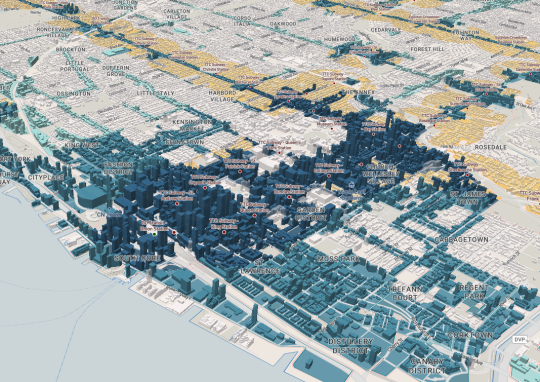
Yesterday the company published this interactive visualization looking at development potential across the City of Toronto. The mapping looks for the following:
- Land that has a Mixed Use, Apartment or Regeneration designation in the City of Toronto’s Official Plan
- Land that is located within a Provincially designated Urban Growth Centre
- Land that is located within 500m of a Major Transit Station
The tool then ranks each development site – AAA, AA, A – according to how many of the above criteria it meets.
It also flags land that it refers to as “Missed Opportunity.” These are lands located within 500m of a Major Transit Station, but that are designated as Neighbourhoods (considered stable) or Employment (whole other discussion).
Based on this filter, about 5.6% of the City’s land is a “Missed Opportunity” and about 1.2% is AAA.
When you look at the visualization, that is one of the first things you will probably notice; a lot of our transit infrastructure is currently underutilized as a result of land use policies.
Image: RATIO.CITY