Daily insights for city builders, delivered every morning at 6 AM ET. I’m Brandon Donnelly — a Toronto-based real estate developer and founder of Globizen. I’ve been writing here since 2013.
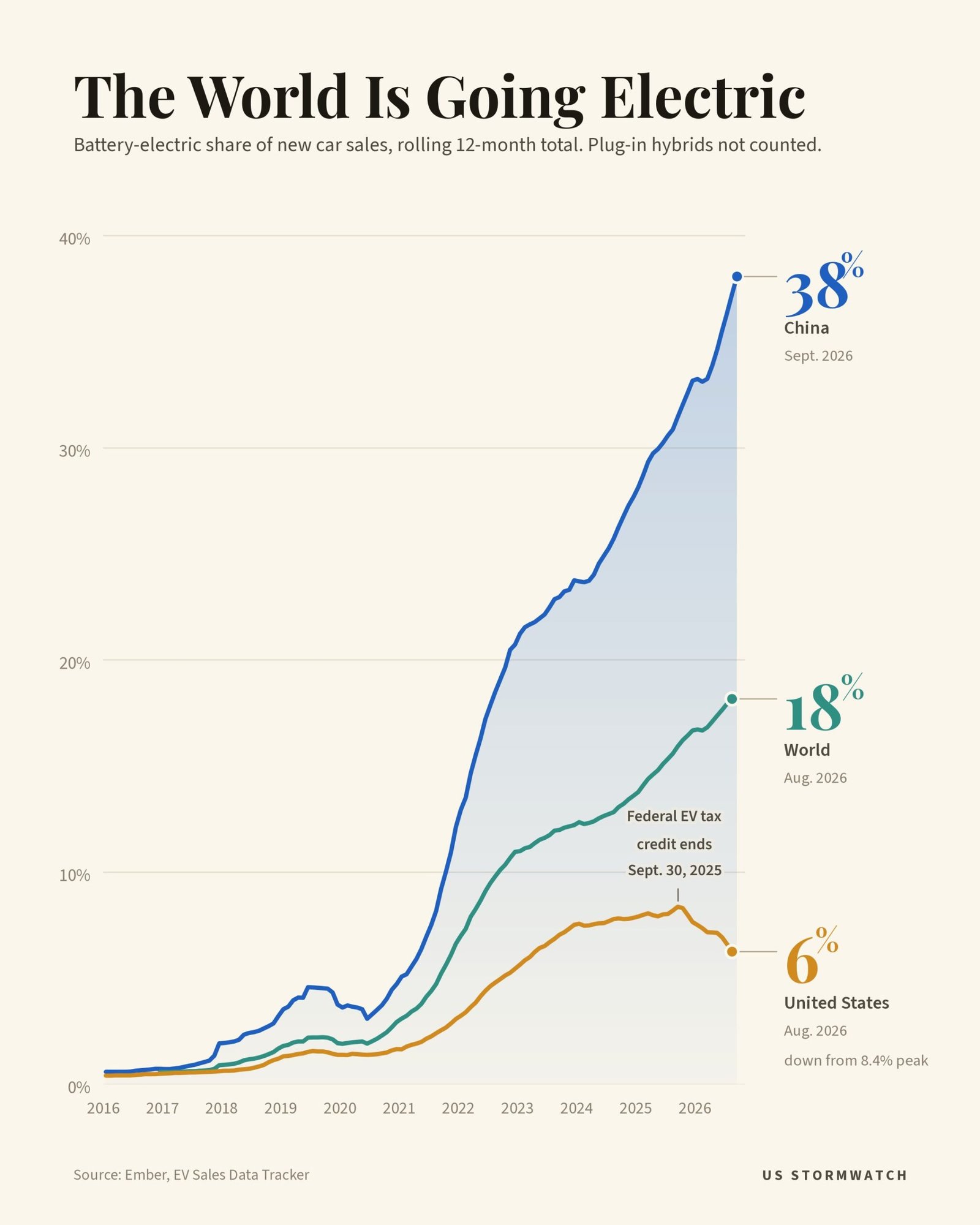
Here’s a telling chart from Colin McCarthy: The world is going electric, except for the US. The chart shows the rolling 12-month share of new battery-electric vehicle sales (plug-in hybrids excluded). The callout for the US marks the end of the federal EV tax credit in September 2025. The adoption curve reflects demand being pulled forward prior to its expiry, followed by the expected falloff. Among the long list of other things going on in the US, it is highly disappointing to see the politicization of renewable energy.
McKinsey published a report last month on the future of electric vehicles and what that will mean for the industry. Many countries, cities, and companies have set some sort of electrification target for 2030. The US is targeting 50% EVs by 2030. Several countries have announced a flat-out end to ICE sales by 2030. And a number of OEMs have committed to the same.
But there are already cities, such as Oslo, which have reached EV majority. In July of this year, its passenger EV adoption figure was 66%, making Norway a global leader. What is clear is that the electrification of personal transport is well underway. Anecdotally, we are seeing that play out with the number of people now inquiring about electric charging infrastructure in our buildings (here in Toronto).
This move to electric will have many repercussions, including a major shift in the entire supply chain (which McKinsey outlines in their report). While ICE vehicles and EVs still both have things like tires, EVs require a whole slew of new and now growing components:
It is also going to force new public infrastructure:
But in parallel to the electrification of personal vehicles, we are also seeing a number of other trends and shifts. The electrification of public transport (Shenzhen has already electrified its entire bus and taxi fleets). The rise of micro-mobility (things like e-scooters). The ongoing push to discourage driving in urban centers. And the continuing goal of autonomous vehicles.
What all of this suggests to me is that the electrification of personal vehicles is only part of the story. The entire mobility landscape in our cities is changing and it will probably look a lot different by 2030.