Daily insights for city builders, delivered every morning at 6 AM ET. I’m Brandon Donnelly — a Toronto-based real estate developer and founder of Globizen. I’ve been writing here since 2013.

Tag: electric vehicle

  • EV charging stations > gas stations

    If you do a search for the number of electric vehicle charging stations in the US, you’ll likely get a number somewhere around 160,000. But to better understand what this means, you’ll probably want to ask a few follow-up questions:

    • Are these individual charging ports (for a single vehicle) or are these stations (locations with multiple charging ports)?
    • How many of these chargers are private versus publicly-accessible?
    • And how many of these are DC fast, versus just level 2? Level 2 is what most people have at home (I think), whereas DC charging is what you need if you’re stopping on the side of the road and need to supercharge your car in 20-30 minutes.

    Usually the biggest fear with EVs is range anxiety. We have come to expect that we’ll be able to find a gas station when we need it, but, for the most part, we don’t yet feel that way about EV charging stations.

    So for this concern, the more precise question would be: How many publicly-accessible DC-fast charging stations are there in the US? This is the filter that gives you stations that would be most comparable to how gas stations function today.

    The answer, according to the US Department of Energy, is about 10,597 stations and 44,160 charging ports. And according to Bloomberg Green, this puts the US on track to have public fast-charging sites outnumber gas stations in about 8 years.

    Of course, it’s probably safe to assume that the pace of EV adoption will only increase. And that means that this flip could happen well before 8 years. In my mind, that’s soon.

  • Electric vs. internal combustion engine

    Porsche released its first electric car back in 2019. It was the 2020 Porsche Taycan, which was fairly similar to the Porsche Panamera sedan in terms of price, performance, and styling, except that it was fully electric. So if you were in the market for a very expensive sedan, it was more about whether or not you wanted an electric vehicle or a vehicle with an internal combustion engine (ICE).

    In the quarter in which it launched (Q4 2019), the Taycan ended up only representing about 7% of Porsche North America’s overall sedan sales. But by the second quarter of the following year it was nearly 50%. And in the first quarter of this year (2021), it was over 80% of their sedan sales. That was fast. Pretty soon, I would imagine there will be no point in even making the Panamera.

    Now, the Panamera and Taycan aren’t exactly mainstream vehicles. But I found the above chart (which is from Bloomberg Green) interesting in that it feels like an all-things-being-equal kind of question. If you happen to be in the market for a six-figure Porsche sedan — and all things are kind of equal — would you rather an electric model or one that runs on gas? Already most people are choosing the former.

  • Too many plug types is a problem for EVs

    Google Maps recently introduced a new feature that allows you to search for electric vehicle charging stations by plug type. Here’s what it looks like when I tried it here in Toronto:

    While helpful, it demonstrates two things. One, there are too many plug types and that’s a problem for EV adoption. Nissans and Mitsubishis use CHAdeMO, BMWs use CCS, and Tesla has its own proprietary plug, for example.

    Two, this is one the main reasons why Tesla is so far ahead when it comes to EVs. They’ve been very purposeful in building out an expansive network of charging stations so as to avoid what is very clearly a chicken-and-egg problem. You need great EVs and then places to charge said vehicles.

    As of January 2021, Tesla operates over 2,105 Supercharger stations worldwide with over 1,094 stations in North America, 589 in Europe, and 423 in Asia/Pacific. This is how you start to compete when there are over 160,000 gas stations in the US alone.

  • Electric vehicle startup Canoo launches first wave waitlist

    LA-based startup, Canoo, is trying to rethink urban transport and, more specifically, how people use and consume electric vehicles. They aren’t planning on launching in Los Angeles until next year, but here’s what is apparent so far.

    (1) The vehicles (pictured above) are far more utilitarian in their design — though still attractive. The focus does not seem to be on creating objects of desire, which is how cars have historically been sold.

    (2) The interiors are more living room-like in their seating configurations. This makes them feel less like a car and more like public transit (or a prom party limo).

    (3) The plan is for these vehicles to be available through a commitment-free monthly membership, as opposed to through a traditional lease or purchase option.

    These features are the sorts of things that many have been predicting would happen. But they remain signals for the future of the “car.” They are also perfectly well suited to autonomy.

    If you’d like to join their waitlist, you can do that here. I just did and apparently I’m #5967 in line. I have no idea when they hope to launch in Toronto, but who doesn’t love a good waitlist? The illusion of scarcity can be a powerful motivator.

    Update: My position in line has improved to #229 because of all of the “referrals” generated by this post. Canoo has done a good job using their waitlist system to generate exposure and solicit early customer feedback.

    Update: #46.

    Image: Canoo

  • Comparing ICE vehicle and electric vehicle travel times

    While we were doing our West Palm Beach to Toronto road trip last weekend, I started wondering how much longer the trip would be taking had we been driving a Tesla. The drive, according to Google Maps, is normally about 20 hours and 46 minutes. It’s a long one. About 2,288 km. The mountains in Virginia are nice, though.

    The route I threw in is West Palm Beach to Junction House (2720 Dundas St W, Toronto):

    According to Tesla, this same route using a Standard Range (400km) Model X SUV is now estimated to take 34 hours.

    The additional travel time is a result of charging time (anywhere from 20 – 70min per charge depending on the device) and the fact that you need to go where the chargers are. In this scenario, you end up driving an additional 155 km. However, you will end up saving money on gas.

    This reminds me of something that Bill Gates argued in the talk I recently posted. Electric vehicles are the future of personal transport, but they’re not great for commercial applications: planes, boats, and so on. The battery capacity simply isn’t there, and it’s unlikely to be there anytime soon. But perhaps the charging times can be brought down. That would help.

    I’m not planning on doing this drive again anytime soon. But if any of you are, you may want to leave the Tesla at home if you’re in a rush. However, using an EV would, of course, be the right thing to do for our planet.

  • Abu Dhabi signs cheapest electricity contract, ever

    The Abu Dhabi Water and Electricity Authority recently completed a 350 MW solar tender. They received a total of 6 bids and the low bidder was Japan’s Marubeni Corp and China’s JinkoSolar Holding Co Ltd. Their bid was USD $24.2 per MWh or 2.42 cents per KWh.

    This is really low.

    According to the U.S. Energy Information Administration, the average cost of a new natural gas-fired plant is 5.6 cents per KWh. More than double the above solar bid.

    In fact, author, blogger and futurist Ramez Naam calls the above bid, “the cheapest contract for electricity ever signed, anywhere on planet earth, using any technology.” (Blog post here.) 

    Huge.

    Now, Abu Dhabi is obviously a very sunny locale. No shortage of bluebird days there. But that doesn’t negate the fact that we are seeing a rapid decline in solar power prices.

    This, along with the growing adoption of electric vehicles is excellent news for us sustainability dorks. Just this morning I was thinking to myself that the car I currently own will likely be the last gasoline-powered car I ever own.

    Hopefully they start making an electric version of the G-Class.

  • The master plan

    I’m going through and dissecting Elon Musk’s second “Master Plan” this morning. 

    I love how he drops earth-shattering news in such a casual and honest way. Two days ago he tweeted that he was planning to pull an all-nighter to complete the “master product plan.” And then yesterday, he outlined his vision in a simple – and at times personal – blog post for how Tesla is going to change the world. It all feels very genuine.

    //platform.twitter.com/widgets.js

    There are so many interesting snippets from the master plan, that I’m simply going to quote them all here. There’s lots to think about and discuss.

    A reminder of the broader vision:

    The point of all this was, and remains, accelerating the advent of sustainable energy, so that we can imagine far into the future and life is still good. That’s what “sustainable” means. It’s not some silly, hippy thing – it matters for everyone.

    By definition, we must at some point achieve a sustainable energy economy or we will run out of fossil fuels to burn and civilization will collapse. Given that we must get off fossil fuels anyway and that virtually all scientists agree that dramatically increasing atmospheric and oceanic carbon levels is insane, the faster we achieve sustainability, the better.

    The solar roof and other electric vehicles that Tesla has in the pipeline:

    Create a smoothly integrated and beautiful solar-roof-with-battery product that just works, empowering the individual as their own utility, and then scale that throughout the world. One ordering experience, one installation, one service contact, one phone app.

    In addition to consumer vehicles, there are two other types of electric vehicle needed: heavy-duty trucks and high passenger-density urban transport. Both are in the early stages of development at Tesla and should be ready for unveiling next year.

    Thoughts on self-driving vehicles:

    Even once the software is highly refined and far better than the average human driver, there will still be a significant time gap, varying widely by jurisdiction, before true self-driving is approved by regulators. We expect that worldwide regulatory approval will require something on the order of 6 billion miles (10 billion km). Current fleet learning is happening at just over 3 million miles (5 million km) per day.

    The most important reason is that, when used correctly, it is already significantly safer than a person driving by themselves and it would therefore be morally reprehensible to delay release simply for fear of bad press or some mercantile calculation of legal liability.

    Once we get to the point where Autopilot is approximately 10 times safer than the US vehicle average, the beta label will be removed.

    Why an even lower cost vehicle (compared to the Model 3) may never be necessary:

    You will also be able to add your car to the Tesla shared fleet just by tapping a button on the Tesla phone app and have it generate income for you while you’re at work or on vacation, significantly offsetting and at times potentially exceeding the monthly loan or lease cost. This dramatically lowers the true cost of ownership to the point where almost anyone could own a Tesla. Since most cars are only in use by their owner for 5% to 10% of the day, the fundamental economic utility of a true self-driving car is likely to be several times that of a car which is not.

    And finally, Uber has a new competitor (that, to me, is a good thing):

    In cities where demand exceeds the supply of customer-owned cars, Tesla will operate its own fleet, ensuring you can always hail a ride from us no matter where you are.

    I’ll provide my thoughts on all of the above in a subsequent post. I’m out of writing time for today.

  • Toronto exploring road pricing on downtown highways

    Road pricing is on the table in Toronto. (Somebody has to fund the expensive Gardiner Expressway East rebuild.) On March 11, 2016, the City issued a Request for Proposal for: “Options for Establishment of Toll Facilities on F.G. Gardiner Expressway/Don Valley Parkway.”

    As a vocal supporter of road pricing, I am happy to see us headed in this direction. And I bet that today’s post will just be the beginning of my ruminations on this topic.

    Because naturally, it raises a lot of questions:

    Should the pricing be fixed or variable? Similar to how Uber’s surge pricing model is intended to ensure that there are always enough drivers on the road, should our road pricing model strive to eliminate traffic congestion by increasing the price of the road as demand rises beyond road capacity? I like the idea of a “congestion charge” rather than just a road toll. There’s something very efficient about it.

    Who should pay? Should anyone and everyone who uses the road pay? Or should it just be be non-Toronto residents who aren’t already paying property taxes in the city? I would imagine that this latter scenario would be easier for Toronto politicians to get behind, since there will obviously be a segment of people who flat out don’t want road tolls/pricing. But if we stick with the principle that it’s a “congestion charge”, then everyone should pay. It doesn’t matter where you live when you are demand trying to exceed the available supply of road.

    (I’m running a Twitter poll right now with this exact question. At the time of writing this post, “everyone should pay” is winning.)

    Should electric vehicles be exempt from the road tolls or congestion charges in order to help accelerate our transition away from fossil fuels? With Tesla getting ready to announce its mass market Model 3 (price $35,000), I’ve been thinking lately that the car I currently own may very well be the last gasoline car I ever own.

    It’s still early days for road pricing and our mayor doesn’t seem to be a fan. So who knows how far we’ll get with this RFP. But I for one hope that we find the courage to make the difficult decisions and that this new revenue stream is leveraged for the purpose of building more sustainable forms of urban transport in this city. 

    Let’s make a 50 year decision and not an election cycle decision.

  • Tesla introduces a battery for your home

    image

    By accident, this week on Architect This City seems to be turning into Elon Musk week.

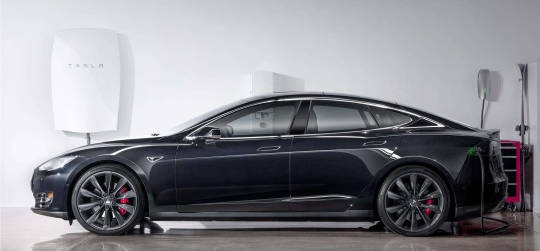
    Yesterday, Musk announced something called the Powerwall home battery. Measuring about 3′ x 4′, the shield looking battery pack will charge using the electricity generated from solar panels (or from the grid when rates are at their lowest) and then power your home.

    It’s designed for consumers and will cost between US$3,000 – $3,500 depending on capacity. The individual Powerwalls can also be daisy chained to increase capacity. It will be available starting this summer.

    A wall battery may not seem all that interesting to some, but I think this is actually a big deal for a few reasons.

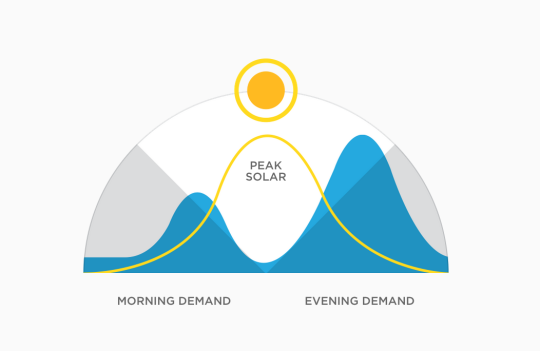
    Renewable energy is often both intermittent and produced when you don’t need it. Here’s a great chart from Tesla that shows what I mean:

    image

    During peak solar hours, most people aren’t home and most people aren’t consuming at peak levels. That’s why it’s important to be able to store the energy that you collect, whether it be from solar, wind or other renewal energy source. And from what I hear from my friends in the industry, storage has been a bit of an Achilles heel for adoption.

    It will also help to further decentralize energy production. What is produced locally (from say solar panels) will be stored locally for when it’s needed locally. This is in contrast to centralized production or producing energy locally and then feeding any excess capacity into the grid for use somewhere else. That requires transmission and will be by definition less efficient.

    Finally, the other interesting thing about Powerwall is that it closes the loop on two of Musk’s businesses: SolarCity and Tesla. SolarCity is about the production of renewable energy and Tesla is about the consumption renewable energy. But as the chart above shows, storage is often needed to link those two activities in an efficient way.

    All of this makes me excited about Powerwall.

    If any of you are an expert in this industry (which I am not) or you just have additional thoughts, I would love to hear from you in the comment section below.

    Images: Tesla

  • The landscape of electric charging stations

    The car had a profound impact on the landscape of our cities (and that’s probably the understatement of the year). Not only did it force the decentralization of our cities (i.e. sprawl), but it dotted the landscape with gas stations and other things that cars required.

    According to the Verge, the first gas station was built in 1905 in Missouri. And it was really thought of as a side business for pharmacies and other business owners. But as of 2012, there were 121,466 gas stations throughout the United States. It obviously became a big business.

    But as we make the transition from gasoline cars to electric ones, we’re going to need a new network of “refill” stations. In fact, this network is probably more important than the cars themselves if the goal is widespread adoption.

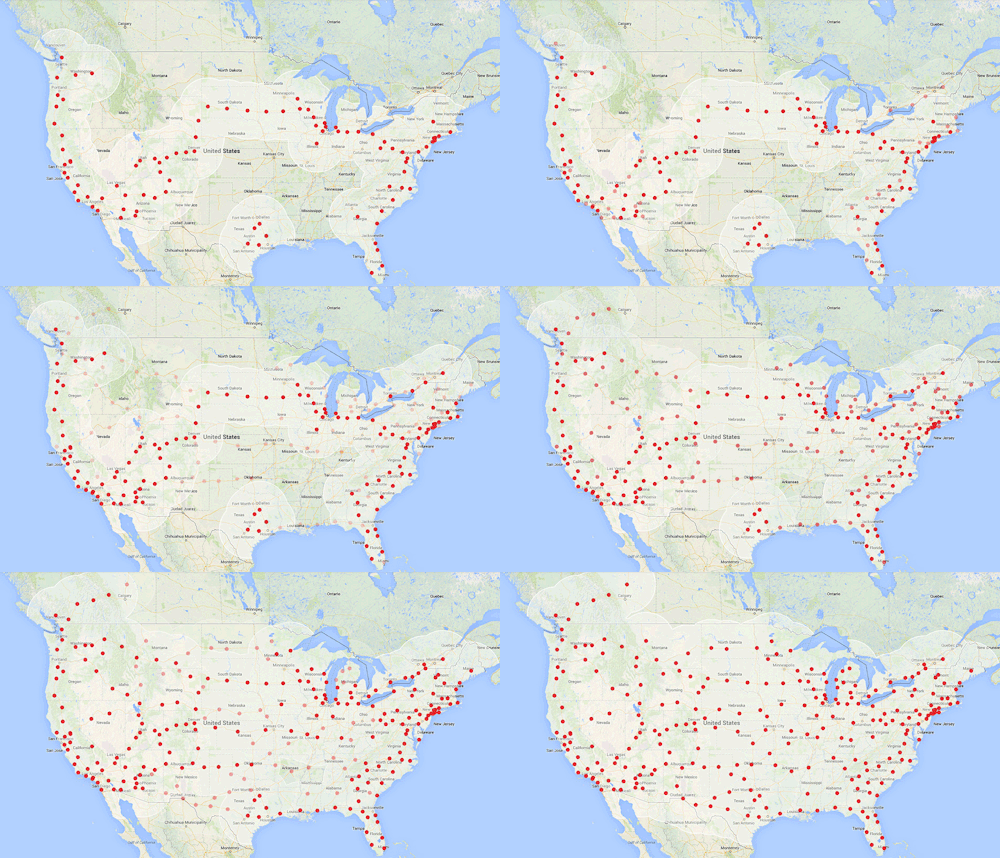
    Below is an animated GIF depicting Tesla’s plans to blanket North America with its Supercharger stations by the end of 2015. By then they will have covered off 98% of the US population and many of the most densely populated parts of Canada.

    But there are two important differences when it comes to comparing Supercharger stations vs. traditional gas stations.

    First of all, these won’t be the only places where drivers will be able to recharge. People will also charge their Tesla at home. In fact, I would assume that for regular city driving, most people would do just that. It’s far more convenient to just drive home, plug in your car, and have it recharge while you’re sleeping (just like we already do with our smartphones). And if this is the case, then these Supercharger stations will be primarily used for long drives, which means we probably won’t need as many within our cities.

    Secondly, these Supercharger stations are free to Tesla drivers (provided you purchase that option with your car). This is really interesting, because it changes the economics of the industry. Selling gas is no longer a profit center. 

    But what I wonder – especially now that Tesla has open-sourced its technologies – is how these free Supercharger stations will ultimately fit into the broader electric vehicle market. Will other manufacturers create Tesla Supercharger compatible cars? Or will we see a rival set of charging stations emerge?

    My sense is that Tesla is doing what it can to ensure it becomes the standard.