
Daily insights for city builders, delivered every morning at 6 AM ET. I’m Brandon Donnelly — a Toronto-based real estate developer and founder of Globizen. I’ve been writing here since 2013.

Tag: edward glaeser

  • How immigration shaped Toronto and New York

    One of the things that Joe Berridge reminded me of in his talk yesterday, is that the story of Toronto is really the story of immigration. 

    In his words, Toronto has become the success story that it is precisely because we are good at taking in lots of immigrants and making them economically productive. 

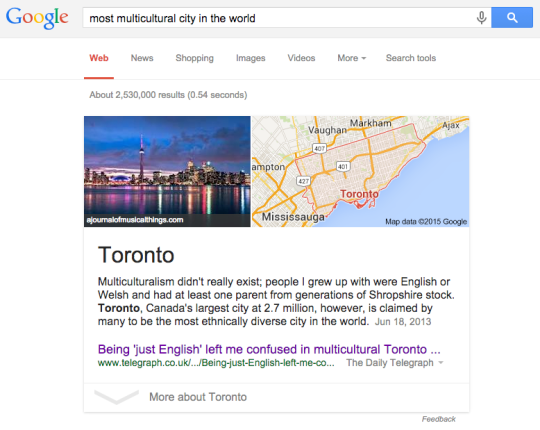
    Sure, there are many things that we could be doing better, but you don’t get to be the most multicultural city on the planet without doing a lot of things right. More than half of this city is now foreign born. The term “visible minority” is quickly expiring.
    image

    And more than anything else, this accomplishment is arguably what has allowed us to become the global city that we are. Click here for a fascinating chart from the Toronto Star that allows you to see the number and source of immigrants that have come to this city over the last half century.

    But of course, Toronto is not alone in this accomplishment.

    Urban economist Edward Glaeser wrote a great essay back in 2005 called Urban Colossus: Why is New York America’s Largest City? It’s an incredibly interesting read for those of you interested in cities and so I definitely recommend it.

    But the crux of his argument is that New York is the largest and most dominant city in America because of geography – specifically its deep harbor – and because of its success in manufacturing.

    What this meant is that New York became the center of shipping in the country and the point of entry for the majority of immigrants coming into the United States. But since transportation costs were still relatively high at the time, most immigrants arrived in New York and stayed in New York.

    Luckily, New York had a robust manufacturing economy – notably because of sugar refining, publishing and printing, and the garment industry. This allowed the waves of immigrants flooding into New York to become economically productive.

    From 1850 to 1920, the population of the New York grew about 800% from roughly 700,000 people to over 5.6 million people.

    So the moral of the story is simply that immigration has and will continue to play a pivotal role in the shaping of our cities. Canada has a sub-replacement fertility rate somewhere around 1.61 births per woman (2012). This is lower than that of United States, which is around 1.88 births per woman.

    That means that without immigration, we do not grow. We shrink. And that’s usually not a great thing for economies.

  • The cost of saying “no”

    https://500px.com/embed.js

    When you rezone a property to build something new, pretty much every city will ask you to provide reports and studies that assess the potential impacts of that something new. 

    They’ll ask you to look at the impact on traffic, the impact on storm water, the impact on shadows in the area, and the list goes. This, of course, is fair and reasonable. It makes sense to measure the impact of the proposed changes to see if it will work in the given context. 

    But those are not the only impacts to consider. I think that many of us underestimate the flip side, which is the impact of doing nothing, or in this case, building nothing. Here’s a recent quote from an excellent interview with urban economist Edward Glaeser:

    Personally, I believe there are always huge costs to saying “no” to people who want to create space for new families that want to live in the city; who want to make the city more affordable. There are always costs – I believe that very, very strongly – but, sure, there are also benefits to saying “no” at certain times.

    Glaeser is, of course, not saying that we should allow unfettered development. He is saying that there are costs (or impacts) to building and costs to not building. The challenge is that we assume, often incorrectly, that saying “no” simply means the status quo will prevail. And we do not consider the impacts.

    So what does that mean? Here’s an example.

    The Neptis Foundation, which is a nonpartisan and charitable urban research group, just published an interesting report called, Growing Pains: Understanding the new reality of population and dwelling patterns in the Toronto and Vancouver regions

    What the report did was compare growth and settlement patterns in both the Greater Toronto (and Hamilton) Area and Metro Vancouver between 2001 and 2011. And what they found was two different stories.

    Of the one million people that moved to the Toronto region between this period, roughly 80% of them settled in new greenfield housing subdivisions at the urban edge. And only 18% of people moved to areas that were well serviced by public transit.

    By contrast, only 31% of Metro Vancouver’s population growth went to greenfield areas and 69% went to urban intensification areas. Nearly half of these new residents ended up settling next to high frequency transit.

    From an environmental standpoint, Vancouver’s settlement pattern is obviously preferable. But it takes hard work to achieve that. The barriers to infill development are more formidable than the barriers to greenfield development. This is despite the fact that there are well documented social, economic, and environmental costs associated with urban sprawl.

    My point with this example is that growth and demand will find somewhere to settle. Some locations make more sense than others, but sometimes there’s no choice when we have decided to say “no.” So what we ought to be doing is measuring both the impact of building, as well as the impact of not building.

  • The great intensification debate–what’s better for cities?

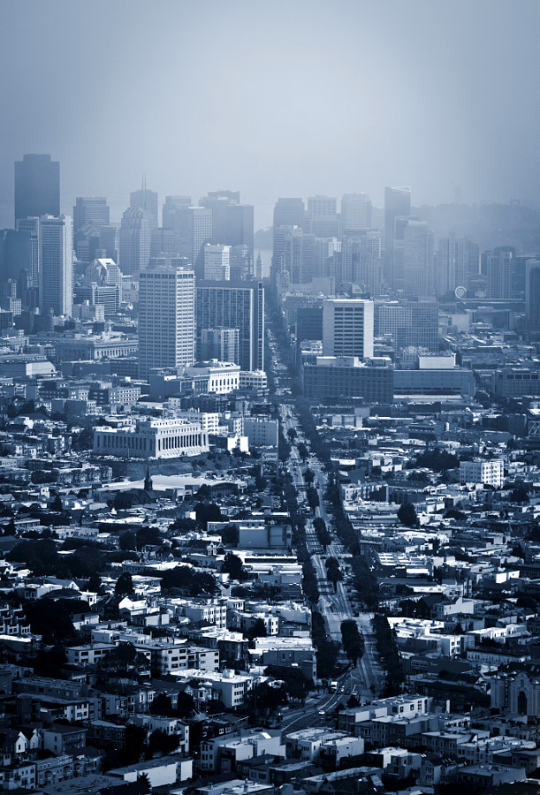
    Photograph San Francisco Bay Blues by Stefano Termanini on 500px

    San Francisco Bay Blues by Stefano Termanini on 500px

    I recently stumbled upon a great Treehugger article by Lloyd Alter called: The real triumph of the city will be seen in Buffalo (2014). The post is partially a response to economist Ed Glaeser’s popular book, Triumph of the City, which I’ve mentioned and cited many times before here on ATC.

    Lloyd’s thesis is basically that Ed is wrong in arguing that reducing the barriers to building is the most effective way to maintain housing affordability; that cities are really made out of flesh, rather than bricks and mortar; and that urbanists need to move beyond the view that a city’s past should be preserved at all costs.

    Lloyd then goes on to argue that rather than continuing to over-intensify cities like New York, San Francisco, and Toronto, we should be turning our attention to former powerhouses like Buffalo and trying to figure out how to reinvigorate those cities. The bones are already in place.

    Now, I don’t disagree that there’s lots of potential in cities such as a Buffalo and Detroit. I’ve written a lot about Detroit and I’m genuinely rooting for the city. But I don’t think it’s as simple as it sounds to shift our attention, and I don’t agree with all of the critiques of Glaeser’s work.

    As important as built form is, cities like Buffalo and Detroit remind us that architecture and buildings alone aren’t enough to build a city. There are countless masterpieces – such as Michigan Central Station in Detroit – that regrettably sit abandoned. You need people and communities.

    There’s also a snowball effect. 

    As a city becomes more successful, there’s a natural tendency for more people to want to be there. It’s no different than the network effect experienced by a social network. A social network without people has no value. But the more people you add to it, the more valuable it becomes and the more difficult it becomes to replace.

    So it shouldn’t come as any surprise that people will put up with expensive real estate and small apartments just to live in cities like San Francisco. That’s where they want to be. And as long as the demand to live in those cities is increasing, I continue to believe that it makes sense to build more, not less, housing and to make it reasonably easy to do so.

    At the same time, I believe whole heartedly in heritage preservation. As a trained architect, there’s a strong possibility that I would shed an actual tear should a building with heritage value be torn down in my city or in any city in the world. 

    And that’s why when I was on CBC radio last week I said that neighborhood investment needs to be a balance between preservation and progress. The Twittersphere later blasted me for using the term “progress”, but I think you get my position.

    My interpretation of Glaeser’s work has never been that he supports completely erasing a city’s past in order to make way for the future. If that is his position, then I too disagree with it. 

    My interpretation has instead been that he supports removing unreasonable barriers to development so that cities are able to supply – or can at least try to supply – enough housing to meet growing demand. This also doesn’t exclusively mean high-rise intensification. It could mean removing the barriers in front of things like laneway housing. And I continue to believe that this is a good idea.

    I don’t believe that this approach alone will solve all housing problems, but I do think it’s a great place to start.

    Thank you Lloyd for the great post.

  • Is the world urbanizing or suburbanizing?

    The Economist recently published an essay called, A Planet of Suburbs – The world is becoming ever more suburban, and the better for it. The argument is basically that the “great urbanization” that everyone loves to talk about these days is actually a misnomer. From Chicago to Chennai, it’s not the urban core that’s growing. It’s the suburbs. And so what we’re seeing should actually be called the great suburbanization.

    The basis for this argument is that wealth fuels sprawl. As people become richer, they naturally consume more of everything – including space. It’s a natural market outcome.

    Take for example, the path of many of Toronto’s ethnic groups. In the first half of the 20th century, College Street was the Little Italy. Then it shifted north and St. Clair Avenue West became the more authentic Little Italy. Today, many Italians now live north of the city in Woodbridge. In fact, last weekend I was on St. Clair West and was disappointed to learn that one of my favorite butchers had closed up shop and “moved to Woodbridge.”

    However, there are also many supporters of the exact opposite outcome. From Edward Glaeser to Alan Ehrenhalt, many have argued that we’re in the midst of a “great inversion.” The suburbs are no longer a threat to urban centers. It’s the urban centers who are threatening the suburbs. The suburbs are dead. Long live the city.

    So which is it?

    Well, The Economist does cite two examples where true urbanization is actually taking place. It’s happening in Tokyo and London. In both cases, it’s the city center that is growing the fastest – not the suburbs. The explanation for Tokyo is its aging population. And the explanation for London is its restrictive greenbelt, which effectively stops the possibility of any further sprawl.

    Here in Toronto – where there is also a greenbelt in place – we know that the population of the downtown core is growing at an incredible pace. A recent report by the city – called Comprehensive to the Core – revealed that the downtown core is growing at 4 times the rate of the rest of the city.

    But what about the suburbs?

    If we look at the province of Ontario’s growth projections, it is indeed the suburbs which are expected to grow the fastest up until 2036. Here is a diagram showing percentage growth rates:

    image

    In absolute numbers, the city of Toronto alone is expected to add about 0.66 million people between 2012 and 2036, and the suburbs are expected to add almost 1.9 million.

    There are a number of potential explanations for this differential, but I think it’s largely because land is cheaper in the suburbs, it’s easier to add new housing supply, population densities are lower, and we’re talking about very different land areas.

    The city of Toronto is 630 square kilometers. If you tack on the suburbs, the Greater Toronto Area is 7,124 square kilometers. That means Toronto makes up less than 9% of the total land area. And yet it is expected to contribute 25% of the region’s population growth. 

    Still, the suburbs are where the bulk of the population growth is expected to happen over the coming decades.

    However, the “great inversion” that authors like Alan Ehrenhalt have been talking about should not really be interpreted as the death of the suburbs. What he’s instead talking about is a socioeconomic or demographic reversal: center cities used to be poor and now they’re becoming rich.

    Here’s how he put it:

    What we are seeing is a reversal in which the words “inner city,” which a generation ago connoted poverty and slums, [are going to mean] the home of wealthier people and people who have a choice about where they live, and the suburbs are going to be the home of immigrants and poorer people. And Census figures show that that’s taking place.

    In this context, we are still living through the great urbanization. We’re seeing a shift in consumer preference and a shift in where wealth is choosing to locate. That’s a profound change.

    And while we’re obviously still suburbanizing, I don’t agree that we’re better for it. In fact, left unchecked, this demographic inversion could actually prove to be quite damaging to our suburbs.

    Image: Flickr

  • How will climate change affect our coastal cities?

    One of the reasons New York is the city it is today is because of the superiority of its port. For a number of reasons, which are better explained here by urban economist Edward Glaeser, New York was almost destined to become “America’s port.” Of course, this phenomenon is something that has been repeated all throughout history. Being connected to the right body of water, in the right way, has meant all the difference in terms of economic success.

    But with study after study demonstrating that our economic success is leading to severe climate change and to the melting of arctic ice sheets, those very same port cities are now being put at serious risk. How ironic. Hurricane Sandy was the largest storm surge in the history of New York. Prior to it occurring, the likelihood of such a storm would have been calculated at 0.1%. It was greater than a 1,000 year storm.

    But if the research is correct, we’re going to see more storm surges and we’re going to see rising sea levels. This makes many, if not all, sea port cities a high risk zone for flooding, which is why cities, such as Boston, have prepared comprehensive reports on how to manage a rising tide. From adjustable parapet walls to multipurpose green spaces that can absorb excess water levels, cities around the world are looking for solutions.

    But these are merely reactive solutions.

    What need to also be looking at is how we can fundamentally improve our economy so that we’re operating in a sustainable way. Some of the research suggests that what we’ve done is irreversible, but that doesn’t mean we should continue to make it any worse. Part of the issue with this “wicked problem” is that it doesn’t seem immediate to most people, yet. It’s too easy to ignore. But that doesn’t mean it doesn’t exist.

    Image: This Big City

  • Best predictor of a city’s growth is its average January temperature

    With the cold winter that we’ve had in Toronto this year I’m going to be honest and say that I’ve, on occasion, wondered why I haven’t moved somewhere warmer. There aren’t any great mountains nearby, so it’s not like I’m putting up with this cold in order to feed my love of snowboarding.

    Then yesterday, I was reading The Urbanophile blog and I was reminded of a fascinating finding from Edward Glaeser’s book, Triumph of the City: climate matters when it comes to cities and prosperity.

    In fact (from New York Magazine):

    The single variable that best predicts a U.S. city’s growth over the past century is its average January temperature. Hence the decline of many northern and midwestern cities and the boom in the South and the Sun Belt, where the Phoenix, Atlanta, Houston, and Dallas metropolitan areas have each gained a million people since 2000. For every five degrees that a city’s January temperatures top the national average, Glaeser writes, its real-estate prices will beat the national mean by 3 percent, thanks to the increased demand.

    But not all cold places are bleeding people. New York isn’t. And neither is Toronto. The Toronto area accepts roughly 100,000 new people every year. We have more cranes up in the air than any other city in North America. But it’s cold as all hell here. So what gives?

    As the New York Magazine article (cited above) points out, New York essentially offers enough benefits to offset its cold winters. There are enough amenities and economic opportunities to make people put up with the bad. And we’re not just talking about weather.

    A lot global cities–New York, London and so on–are crowded, expensive and somewhat impractical places to live. But they continue to attract and retain people in droves, which is a nice tie in to yesterday’s post about urban renewal and the importance of lifestyle.

    People will put up with a lot if your city is an otherwise awesome place to live.

  • The powder clause

    Jackson Hole has been on the top of my list of places to visit for a number of years now. And having just snowboarded it for the first time, I can honestly say that it lives up to the hype. It’s by far the most aggressive mountain I’ve ever had the pleasure of riding on. We also got lucky with 9” of fresh powder.

    But in addition to some great riding, I also learned of something new today: the “powder clause”. And from what we’ve heard from the locals, lots of employers in the region offer it. What it means is that if there’s a fresh dumping of snow, you’re allowed to take the morning off work so that you can go ski “the pow.” I think this is brilliant.

    If you’re from a big city (or you don’t ski), this may seem a bit absurd. But I think the “powder clause” underscores a growing trend happening in a lot of cities around the world. We’re seeing the rise of the consumer city. Historically, cities were all about agglomeration economies. But today, amenities matter. People choose first where they want to live and then look for a job (or start their own company).

    Some places are blessed with natural amenities. But for the rest of us, we have to work at creating our own. That’s where city building comes into play.

  • Why Toronto should stop complaining about all its condos

    Below is my latest post from the TAS blog. You can find it cross-posted here.

    Last week I wrote a post on my personal blog about housing policy in San Francisco. My argument was that the backlash against the tech community (for allegedly driving up real estate prices) is actually misdirected and that housing policy should be the target. 

    The reasoning behind this is simple: More people are moving to San Francisco than new housing is being provided. And so regardless of whether you have tech workers or not, you have an environment where the rich are always going to outbid the poor for housing.

    If you look at the numbers from the past 2 decades, San Francisco on average builds 1,500 new housing units a year. And yet the city gained approximately 25,000 new people between 2010-2012 (that’s roughly 8,300 people per year). So what you have is a perpetual housing supply shortage.

    To correct this problem, San Francisco needs to start building. And I’m stealing this idea from Harvard economist Edward Glaeser, who wrote an article on this very same topic back in December of last year for Bloomberg (and a book called Triumph of the City). His argument was that “the surest way to a more equitable housing market is to reduce the barriers to building.”

    Now, if you compare San Francisco’s situation to Toronto’s, we’re almost on the opposite end of the spectrum. Toronto doesn’t have a problem building. We’re building lots. So much so that it’s become fashionable to joke around and complain about all the condos going up in this city.

    But it’s important to remember that all of these condos are making us a relatively affordable city by global standards. We have more people moving to this city every year than San Francisco and yet home prices are less. We’re also less expensive than Vancouver, where there are strong natural barriers to building, namely water and mountains.

    So rather than complain, I’m going to be the contrarian. I like seeing new housing built. I like knowing that the neighborhoods I love in this city are becoming home to more and more people.

    At one point, my home (which is in the St. Lawrence Market) was a “new development” and somebody could have fought and opposed it. But it was allowed to be built and I was allowed to move in. I’m thankful for that. And so my plan is to be just as gracious to the next person who wants to join the neighborhood.

  • Is San Francisco so liberal that it’s actually conservative?

    One of the things I’ve always found funny about San Francisco is that, despite being a bastion of liberalism, it’s a city that’s incredibly anti-development. From the outside, it seems like a city filled with NIMBYs. Doesn’t that seem odd given its reputation as one of the most progressive cities in America?

    Of course, many would argue that part of the reason so many people love San Francisco is because it’s done such a great job of preserving its history. And don’t get me wrong, I think that’s important. But as I’ve argued before, development should be about a balance. We should be looking to the future, while not forgetting the past.

    Let’s put some numbers to this discussion.

    According to Atlantic Cities, San Francisco has produced on average 1,500 new housing units each year over the past decade. Seattle does about 3,000. And in the Greater Toronto Area, we’re probably around 30,000. I’m not sure if the Atlantic Cities numbers represent only the city proper but, either way, the spread seems massive. Even still, market analysts, such as George Carras of RealNet, have argued time and time again that the Toronto region needs 40,000 new housing units a year just to keep pace with demand!

    So what happens when supply doesn’t keep up with demand and you have a robust economy that continually draws in people from around the world? You get San Francisco. And you get expensive real estate and high rents that relatively few people can afford. San Francisco regularly tops the list of most expensive real estate markets in the US.

    This is a phenomenon that I don’t think many people appreciate: When you fight development you restrict supply and when you restrict supply you hurt housing affordability. This is the argument that economist Edward Glaeser makes in his book, the Triumph of the City, when he talks about why housing is so affordable in Houston.

    Now, if you think about it for a second, this actually means that it’s entirely contradictory to be a NIMBY and, at the same time, an advocate for affordable housing. The two are at odds with each other. Do you want an exclusive city with only enough housing for rich tech moguls? Or do you want an inclusive city with enough new housing supply for the middle class?

    When asked, I’m sure many liberals would choose the latter of those 2 scenarios. But in practice, at least in San Francisco, it would appear that many are opting for the former. And it’s happening because residents want their perfect community to remain unchanged. However, in the process, the values that supposedly underpin that community are being threatened.

    Which makes me wonder: Is San Francisco so liberal that it’s actually conservative?