Daily insights for city builders, delivered every morning at 6 AM ET. I’m Brandon Donnelly — a Toronto-based real estate developer and founder of Globizen. I’ve been writing here since 2013.

Tag: east side

  • Why east sides are often poorer than west sides

    In a recent Spacing article, called Pollution and the fall and rise of urbanism, Dylan Reid argues that one of the reasons why urbanism declined in the 20th century was because of industrial pollution. (There are, of course, other contributing factors beyond just pollution.)

    This article is the first time I have come across a study supporting the widely held belief that pollution and prevailing windows are the reasons for why the east sides of many former industrial cities are poorer than the west sides. Here is more on that from the article:

    People recognized and understood that pollution had an impact on them, and they tried to avoid it if they could afford to do so. Have you noticed, for example, how in so many cities (Toronto included), the east side is poorer than the west side? It’s because the prevailing winds in Europe and North America are west to east, and they blow pollution to the east side. A fascinating study by economists Stephan Heblich, Alex Trew and Yanos Zylbergerg quantified this effect, identifying how 19th century pollution was dispersed eastwards and showing that the most polluted areas were also the poorest. 

    What the authors discovered is that not only did pollution cause a geographic sorting based on wealth, but that there’s also a certain degree of persistence to it. This makes sense if you think about it. Pollution in our cities has waned significantly and yet here we are still remarking and talking about east vs. west.

    It goes to show you just how long lasting the impacts of our city building decisions can be.
  • The best party in town!

    Friend: Ever go to Jilly’s?

    Me: No, actually.

    Friend: Same.

    Me: What about you? [Addressed to random guy in elevator]

    Random guy in elevator: I’m from Portland. I don’t know what you’re talking about.

    I went to check out the new Broadview Hotel last night in Riverdale, Toronto. (Riverside if we’re being pedantic.)

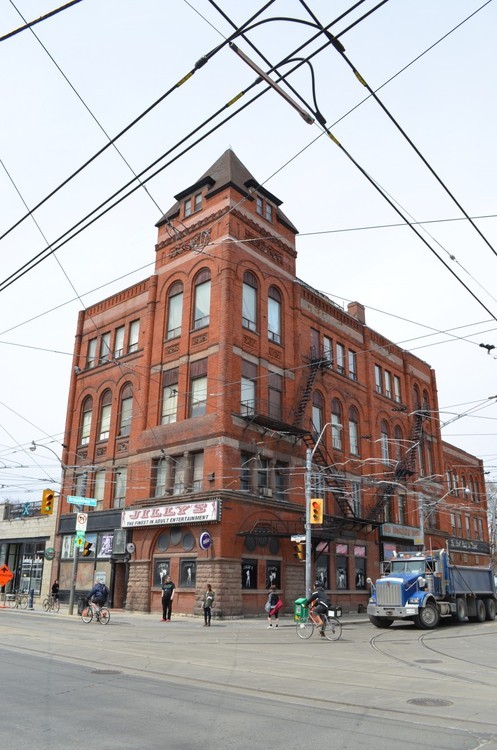
    Originally built in 1891 and most recently a boarding house with strip club at grade (Jilly’s – the best party in town!), the building was acquired in 2014 by developer Streetcar and turned into a “58-room boutique hotel and charismatic gathering spot.” The soft opening was July 27, 2017.

    Official website here. Lots of interior photos here.

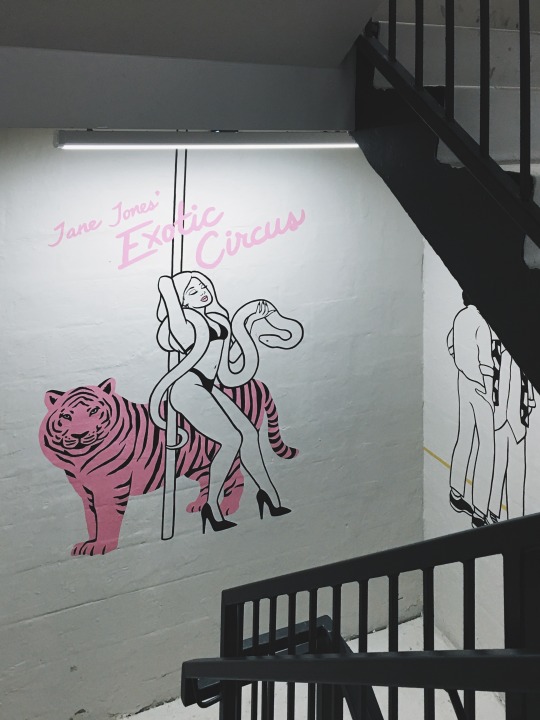
    Besides the pink neon above the lobby bar (which is obviously great), I really like what they did in the stairwells. Credit to Supermilk Studio. Here’s a photo I snapped last night while trying to find the WC:

    Each floor is painted with murals that pay tribute to the building’s history, from the early days of Dingman’s Hall to its most recent iteration as Jilly’s.

    Interestingly enough, the building originally served as an important social hub for the community, though it did not initially house a hotel. On the ground floor was a bank (see, there’s a long tradition of this) and above it were offices and grand meeting halls.

    It wasn’t until the original developer sold the building that it was converted to a hotel and granted a liquor license. It’s worth noting that this conversion is said to have faced stiff community opposition. A hotel that serves alcohol to people? Not in my 1906 backyard.

    With the reopening of the new Broadview Hotel this summer, you could argue that east of the Don River is once again regaining its grand gathering spot. And the feeling I got when I stepped foot inside the hotel last night was that it was time. The demand was latent and, yes, condos wouldn’t have cut it.

    At the same time, this is obviously bigger than the east side. There are many who don’t know this building’s infamous history. Jilly’s? What’s that? Time to go for a walk in the stairwells.

  • Gray on gray on gray

    This past weekend was gorgeous in Toronto. I always love seeing the city come to life after the winter and last weekend was the first sign of that this year.

    Being the fair-weather cyclist that I am, I had the flat fixed on my single speed bike and I was ready to go by the weekend. I managed to test out the GoPro handlebar mount that I mentioned last week but, quite honestly, the footage was so jittery and bouncy that it made me nauseous to watch it. So I need to rethink my city geek filming strategy. 

    (Sidebar: GoPro needs to make it easier to turn their raw footage into content that is actually worth sharing.)

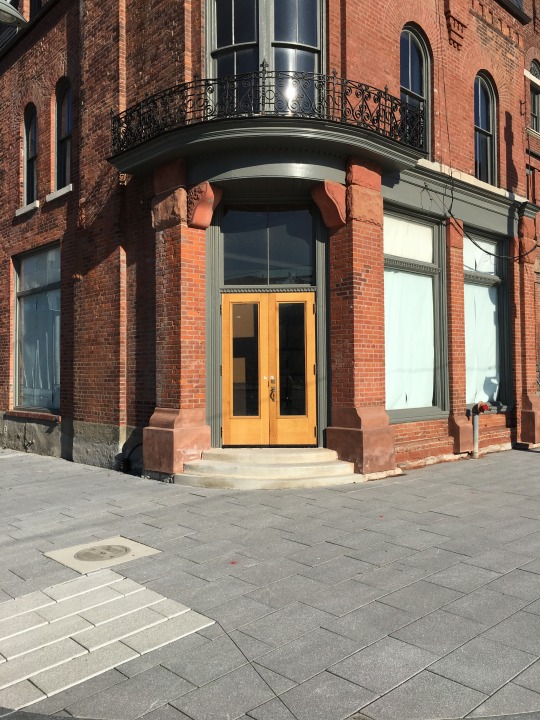
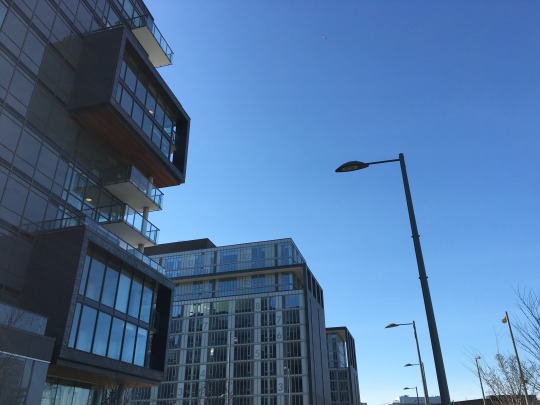
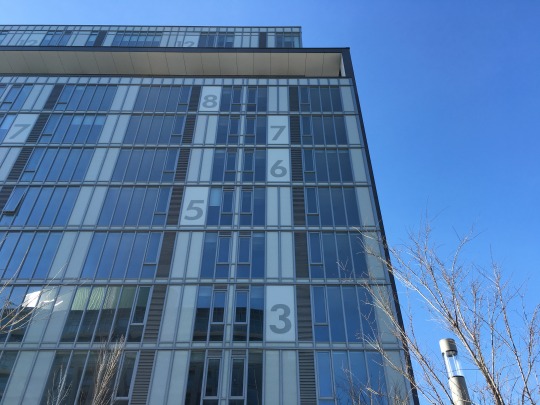
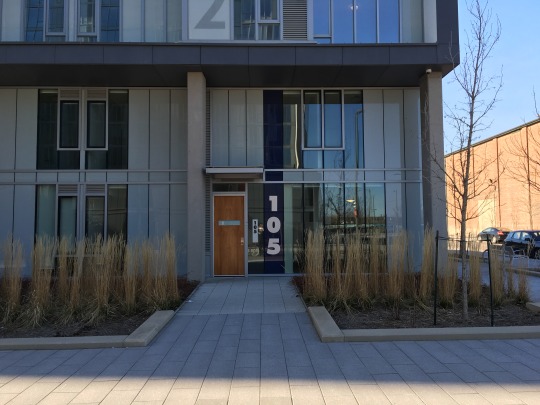
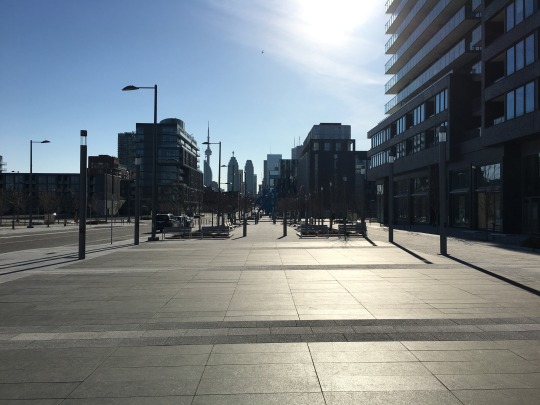
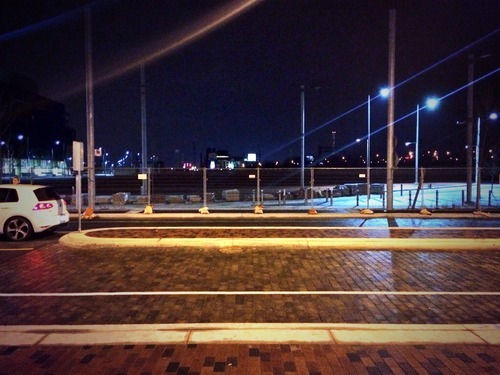
    Still, I had a good ride over to the new Canary District on the east side of downtown. The gates just recently game down, so I was itching to take a look at it. Here are a couple of photos to give you some context for the rest of this post:

    None of the retailers have moved in, so the area currently feels like Toronto post zombie apocalypse (to use a friend’s description of the neighborhood). But all of the bones are in place for an incredible downtown neighborhood.

    Here are some of my thoughts as I was riding around:

    The opening of this neighborhood repositions the Distillery District. Initially, the Distillery District struggled as a kind of island on the edge of downtown. But thankfully they stuck to their initial vision for the community and now they get the benefit of this new mixed-use anchor to the east of it.

    Trinity Street to the north of the Distillery District proper is a fantastic opportunity to not only extend the magic of the Distillery northward, but also “plug” the area into Front Street East, which is the primary east-west spine that connects the Canary District back to the downtown core. I hope we (the city, developers, and so on) take advantage of this.

    The Front Street Promenade running through the Canary District and connecting into Corktown Common (park) is going to be an absolutely magical urban space once the restaurants, cafes, and retailers open up. I can’t wait for this to happen. Live Work Learn Play has been orchestrating the retail component.

    Finally, why are all of the buildings gray? 

    Gray brick. Gray window wall. Gray spandrel panel. It’s gray on gray on gray. We’re playing into that boring Canadian stereotype here. I hope the subsequent developments introduce some wild colors. Although some red brick to tie into the Distillery District would work well too. The best nearby architecture (just to the north) is the River City complex by Saucier + Perrotte.

    Notwithstanding the gray, I’m super excited about the Canary District and I am generally bullish on the east side of downtown. If you’ve had a chance to visit, I’d love to also hear your thoughts in the comment section below.

  • East Room co-working space

    image

    Amy Bath needs to leave comments here on ATC more often because she has great feedback and insights.

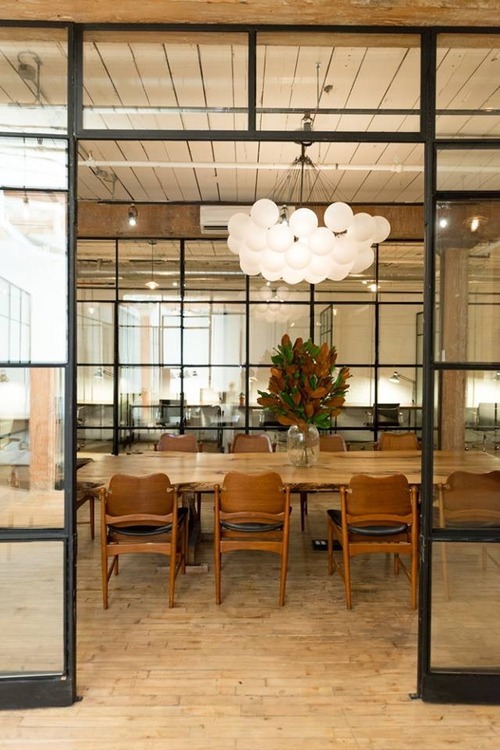
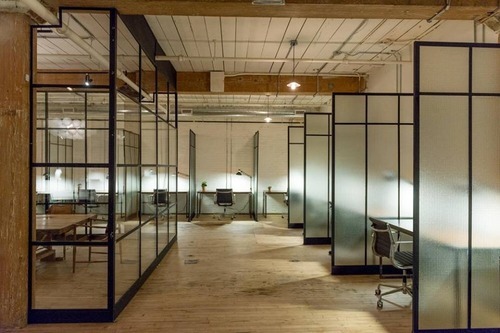
    This morning she tipped me off to a brand new co-working space on the east side of Toronto called East Room. If you haven’t yet heard of it, I would encourage you to check out their website. They’re in a gorgeous heritage building along the Don Valley and they seem to have executed really well. I love their design aesthetic.

    //platform.instagram.com/en_US/embeds.js

    They currently offer two different memberships: a resident membership ($500/month) and a club membership ($250/month).

    image

    This is exciting to me because I have a soft spot for both good design and the east side of Toronto. But probably more importantly, it speaks to the changing nature of work and the workplace, as well as to the shifts in how space is being consumed.

    Co-working spaces are, of course, blowing up all over the world from Philadelphia to Berlin. The internet has empowered new ways to freelance and make money, and these kinds of spaces are really a result of that. Because even though it’s entirely possible for many of us to work remotely at home, we still crave the social interaction that comes from being within an office environment. And that’s a big part of what these spaces are. They’re a social fabric.

    Amy’s hope is that condos will eventually start including amenity spaces that are similar to co-working spaces, and I think that’s a really interesting idea. The challenge, however, is that most developers today (and property managers) aren’t equipped to operate these kinds of environments.

    But maybe it’s only a matter of time before some do become equipped, because I’m sure we’re going to see more, not less, of these kinds of urban spaces.

    Images: @eastroom_

  • Community building on the east side of downtown

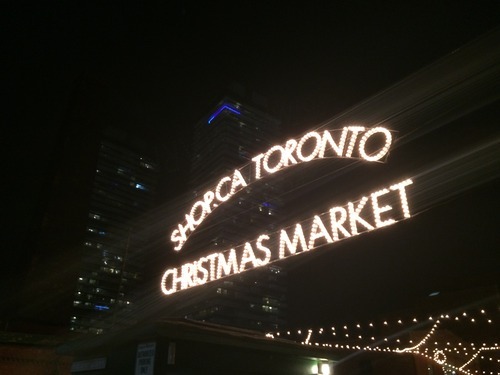
    Yesterday evening I went to the Toronto Christmas Market in the Distillery District. I had actually never been before, but it was something that I had been meaning to check out for a few years now. And it was wonderful. If you’ve never been, I would highly recommend you go. This past weekend was the opening weekend and it runs all throughout Advent until Sunday, December 21st.

    For those of who might not be aware, the Christmas Market festivity is a longstanding tradition that originated primarily in German-speaking Europe. Accounts of a “December market” were found as early as the end of the 13th century. The Toronto Christmas Market is a slightly more recent tradition (it’s only about 5 years old), but it was already selected as one of the world’s best.

    But Christmas carollers and hot toddies aside, the Market is also a fantastic opportunity to see the Distillery District in all its glory. Every time I visit the Distillery, I can’t help but feel how lucky we are to have a district like this in the city. The architecture and scale of the place is incredible and – alongside the Toronto Islands and Kensington Market, sometimes – it’s pretty much the only car free zone we have.

    However as someone who lived near the Distillery District in its early days, I remember how much of an “island” it was when it first opened. It felt disconnected from the rest of the city and the only way to get people there was to hold a special event. The retailers and galleries struggled and many didn’t last.

    With all the condos that have been built, literally on top of the neighborhood, that has changed dramatically. Today the area has become much more balanced as a mixed-use community. But the real tipping point, I think, will come next year when Toronto hosts the Pan Am Games and the West Don Lands neighborhood starts to come online just to the east of Cherry Street.

    Now all of a sudden the Distillery District won’t feel like the edge of downtown anymore, it will feel more like the middle of it. As my friend Alex Bozikovic of the Globe and Mail pointed out to me this weekend, the Pan Am Games are going to put the east side of downtown on people’s radars. And I would completely agree. Once that happens, the Distillery District will finally start to reach its maximum potential.

  • The demand for character office space

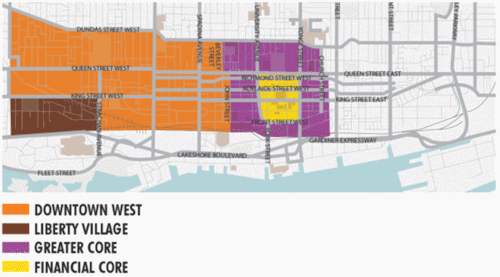
    Last Friday the Toronto Star published an article talking about the growing demand for character office buildings in submarkets outside of Toronto’s core. Specifically, it was talking about the Downtown West and Liberty Village submarkets (citing a report from CBRE).

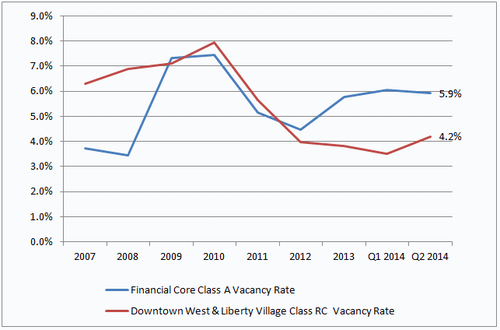
    I’m sure this isn’t news to most of you. Cool loft spaces have been popular for years. But it’s interesting to look at how rents and vacancy rates have changed for these submarkets and product types over time.

    Since 2002, average (net) asking rents for brick-and-beam buildings in the west end have gone from $16.12 to $22.23 per square foot. Almost a 38% increase. By comparison, office space in the core has gone from $28.40 to $32.38 per square foot. A 14% increase.

    And if you look at vacancy rates since 2007, you’ll see that the character office market has really tightened up over the past 4 years or so. There’s growing demand for a limited amount of supply.

    With the growth that the downtown core is seeing and with the rise of Toronto as a creative startup hub, I’m sure we’ll continue to see strong demand for this type of space. But there’s only so much of it to go around. So I think we’ll also end up seeing greater interest in the east side of downtown and also more interesting new builds.

    Images/Charts: CBRE

  • Streetcar Developments buys heritage strip club

    image

    The big news in Toronto real estate today is that Streetcar Developments has picked up the Broadview Hotel at the northwest corner of Queen Street East and Broadview Avenue in the city’s east end. The building is best known for housing Jilly’sthe finest in adult entertainment.

    I don’t know what it sold for, but the twittersphere seems to think it went for somewhere between $4 and $6 million. My guess is that it’s on the higher end of that range.

    The deal is interesting because there have been rumors circulating for years about its future. At one point there were rumblings that it was going to become a Drake Hotel on the east side–which does seem like a natural fit, and would be exciting for the Riverside area.

    And while we still don’t know what it’s going to be, Streetcar–which is a condo and loft developer–has said the plan isn’t to turn it into residential condos:

    “Although rooted in loft development, Streetcar does not see this building as a residential condominium project. We are in the early stages of planning, but our focus is to revive this building to a landmark everyone in the area can be proud of.”

    That’s interesting. They also don’t deny that it could remain a hotel.

    I don’t want to automatically assume that something along the lines of the Drake Hotel (a hotel, bar, restaurant and cultural community center) is the right recipe for this building, but I do think there’s an opportunity for it to become a significant anchor–even more so than Jilly’s–on the east side of downtown.

    Earlier this week I wrote about the rise of the east end. Maybe this will end up as the establishment that really gives West Queen West a run for its money. But in order to do so, I think Streetcar will need to find the right cultural entrepreneur to partner with. You can’t fake being effortlessly cool.

    Either way, I’m thrilled that this building–built in 1893–will be preserved. If there were any plans to demolish it, I would chain myself to a stripper pole in protest. The Broadview Hotel is a real gem with loads of potential.

  • Where marketing is at today

    Two things happened yesterday. And since there’s a nice tie in, I’d like to talk about both of them.

    First, here at TAS, we launched a new condominium project called Kingston&Co. We had already gone public with some information, but we now have an updated rendering and we’ve gone live with a public Q&A section on our website (kingstonandco.ca). The questions are all geared towards topics that we think are on a lot of people’s minds and anybody can respond. Instead of trying to cover up the elephant in the room, we wanted to do the opposite and get it out and into the open. It’s all about promoting greater transparency.

    Second, I watched this 45-minute interview with author and entrepreneur Gary Vaynerchuk last night before going to bed. It’s a great video and I would encourage you to watch it if you have any interest in entrepreneurship, social media, marketing, capitalism and overall hustle. But if you don’t have the time, here are some of my key takeaways. Gary makes, on average, between $3-5 million a year selling the social media dream (but it could be more depending on things like his angel investments). Everybody is a media company first. He has clients putting 100% of their marketing dollars into social media and they’re seeing a ROI. It took him 1 ½ years to get anybody to care about his video blog Wine Library TV. And don’t just ask. Give as well.

    That last point is a tie in to his latest book called Jab, Jab, Jab, Right Hook. And what he’s effectively saying is that, as a brand, you need to be mostly giving to your customers (that’s the jab). It could be valuable content you produce via social media or whatever. It’s you, delivering value to your customers in some way. Then, once you’ve done that, you can go in for the right hook, which is the ask: Buy my stuff. The idea is that you build up trust with your customers and develop a relationship so that you get the privilege of asking them to give you money.

    The alternative, of course, is what we’re all already familiar with: brands constantly bombarding people with right hooks. It’s the let’s throw a bunch of shit up against the wall and see what sticks approach. And it’s related to the whole permission marketing vs. interruption marketing debate popularized by marketer Seth Godin.

    But Gary’s argument–and I found this really interesting–is that constant right hooks is the approach we had to take before the internet and things like social media. Those right hooks were so expensive to deliver through billboards, print ads, TV commercials and so on, that companies simply couldn’t afford to be delivering any jabs. But all that has changed with social media and technology. Now, the best brands succeed by building trust and establishing relationships with their customers–often one-by-one.

    And this is exactly what we’re trying to do with Kingston&Co. We know that there’s a lot of discussion happening in the marketplace around condos and we didn’t want to ignore it. We wanted to address it. And if you look at our messaging, you’ll notice that in most cases we’ve put “Join the conversation” ahead of the typical “Register now.” That’s because we truly do want to have a conversation.

  • Globe and Mail moving to the east side of downtown

    This past Wednesday the Globe & Mail newspaper announced that they signed a 15-year lease to be the lead tenant in a new office tower now under construction at 351 King Street East (just west of Parliament Street). This means that the newspaper will be leaving its current digs on the west side of downtown at Front & Spadina.

    I have to admit that I was pretty excited when I read the news. The design looks incredibly promising and, as some of you might know, I’m bullish on the east side of downtown.

    One of my favourite areas of the city is the Distillery District. But today it still feels very much like an island. And it’s because the city hasn’t really caught up to it. It’s a destination.

    However, between the West Don Lands and major office projects such as this one (it’s 500,000 sf), I think the east side of downtown is about to hit its stride.

    It’s continuing to “fill in” and this will make more and more people realize how central it actually is to the core – especially in comparison to west side neighbourhoods like Liberty Village.

    Amongst my excitement, I did however stop to think about the fact that a newspaper company was taking top spot in a new office tower. Will newspapers even be around for another 15 years?